We have the rainforest salt licks under control, the Neuron Expedition reports
25 March 2022
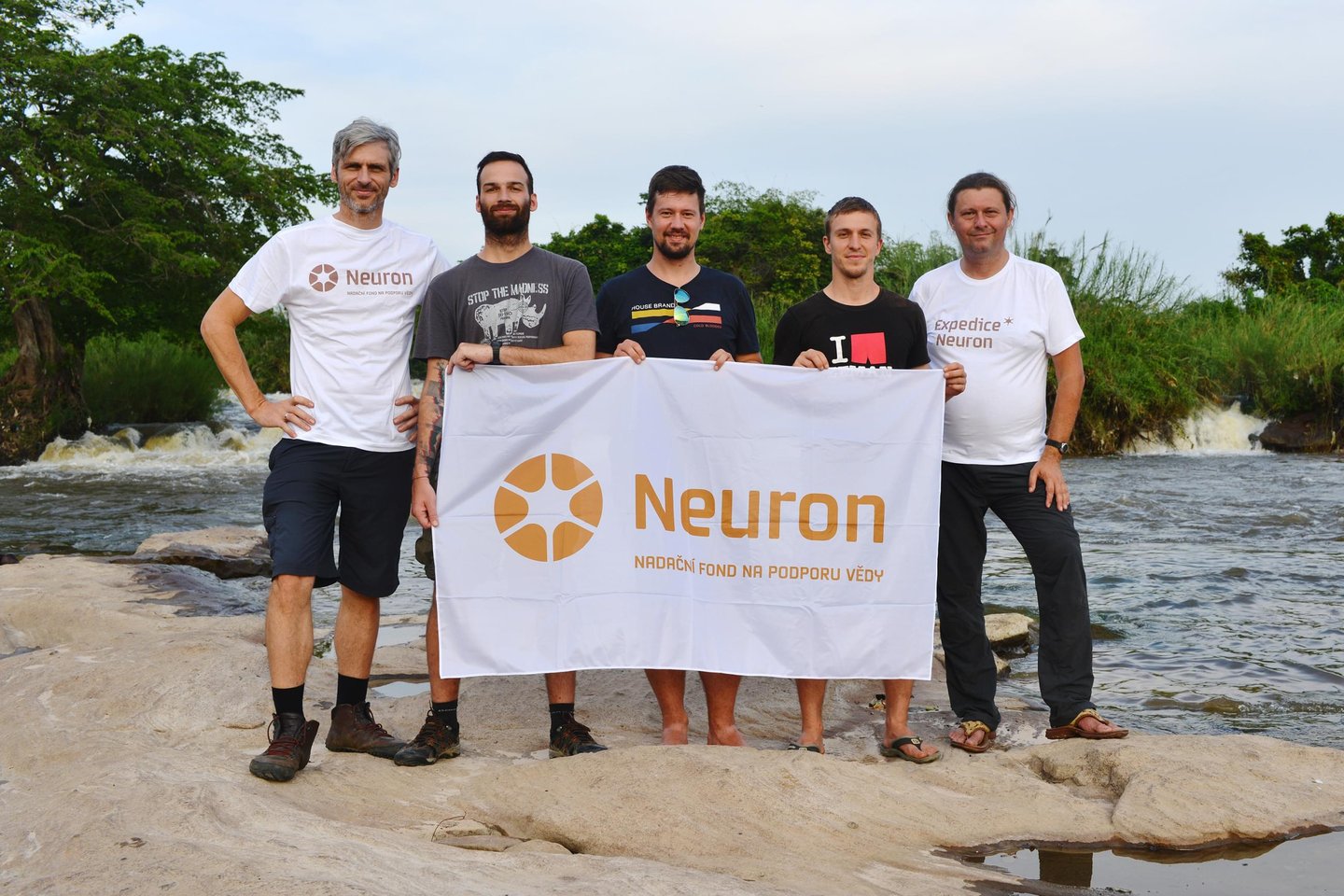
The long-term project of mapping wildlife in the rainforests of Congo is going well, and it is now time to use further equipment. Cooperation with international conservation organisations is established, and the Czech and Congolese teams will now share their observations of rainforest animals with each other. The Neuron Expedition 2022 Dzamba Ya Lobi was completed with the March trip, but the help for the local environment is not over.
The research team of Tomáš Jůnek from the Faculty of Environmental Sciences of the Czech University of Life Sciences will return to Africa regularly to analyse the video and audio recordings and use the resulting data for the direct protection of animals. The information will also serve in dialogue with the local government and concession holders, so that they preserve biocorridors for endangered animals and allow them to move freely between national parks.
How did the final part of the Neuron Expedition 2022 Dzamba Ya Lobi go? Watch Tomáš Jůnek's videos and read his account:
First covid-19 interfered with the departure date; I fell ill with it two weeks before the flight. The whole expedition already had tickets and visas, so there was nothing for it but to split up. My colleagues flew to Congo and headed into the jungle for preparatory work; fortunately I only joined them a week late. At the airport in Brazzaville I found that my rucksack had ended up somewhere else entirely in Africa — so I had neither clothes nor rainforest equipment nor part of my technical kit. But that was nothing compared with what happened in Ukraine during my journey, and with being the first to tell our expedition about the war.
Trousers, a T-shirt, a knife, a sleeping mat, a blanket — I had to borrow everything. On the one hand I discovered that travelling light is enough; on the other, people's help gave me the chance to get to know them better. The new head of research at the national park, for instance, with whom I immediately agreed that our expedition would lend them part of our equipment for their research and that they in turn would help with our further plans. This year's Neuron Expedition also included our film-maker Mišo Gálik, who is preparing a documentary from the trip; he managed to film not only animals but also the traditional way of life of the local people, the Pygmies. We met in the village and then walked for two days through the rainforest to our camp.
In Congo we are focusing on two salt licks; one is damp and muddy, the other dry as savannah. Salt licks are open clearings in the jungle where elephants and other animal species top up their minerals and which they also use for social interaction. We placed camera traps here during the last trip in August; now we have added more and will arrange for them to be guarded. We combed every corner in detail; wherever the earth had been dug up, we put a camera trap. Nobody has a salt lick covered in such detail. During the forty-five-kilometre walk through the rainforest to our team's camp I also placed acoustic recorders at further salt licks at various distances from the village.
We already have thousands of photographs; the acoustic recorders will also record elephant calls and the sound of gunfire at regular intervals, so we will know where the animals meet and when they are most poached. We have followed poachers before and want to focus on them in future too, by arranging anti-poaching patrols and through education — local hunters know that elephants and gorillas are protected; we have to tell them that hunting crocodiles, grey parrots and pangolins is also forbidden. Long-term observation of the salt licks and their surroundings is one way of protecting the animals. To keep the rhythm of securing recordings across the dry-to-dry seasons, we will return to the salt licks in August this year to download and evaluate the data.
The Neuron Foundation contributed a total of CZK 1,500,000 to Czech scientists' efforts to map territory in the middle of Africa and to cooperate with conservation organisations.
The first part of the Neuron Expedition Dzamba Ya Lobi took place in 2019 — read more about it — the second part in September 2021 — when it discovered new territory and acted against poachers — and its last trip took place in March 2022.