Neuron's scientific hopes shone at the Forbes Business Fest
4 June 2026
Hundreds of businesspeople, investors and VIPs gathered for the networking event Forbes Business Fest 2026 at the Prague Exhibition Grounds. The entrance was just a short walk from the Planetarium, where scientists received the prestigious Neuron Awards in January. And the "Neuron people" were represented at the business meeting this time too. On one of the most attractive stages, the Forbes 30 under 30 stage, the promising scientists Terezie Štěpánková and Claudia Haová appeared, followed by the AI expert Václav Knapp — the three main faces of the motivational campaign Start with Why.
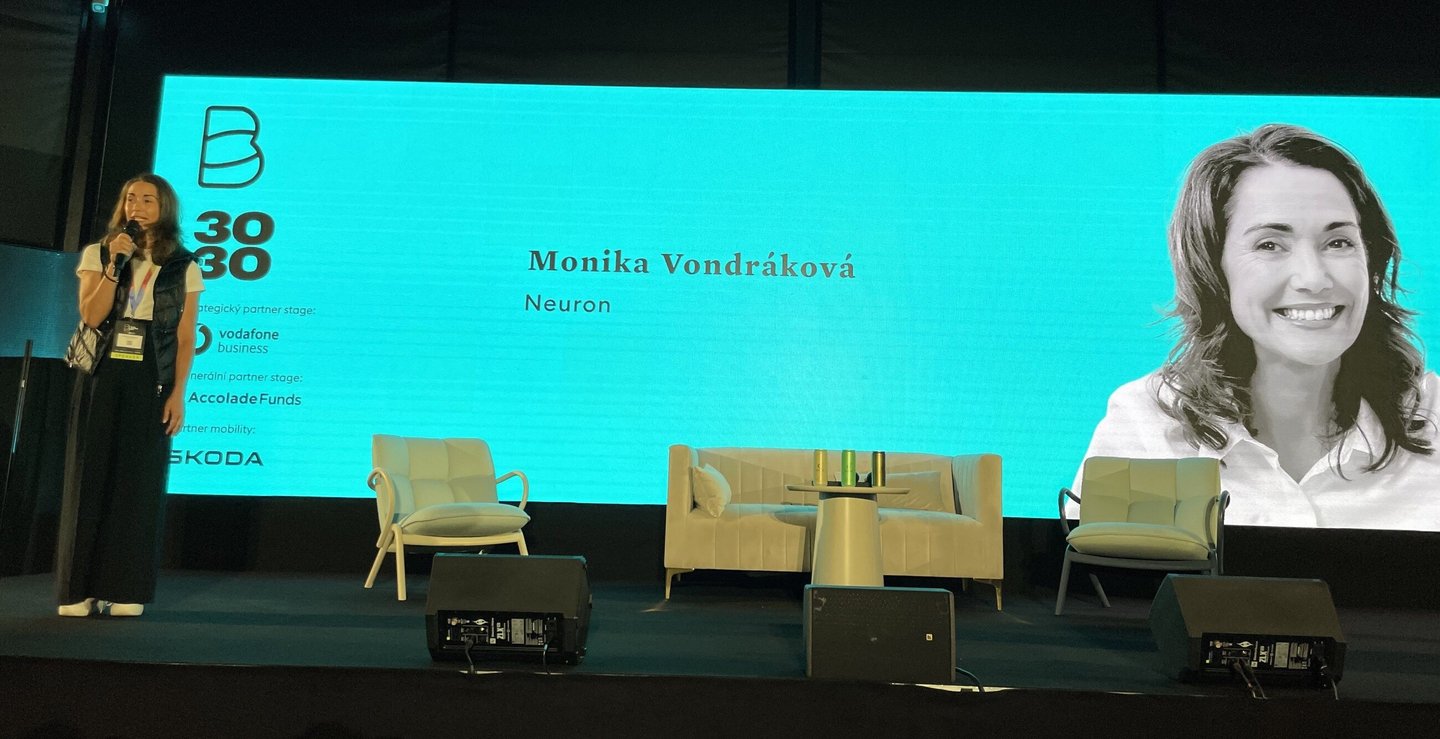
The young students who are well on their way into the world of science were introduced by Monika Řasa Vondráková. "The Czech Republic does not have many raw materials, it has no sea, but what it does have and what it should build on is precisely the curiosity of talented people and their courage. That is why we have been giving the Neuron Awards to the best scientists for several years now. At the same time we try to send talented students on placements to the best. And we always look a little way round the corner. That is why we decided to start working more with talented young scientists and launched the campaign Start with Why, which we want to present to you today together with our ambassadors," is how Monika introduced the capable Terezie and Claudia, who have the gift of having gone out and actively taken the first step. The audience then watched the campaign's hero video.
"We always look a little way round the corner. That is why we
decided to start working more
with talented young scientists."
From children's books to world science
Neuron helped them "peek" into big science while still at secondary school: Terezie Štěpánková into the biomedical laboratories at the BIOCEV centre, Claudia Haová to machine learning experts at the Faculty of Electrical Engineering of the Czech Technical University. What was their first scientific Why?
"As a little girl I had a favourite book called Experiments and Pranks. So my first scientific Why was directed at my mother and I asked her: why can't I do these experiments at home on the table? Why does it bother her so much," Terezie said, making the full hall laugh. Claudia says she had no one specific moment: "When something catches my attention, I want to find out how it works. Recently, for instance, I was reading about the terminology of wine, which I can't even drink at all, but it was something that interested me. And they were articles about history, medicine, business. My parents supported my curiosity by teaching me to ask precisely why and not to look for answers only at first glance," added the young woman who developed an AI application.
Science spoke to them and they wanted to continue in it. "My sister had a skin disease where there were problems with the diagnosis, in that the doctors could not determine exactly what it was. And I had a hunch that it might be some kind of fungal infection. And at that time I had to create a school biology project and connect it with biology, so I did," Claudia said, presenting the development of the tool FungiGPT. Terezie dreamed of her own laboratory, and she is getting closer and closer to it. "I started as that child with baking soda and vinegar. And it would certainly never have occurred to me that when I wrote in my diary at the age of eight that I wanted to have a big secret laboratory one day, that... Well, it probably won't come true entirely. But actually I would say I am getting a little closer to it, that I really will spend a few more years, some time, in that laboratory," said the chemistry student at the University of Chemistry and Technology.
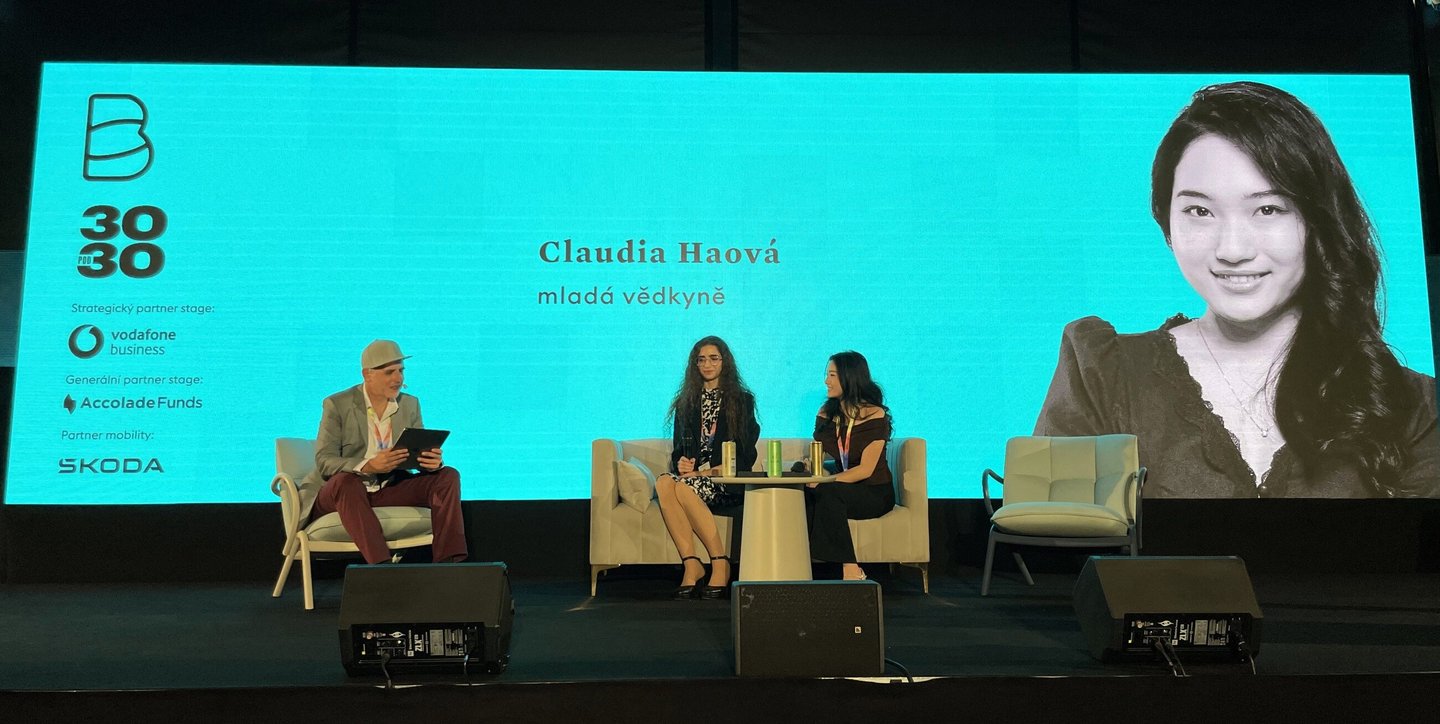
Stereotypes? We don't have greasy hair, we have hobbies!
Both highlighted the role of the Neuron Foundation. "Thanks to it I met various people who work in science professionally. And after I got to know them, I realised that they are not as unreachable as I used to think, that they are normal people dealing with ordinary problems," Haová answered the host's question about how she got into the academic world.
Terezie studied at the Žamberk grammar school when she peeked into the team of Kateřina Rohlenová at the Academy of Sciences, her role model. Now she wants to help others herself. "I am very glad that I can be part of the Start with Why project, even though I have already started somehow with my own Why... I think it is now time to move towards the younger ones too. I would like to help someone find their own path. And that is my motivation for accepting this offer, why I wanted to be part of Start with Why, because I see great potential and great meaning in it," she added, saying she has met a lot of interesting and inspiring people along the way. "I found out that they are not the swots with straight A's and that they are very human. That thrilled me. They were people who created an environment for me in which I was not ashamed to admit that I did not know something, because that is simply part of it," said Terka Štěpánová, who is enormously interested in the scientific question of growing replacement organs in laboratories in the future. But there are still plenty of obstacles.
What would they say to secondary school students? "I probably wouldn't necessarily try to persuade them. I would rather want to let them know that each of us is a bit of a nerd. Someone in football, someone else in art, someone in physics. The moment you start going into something in depth, you become a nerd. And as far as I'm concerned, being a nerd is not a bad thing! I would like them to throw away that negative connotation of the nerd, because being a nerd only means that something really interests you," said Claudia, who is interested in the potential of the intersection of dermatology and AI — for instance in new areas of the skin care field.
And do they themselves come up against any stereotypes about women scientists? "I think that if people believe films and series, then if they came to some research institution they would be very disappointed that we don't all have greasy hair there," Terezie laughed. "A prejudice I would like to reject is the stereotype that young scientists are stuck in the laboratory all day. I think that in reality we are normal people who have hobbies, scroll on TikTok, pack ourselves with brain rot, memes… And we deal with ordinary things at school and so on. Yes, we do the same things as your peers," Claudia Haová concluded the debate; she was inspired by Ada Lovelace (considered the world's first programmer) and the beautiful Hedy Lamarr, the Czech-American actress who was also present at the very birth of technologies such as Wi-Fi and Bluetooth.
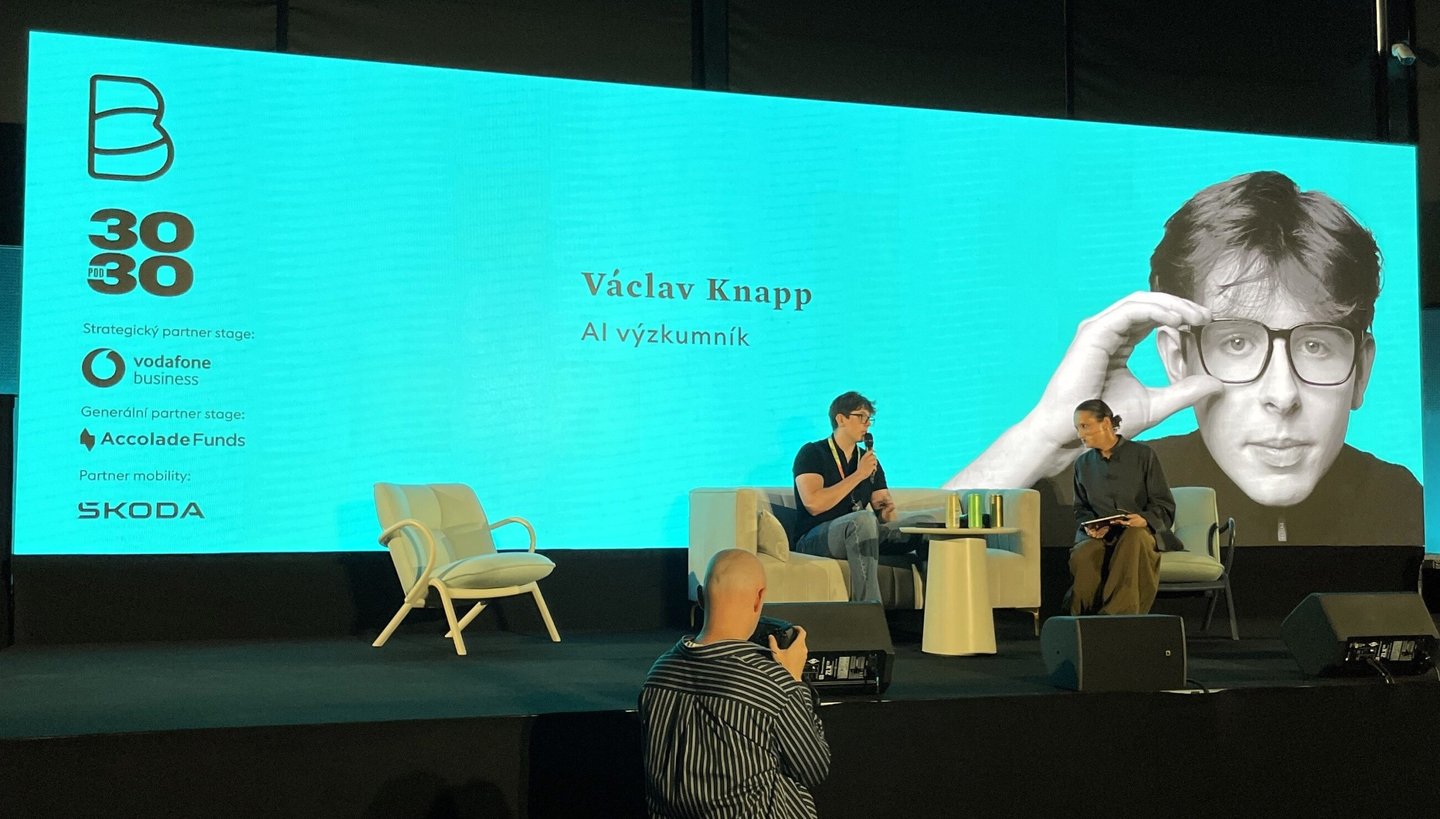
The enormous possibilities of AI… and how to steer them morally
After Neuron's ambassadors, the stage belonged to Václav Knapp, also a face of the Start with Why campaign, but also a member of this year's Forbes 30 under 30 ranking. He is fascinated by physics and the potential of artificial intelligence. With the help of the Neuron Foundation he completed a placement at the University of California in Berkeley, USA, before even taking his school-leaving exams. "Through physics I got to AI, because there are plenty of questions there that I don't know whether the human brain can solve at all, so we need help from AI, or from another level of intelligence," Václav opened his appearance, adding that the "silicon brains" built by humans may one day answer questions such as what space is, what consciousness is and so on.
"I like one quote, a quotation from (the theoretical physicist) Richard Feynman, which is that until we build it, we won't fully understand it. And the human brain is one aspect of that. If we enlarge and improve these models, if we change the algorithms, then perhaps consciousness will suddenly appear there and we will be able to realise what step has occurred," he told the show's host.
Did teachers at secondary school guide him to develop his talent? "At primary school not much, it didn't stretch me very much, so I did what I wanted… But at secondary school the headmaster (Radko) Sáblík supported me a lot," he said, praising the head of the Smíchov secondary technical school for his vision and for helping him fulfil his dreams.
Vašek believes in the potential of AI and also thinks about its ethical dimension. "Anthropic Open Source, for instance, has all the properties there that we want from artificial intelligences — and as far as I'm concerned those are good properties. One of them is written out explicitly, which I found funny: that AIs should not help anyone make a bomb or a biological weapon. And it is important to put properties like this into artificial intelligence. And that is also why AI companies are now recruiting philosophers, sociologists and economists, because they want to put the right properties into new models," he explained of what is happening.
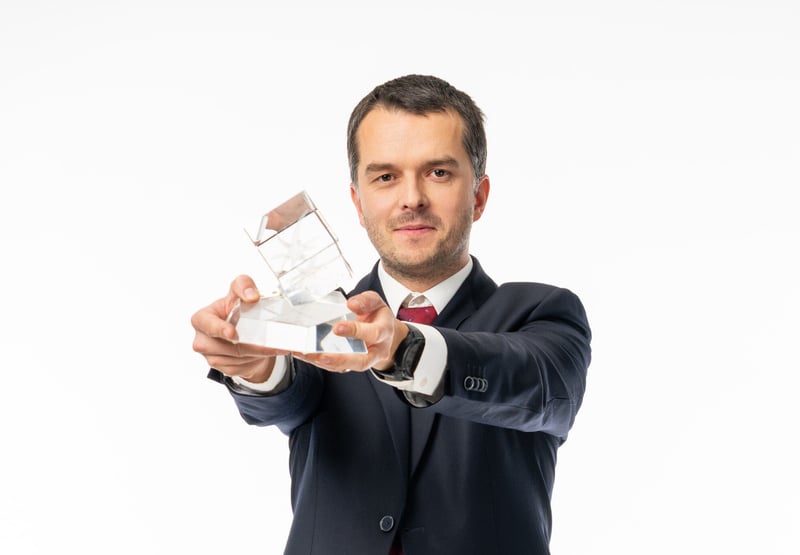
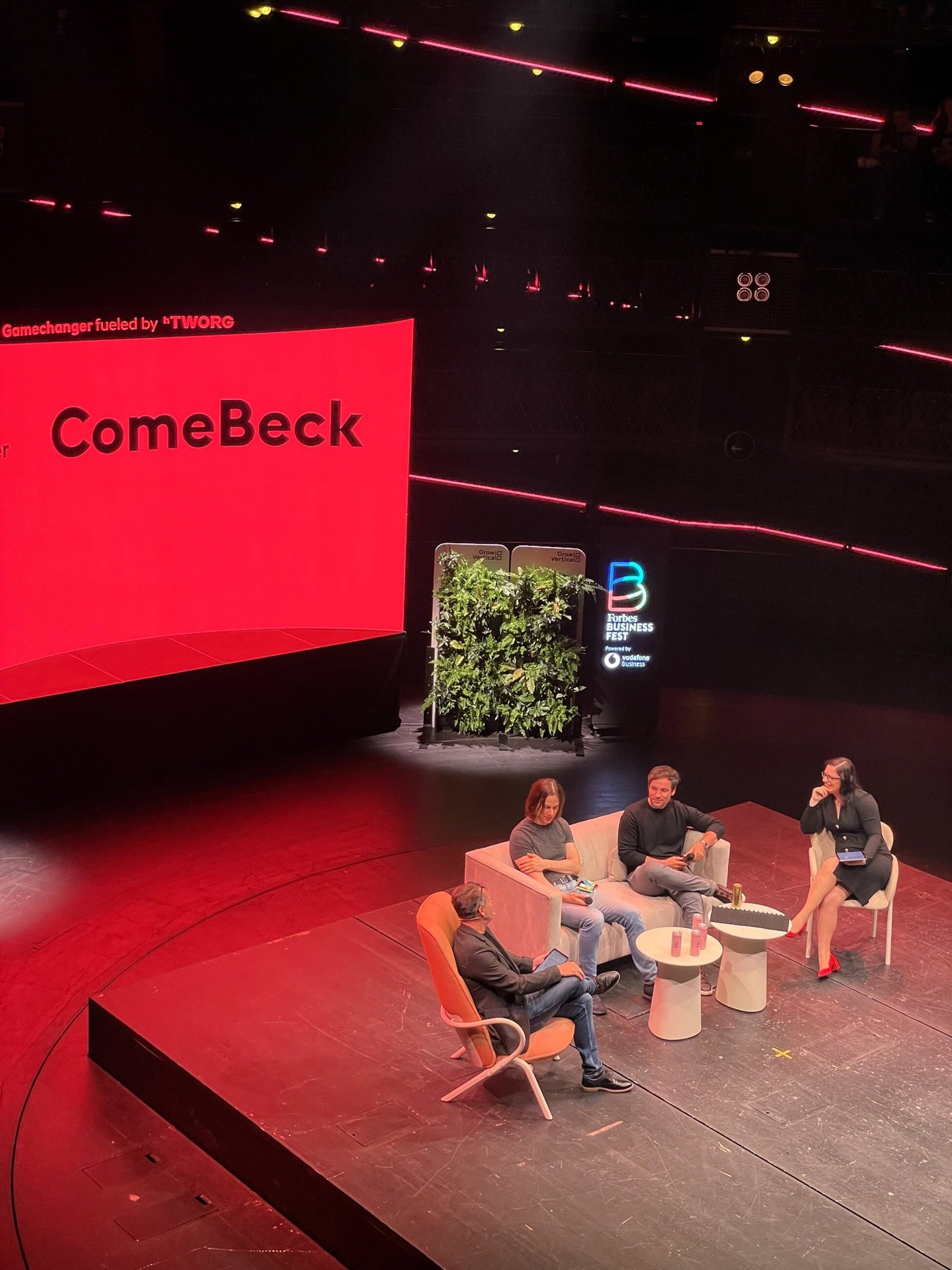
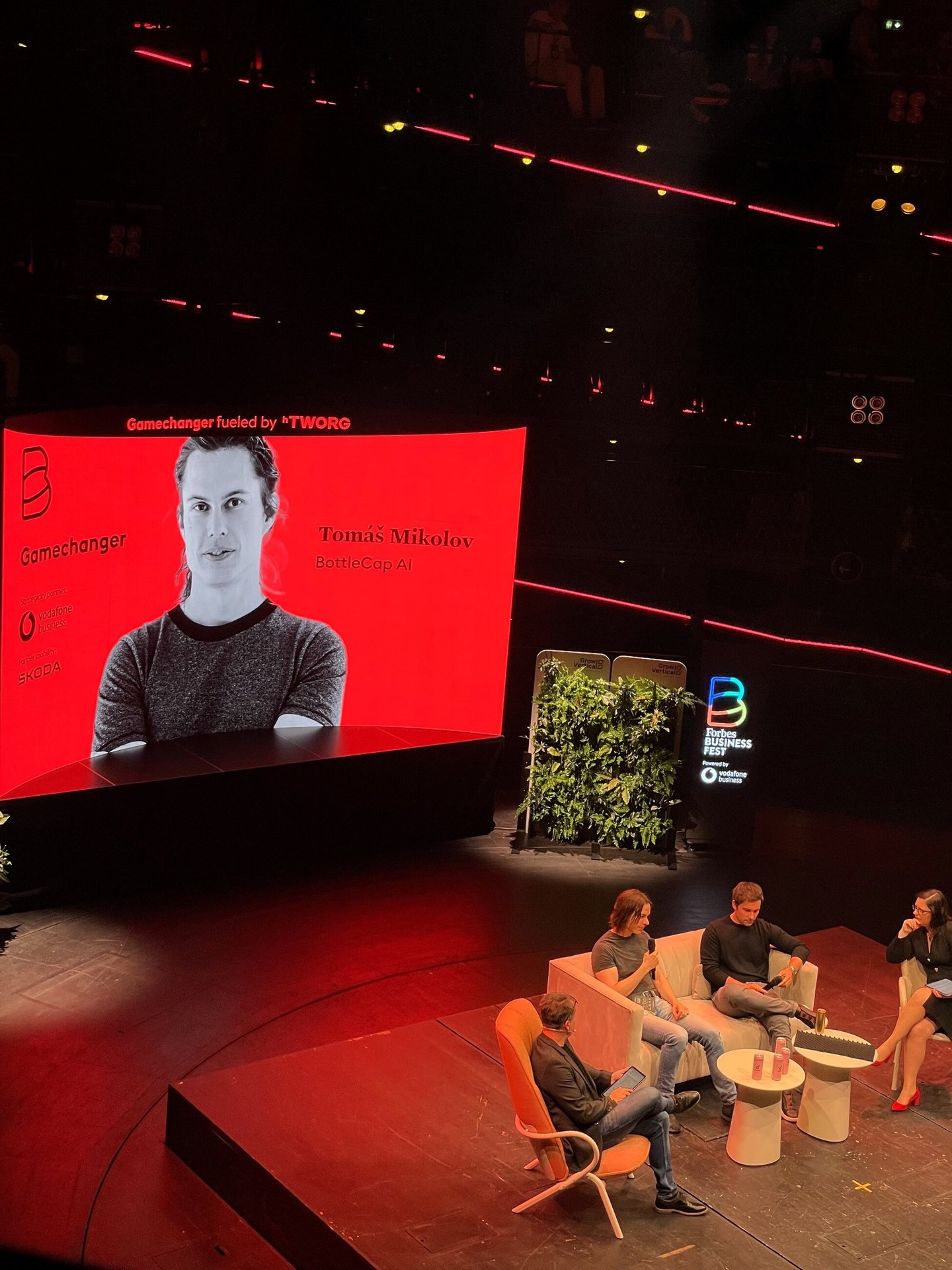
What does Vašek plan next? "Now for the summer, if it works out, I'm going to Philadelphia to the University of Pennsylvania (UPenn), and in the future I would definitely like to live in America." And would he recommend that the Czech Republic support its talents? "In my view it is important not to put students down even when they are not good at something in some other subject, and at the same time to give them room to have time to work on their own things," shared Václav Knapp, whose role model, besides Feynman, is also Demis Hassabis, the CEO of Google Deepmind. Incidentally, the Czech scientist Tomáš Mikolov, a laureate of the 2018 Neuron Award, worked at Google, as did the visionary entrepreneur Jaroslav Beck, a patron of Neuron; both of them also appeared in the morning programme of Forbes Business Fest 2026, as can be seen in the pictures above.