MF DNES: Michal Vališka's journey to the secret of ultrapure crystals
20 May 2026
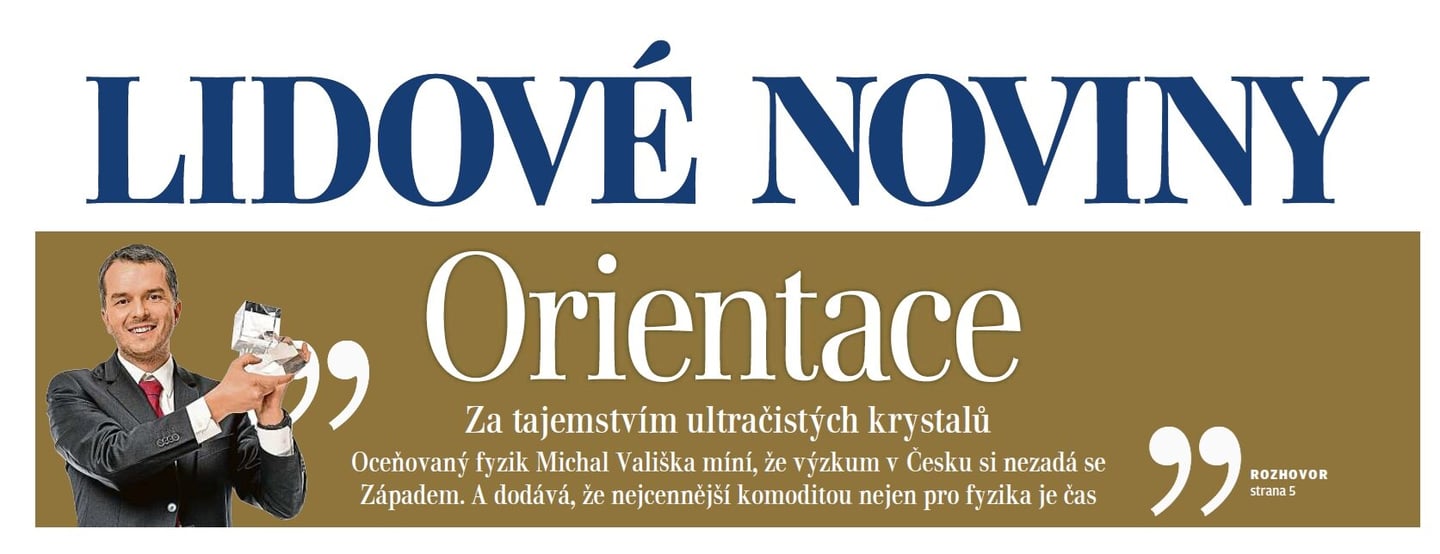
In its LN Orientace supplement, the daily MF DNES published an interview with the physicist Michal Vališka about his path through life, his studies in Grenoble, crystals and new discoveries, and about why his children were pleased about the Neuron Award. "Unconventional superconductors such as the compound UTe2 can create special states that could be suitable for quantum computers," says this award-winning physicist from the Faculty of Mathematics and Physics, who received the Neuron Award for outstanding young scientists in January. Read extracts from the extensive interview, the whole of which is also available online at Lidovky.cz.
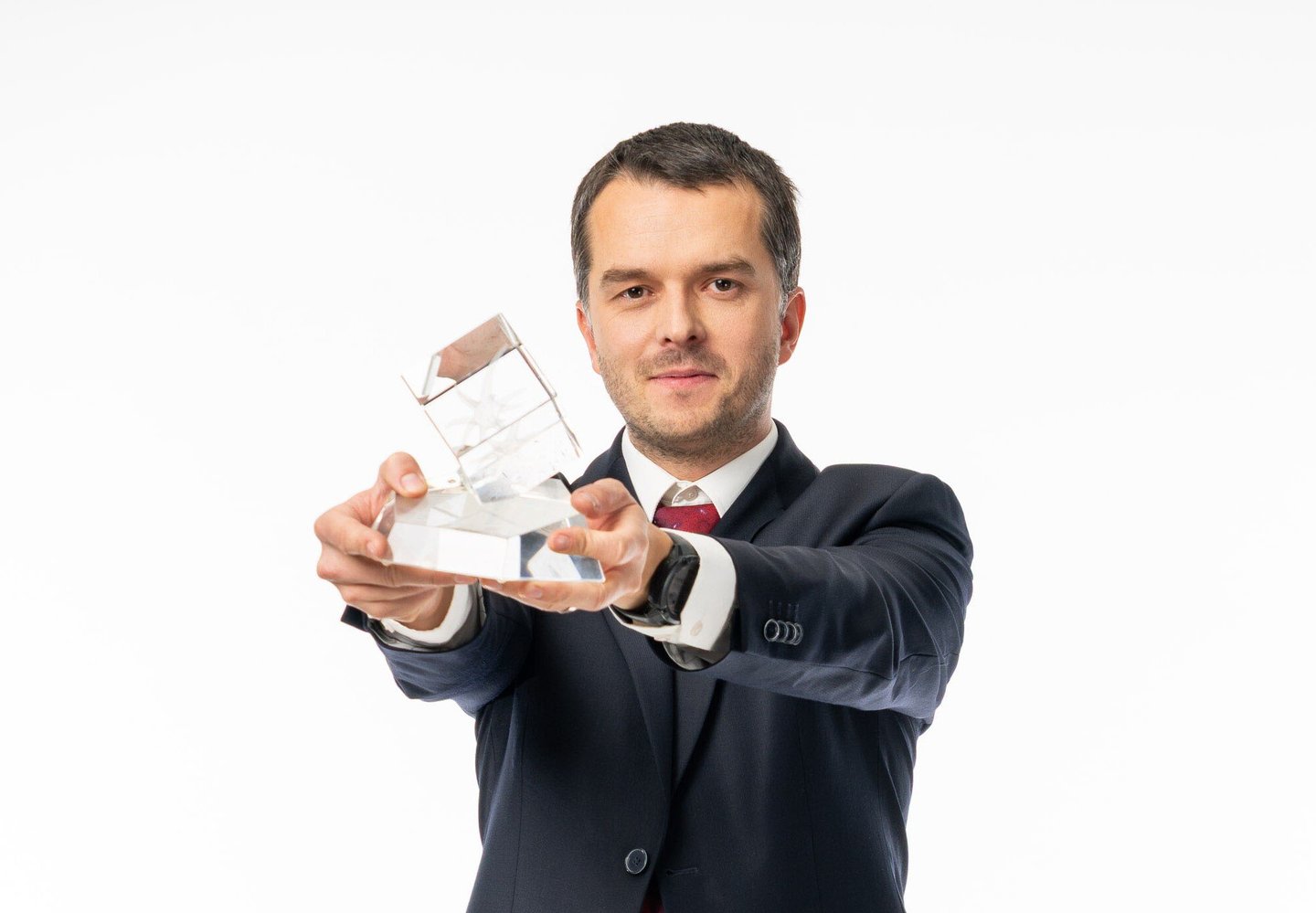
At the Planetarium during the presentation of the Neuron Awards for outstanding scientists, I was struck by a photograph on the walls in which you are holding a drill and saying that at home — where you are raising four children — you are always tinkering with something. How is physics useful in everyday life?
It is useful, sometimes perhaps dangerously so. You end up feeling that you understand some things well enough that you would rather do them yourself. With electricity, though, you should not take it on alone. But I do get the urge, since we manage things at work, don't we.
It has long seemed to me that physicists tend to be practical people. Am I wrong?
You have to distinguish between experimental and theoretical physicists. There are exceptions on both sides, but it is true that experimental physicists tend to be handy. In our field we really do grind, cut, drill, use welding equipment and so on. Our work is very manual and it probably carries over into everyday life. We are used to doing things with our hands.
Did you already take things apart as a child?
Definitely. I was a fan of various construction sets, especially Merkur. I made electrical kits, built circuits and soldered them. I enjoyed taking things apart and examining how and why they work. I enjoyed putting them back together rather less. But sometimes I managed even that.
You also excelled in knowledge olympiads, though. Were you a curious child?
At the eight-year grammar school in Turnov I was lucky to have superb teachers who motivated us to take part in various olympiads. I was heading more towards technical fields. When I applied to the Faculty of Mathematics and Physics I briefly considered mathematics too. In the end I chose physics, because I had previously reached the national round of the olympiad in it.
Since you mention Turnov, the company Crytur comes to mind, which works with single crystals; the US Navy was once interested too. Did Turnov's tradition of crystal production influence you?
Enormously. My mother worked at a company called Monokrystaly; after the revolution it was part of Preciosa and after 1998 it became today's Crytur. So my mum studied crystals on the premises where the company is based today. Looking back, it is astonishing how many things I heard about in childhood! Methods of preparing crystals that we use today, for instance, such as the Czochralski method. It was probably predestined. And when I did holiday jobs helping bricklayers while at grammar school, we worked for a while on renovating that very building. I used to joke that I had stood at its "foundations".
Did you prepare any crystals at home before your school-leaving exams?
The basic ones from copper sulphate. We do that at home with the children today. They enjoy it, because their idea of a crystal is something colourful, transparent, almost a jewel. Our crystals are in that sense a little duller. When I show someone one of our crystals they are often disappointed.
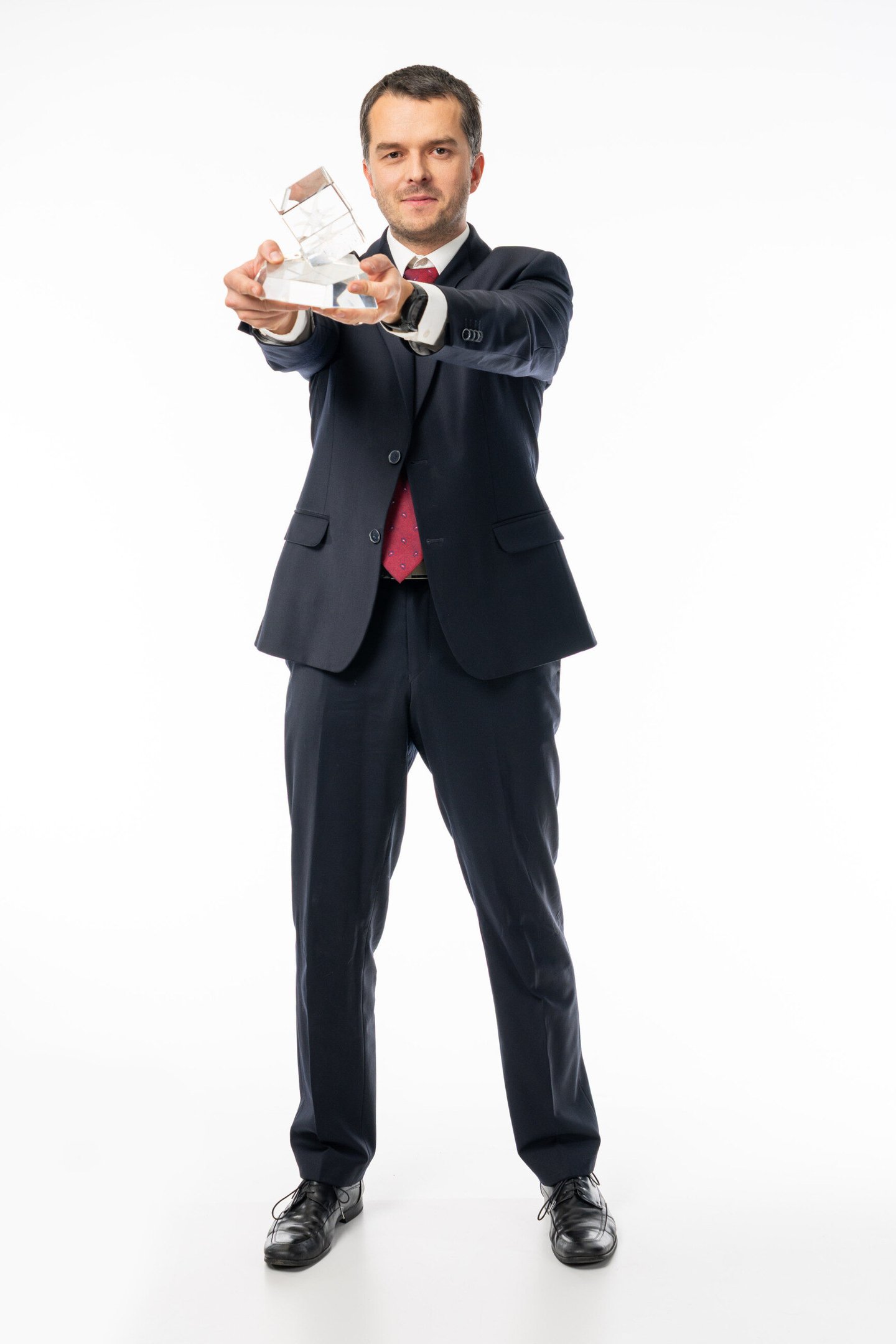
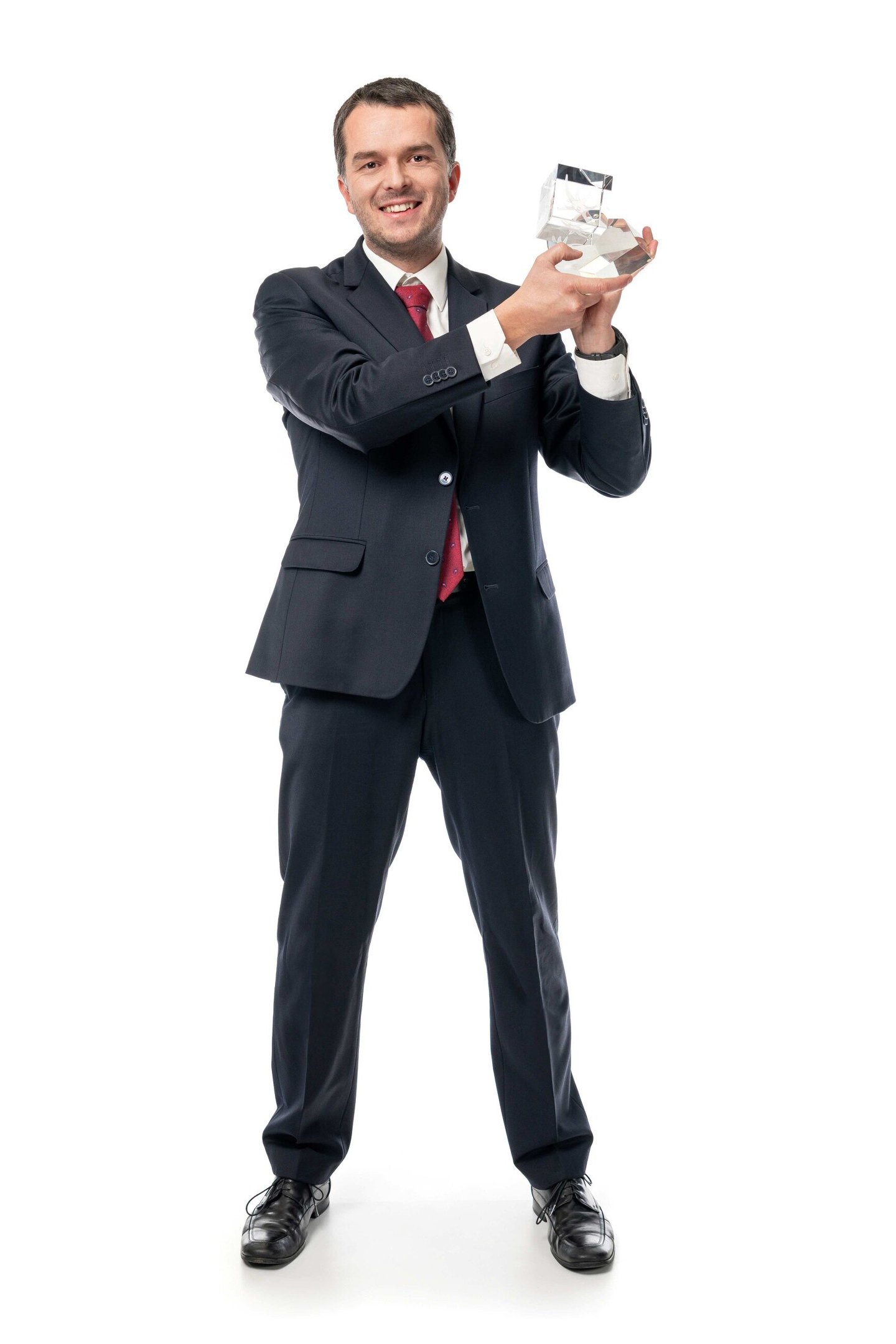
You produce them here at the Faculty of Mathematics and Physics. Did crystals interest you as soon as you started studying?
It was a series of coincidences that have accompanied me all my life. Even before the first semester began there was an open day at the faculty in the Ke Karlovu building. It was already late and there were only arrows stuck on the walls showing where to go for the tours. I wandered the corridors and finally ended up exactly here, in the part of the building where I work today. A current colleague of mine was there, already gathering up things after the tour. But he took me under his wing and drew me in. And another coincidence came during physics practicals in my bachelor's.
There was one rather complicated task, but a friend of mine had done it a week before me, so he told me exactly what to do and how. I was superbly prepared for it and, thanks to the information from him, gave the impression that I understood it. The teacher, now a colleague, who supervised the task in the practical, immediately said to me: "Come to our department, you will make crystals."
And you have been making them ever since. After a diploma thesis on superconductivity and magnetism in uranium compounds in general, you headed for Grenoble. Why there?
That was during my doctoral studies. There was an exchange programme between the Institut Laue-Langevin (ILL) in Grenoble and the Faculty of Mathematics and Physics, so I spent a year there. I had already been going there for neutron experiments. Paradoxically the reactor was shut down for about five months, so I did not do many experiments. I was rather writing my dissertation, processing data and talking with colleagues. I was there with my family by then, with my wife and our first daughter, still small at the time (…)
What does your team look like today?
It is not large; four or five people, if I include students. It is important to say that when I was in Grenoble I had nothing at all to do with crystal growth. When I came back it seemed natural to try preparing them, because our department has a tradition in it. And through Japanese colleagues we came upon a recipe for preparing ultrapure crystals. My student Andrej Cabala began adapting and improving it so that we now produce some of the best UTe2 crystals in the world.
When you "cook" them so superbly in Prague, what do you find out from them?
Because we have markedly improved their purity, it has become possible to observe more detailed properties of superconductivity that remain hidden in lower-quality crystals. We have got almost to the limit with purity. The enormous advantage of unconventional superconductors such as UTe2 is that the electrons in them are arranged differently from those in ordinary superconductors. Thanks to that they withstand very high magnetic fields and can create special states that could be suitable for quantum computers. Our task is to select and characterise materials and offer them to others who can build some specific device from them.
Your life is bound up with crystals. Where did you put the crystal Neuron Award at home?
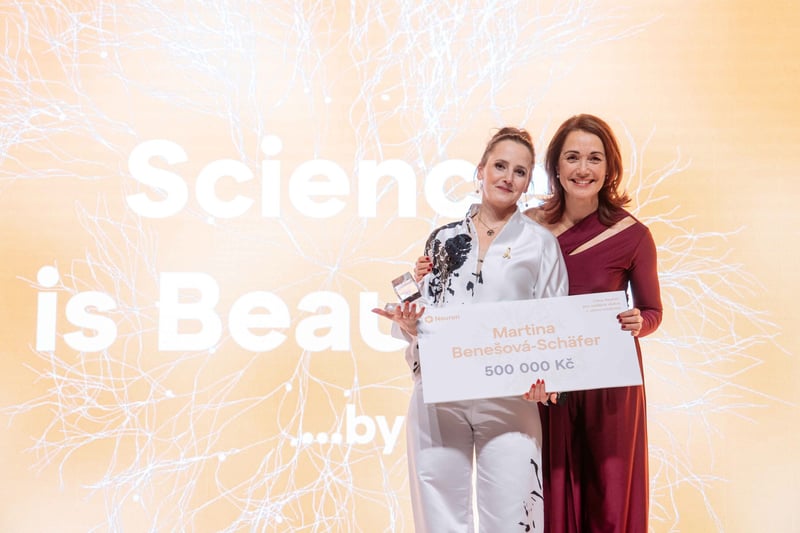
We have it in the living room on a shelf, surrounded by the children's cups and trophies from races. The children have not broken it yet. They played with it and wanted to take it to school, but I told them we might end up with lots of little crystals instead of one award… But at home they praised me. They still play with the symbolic cheque; it is a hard board they run toy cars along. They probably enjoy that even more than the award itself.
Abridged. The full version appeared in the print edition of MF DNES / LN Orientace on 16 May 2026, p. 19, online at Lidovky.cz