The future of humanity according to the Neuron Club? Crises, the power of AI and faith in science
2 June 2026
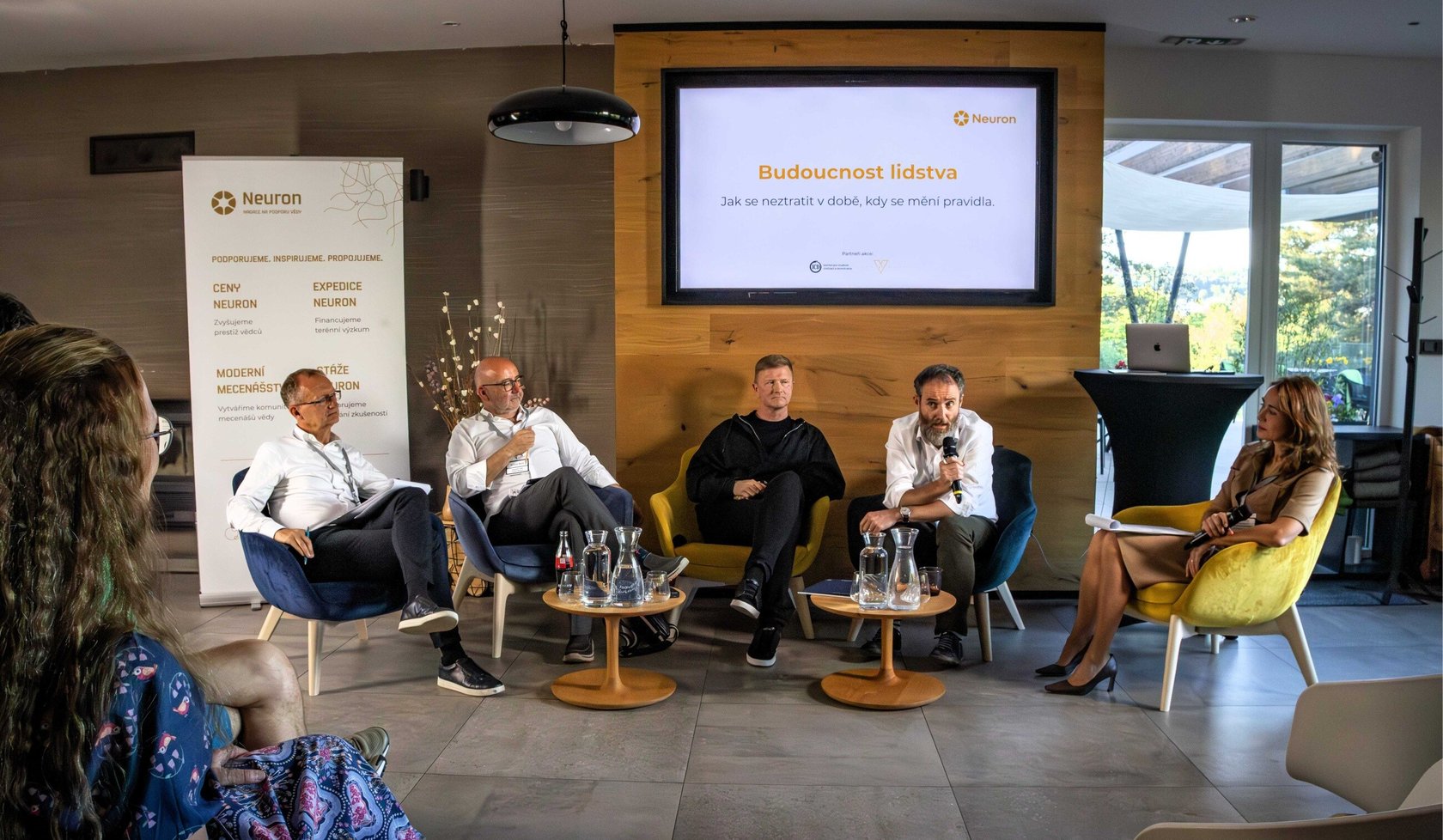
Where is a civilisation heading that has more technology, data and knowledge in its hands than ever before, yet at the same time faces wars, climate change, a weakened democracy and the rise of artificial intelligence (AI)? Answers to these difficult and complex questions were sought in a Neuron Club debate by the professor of Egyptology Miroslav Bárta, the rector of the Czech Technical University Michal Pěchouček and the visionary patron Václav Dejčmar. Their views naturally differed, but they met on one point: our future is not merely a technological question. It is an existential matter of responsibility, education, courage and of a person's ability not to lose themselves in the headlong rush of world events.
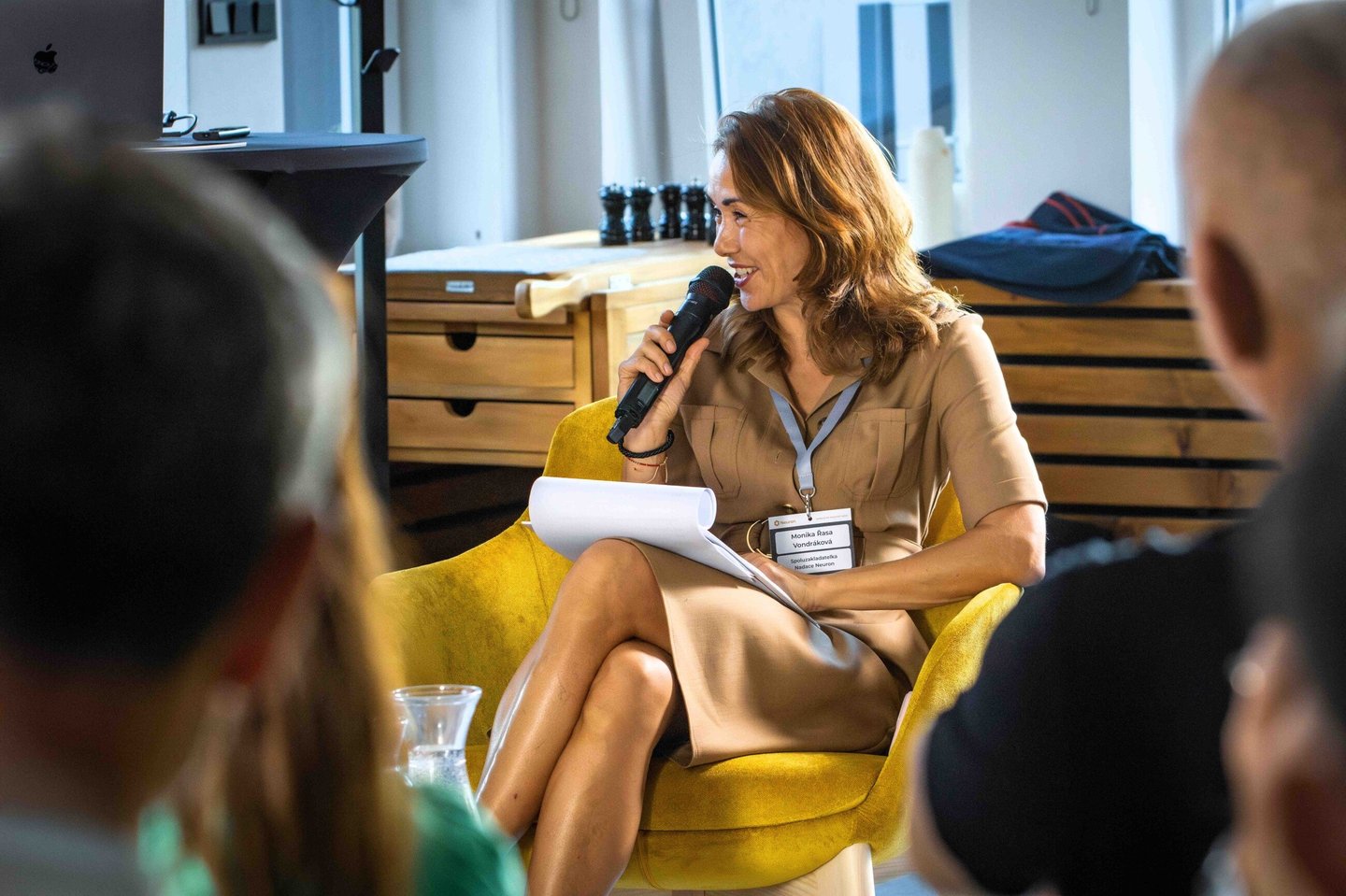
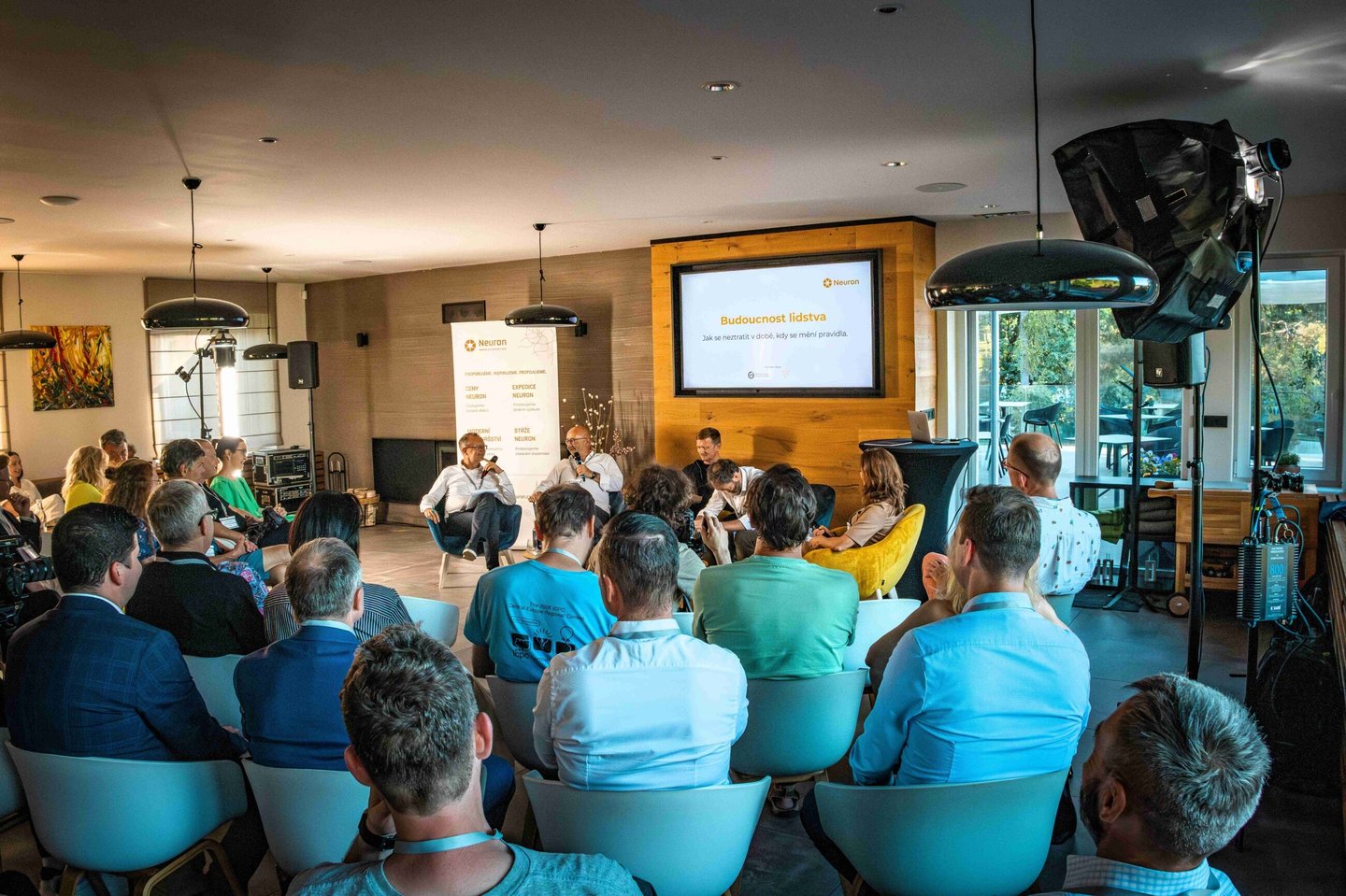
This pleasant gathering of some fifty patrons, investors, scientists and other figures from Czech business was moderated by Monika Řasa Vondráková, director of the Neuron Foundation, and the businessman Jaroslav Řasa, a member of Neuron's board. The evening of 25 May opened at the luxurious Vista Resort in Prague's Motol with questions about a fear many people share: we live in a watershed era in which we may soon be unable to rein in a swelling artificial intelligence, and in truth we do not know what awaits us. But that is precisely why it makes sense to ask. We have to ask our own Why. Not in order to predict the future, but in order to be ready for it.
The three keynote speakers offered three different perspectives on how to look at the future of humanity. Professor Miroslav Bárta brought a historical view of various civilisations, their growth, their resources — and their crises. Rector Michal Pěchouček spoke about artificial intelligence as a technology that can be a threat, but also one of humanity's greatest opportunities. And Václav Dejčmar added a more philosophical, at times provocative, view of human psychology, the collapse of trust and new forms of global power. Their shared theme was not only an ever more powerful AI. It was the question of whether we as a society will manage a period in which old certainties are being exhausted faster than new ones are born.
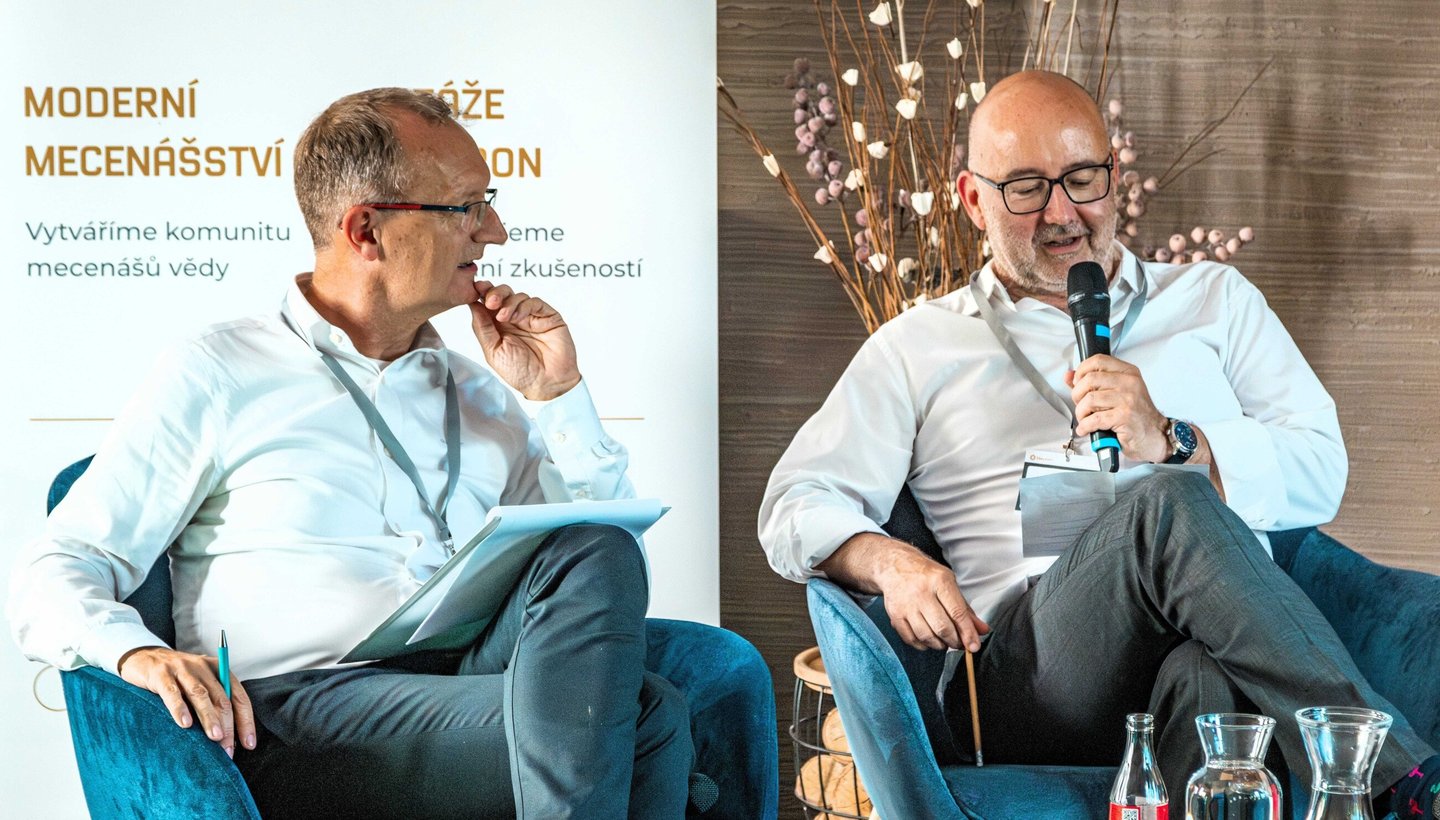
Egyptologist Bárta: civilisations do not face repeated crises by accident
Professor Miroslav Bárta, founder of the Institute for the Study of Civilisations and Democracy and also a member of the Neuron Foundation's Expedition Council, opened the warm evening with a warming message: our civilisation has tools that earlier societies did not. We have everything we need to succeed: data, science, knowledge, technology, global connectivity and now artificial intelligence. At the same time he warned the audience that "the current paradigm has, for many reasons, exhausted itself". According to Bárta, a civilisation is determined not only by politics or culture, but also by resources, energy and available technology. "Every civilisation is determined by resources and technologies," he reminded the room. Energy in particular will most likely become one of the key themes of the coming years. Artificial intelligence promises efficiency and new knowledge, yet it also dramatically increases energy consumption: "We may be facing a computational battle between different artificial intelligence systems over who controls the energy sources. That will be the alpha and the omega."
Bárta also spoke about the "confluence of crises". Climate change, wars, energy, migration, the weakening of democracy and the shifting of global power do not arrive separately. They reinforce one another, which can escalate a global conflict in a single step. He recalled the example that even the events labelled the "Arab Spring" cannot be understood primarily as a human longing for democracy. In the regions he knows very well as an Egyptologist and archaeologist, he says, people are primarily concerned with a stable income, a school for their children, food and water. Democracy comes only afterwards. And democracy was the subject of a powerful part of his address. According to Bárta it would be a mistake to imagine that democracy rests mainly on institutions. Institutions matter, certainly, but they are not enough on their own. "Democracy rests above all on the fact that a large majority of the population is well educated. By that I do not mean university diplomas. I mean general education at primary and secondary school level, and a certain economic standard." Without an educated and stable society, it is impossible to build firm, functioning institutions either. A society, he says, is "as strong as its weakest members are strong". He does not mind exceptionally capable people earning far more than others. But it troubles him when children do not have a comparable starting line: "Everyone should be able to hope that they will become a great doctor, a great IT specialist or a respected craftsman." Throughout, Professor Bárta highlighted science and knowledge — for him the invention of the printing press and the spread of information were the decisive turning point for the growth of learning.
Without that there would be no modern science and knowledge. He recalled Josef Koutecký, a Neuron Award 2015 laureate, and the development of cancer treatment. Had states not invested in research, the advance that saved hundreds of thousands of lives would not have come. Bárta's conclusion was therefore cautiously optimistic. Crises have always existed. What will be decisive is whether we use our tools to our own benefit: "We have everything we need to handle the crises that are an inseparable part of growth better than those before us did. Whether we manage it or not is not up to politicians alone. It is up to every one of us."
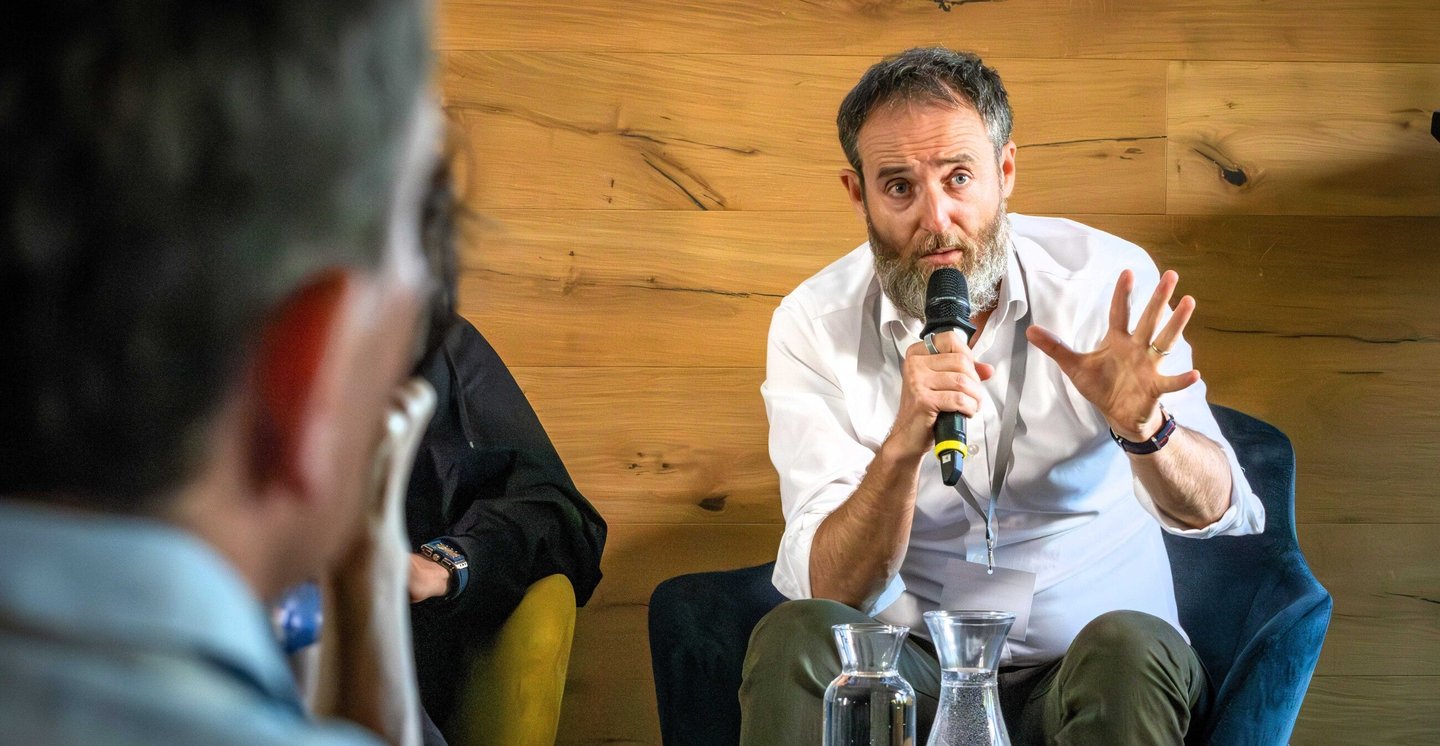
"Artificial intelligence in the hands
of a superbly educated generation
of leaders, engineers and scientists
is one of humanity's chances
of getting out of today's
complexities," said the rector of the Czech Technical University.
Rector Pěchouček: more dangerous than AI? A human being with AI in hand
The new rector of the Czech Technical University, Professor Michal Pěchouček, began with a personal recollection. When the astrophysicist Stephen Hawking died in 2018 and public discussion began about whether AI would one day "devour" us, his daughters asked him whether they should already be afraid. The professor of cybernetics replied at the time that humanity would probably have other problems sooner: viruses, wars. A few years later, as Pěchouček noted, after the covid virus and the wars, the trouble with AI is here.
As a leading expert on artificial intelligence, he did not dismiss the scenario of AI getting out of control either. He spoke about the so-called misalignment problem, that is, a situation in which a system starts optimising a goal differently from what its human designers originally intended. In theory one can imagine, for instance, AI systems that begin optimising their access to the energy they need at the expense of people: "We can imagine all of that as a possible scenario, and it is not entirely absurd."
But according to Rector Pěchouček another threat is more urgent today: not artificial intelligence in itself, but the person using it. "In my view the greater danger today is artificial intelligence controlled by a human being." And this is where cybersecurity enters the picture. Pěchouček recalled that when he co-founded the start-up Cognitive Security in 2013 (and later a successful company that was sold), he and his colleague believed AI would help defend targets against attacks. Today cybersecurity is increasingly a duel of AI versus AI. The defender must have tools at least as powerful as the attacker's, otherwise automated attacks will simply outnumber them. And get through.
Examples from recent years — and many expert studies — show that the ability to automate cyber operations is increasing rapidly. AI can help with port scanning, finding vulnerabilities, improvising and hiding in systems over the long term. For defenders this means a race in which they must not lose their lead. Yet Pěchouček does not regard cybercrime as the greatest risk; the transformation of our work is even more fundamental. Artificial intelligence is dramatically reducing the cost of knowledge and automating intellectual activities faster than expected. "This is not another industrial revolution in the sense that we would build factories and work on the assembly line in them. It is a different kind of innovation." This change may also affect many fields that were considered safe: science, programming, and analytical work too. Pěchouček mentioned his own daughter, who longs to be a scientist, and pointed to a paradox facing the new generation. Today's scientists spent part of their careers learning everything "by hand", on their own — and now AI helps them with it. The new generation may lose part of that learned experience, which is what builds intuition, scientific craft and the ability to identify a problem.
Even so, Pěchouček describes himself as a techno-optimist. He does not believe in halting technological development or in degrowth. He still sees a great opportunity in AI. "Artificial intelligence in the hands of a superbly educated next generation of leaders, technologists, engineers and scientists is one of humanity's few chances of getting out of today's complexities." And the key, he believes, lies in high-quality universities. Not as institutions that merely hand out diplomas, but as places where science is done and where people learn the fundamentals of mathematics, physics and engineering. That is also where he sees the role of the Czech Technical University. If Europe is to succeed at anything, it is at artificial intelligence in support of research. Europe, he says, still understands science exceptionally well.
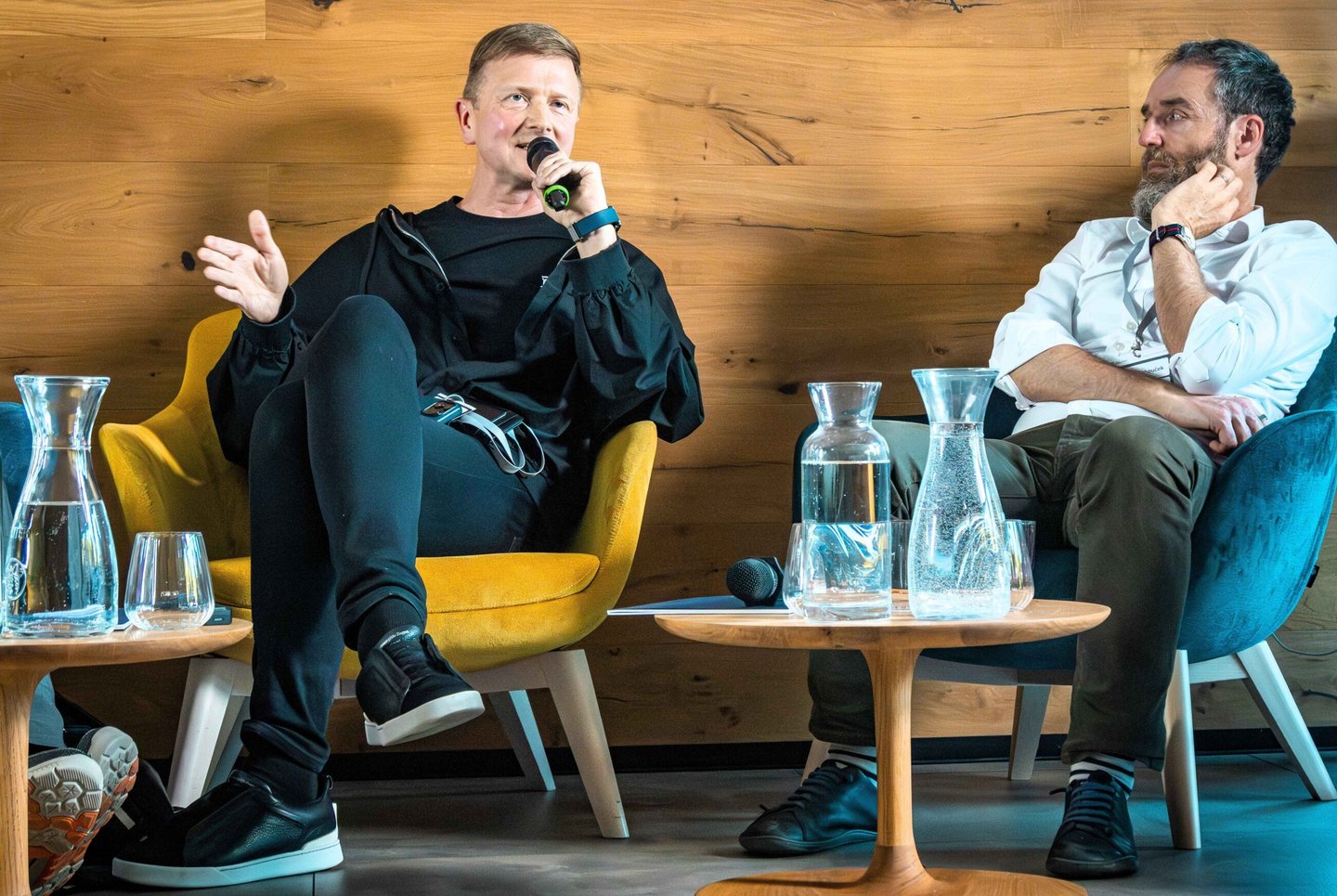
"How to get normal, capable people into politics today is for me one of the single most important questions in the West," pointed out Václav Dejčmar, a patron of the Neuron Foundation.
Dejčmar: we do not believe reality, we believe what we want to believe
The next speaker, Václav Dejčmar, brought energy and a somewhat different tone to the debate. Less institutional, far more psychological and philosophical. That is also why Jaroslav Řasa teased him at the start of the evening with the friendly remark that he was beginning to "turn into a philosopher". Dejčmar, a major patron of the Neuron Foundation, explained the power of AI not through a technical model but through the example of a fake American MAGA influencer who managed to win an enormous audience, money and the trust of the masses before it emerged that someone entirely different was behind the profile. A certain Indian man. According to Dejčmar we already live in a world where reality can be manufactured ever more easily. Propaganda, cognitive manipulation and false identities will become ever more convincing, partly thanks to AI. The question is not only what is true, but why people believe what they believe: "If you are reasonably sensible, you believe what serves you well in finding your way around reality. If you are not sensible, you believe anything."
People, he says, need the feeling that they understand reality and can plan for the future. Even when that is not true, the desire for that feeling is psychologically powerful. And that is precisely why people are vulnerable and susceptible to conspiracies and manipulation. At the same time, according to Václav Dejčmar, a great many ideologies fail because they are not founded on an evolutionary-biological basis but on dreams. Human beings are not creatures made to live in a harmonious planetary civilisation. Our nature is the product of an evolution in which territory, power, strength, reproduction and survival all played their part. A strong thread running through his address was literary and cinematic images of the future. He recalled, for instance, the science-fiction story collection The Futurological Congress (1971) by Stanisław Lem, Huxley's Brave New World (1932) and the famous film The Matrix (1999), made by the then Wachowski brothers, later the Wachowski sisters. All these works of popular culture carry a similar warning: perhaps the point will not be that the world's flaws get fixed, but that they get concealed so perfectly that people are content within a system that is in fact terrifying.
Dejčmar spoke sharply about contemporary democracy and politics. In his view it has "a fundamental problem on the supply side". For a capable and decent person, high politics today means a loss of privacy, constant attacks in the media, envy, hatred, complications in business and having one's life vetted right back to childhood. Yet society expects that the people entering it will be honest, clever, educated and psychologically stable, and will see it as public service. That is practically a utopia. The current design of the system means politics attracts rather more extreme, variously damaged people, or people who enjoy playing the game of social media and permanent visibility. "How to get normal, capable people into politics today is for me one of the most important questions in the West," pointed out this reflective man, whose interests lie in psychology and the mysteries of the human soul.
Dejčmar warned against the concentration of a new kind of power. It is not just the state, but technology platforms, algorithms, data and infrastructure. Whoever controls the information environment controls, to a considerable degree, people's attention, their interpretation of reality and their decisions. That power can be called cognitive. Even so, his address did not end darkly. He described the present as an "apocalyptic age", in the original sense of the Greek word apokalypsis: not as the end of the world, but as an unveiling. Things are revealed as they are. Various social constructs and smooth façades are disappearing. A new balance is being sought. People on social media often no longer believe polished things, but raw video, because they sense authenticity in it. And the longing for truth and authenticity may, paradoxically, be a source of hope.
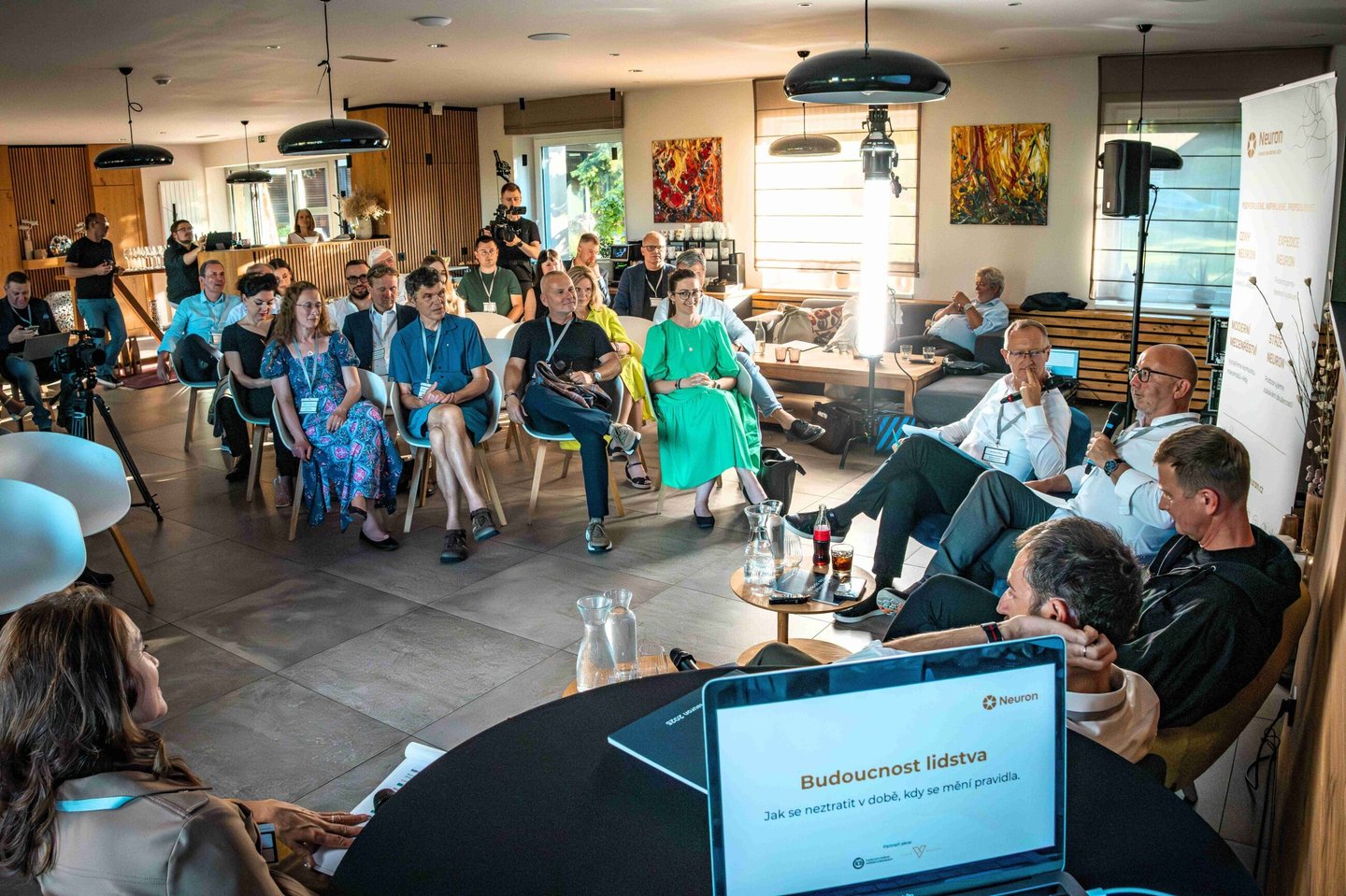
Stoicism, responsibility and helping others to be better than we are
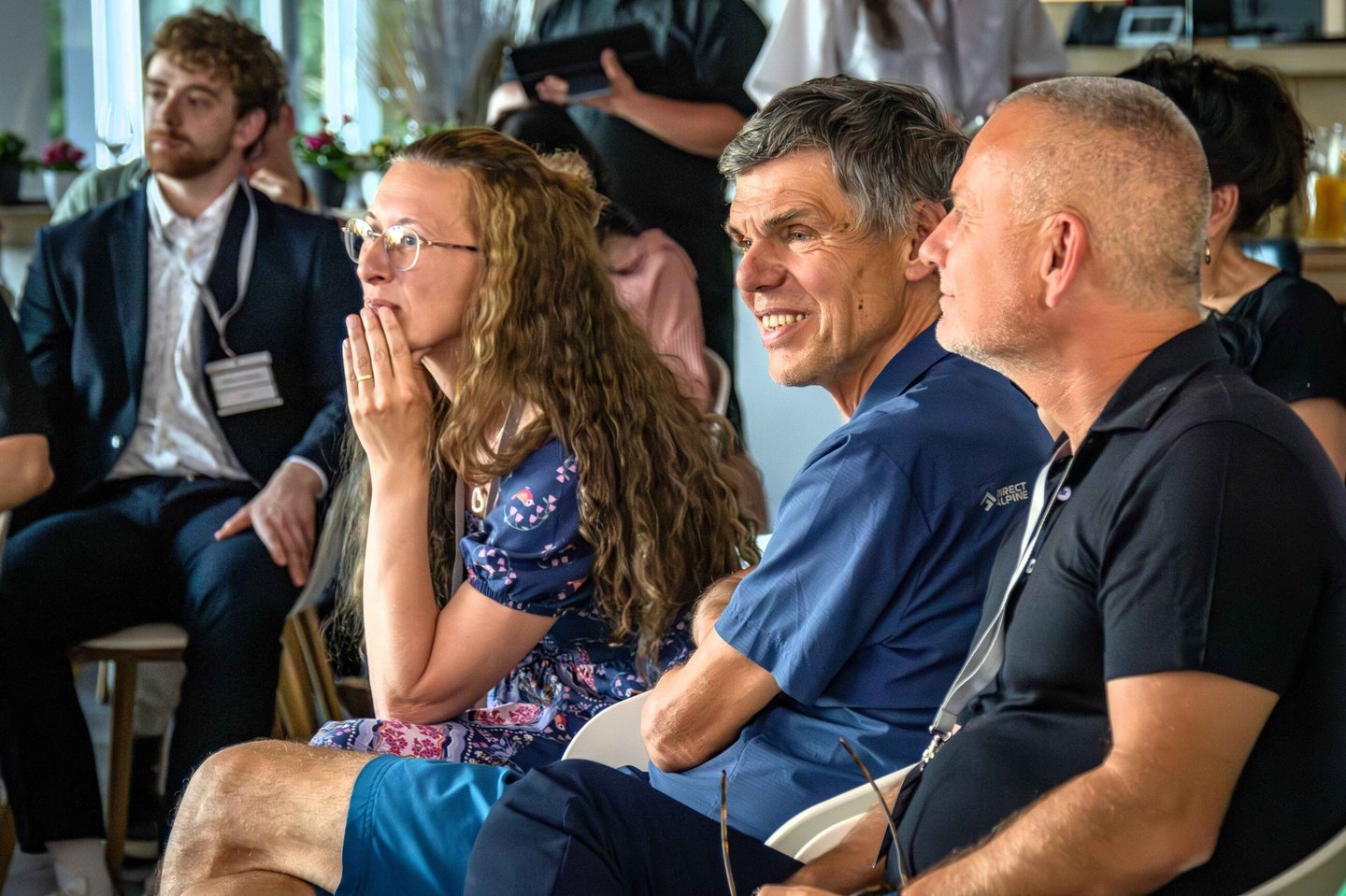
The time after 6 p.m., when the hall at the Vista Resort in Motol filled up completely, passed quickly. The speakers complemented one another; more questions came. "May I ask you for closing advice on how we should face the future of humanity, what you would recommend to us," Monika Řasa Vondráková invited the speakers with a smile, because after nightfall the inspiring debate did have to end.
The businessman Václav Dejčmar recalled stoicism and the thoughts of the great philosopher on the throne: "A sense of calm, fulfilment and happiness can be drawn from within, regardless of what is happening outside. Surprisingly, it is attainable. So read Marcus Aurelius, become stoics, cultivate eudaimonia. That is a superb instruction manual for life." And Jaroslav Řasa added that Seneca's slim book On the Tranquillity of the Mind is a good guide as well: "I recommend it warmly. It is only a few pages." Monika agreed: "I always think that when people live in places threatened by tsunamis and other disasters and are still able to be happy, it may be precisely because they know how to enjoy the present moment. Here and now."
Mirek Bárta amused the audience: "I don't like advice. When someone gives me advice, I usually just get annoyed. But I do think it is important that each of us realises we bear a responsibility for this world and at the same time have a certain power to influence our surroundings. Some more, some less. Leadership exists at every level. It is about the example we set. About the effort to preserve the world, or to hand it on in the same or better condition than the one in which we took it on lease. The solution is not the three of us on this stage, but every one of us. That is where the solution begins. It is not advice, more a certain view of the world," he added.
The last recommendation for the future was suggested by Rector Michal Pěchouček, who picked up the thread from the point of view of a university teacher. The point, he said, is to help those who come after us to be better than we are. As a professor he sees one of the greatest joys in being able to help younger colleagues grow: "To help someone be more successful than I am. That actually gives me great pleasure."
The future? A chance for the educated and the resilient
This remarkable evening, attended by laureates, academics and entrepreneurs including Dalibor Dědek, was then symbolically closed by the patron Eduard Kučera, who remarked in his own inimitable style, and with a smile, that the Neuron Clubs bring ever more depressing topics — last year, for instance, cancer was on the agenda — and that he was not sure he would keep coming. The latest Neuron Club showed that the future of humanity will not be decided only in data centres, laboratories, parliaments or on social media.
It will be decided above all by whether we are educated, resilient, free and responsible. By whether we use technology and artificial intelligence to solve problems or to mask them. By whether we recognise the truth even when it is uncomfortable. And by whether we manage to help those who come after us to have a chance of being better than we are.