Closing schools can bring children some positives too, the sociologist points out
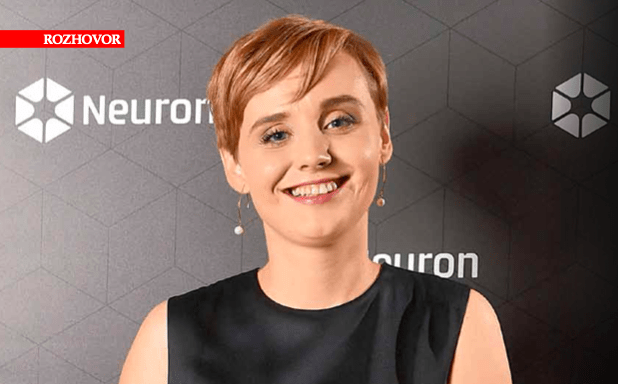
Not only lifestyle or diet. Our health is influenced by a great many other factors, many of which are not in our power. What are they? Thanks to her research, the sociologist Lucie Kalousová knows a great deal about it; her research into the relationship between social inequality and the health of the population won her the prestigious Neuron Award for young promising scientists last year. Read the interview by the journalist Veronika Tardonová.
As a sociologist you study the relationship between social inequalities and the health of the population. Do you focus more on physical or on mental health? Mental and physical health are connected, but of course within my studies I deal with physical and mental health separately. Some of my work, for instance, focused on changes in the health habits of people who had lost their jobs. I was interested in whether long-term unemployed people started to smoke, drink or take drugs more, because we have ingrained stereotypes that unemployed people start to treat their bodies worse. More educated people eat better, smoke less and are usually less exposed to stress, which counts as an invisible killer.
And was that confirmed?
It was not. On the contrary, it turned out that people who had lost their jobs drank less.
Because they had no money for alcohol?
It turned out that it is not only the economic aspect that plays a role here but the social one too. A lot of people go for a beer after work with their colleagues. When they are suddenly at home all day, they don't have a beer in front of the television.
What social aspects influence the health of the population?
Social, economic and cultural ones, and the environment we move in. What is fundamental, though, is to distinguish between population and individual health. When we talk about health, we automatically start thinking about our current state of health and about what influences it. But population health deals with more global questions. For instance, an individual approach to health would try to find out why a particular person has a tumour of the colon and rectum. The population approach, though, studies why, for example, this illness has a certain number of patients in the Czech Republic at a given moment or over some period, and so on.
Research shows that people with a university education in America live roughly ten years longer than Americans with only a basic education. What is that caused by?
More educated people eat better, smoke less and are usually less exposed to stress, which counts as an invisible killer. A person who works in unstable employment, and therefore permanently fears for their future and cannot plan their life ahead, is under far greater stress than someone who does not have to deal with existential problems. Such a person may live just as healthily as the more educated and richer one, but the unstable environment shortens their life.
Does the difference in life expectancy between educated and less educated people apply in all Western countries?
Yes, there is essentially no Western country where these differences do not exist. They are just of different sizes. For instance in the Scandinavian countries or in the Netherlands the differences are as a rule smaller than in, say, Great Britain or the United States.
What are these health inequalities caused by?
The size of these differences depends a great deal on how the social system in individual countries is oriented. For the health differences between individual social strata to be as small as possible, what matters is not only a good health system but also that all the other systems that look after how people are doing should be interconnected. So it is also necessary to have a good education system to which everyone will have access, not only the richest. That includes preschool care too. In general, then, we can say that the countries in which social inequalities are smaller are those where these sectors cooperate with one another, so that people gain firmer foundations on which they can build their lives.
Are social differences in America greater mainly because of the social system, which does not offer everyone the same opportunities?
The differences in the American health system for the poor and the rich are enormous and by no means everyone gets access to preventive care. The quality of education is fundamentally dictated by how much a person has paid for it. Things that Czechs and Central Europeans consider automatic and basic are in America only for paying customers, and that is why social inequalities there are deepening. Many people in the USA think that health is exclusively an individual responsibility and it seems unfair to them that anyone should be helped. The cultural influence is absolutely fundamental. Even when the USA was coming into being, the ethos of doing everything for oneself was apparent, and it is still reflected in the American mentality.
In Scandinavia the health differences are not so great. Is that only because of a good social system, or is the number of university graduates higher there too?
Scandinavia is known for investing heavily in basic things such as housing, health care and childcare. At the same time these are expensive states in which enormous taxes are paid so that they can afford this robust welfare state.
How is the Czech Republic doing on inequality?
Compared with some of our neighbours or with the USA, quite well, both in social and in health inequality. Research shows that people with a university education live on average longer than people with a basic education. In the USA, for instance, it is roughly ten years.
Is that still caused by communism?
To a certain extent, yes. In our society social inequality is still developing. People born after the revolution have not yet grown old, so the post-revolution health inequalities are not yet as apparent as they probably will be in the future. One of the reasons why we do not have such great health differences in the Czech Republic is also that here the richer are not so much better off healthwise than the less rich. If we look at other, above all Western countries, the differences are far more apparent. I would speculate that it is caused by smaller differences in health habits between the less and the more educated than in other countries.
And what is that caused by? Culture?
That we simply won't give up our svíčková and pork with dumplings and cabbage? It is possible. Compared with other countries, social differences here are small, so people are culturally closer to one another and there is not the social rift between them that there is in other countries. And therefore almost everyone can treat themselves to pork with dumplings and cabbage.
Compared with other Western countries there are still few university graduates in the Czech Republic. Is that also one of the reasons why health inequalities here are smaller?
It is possible. In recent years it has been improving, new universities have opened and there are more places at universities, but in the older population there are not as many university-educated people as in some other countries. Because we usually study the health of the population on samples of older people, the greater number of graduates will be reflected positively in our population health in the long term.
You have already mentioned that more educated people smoke less.
It is partly a matter of education and partly of the lower level of stress mentioned. For a lot of people smoking is a kind of valve with which they try to ward off stress. At secondary school almost everyone experiments with smoking, but whether they become a smoker or a non-smoker depends a great deal on how the rest of their life develops as far as stress is concerned. And also on whether their friends, family or colleagues at work are smokers. If a person who experimented with smoking at secondary school gets to university, where there are fewer smokers, or where there are only social smokers who light up only in company over a glass of wine, then they probably will not become smokers. Then they start work where smoking is not the done thing, and so they essentially grow out of it. But if a person moves in an environment where smoking is socially expected, then it is much harder for them to stop, even though they are aware of its negative impacts on health.
Have the relationships between social and health inequalities always been connected?
One of the most interesting aspects of the phenomenon of the relationships between population health and social inequality is that it is constantly changing. In general, though, it turns out that when some new knowledge about health appears, it is at first the richer who benefit most from it. For instance, in the 1940s and 1950s we did not know much about the causes of cardiovascular disease, and therefore these diseases affected everyone across all social strata. Among the richer they were even more common, because they more often had sedentary jobs and a richer diet.
In the second half of the 20th century, though, scientists brought new findings and, with them, advice on how to prevent these diseases. At that time differences also began to appear in the social groups these diseases affected more often. Today cardiovascular diseases can be monitored very well and can be prevented. But control is far better among richer people, who originally had a far greater risk. What I mean to say is that social inequalities have been connected with health ever since we have had unequal living conditions, but the way they manifest themselves in our society is constantly changing.
Does that mean that the more educated and richer are the first to profit from new scientific findings, because they are more flexible and better informed?
They may be more flexible and better informed, but it is also a matter of culture. It can be assumed that their acquaintances will have this knowledge too and that they will live in a culture more focused on health.
That brings us to the influence between health and belonging to a particular social group. How great a role does it play?
The extent to which belonging to a social group plays a role here depends a great deal on the extent to which the social advantages and disadvantages of the country we live in are bound up with a person's social status. When you live, for instance, in a country where only the richer can afford things like housing, nursery, sport and fruit and vegetables, then a lack of financial means really does affect you significantly. But when you live in a society in which essentially everyone has access to such things, then the impact is far smaller. And whether a person works in a factory or in a pleasant office need not have all that much influence on the length of their life and the illnesses they suffer from in old age.
Which health habits are passed from generation to generation?
In most countries of Western Europe and in the USA social mobility is fairly low. That means a child will probably grow up into the same social group as their parent. And along with social status they often inherit health habits too, such as the way they eat or the extent to which they consume alcohol. And for that to change we should talk more about the structural influences that prevent social mobility. As a society we should start talking more about why social position is so often inherited and whether we want it that way.
The whole world is currently dealing with the coronavirus and the economic crisis that goes with it. How do recessions show up in the health of the population?
Financial and economic crises have a fundamental influence on the health of the population. The moment you take social security away from a large number of people, it starts to be reflected in their health. It is possible that they will change their health habits and will live under greater stress. Small changes, such as starting to buy lower-quality food, are reflected in their lives quite quickly. Because people usually surround themselves with friends who have a similar education and job, it is likely that others close to them will lose their jobs too, which exposes them to still greater stress. Besides individual depression, an economic crisis can also bring social depression, which manifests itself as bad mood. One particularly dangerous aspect of economic recessions is an increased number of suicides. Stress and economic hardship are connected with a higher incidence of mental illnesses, which unfortunately may also lead to an increased number of suicides. In Greece, for instance, which was hit especially hard by the last crisis, the average suicide rate rose by 35 % between 2010 and 2012.
So is there a risk of a rise in the number of suicides today as well?
We will see how far this economic crisis develops. Unfortunately, though, one more aspect supports this hypothesis, and that is the higher level of social isolation we are all experiencing today. Social isolation is one of the significant stressors and is therefore closely connected with a worsening state of health. So it is quite possible that this economic crisis, which we are each living through separately, will in some way multiply the negative impacts on mental health and that it will be even worse than usual.
Since October children in the Czech Republic have also been isolated because of school closures; they do sense their parents' stress, but otherwise the economic crisis does not affect them so much. Will this isolation show up in their health too?
It certainly can show up in their health, but exactly how we cannot yet calculate. We have never lived through such a long-term situation before. But of course we already have hypotheses. Closing schools not only worsens the possibilities for children's social development, it also significantly worsens their parents' social possibilities, which does their psyche no good. It may happen that the care they give their children is not one hundred per cent, as it would be if the parent had the chance to rest. But there is also a hypothesis that is actually positive. We assume that for some adolescents the first experiments with cigarettes and alcohol will be postponed, because they will have less contact with their peers. It is important to realise that every child is different and that, although most of them lack social contact, there are children who suffer at school because of bullying. It is possible that some time out of school will benefit these children too. It is certainly necessary to reckon, though, with the fact that children usually do not learn very much at home. The children of parents with a lower education will be more disadvantaged by closed schools. A new study of the influence of closed schools on children's knowledge at Dutch primary schools pointed out that their knowledge worsened significantly. The children of parents with a lower education had 55 % worse results than the children of graduates. So it is possible that closing schools will contribute in the long term to greater social inequalities.
Can recessions and crises bring some positives for anyone besides teenagers?
In recessions people drive less, so there are fewer car accidents, and because operations in factories are limited, the air is far better. That showed up in Los Angeles too during the first lockdown in March. For a long time they had been fighting polluted air, and suddenly it was beautiful everywhere. Another very interesting thing about recessions is that they have a heterogeneous effect on the health of different people in the population.
In what sense?
We expect that thanks to better air it will above all be older people who are better off, since they are especially sensitive to worsened air quality. The less people depend on the labour market, the less a recession affects them. So older people who have a stable fixed income in the form of a pension are not so stressed by an economic crisis, because it does not affect them directly, and some American studies have even shown that their life expectancy lengthens to a small degree. Other American studies show, in turn, that in times of recession social care in homes for the elderly improves. This work is usually considered not very attractive, but in a crisis this view changes and younger and better-educated people go into social services.
Because they feel solidarity? Or are they trying to find at least some job?
It would be nice if it were solidarity, but it is more the second reason. Places in social services are hard to fill because they are not attractively paid. But when there is no work, people make do with them. At that moment homes for the elderly can choose their employees and thus get more qualified staff. It is quite controversial, but some American studies really have shown that in times of economic crisis people in American retirement homes are better off, because they are better cared for there.
The interview appeared on the iDNES.cz website.