"Tomáš Mikolov: any technology can be misused"
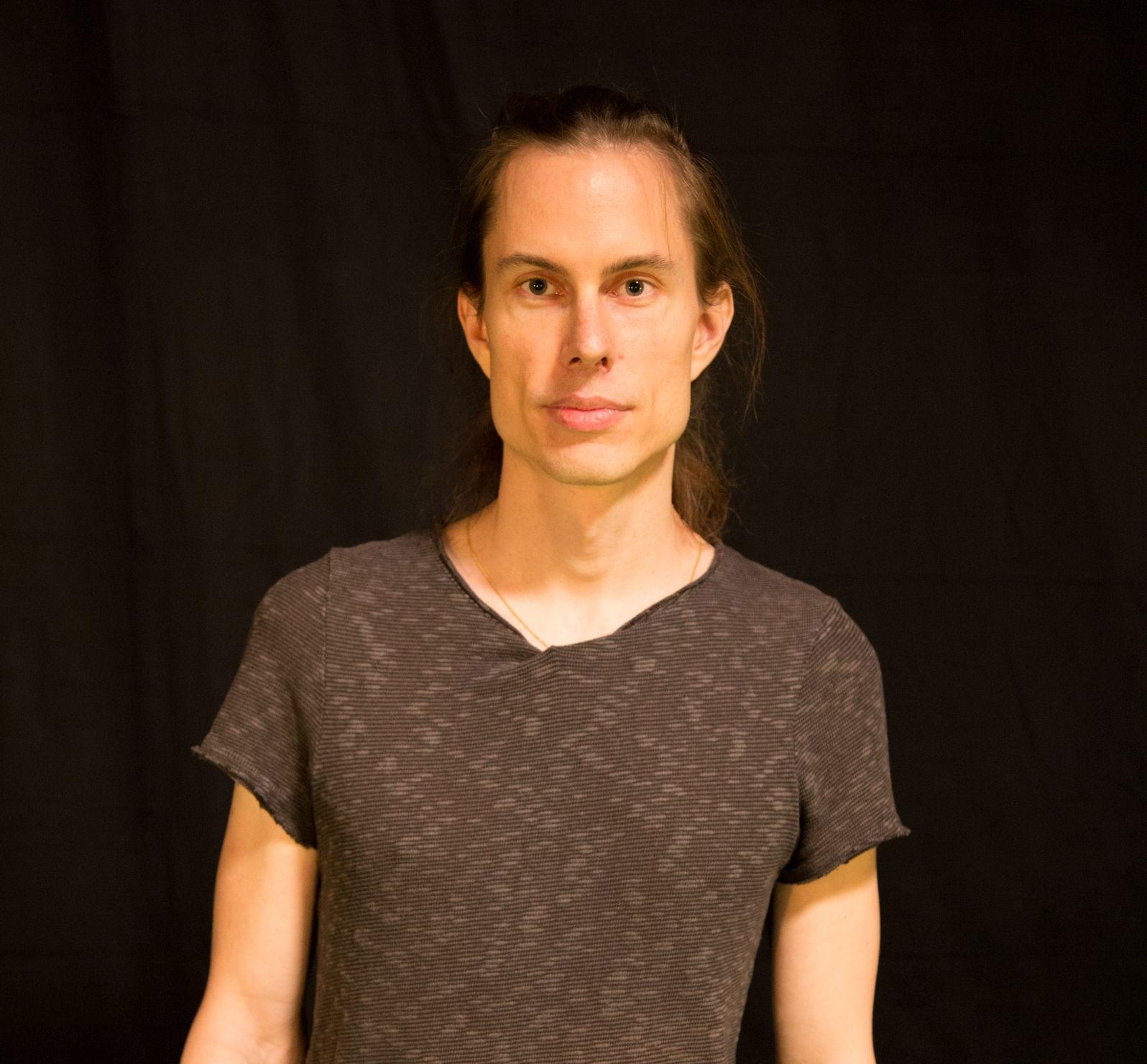
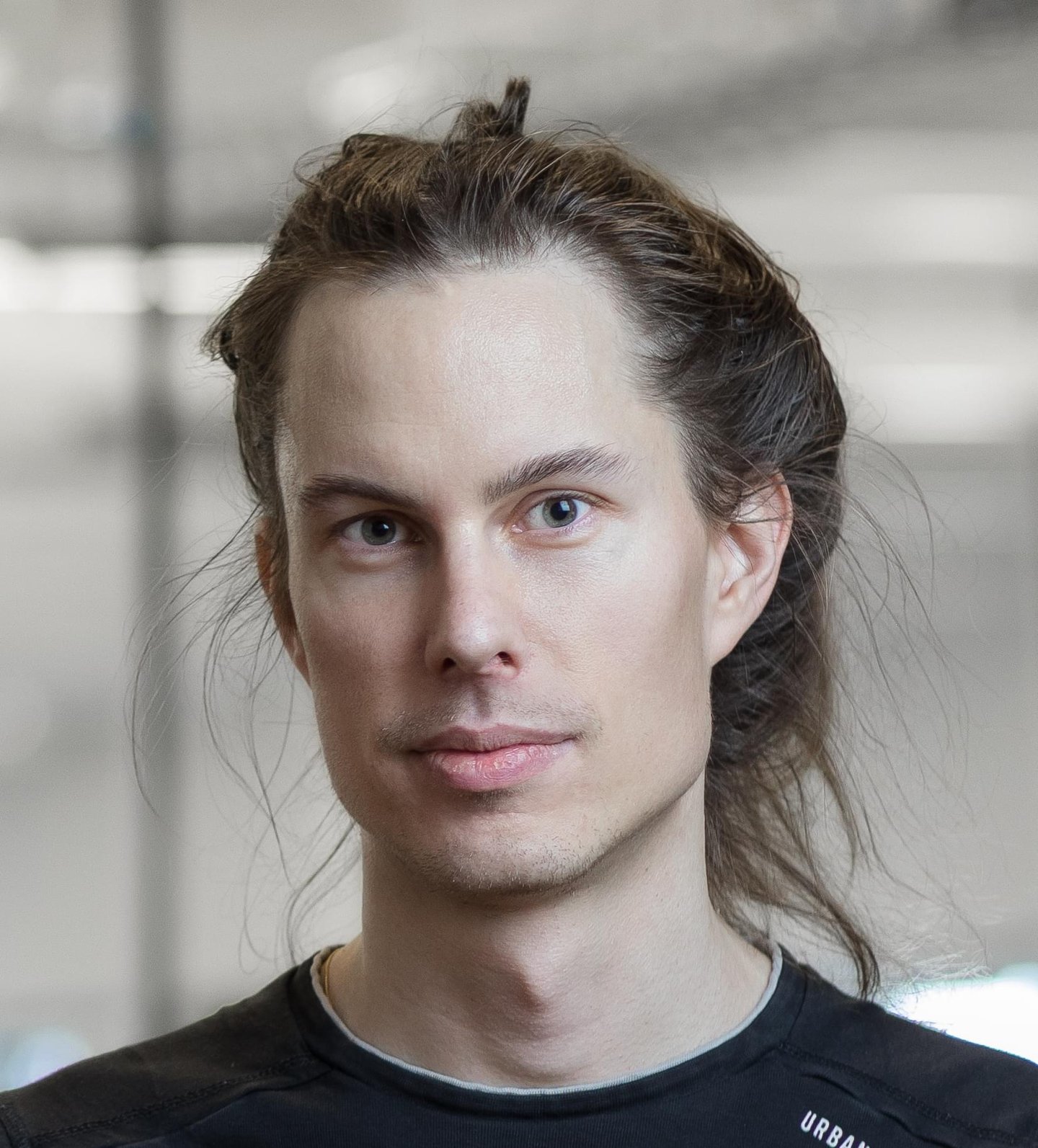
Tomáš Mikolov, a Neuron Award laureate, is one of the leading Czech experts on artificial intelligence and neural networks. Tomáš has worked for technology giants such as Google and Facebook and is one of the scientists behind the improvement of Google Translate.
While still a student, Tomáš developed language models based on recurrent neural networks and thereby brought about a turning point in his field. Recurrent neural networks can describe the structure of language far more precisely than other earlier approaches. On Facebook you asked Tomáš Mikolov about everything that interests you in the area of artificial intelligence. Read through his answers.
How do you view the problem of controlling the decision-making and behaviour of artificial intelligence and machine learning? Is it possible in some way in the future to deal with and check that software does only what it is supposed to and, in the event of an error, to find out why it made that error? Or is that something unsolvable "by design" that will remain one of the risks of using these technologies?
Explainable AI is one of the current directions of research that should lead to models where it will be clearer why they make which decisions. It is worth mentioning, however, that various declarations of the type "we have created a marvellous AI, but nobody knows how it actually works" are only marketing slogans. Scientists know absolutely precisely how their models work and, when necessary, they can find out why a particular decision was reached.
The uncertainty arises rather from the fact that in an enormous statistical model with millions of parameters it is not possible to say simply what each parameter means on its own — but you will have the same problem with complex models for forecasting the weather, say. So if you are solving a task where, say, 95 % accuracy is enough for you, then machine learning is suitable. If you need 100 % accuracy, then it is better (where possible) to use classic programming.
I am interested in the subject of AI and I am an ICT teacher. What do you think pupils should learn about this subject within basic education at primary school?
I think some of the AI approaches to solving problems could be taught within mathematics and programming as early as primary school. Examples might be simple classifiers learned from data, or say the Monte Carlo algorithm. These are not only easy to understand, they can also be applied quite well in practice.
Which area of human activity where AI is used would you tell pupils about first? Is it possible to estimate in which professions these children, who will be at work in 5 to 10 years, will (not) encounter AI?
Those who use computers in their profession will certainly encounter AI algorithms. Those may be, for example, doctors (better and more precise diagnosis and proposed treatment with the help of AI), programmers (removing spam, machine translation, recommending content), teachers (tools for personalising teaching and marking tests) and so on.
Could you describe some specific activity for primary school that you mention above and that you have experience with?
I have no experience of teaching at primary school, but I believe that Monte Carlo, for instance, is a nice algorithm that can be easily explained as early as the first stage of primary school. Alternatively, in programming lessons it is possible to use some of the AI tools for classifying images, say, or the word2vec algorithm for clustering words that occur in similar contexts (which may be interesting in Czech lessons at the second stage).
With regard to the development of technology and digitalisation (especially of state institutions), how do you view the question of security and freedom? What I have in mind is the future possibility of better state control of citizens, which on the one hand may lead to better identification of a "sinner", but in the case of badly set norms in society may then lead to a state functioning in a totalitarian way.
Any technology can be misused and, as they say, the road to hell is paved with good intentions. Even today we see that in some countries there is massive surveillance of the population with the aim of slowing the spread of the virus (before that the same thing was in the name of the fight against terrorism). The question is where that will lead in the future if we allow state institutions to maximise their power.
At present, methods of deep learning of neural networks can do marvellous things — whether it is recognising, synthesising or transforming language, images and sound. For these operations, however, an enormous amount of input training data tends to be needed. Are there any promising directions for making this learning fundamentally more efficient? Or methods for abstracting general regularities from a set of training data?
A number of scientists have long been trying to do this — it is a problem of learning/generalisation, where from the same quantity of training data we want to create models that will work better on unseen (test) data. One of the directions is incorporating models of physics (for instance in recognising images/video), but as far as I know this is still unresolved. Otherwise there are more such directions, for instance a combination of supervised and unsupervised learning, and also reinforcement learning (where we only tell the computer that it did something well or badly, but not what exactly it was supposed to do) and so on.
To what extent do you think the development of general artificial intelligence requires it to be connected with the physical world? What I mean is, for instance, whether access to an extensive database, or to the whole internet, would be enough to train it. Or whether a connection to some set of sensors and manipulators for physical interaction with the world and feedback is necessary.
Nobody today can create a general artificial intelligence (not even close), so I can only give my guess. I think a connection to our world at almost any level should be enough (that is, even access to the internet without a physical body/robot with sensors should suffice). On the other hand I think it will be non-trivial to create a general artificial intelligence that we will understand — I go into this more in the article "A Roadmap towards Machine Intelligence" from 2015.
To what extent has a solution to what is called the control problem currently been worked out? That is, the question of how to ensure that the goals of a possible general and independently learning/improving artificial intelligence remain aligned with the general interests of humanity, and that an inaccuracy or oversight in their initial setting does not lead to some unexpected negative consequences?
At present we are very far from creating autonomous AI systems. I think there are an order of magnitude more projects proposing various solutions for how to control AI than projects that could really lead to the emergence of general AI. In the article I mention above we propose creating an AI that will be very closely bound to its user, that is, in a way it will be part of us (rather as a car is in a way part of us when we sit in it and drive it).
I would be interested to know how you view the question of artificial life. What attributes should a chatbot, for instance, have for us to be able to regard it as alive?
I would perhaps regard as alive a chatbot that has (more or less) unlimited potential in what it can effectively learn (that is, at a similar speed to a human, or faster). A program of the type 'If (user_input == "Hello") print ("Hi, how are you");' I certainly do not regard as alive; and yet today's best chatbots look exactly like that, that is, like a database of preset answers with zero ability to learn or adapt.
---
Would you also like to ask scientists about what interests you? Read more about the project Ask the scientists. Is artificial intelligence a path beyond the boundaries of human thought? You will find the answer in the video from our last conference Science as the fuel of modern business. The complete discussion and the wording of the questions can be found on our FB page HERE.
CURRENTLY RUNNING — Ask the scientists: the sociologist Lucie Kalousová of the University of California
The sociologist Lucie Kalousová, a #NeuronAwards laureate, works at the University of California and studies the relationships between social inequalities and the health of the population. Ask Lucie Kalousová how the level of income, the level of education or even the neighbourhood we live in can influence population health.
You can find out more on our Facebook.
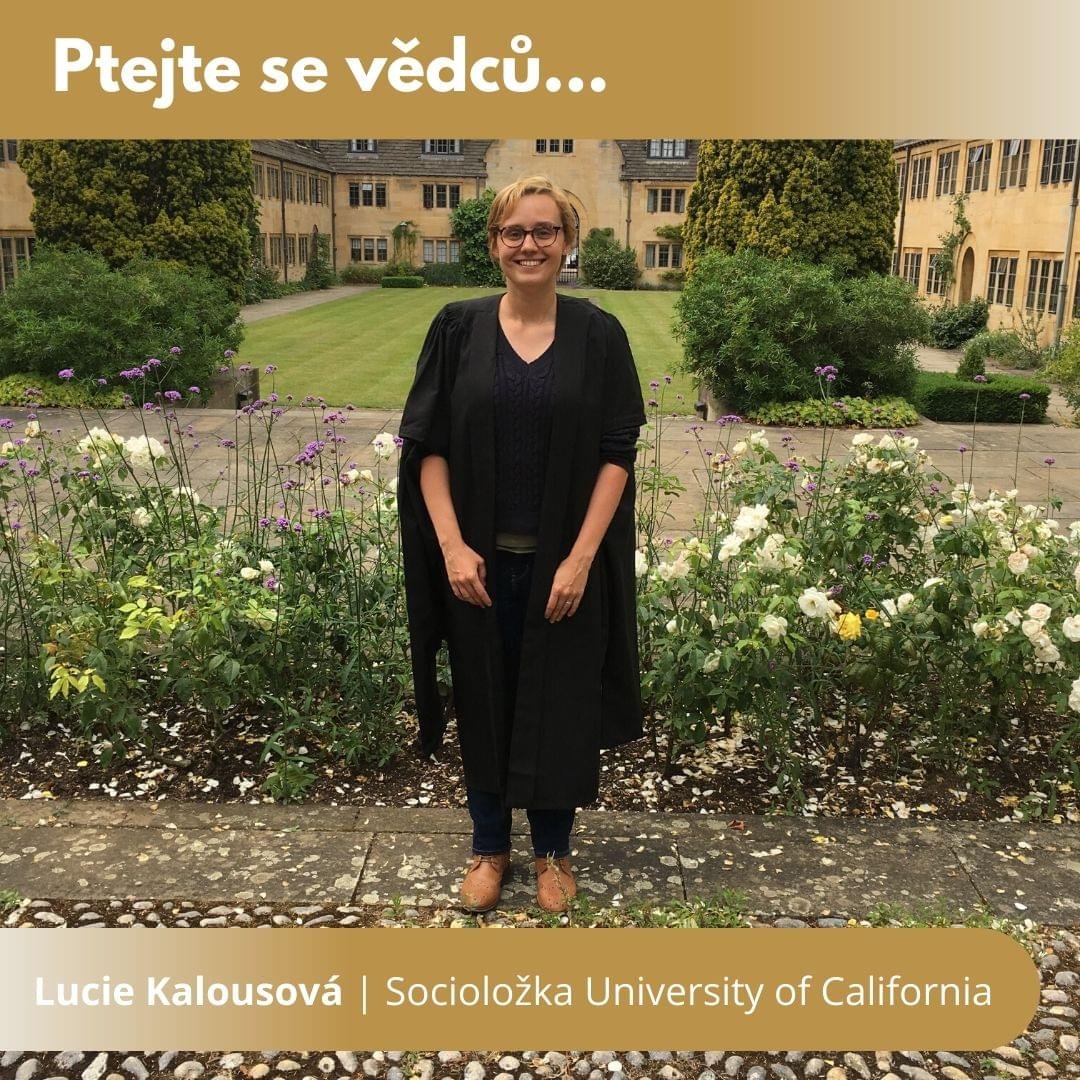
Ask Lucie Kalousová — click on the photo