Science and business together against the coronavirus
The team of associate professor Jan Konvalinka, the guarantor for chemistry on the scientific board of the Neuron Endowment Fund, has joined the fight against the coronavirus, as have research laboratories all over the country. With his colleagues he has focused on increasing testing capacity, specifically on developing new testing kits. "At the IOCB we are for now concentrating on what is probably the most critical point of the whole effort, namely isolating the viral RNA after samples are taken from patients. Put simply, in order to be able to detect the viral nucleic acid, you first have to isolate it from the sample. That is normally done with commercial kits, but there aren't any at the moment," associate professor Konvalinka explains.
The team of associate professor Jan Konvalinka, the guarantor for chemistry on the scientific board of the Neuron Endowment Fund, has joined the fight against the coronavirus, as have research laboratories all over the country. With his colleagues he has focused on increasing testing capacity, specifically on developing new testing kits. "At the IOCB we are for now concentrating on what is probably the most critical point of the whole effort, namely isolating the viral RNA after samples are taken from patients. Put simply, in order to be able to detect the viral nucleic acid, you first have to isolate it from the sample. That is normally done with commercial kits, but there aren't any at the moment," associate professor Konvalinka explains.
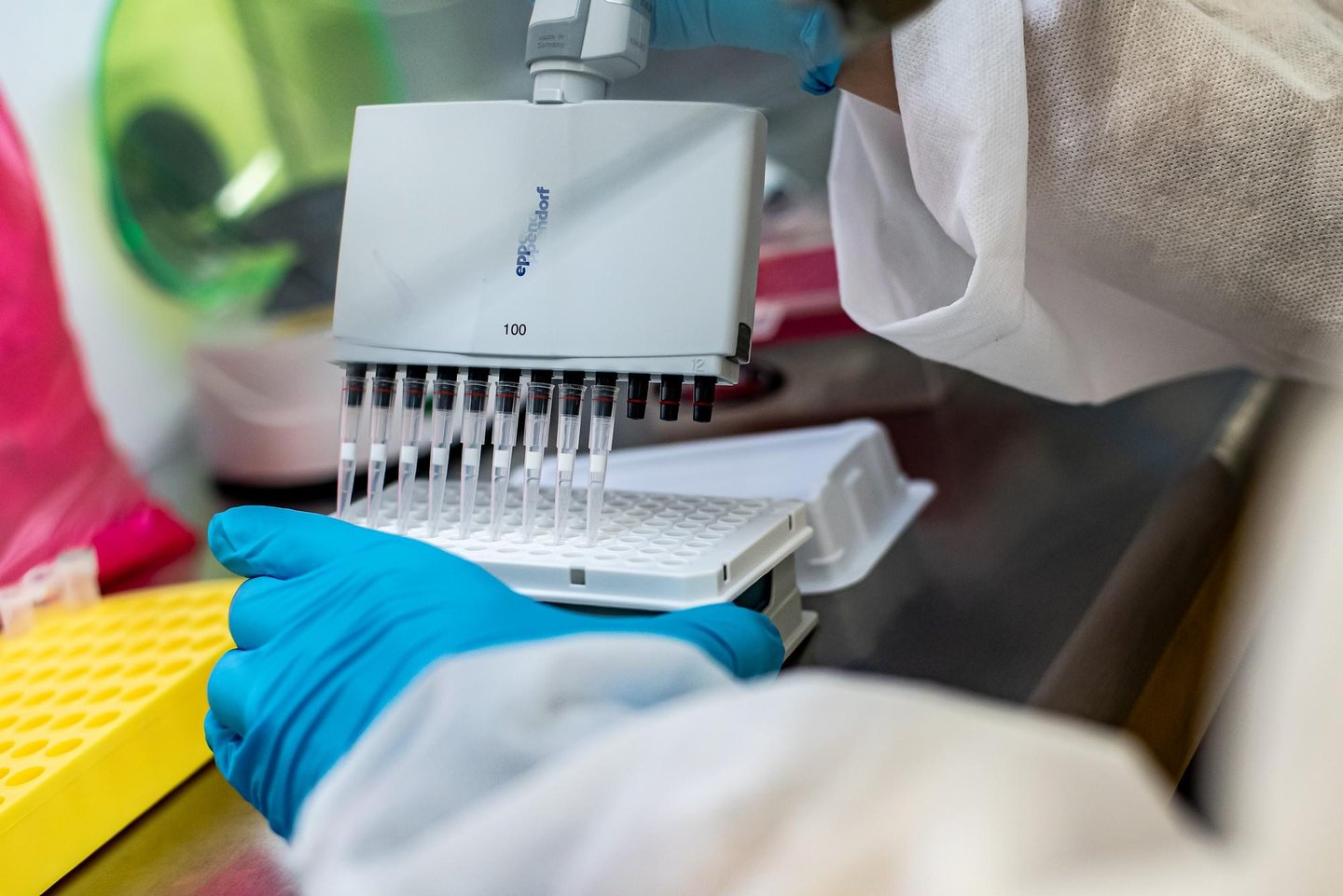
Photo: Tomáš Belloň / IOCB
In this work the cooperation of the individual institutions, smooth communication and also the efficient exchange of collected samples between laboratories are important. In this exceptional situation, however, the IOCB's vehicle fleet could not cover the institution's needs — there are far more samples to transport than usual. "We are in contact with scientists and at the same time we knew that our partner Volvo Car Czech Republic intended to support scientists and equip them with its environmentally friendly cars. Bringing the two together was thus a natural outcome of our activity and an example of how business and science in synergy can move our whole society forward," says the chair of the administrative board of the Neuron Endowment Fund Monika Vondráková.
Associate professor Konvalinka's team now has five cars at its disposal, which it uses every day in its work on developing testing kits. "The cars that Volvo Car CZ so generously lent us make it easier for us to transport material and staff and to distribute finished kits for isolating viral RNA where they are needed — above all to hospitals and testing laboratories. Thanks to that we can quickly deal with situations where otherwise we would be laboriously looking for transport or the delivery would be postponed or dragged out," Jan Konvalinka explains. "The cars are safe and reliable, they are indispensable helpers for us."
"For all the difficulties the situation causes, it is worth highlighting how mutual support and cooperation are being carried through society, across fields and sectors. We are glad that Neuron is a place where these worlds meet and can be of benefit to each other," says Monika Vondráková.
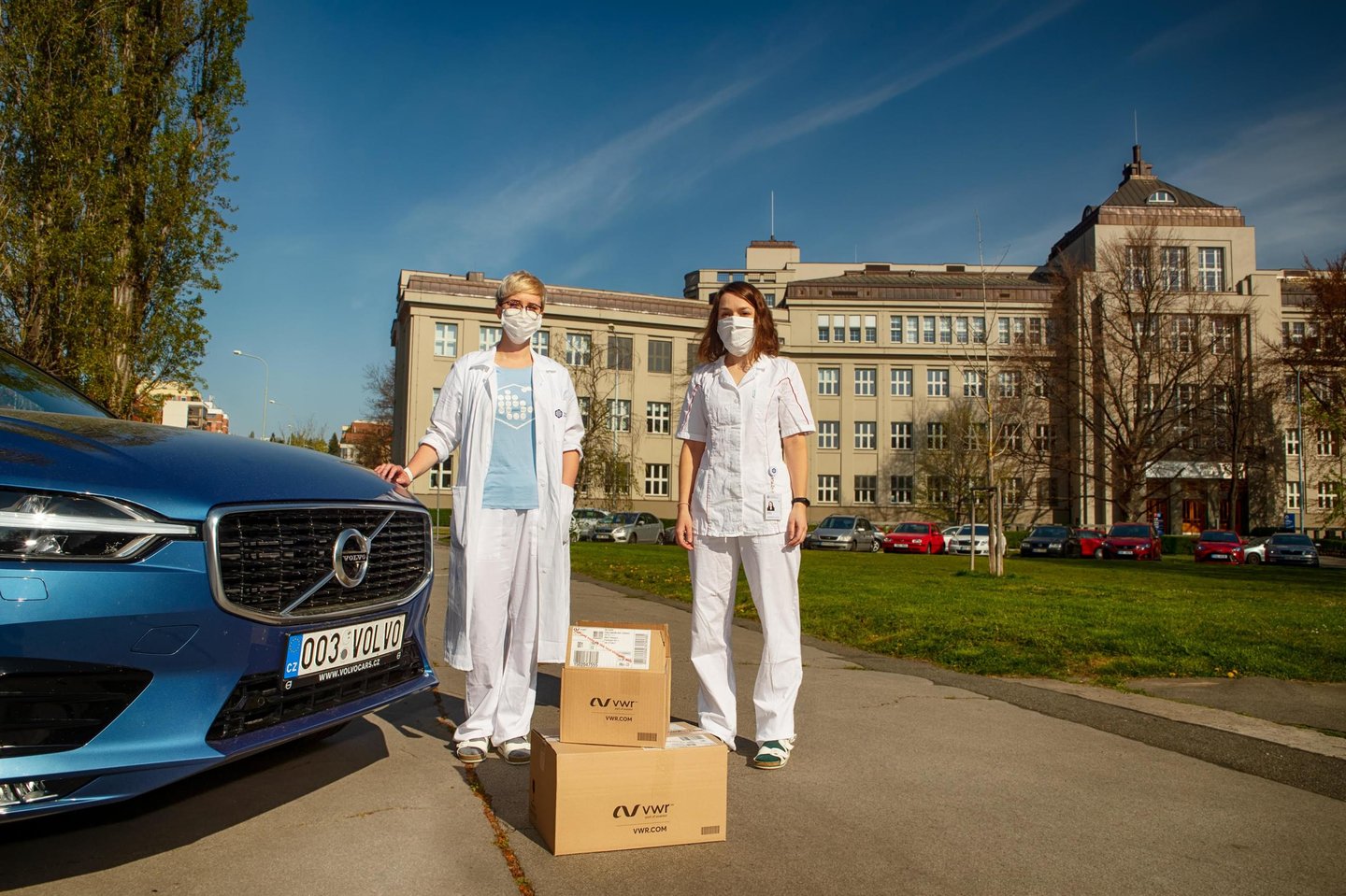
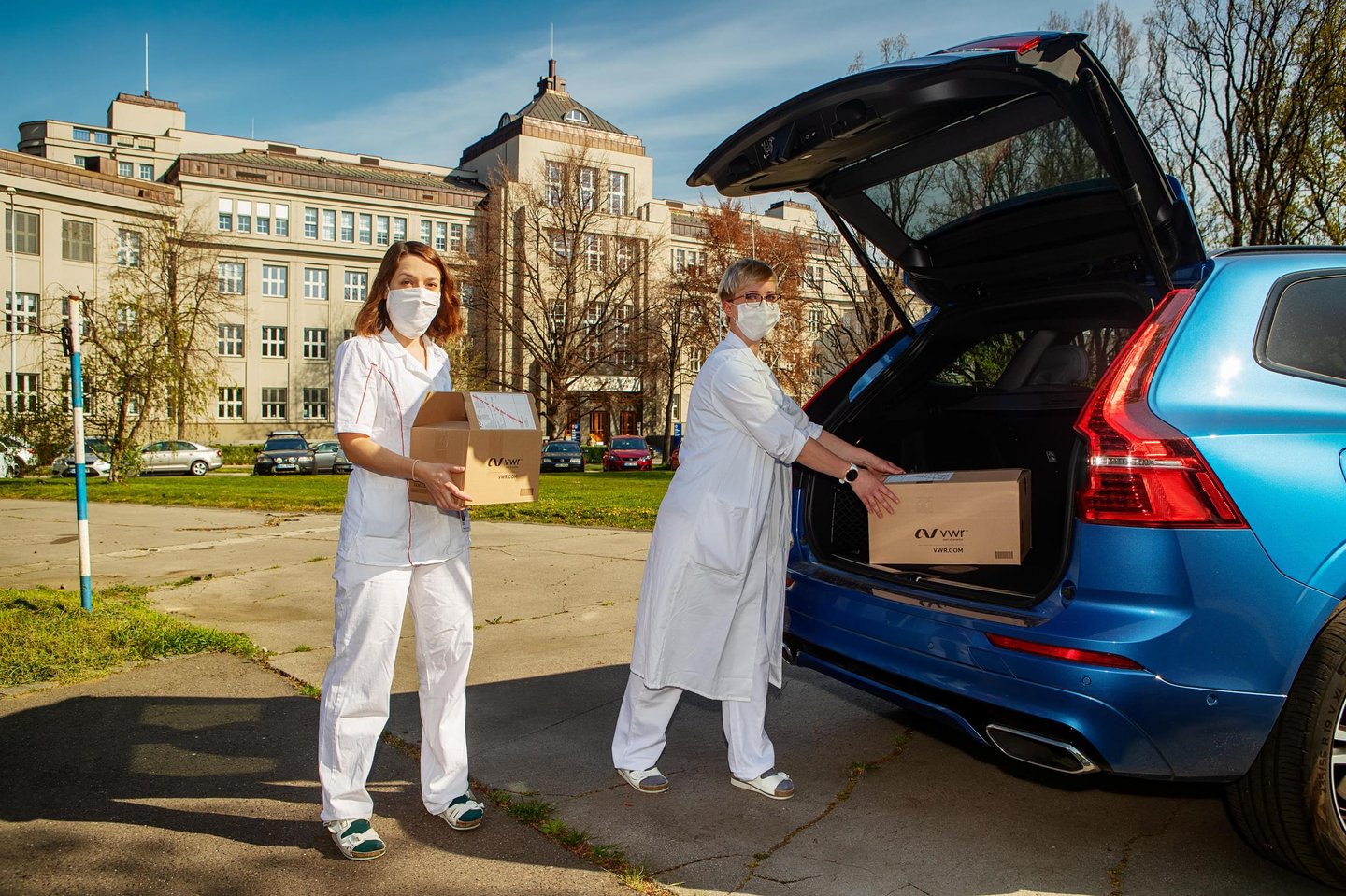
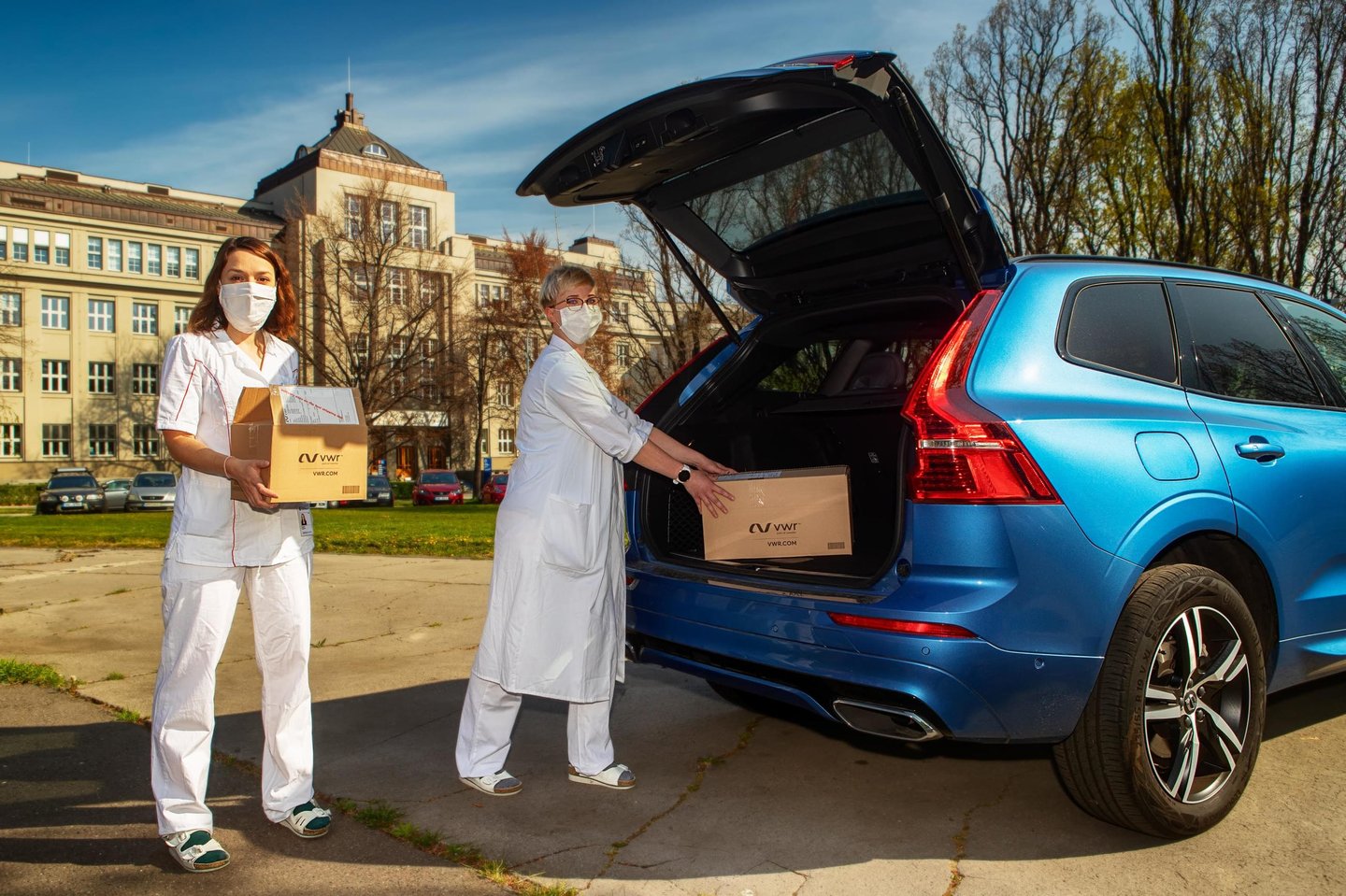
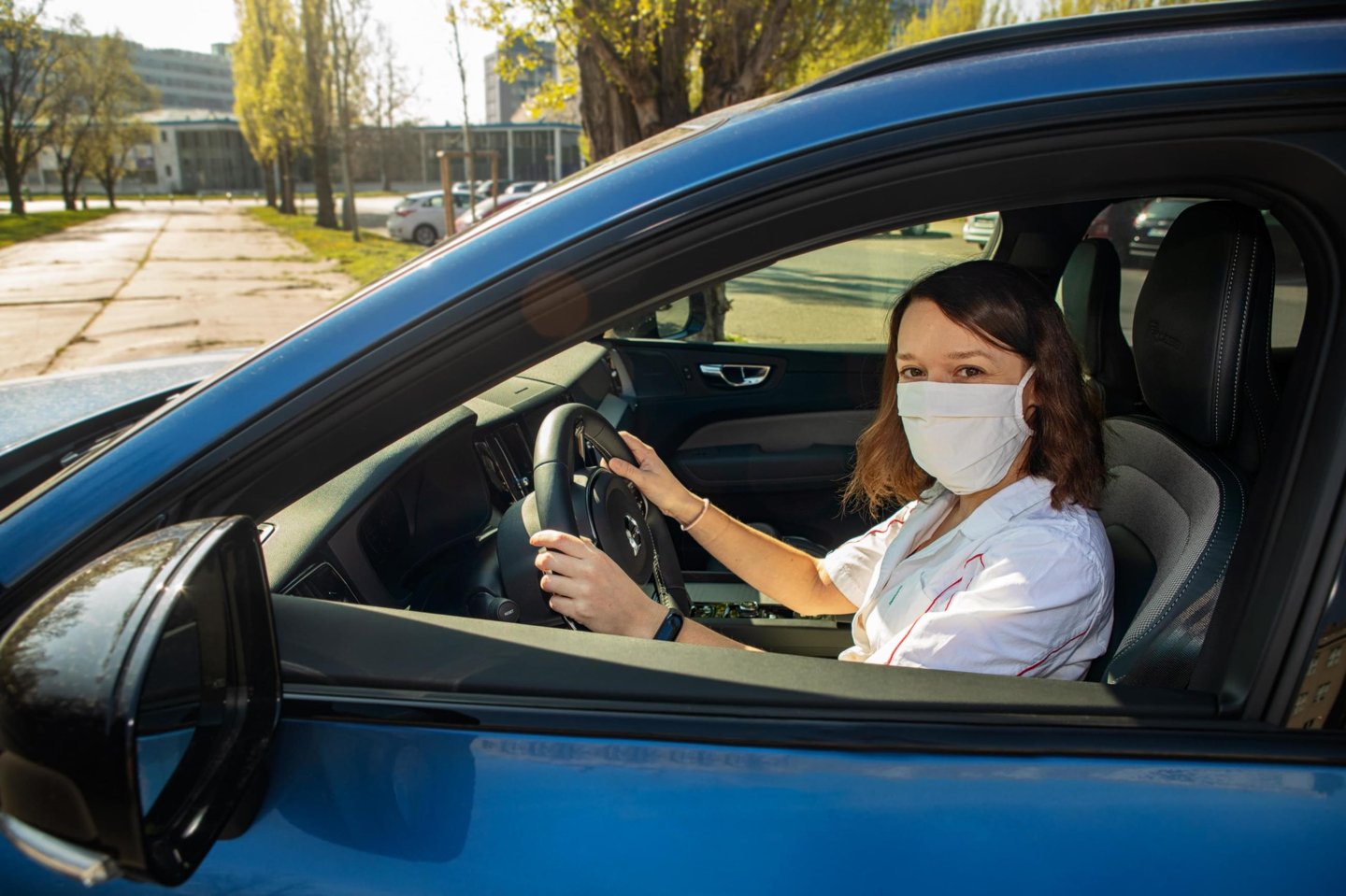
Mgr. Dominika Fassmannová and Mgr. Kristýna Blažková loading chemicals in front of the Institute of Organic Chemistry and Biochemistry of the Czech Academy of Sciences.
Photo: Libor Špaček
If you are interested in what a day in the laboratory looks like, what doc. Konvalinka's team is working on or how things stand with the development of the drug Remdesivir, listen to the interview with him in the HomeofficeTV.cz series (from 19 April 2020).