MF DNES: The world with AI will soon be completely different, says Václav Rozhoň
30 June 2026
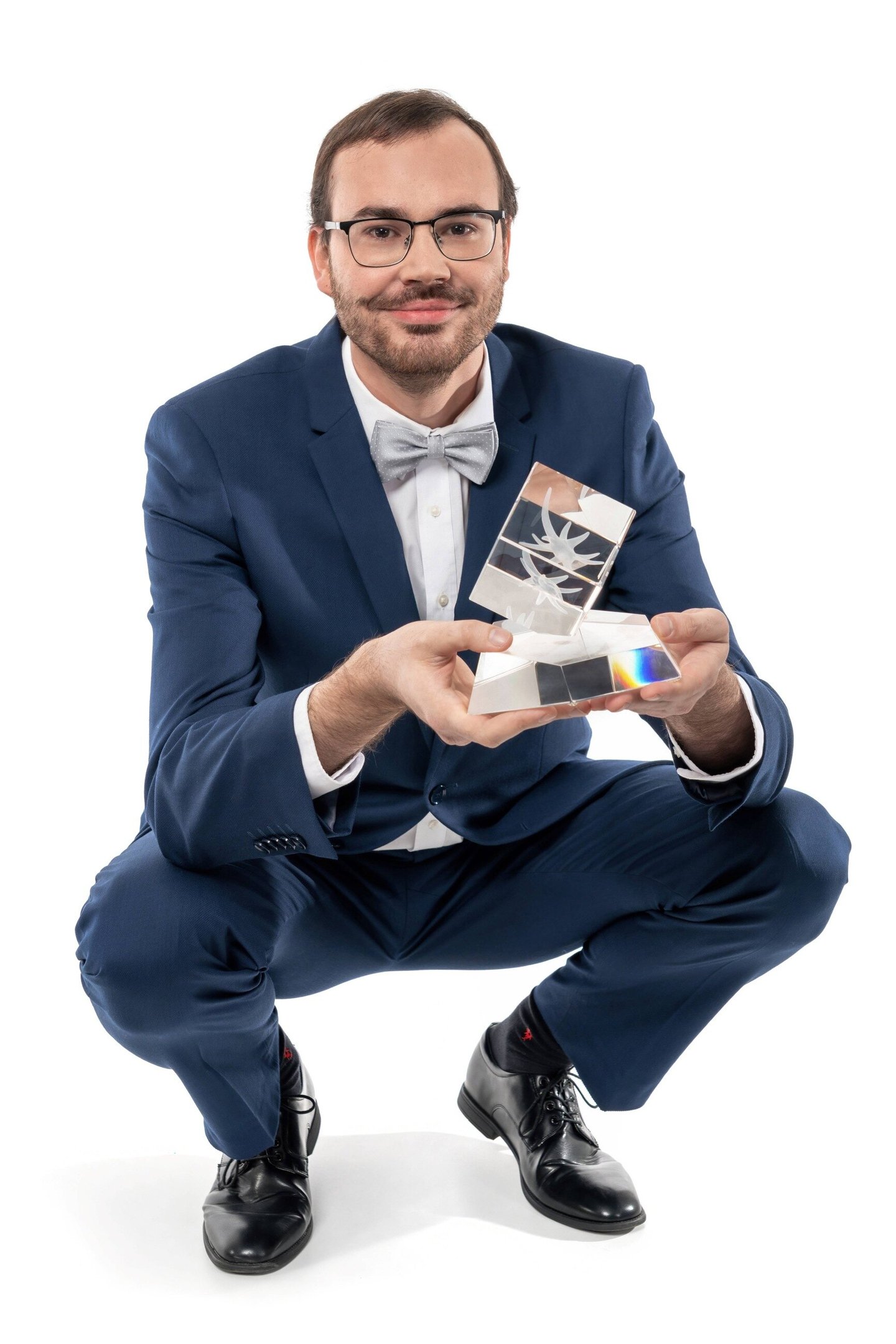
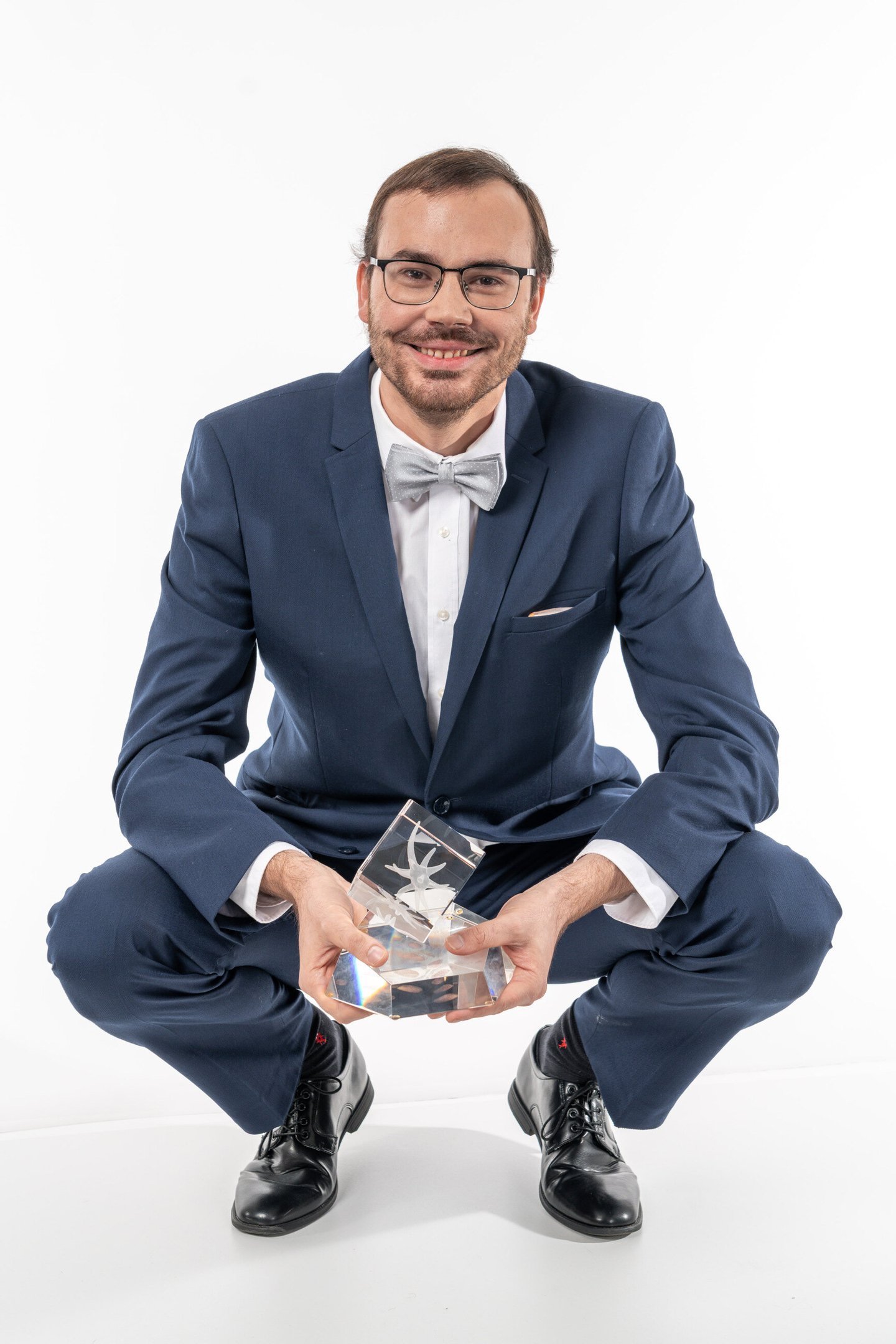
Václav Rozhoň is a theoretical computer scientist. He works at the Faculty of Mathematics and Physics in Prague, but has also worked at ETH Zurich and MIT in the United States. What is he bringing back to the Czech Republic from the best universities in the world? How do the algorithms driving our digital world work? And what does he expect from artificial intelligence? This holder of the Neuron Award for outstanding young scientists talked in the weekend edition of MF DNES about changes in science, the influence of artificial intelligence and the difference between Czech and foreign universities.
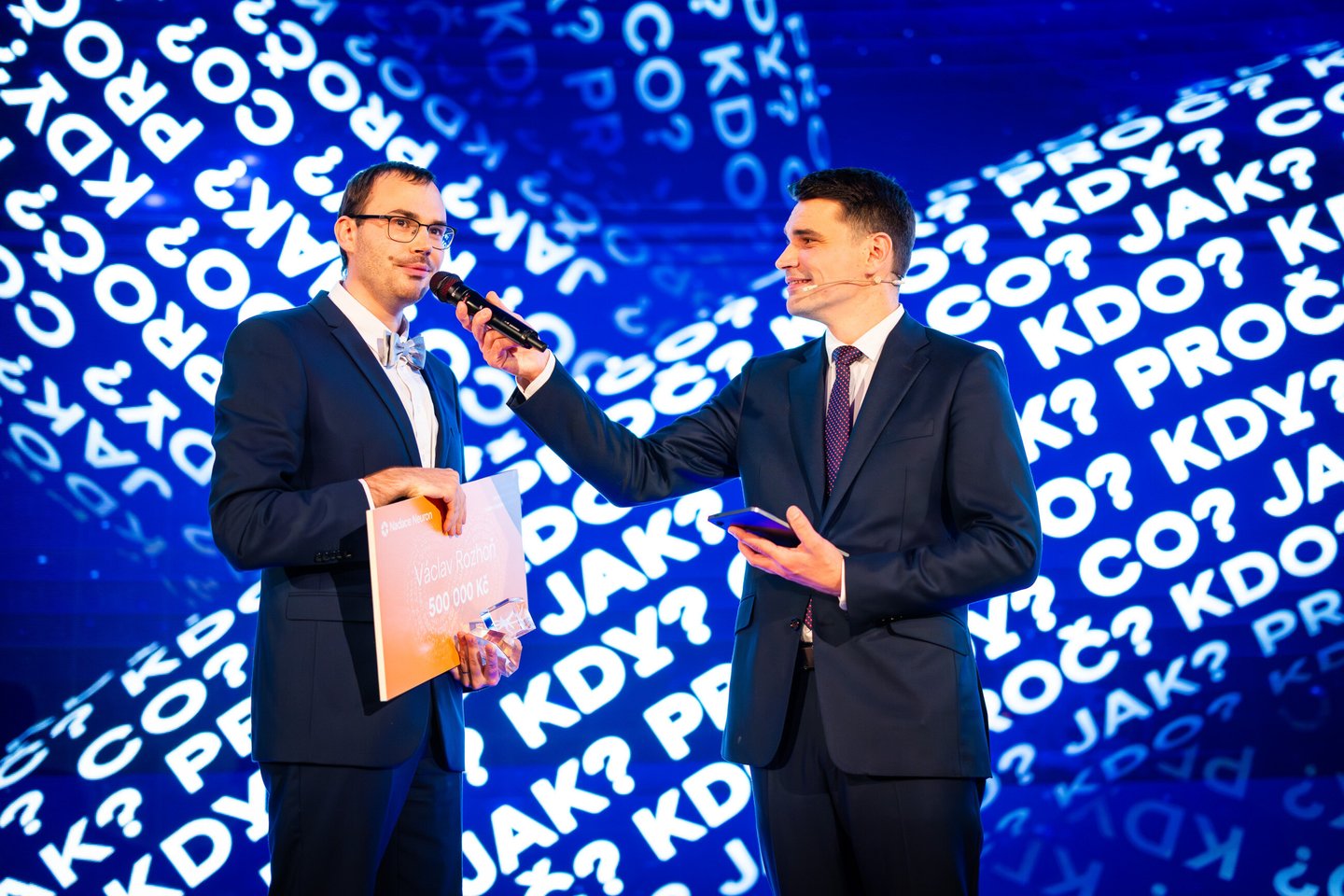
This year you received the Neuron Award for young scientists. But it is far from your first honour; two years ago at the elite ETH Zurich you also received a silver medal for an outstanding dissertation. How did you get there from the Faculty of Mathematics and Physics, and later on to MIT?
I think my wife, then still my girlfriend, is responsible. We met at the Faculty of Mathematics and Physics in Prague, where she was studying bioinformatics, an important but young field. At the time there were not yet so many opportunities in the Czech Republic, so she was very motivated to go abroad.
And you were not?
I am more of a stay-at-home type; on my own I might not even have brought myself to do it. But thanks to her we began deciding where to go next. ETH is a superb university and at the same time quite close. We both liked it and in the end we were extremely happy there; we went together after our bachelor's degrees and altogether, with a master's and a doctorate, we were there about six years.
ETH is among the best universities in Europe. How did you like it, arriving as young students in a completely different environment, perhaps with somewhat different teaching and research?
It was wonderful. I think good universities differ from average ones not only in necessarily having the best lectures. Lectures are of course very important, but those ninety minutes in a lecture hall can look fairly similar at different universities. The real difference between institutions is what happens between lectures; you meet an awful lot of interesting, clever, active people. It depends whom you get talking to and what ambitions and ideas are circulating around you.
Whom did you meet?
My future supervisor Mohsen Ghaffari, originally from Iran. Later I spent part of my doctorate with him at MIT when he moved to America. He gave me an awful lot in life.
In what way exactly?
In science there is something resembling an "apprenticeship system". You learn from your supervisor, watch how they think, how they ask questions, how they look at problems… If you look at Nobel Prize winners, you often find that their supervisors were also exceptional scientists, sometimes Nobel laureates themselves. I am not saying it is an ideal model, but it still works that way. Science is learned at close quarters.
And how did Professor Ghaffari inspire you?
He works in the theory of distributed and parallel algorithms. With parallel algorithms the basic idea is simple: you have a computation that takes a long time and you want to speed it up by dividing it among several processors or computers. One way of speeding it up is to get more computers and let the computation run in parallel. But that does not always work. Some problems cannot simply be chopped into a hundred independent parts, even if you have a hundred times more computing resources. And we try to understand in principle for which problems it is possible, for which it is not — and moreover why. We design new algorithms, but we also try to explain the limits.
You are a theoretical computer scientist, not an engineer. How do you actually work?
I often work with a blackboard, paper and pencil. I try to find new approaches and prove mathematically what works and what does not. The goal of basic research is not necessarily that next year someone will implement our exact algorithm in a particular system. The goal is rather to understand what possibilities and limits a given type of computation has. Sometimes you try to prove that something is impossible. Odd as that may sound, it matters. When you know what cannot be done, you understand better what can.
Did you already have the ambition to think about things in that depth before you came to ETH?
I probably had some general ambition. But chance plays an enormous role in science. If I had gone to a different university, even an equally good one, I would have met different people and might be doing something completely different today. Who knows. It is normal for people to change fields and topics during a career. I started with parallel and distributed algorithms, but today I partly do other things too.
ETH is great, but what about MIT? In the rankings it is usually first in the world alongside Caltech or Oxford.
It is of course a superb university. But as in Zurich, its quality is not recognisable from the lectures alone. Again it shows in the people you meet. At MIT or Harvard you come across extremely ambitious students and scientists. That transforms the environment completely. Even if those universities did nothing else, the concentration of exceptional people alone would create an enormous difference.
What has changed most in your field?
We need AI more and more. Artificial intelligence has changed so much that for some types of problem it is no longer even clear whether it makes sense for a person to go on working on them in the same way as before. And that is true even in very abstract areas. AI is already very capable today. I have already lost part of my work… Not entirely, but a large part of it, yes.
Really? Can AI come up with anything original at all, that is, anything not learned?
Different people have different views on that and they also mean different things by "original". Personally I would say AI can definitely be original. And very soon it will be even more original than we are in many respects.
So science is changing fundamentally under the influence of AI?
Definitely! Science will speed up and will be transformed in many respects. If humanity keeps control over AI, it could be superb. The world in five or ten years will probably be completely different. But there is that big "if". The question of whether humanity keeps control over AI really is fundamental.
Abridged. The full version appeared in the print edition of MF DNES / LN Orientace on 20 June 2026, p. 17, online at Lidovky.cz