It's great that my money serves something good, says patron Ondřej Fryc
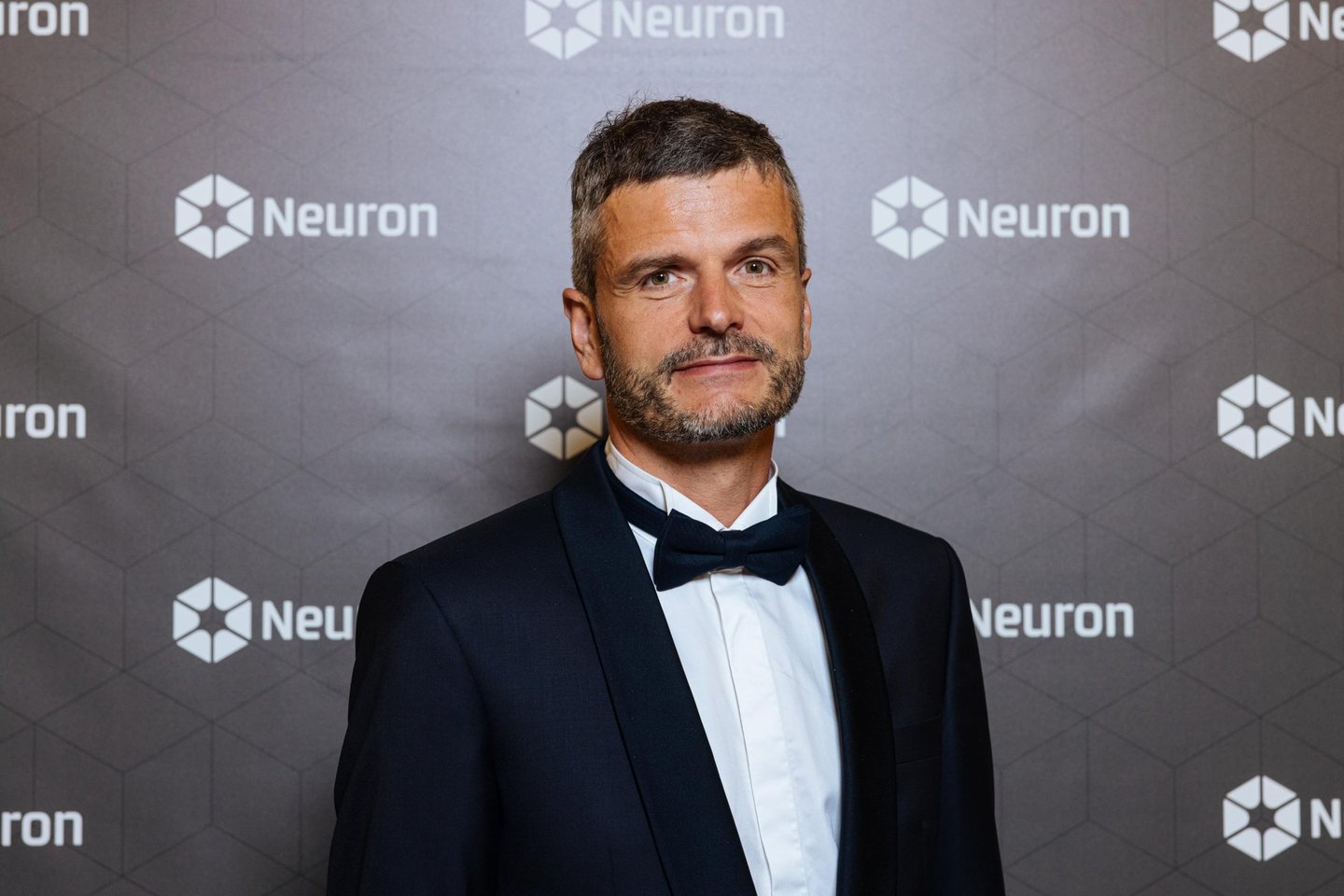
He admires scientists, but they also give him grief. Ondřej Fryc, a patron of the Neuron Foundation, says Czech science has to work on its mindset, because "only an equal partnership of science and business can achieve anything".
He admires scientists, but they also give him grief. Ondřej Fryc, a patron of the Neuron Foundation, says Czech science has to work on its mindset, because "only an equal partnership of science and business can achieve anything".
What is his approach to patronage, why does he see his work at the investment company Reflex Capital as "giving back", and what can the non-profit sector do to win new supporters?
Ondřej Fryc does not want to judge other successful entrepreneurs, but for his own part he says he would feel foolish not to share. "But everyone has to discover for themselves how wonderful it is," he adds in our interview.
You are a significant Czech patron. Is it a pleasure or a worry?
A pleasure, of course, nothing but a pleasure. It is great to have the feeling that my money serves something good. Why should it be a worry?
The public knows about your wealth, and I assume a lot of people approach you asking for help.
They do, and precisely so that it does not become a worry, I choose projects with a society-wide reach myself. I support dozens of organisations, in education, in the fight against corruption, I support independent journalism and, in science, besides Neuron, also research into psychedelics, for instance. I support organisations that address problems systematically and have a "leverage effect" in society. In the case of the Neuron Foundation specifically: if Czech science is better, it will bring new discoveries and we will all benefit.
Do you have a personal relationship with science?
I admire people who can think something up and move us forward. I never had scientific ambitions myself, but when something interests me I go into it deeply. Neuroscience is very close to me — I am interested in how the human brain works, what consciousness is, how information is transmitted in the brain and between people… That is what I enjoy. I also like it when a start-up has a mathematical component serving artificial intelligence. On the other hand, I have to say that doing business with scientists is terribly hard.
That is one of Neuron's themes — the transfer of science into business. What is your experience of it as an investor?
Agreeing on shares, dividing up responsibility, keeping your feet on the ground — that is sometimes close to impossible. I am glad you introduced the new Neuron Award for transfer, because I see it as a big problem; scientists are not able to move their invention into the commercial sphere. They think the main thing is to invent it — and they do not understand that execution is at least as important. Putting the idea into practice.
What is to be done about it?
The problem is the mindset. A lot of scientists do not understand, or do not want to understand, how business works. An idea in itself is not enough. If there are studies behind it, that is perhaps more, but execution is absolutely key and at least half the success. You have to do the entrepreneurial work pragmatically and then sell it. But a scientist often approaches commerce with disdain, which is not a good contribution to a partnership. And yet only an equal partnership of science and business can achieve anything.
In the media and on your blog you describe the world of investors and start-ups from your own experience. Do you have patronage know-how?
There is nothing complicated about it; if some project strikes you as a good idea, give it money.
How do you yourself approach supporting non-profit organisations?
I don't have it structured, I have no patronage strategy. I am a programmer by background, so I have systematic thinking in me, and when I am preparing a contract, say, I proceed algorithmically, but I do charity by instinct. I have a similar motivation at Reflex Capital; our work is not charity, but its purpose is giving back. Money is not primary for us — we enjoy it and we want the companies we invest in to make economic sense — but what matters more is that the more people in the Czech Republic are in business, are active, have a spark in their eye, employ other people and create value, the better life will be for all of us. We support entrepreneurial stories because their energy is needed.
Do you remember the moment when you became a patron?
When a lot of money landed in my account after the sale of Mall.cz, I asked myself what I should do with it. Accumulating wealth does not motivate me; I don't need my own plane, that is just extra worry. Nor is it good for the children to inherit all the money; they have to fight for their place in the world themselves. So I told myself that I would go on earning money but would also give it away at a faster rate. And that gives me pleasure; I feel it contributes to the environment that allowed me to get rich.
Who are the Czech patrons?
There are a few dozen who regularly give millions or tens of millions. The same fifteen patrons meet on a great many projects. It is sad when I look at how many people have been able to generate hundreds of millions or even billions and it has not occurred to them that sharing it might generate some happiness for them too. But everyone has their own path and I do not judge anyone. Personally, though, I would feel foolish not to share; it simply gives me pleasure.
And how can the non-profit sector attract new patrons?
Patronage does not just mean being rich and donating money; it is also a matter of personal engagement. Some people donate money, some donate their time. When you are twenty or thirty you need to achieve something in the world yourself, but with age your priorities change and by fifty you no longer want to experience corporate politicking. You want to do something good, and there is an opportunity there for the non-profit sector to attract such people. They bring management skills and day-to-day leadership, and they complement the heartfelt but often very unstructured approach on which non-profit organisations frequently run. And in doing so such people do a great deal not only for the professionalisation of the non-profit sector, but they can also attract new patrons for whom their work will make sense.