A spring detox? With the experts, focus on your microbiome instead
Planning a "spring cleanse"? Before you launch into diets and detoxes, try focusing on the health of your microbiome. This complex community of microorganisms living in our bodies influences far more than digestion. It is closely connected with immunity, metabolism, mood and overall health. And a varied, balanced diet is key to it working properly. Back in the autumn you could follow our Neuron Online Club, where we discussed the importance of the microbiome with leading Czech experts. With the annual return of spring cleanses and diets, we decided to follow up on that debate — because what matters to us is the view of science, not of trends.
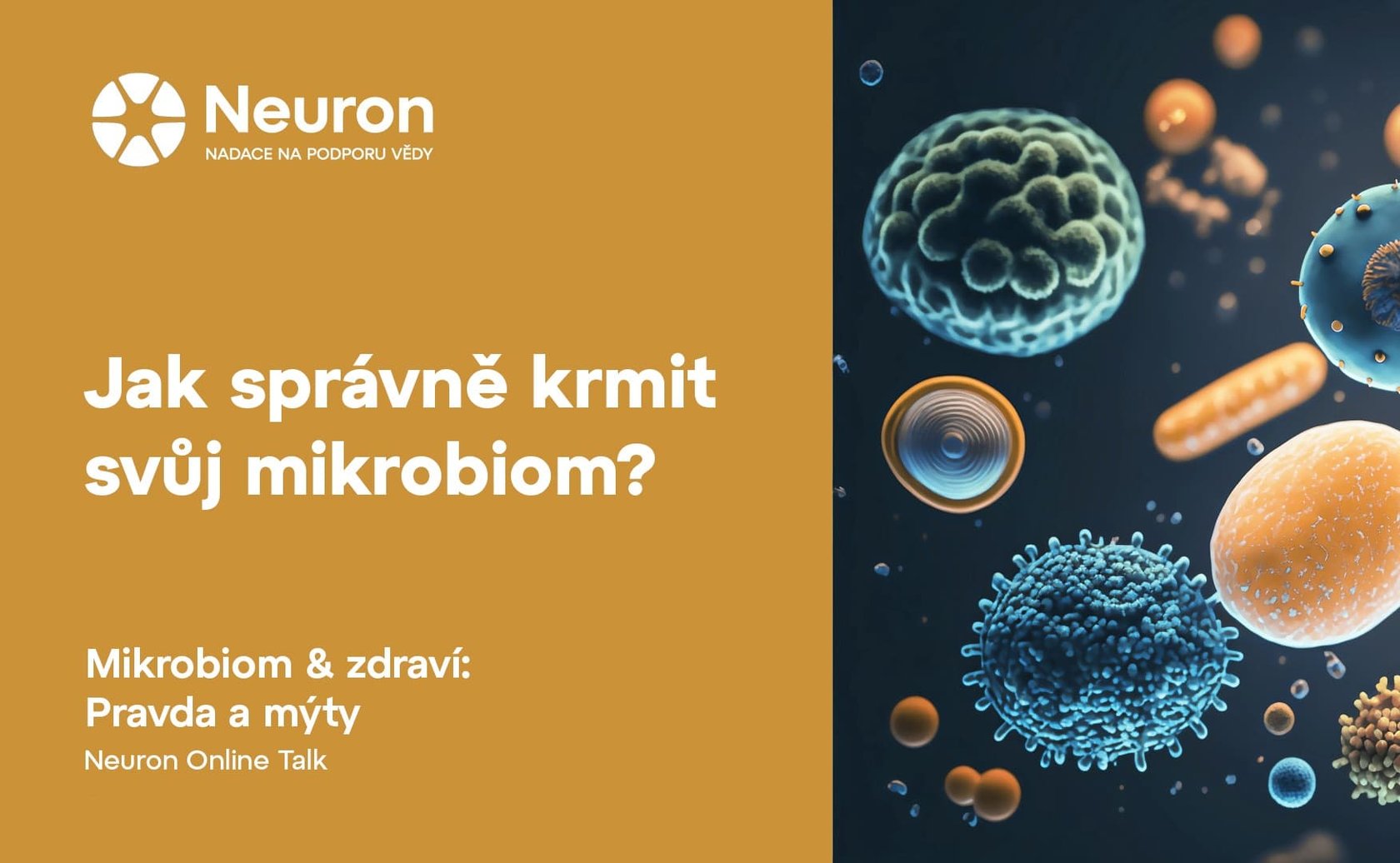
Planning a "spring cleanse"? Before you launch into diets and detoxes, try focusing on the health of your microbiome. This complex community of microorganisms living in our bodies influences far more than digestion. It is closely connected with immunity, metabolism, mood and overall health. And a varied, balanced diet is key to it working properly.
Back in the autumn you could follow our Neuron Online Club, where we discussed the importance of the microbiome with leading Czech experts. With the annual return of spring cleanses and diets, we decided to follow up on that debate — because what matters to us is the view of science, not of trends.
We therefore obtained answers from the experts Helena Tlaskalová Hogenová, Lucie Najmanová and Jiří Hrdý to the most common questions about the microbiome. If you want to understand how the microbiome works, when to reach for probiotics, why fermented foods matter or what effect diet has on gut health, you are in the right place.
Eat fibre and don't avoid fermentation
Are fermented foods really healthy?
Yes, especially the natural ones such as sauerkraut, kefir, yoghurt or kimchi. They contain beneficial bacteria, fibre and the products of bacterial fermentation, which support gut health.
But be careful with home-made fermented drinks such as kombucha. Besides beneficial microbes, they also contain quite a lot of sugar, which is not so healthy.
What effect do various diets, such as GAPS (for gut health), have on the microbiome and on leaky gut?
Diet has a fundamental effect on the microbiome. The GAPS diet, aimed at restoring the gut barrier, is popular among the public, but there are no good scientific studies behind it. Its recommendations — for instance to leave out grains and eat plenty of vegetables and fermented foods — are not harmful in themselves and in many ways resemble the principles of a healthy diet.
In healthy people, though, needlessly following strict diets can lead to problems with food intake or nutrient deficiency. Moreover, more marked changes in the composition of the microbiome require weeks or months of a varied, balanced diet rather than short-term diets.
Supplements are not an instant rescue
Do probiotics and prebiotics make sense as prevention too?
Yes, but it depends on the particular strain. Probiotics help not only after antibiotics but also in preventing certain diseases. Even more important, though, is a consistently good diet rich in prebiotics — that is, fibre from fruit, vegetables or wholegrain products. That is what helps keep the microbiome in balance and prevent many problems.
With synbiotics (preparations containing probiotics and prebiotics at once), does "the more the better" apply? No. What matters is a varied diet and a healthy lifestyle, not high doses of supplements. No miracle pill will replace a good diet and exercise.
Are probiotics better in capsule or liquid form?
Generally, capsule probiotics are more stable and better protected. The bacteria in them are gently dried and only wake up in the gut. Liquid probiotics tend to be less stable and more expensive without bringing greater benefit.
Does it make sense to supplement butyrate and L-glutamine (substances that help with gut permeability)?
Intestinal permeability is a condition in which the integrity of the gut lining is disrupted and allows unwanted substances to pass into the bloodstream, which can lead to inflammatory reactions.
Butyrate and L-glutamine help restore the gut lining; they are found in an ordinary balanced diet but are also available as supplements. If you have a varied diet with plenty of fibre and take care of your lifestyle, they are usually not necessary.
Doctors recommend supplements in cases of increased intestinal permeability syndrome, irritable bowel syndrome, certain autoimmune diseases or inflammatory bowel disease.

*From the left: Jaroslav Řasa, Jakub Abramson, Martin Schwarzer, Lucie Najmanová, Jiří Vejmelka, Lucie Najmanová, Helena Tlaskalová-Hogenová; below: Monika Vondráková;
The Microbiome – Truths and Myths, 19 November 2024*
Are probiotics suitable for people with histamine intolerance?
Some strains can raise histamine levels and worsen symptoms. People with histamine intolerance should carefully choose preparations without strains capable of producing histamine. It is important to know, though, that probiotics will not cure histamine intolerance.
Do you recommend taking probiotics after antibiotics?
Probiotics can help after antibiotics, but it depends on their composition. Studies from 2018 warned that some widely available probiotics may even delay the return of the natural microbiome. The results were also affected by the methodology used and by insufficient identification of the particular bacterial strains.
Today we know that the effectiveness of probiotics is highly strain-specific — not all of them work the same way and not everyone will be helped. That is why it is important to choose preparations with a clearly defined composition and effects verified in clinical studies.
Do probiotics make sense for cancer patients?
They can ease the side effects of treatment, but it is necessary to choose preparations with verified effects. The influence of the microbiome on the treatment of certain types of cancer is being studied intensively.
Further connections of the microbiome
Are colonic irrigations for "cleansing the bowel" beneficial?
On the contrary. They can disrupt the composition of the microbiota, so we do not recommend them.
Do people in the countryside have a better microbiome than people in the city?
In the Czech setting the differences are minimal. We all drink similar water, breathe similar air and often eat the same food. There may be a slight difference in people who have spent more time in nature since childhood or who work with animals — they may be exposed to a more varied range of microbes, which can benefit immunity.
When does a person's microbiome arise?
The main colonisation begins at birth. The type of birth, the environment and the mother's diet all play a significant role, although the presence of a microbiome already in the womb remains disputed.
Is there a microbiome of the brain?
Current findings show that the brain has no stable microbiome of its own. The presence of bacterial components tends to be associated with pathological conditions, for instance in multiple sclerosis, when the protective barrier is disrupted.
Do doctors look at the microbiome when taking a case history?
Examination is carried out according to the patient's symptoms. It focuses mainly on the presence of harmful bacteria that may be causing specific problems.
Watch the full recording of the debate of 19 November 2024