E15: Tomáš Cihlář's discoveries can stop the spread of HIV
16 July 2026
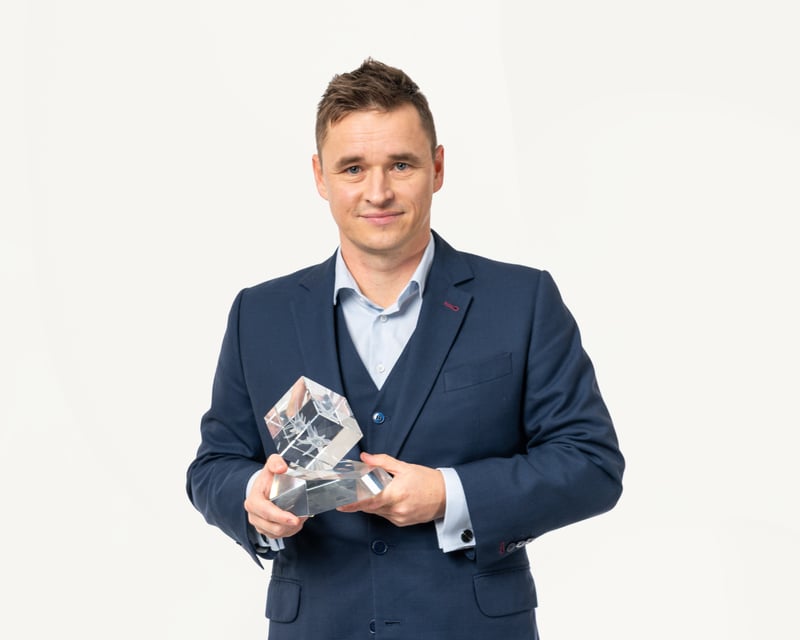
The new issue of E15 magazine writes about the stimulating work of the outstanding scientist Tomáš Cihlář, who received the Extraordinary Neuron Award in 2020. Cihlář is one of the highest-placed Czechs to have succeeded in connecting science with business. He is a vice-president of the American pharmaceutical company Gilead Sciences, with annual revenues in the tens of billions of dollars. As a scientist his name is also connected with the discovery with which the world is beginning to turn back the HIV epidemic. One injection every six months of the unique substance lenacapavir prevents transmission of the virus with an effectiveness approaching 100 per cent. That is why Tomáš Cihlář and his colleague Wesley Sundquist made Time magazine's list of the hundred most important people on the planet last year. What else caught E15's attention?
The new issue of E15 magazine writes about the stimulating work of the outstanding scientist Tomáš Cihlář, who received the Extraordinary Neuron Award in 2020. Cihlář is one of the highest-placed Czechs to have succeeded in connecting science with business. He is a vice-president of the American pharmaceutical company Gilead Sciences, with annual revenues in the tens of billions of dollars. As a scientist his name is also connected with the discovery with which the world is beginning to turn back the HIV epidemic. One injection every six months of the unique substance lenacapavir prevents transmission of the virus with an effectiveness approaching 100 per cent. That is why Tomáš Cihlář and his colleague Wesley Sundquist made Time magazine's list of the hundred most important people on the planet last year. What else caught E15's attention?
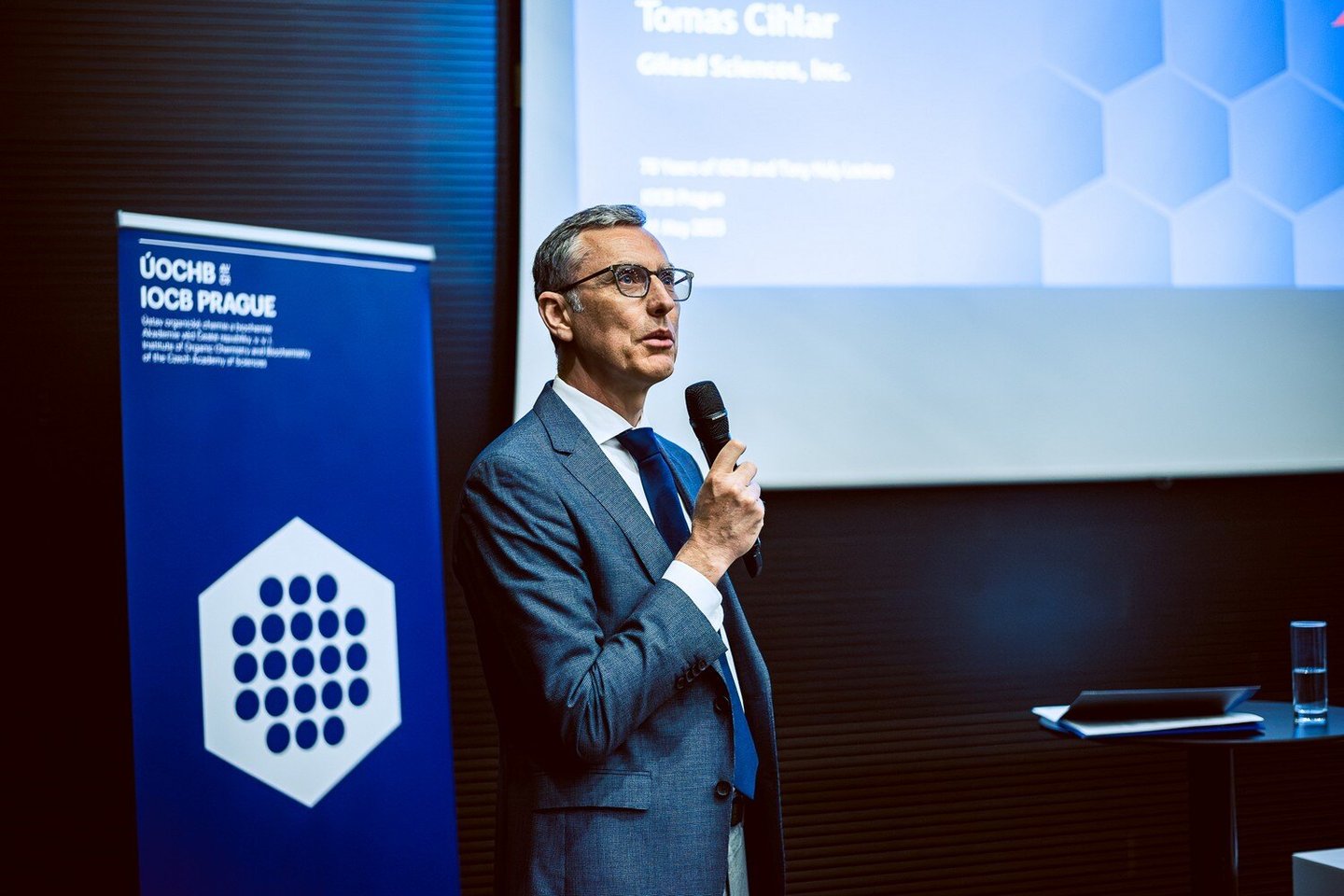
"This story had success encoded in its DNA practically from the start. Partly because Professor Antonín Holý played his part in it — a legend of Czech science behind a number of discoveries that help treat some of the most serious viral diseases, such as HIV and hepatitis B. Those substances reached patients thanks to the global company Gilead Sciences," the E15 profile begins.
Looking for the most effective route to the goal
Let us go back to the time when Tomáš Cihlář was studying at the University of Chemistry and Technology and beer and wine were supposed to be his fate. In his final year he began work on his thesis, and its subject took him essentially across the street to the Institute of Organic Chemistry and Biochemistry of the Czech Academy of Sciences (IOCB). In the end he did most of the work there. "At the IOCB I got to know pharmacology, virology and antiviral substances. I ended up there more or less by chance, without knowing exactly what breakthrough discoveries the scientists were working on, and it turned into a research studentship that I completed in 1994," he says of the switch that turned out to be decisive.
At the IOCB, Tomáš Cihlář worked with Ivan Rosenberg from Antonín Holý's group, and later came close to Professor Holý himself. "He knew what he wanted to achieve in his work. That was inspiring for me, and it was also a very valuable lesson and an example to start out with. He always concentrated on making sure his chemical projects produced something of practical use. He was quite uncompromising, and he went straight for his discoveries and their meaningful use. Some people may have found him hard to get on with, but that was simply his philosophy," he says of Antonín Holý, whose work he was soon to encounter from the other bank of the river as well — as a scientist in a growing pharmaceutical company.
When Tomáš Cihlář left for a postdoctoral placement in the USA in the autumn of 1994, it was essentially a completely new start. He did not know, of course, that he would settle across the ocean with his family for good. But the States drew him in from the beginning. He came straight to San Francisco, to the Bay Area, the cradle of the biotech industry. "I was struck by the incredible diversity — not only of the population and of society, but also of research focus, universities, startups and investment firms," he recalls.
He carried one message with him from Prague, from Antonín Holý. He describes it as focus on the goal and the need to look for the most effective route possible. With that he joined a then almost unknown startup, Gilead Sciences. At the time it employed about 300 people, had no approved drug product and had eight more years of patient work by everyone ahead of it before the company would become profitable. "The beginning was demanding for me; I had to learn English so that I could communicate professionally with colleagues, and there were cultural differences on top of that. Adapting took our family quite a long time, and without my wife's understanding and support it would not have been possible at all," he says.
The Prague connection
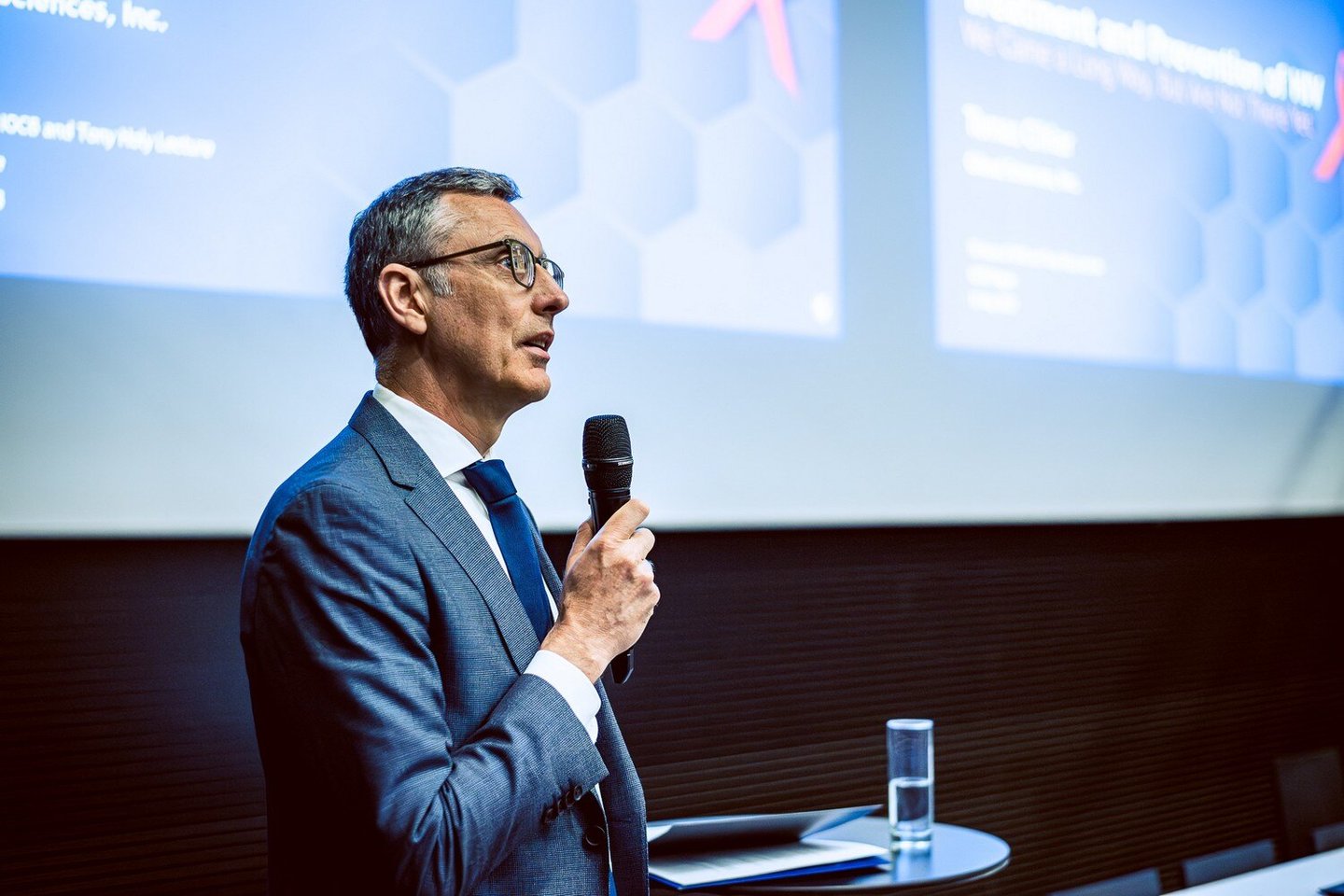
Across the ocean he became something of a Prague connection — helping to bring Antonín Holý's research into practice. Thanks in part to his work, the company grew to today's tens of billions of dollars in turnover. The first great success turned out to be tenofovir, for the treatment and prevention of HIV.
In its time it became one of the most important HIV drugs. It had relatively low toxicity, worked well in combination with other drugs and only very rarely met with resistance, which allowed longer-term control of HIV. Tenofovir earned Gilead tens of billions of dollars and became one of the most successful antivirals in history. The licence income also funded Czech research significantly. The road to its adoption was long, though. The American Food and Drug Administration approved it as a standalone HIV drug in 2001. Since then tenofovir has become part of a number of other drug products, including very successful and effective combinations for treating HIV.
Whether the company would have succeeded without the contribution of Antonín Holý and his team is hard to judge today, in Tomáš Cihlář's view. "If companies like Gilead are flexible and have good investors behind them, it often happens that even after a seemingly weak start they change direction and find something else. With the very capable leadership Gilead had from the beginning, headed by John Martin, that would certainly have been the case," he reflects. In the early days, though, the contribution of Antonín Holý and his antivirals was, he says, "essential". And tenofovir was followed by a series of scientific and technological breakthroughs that eventually contributed to Gilead's leading position in the whole field of virology and antivirals. Today about fifteen million people in the world are treated for HIV with this company's products. To that must be added other products that came to market later — those for treating hepatitis B and C, for instance, and remdesivir against covid, with which about eight million people were treated during the pandemic.
Tomáš Cihlář (59)
* He has worked at the American biopharmaceutical company Gilead Sciences since 1994. He joined as an ordinary research scientist and worked his way up to top management.
* He holds dozens of international patents and is the author or co-author of almost two hundred publications, including a number of papers in the most prestigious journals, such as Nature and Science.
* He received the Medal of Merit, first class, from the President of the Republic for services to the state in science. In 2025 TIME magazine placed him among the 100 most influential people for the development of revolutionary HIV drugs. He is also a holder of the Extraordinary Award of Nadace Neuron.
Abridged; published in E15 on 12 July 2026, the full text at E15.cz / Photo: IOCB CAS / Tomáš Belloň