MF DNES: Treating multiple myeloma makes sense, says physician Tomáš Jelínek
The haemato-oncologist Tomáš Jelínek is among the outstanding figures of the emerging generation of Czech scientists. A laureate of the Neuron Award for outstanding young scientists, he combines clinical care with research into multiple myeloma and, through his discoveries, contributes to the development of more effective treatment for blood cancer. In the weekend edition of MF DNES he talks openly about returning from Miami to the Czech Republic, about the meaning of medicine and about why science begins with properly framed questions.
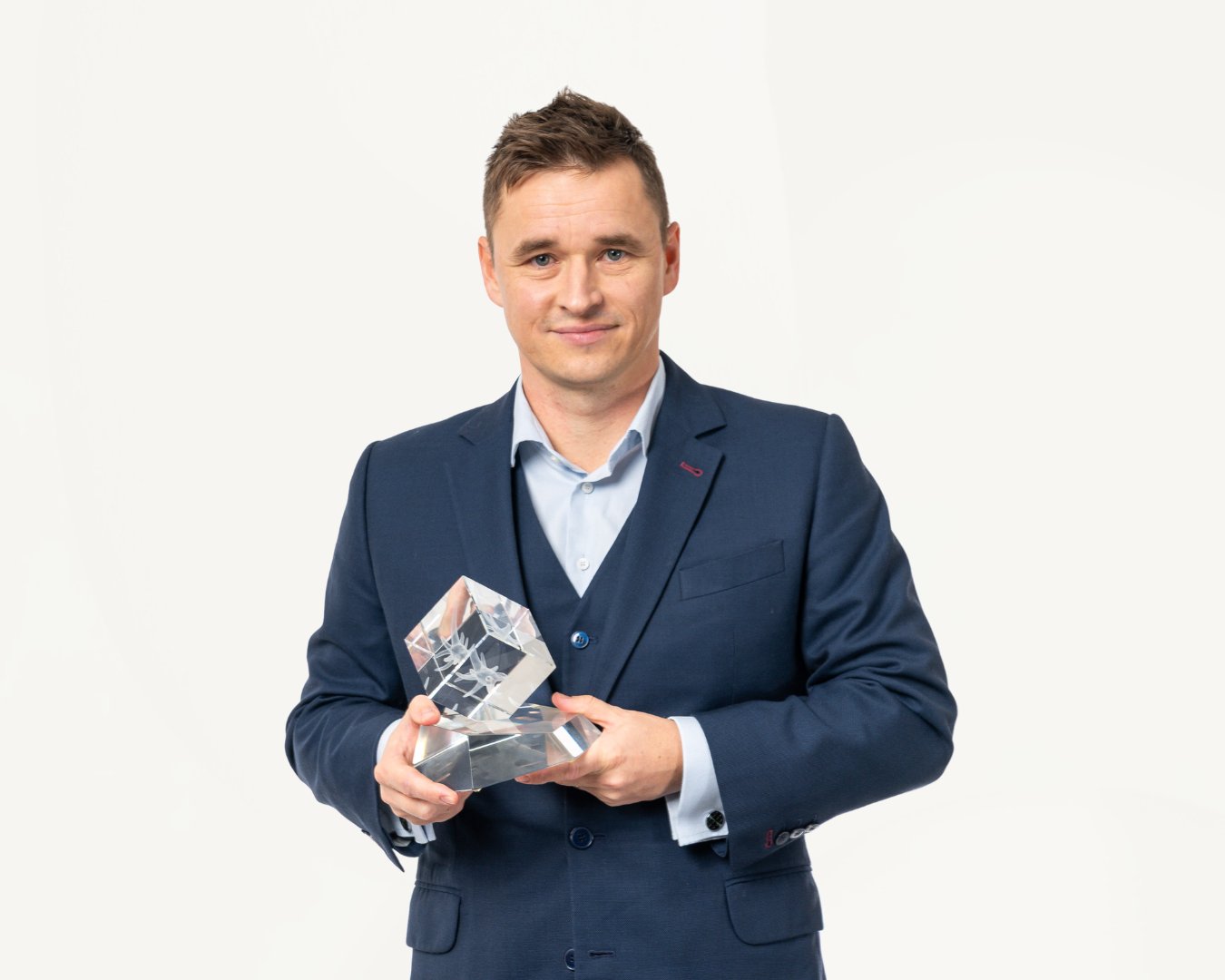
At the Neuron Awards ceremony you said you had learned a great deal abroad. Where exactly did you work and what did your experience abroad give you?
I had two relatively long placements abroad. The first in Spain, where I spent almost two years in Pamplona in 2016 and 2017. Thanks to Ernest Hemingway it is relatively famous, among other things for the notorious bull runs through the streets.
But of course that is not why I went there. I worked at the University of Navarra, one of the most prestigious Spanish universities. It was my first big research placement. It was partly clinical too, but I spent most of the time in the flow cytometry laboratory.
Was that connected with your expertise in blood cancer?
In principle yes. Among laboratory methods, flow cytometry is an area I work on a great deal. In Pamplona, under the supervision of Bruno Paiva, who is a household name in the world of multiple myeloma, I learned the fundamentals of research work.
The second placement was in Florida in the USA between 2024 and 2025. That taught me other things. Besides medical ones, I would say a great deal about people. I realised how tough the environment in America is and that you really have to graft there to achieve anything.
Is it a very competitive environment?
Definitely. Great emphasis is placed on science, research and innovation. They know it is what moves them forward and secures their prosperity. When someone there tries to do what I am trying to do — that is, combine clinical and research work — the system is able to recognise it.
In the Czech Republic it is often seen as something extra. In the United States there are clearer hierarchical steps: people know clearly that if they complete a doctorate they move on, gain a position, a more secure job and good working and financial conditions. That is also why the environment is highly competitive.
And how did you come to research multiple myeloma at all?
I am a clinician with specialist qualifications in haematology and transfusion medicine. Haematology is the science of the blood, to put it simply, and I specialise in blood cancers.
Immediately after university I joined haemato-oncology. I was influenced by the current head of the Ostrava clinic, Professor Roman Hájek, who chairs the Czech Myeloma Group. He has devoted a large part of his professional life to multiple myeloma. His influence was important.
At the same time it is a disease I find very interesting both medically and in research terms. And enormous progress can be seen in it! Even in the relatively short time I have been working on it, some ten to twelve years, treatment options have changed markedly. Over the past twenty years roughly twenty new drugs have been approved and patients' prognosis is noticeably improving.
Can you be more specific?
It is not easy to say exactly, because extremely effective new drugs are entering treatment and we do not yet know how long our patients will live with them.
But to give a rough idea: at the turn of the millennium average survival was, say, two to three years from diagnosis, and five to six years for younger patients able to undergo transplantation.
By around 2020, though, we could think in terms of eight to ten years. And today we are talking about being able to cure some patients, so that they die of another cause…
Older patients of course have a different prognosis from younger ones who can undergo transplantation. But generally speaking survival has lengthened markedly. And a certain proportion of patients, 20 or 25 per cent or even more, can be cured completely.
Is the shift due to new drugs?
Yes, there has been enormous progress in treatment. We are gradually moving away from cytostatics and chemotherapy. I try to explain it to patients by saying that the drugs they receive today are often no longer chemotherapy as they know it from films, that is, treatment that makes you feel very ill, makes your hair fall out and so on.
First came modern drugs such as immunomodulatory agents and proteasome inhibitors. Those are now a standard part of treatment.
And gradually immunotherapy is entering treatment, using the patient's immune system to help kill tumour cells. That includes specific antibodies and CAR-T lymphocytes. These are exceptionally effective drugs that are not dramatically toxic and that fundamentally improve treatment outcomes.
Immunotherapy is generally a major trend in medicine today — in oncology and in other areas — but in multiple myeloma I would say the leap is truly great.
How common is this disease here?
That is a good question, because multiple myeloma is not very well known in the media, even though it is relatively common. It is often said to be the second most common blood cancer.
The incidence, that is, the number of new cases, is roughly five to six per hundred thousand inhabitants a year. In the Czech Republic that means approximately 500 to 600 new patients a year.
As for prevalence, that is, the total number of patients, it is rising, because patients live longer. If you look into our day unit and waiting room, a large proportion of patients will have exactly this disease.
You are experiencing enormous progress in your field. Is that a strong motivation for you?
It is certainly a motivation for further work.
At the same time it has to be said that working in haemato-oncology is psychologically demanding. You get used to a lot of things, but whatever the case, I think our work is demanding for doctors, nurses and orderlies alike.
On the other hand, you see the point of it. There are certainly positions that are more comfortable and better paid, but the people in them do not see such meaning in them. I see several such people around me. For me the sense of meaning is terribly important.
You touched on it. How does a doctor cope with the death of patients they have known for years?
It is a hard subject. What is difficult in our field is precisely that we know some patients for a long time, for years. It is not days or months. You often form a relationship with them.
I do not want to compare fields, but when someone comes into A&E after a car accident, the doctor is probably seeing them for the first time. In our case there is a long relationship beforehand. And when a patient then reaches the fifth or seventh line of treatment and we have nothing left to offer, those are demanding conversations. Especially when it is someone likeable, who is close to you, who has a family…
How do you deal with it?
The important thing is not to burn out. What helps me is the connection with research. It gives you a certain distance and at the same time the belief that you are pushing treatment options forward.
And of course physical activity, the mountains, sport, or simply going out for a beer with friends.
You could have worked in Miami, but you came back. Why?
I really did get an offer there that was hard to refuse. I could have taken a full position; my wife wanted to stay.
But in Florida I realised that the Czech Republic is a superb country to live in, even though we still often hear from all sides how bad everything is here. It is safe. If something happens, the health system takes care of it. That is not usual everywhere, but part of society does not even realise it.
And personal reasons certainly played a role. I have friends here, I have my family here and I want my father to see my daughter grow up.
So I came back to the Czech Republic partly because I like it here and because I want to bring certain know-how back. I believe that if we managed to change a few things here, we could be fully competitive even with many of the strongest countries.
When did you decide you would be a doctor? Apparently you kept asking "why".
Asking the right questions is essential. Not doing things simply because that is how they are done.
Both my parents were doctors. I wanted to go into natural sciences, but in the end I chose medicine. And I think it was a good decision. It is an enormous privilege to combine clinical medicine and research.
At the same time, my mother died young of breast cancer. That too motivates me to improve care for patients, the logistics of care included. So that a patient does not spend eight hours in hospital at every outpatient visit at exactly the time when they are going through a hard period of their life.
Abridged. The full version appeared in the print edition of MF DNES / LN Orientace on 18 July 2026, p. 17, online at Lidovky.cz