"Expedition notes: the journey after ayahuasca — part I."
7 February 2019
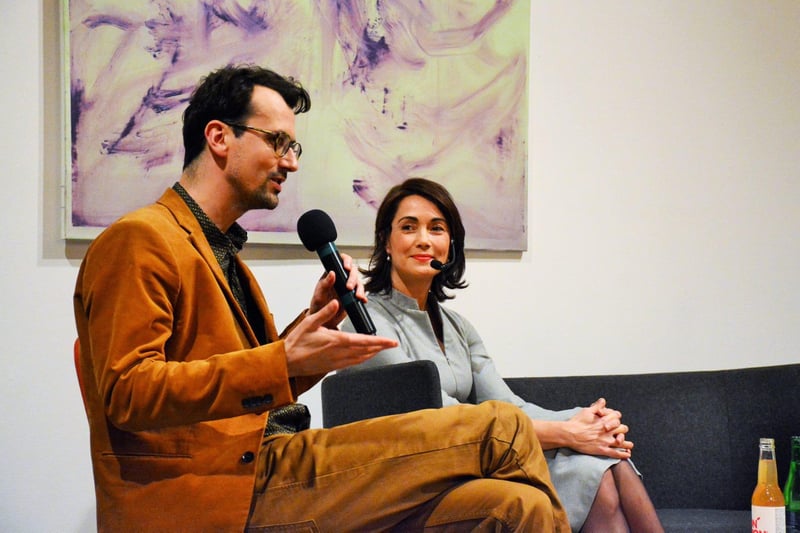
Dr Tomáš Páleníček works on research into psychedelics and their influence on the treatment of depression and schizophrenia. The Neuron Expedition allowed him to focus on research into the effects of ayahuasca — the mysterious psychedelic drink that South American Indians have prepared for their rituals for centuries. It has been demonstrated that taking ayahuasca during controlled experiments has very rapid and strong antidepressant effects. But what effect will it have when taken in its natural environment? What new findings will emerge during traditional Indian rituals? Will ayahuasca one day be suitable for ordinary therapeutic use?
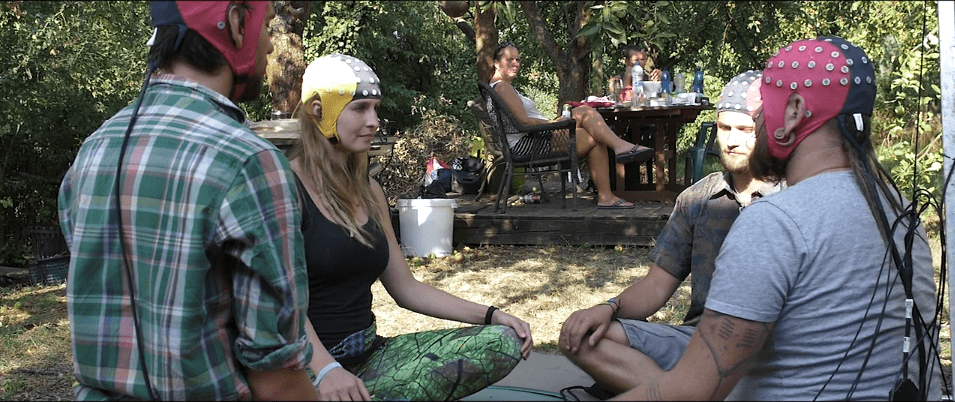
These are the questions Tomáš Páleníček wants to investigate with his team in the Amazon. Using EEG equipment he will record the brain activity of volunteers from among the local indigenous inhabitants after taking ayahuasca during traditional rituals. He will then compare the data obtained with findings from controlled experiments in the Czech Republic. There are not many people in the world who would travel so far to research ayahuasca. And the road is a thorny one...
We are off
When we received a wild card from the jury of the Neuron Expedition in 2015, we had only a distant idea of how wild a journey awaited us. The original plan was clear: to go to the Amazon in the summer of 2016, meet the local people who traditionally use ayahuasca, record a traditional ritual and gather data to compare with what we had obtained during our experiments in the Czech Republic. Simple.
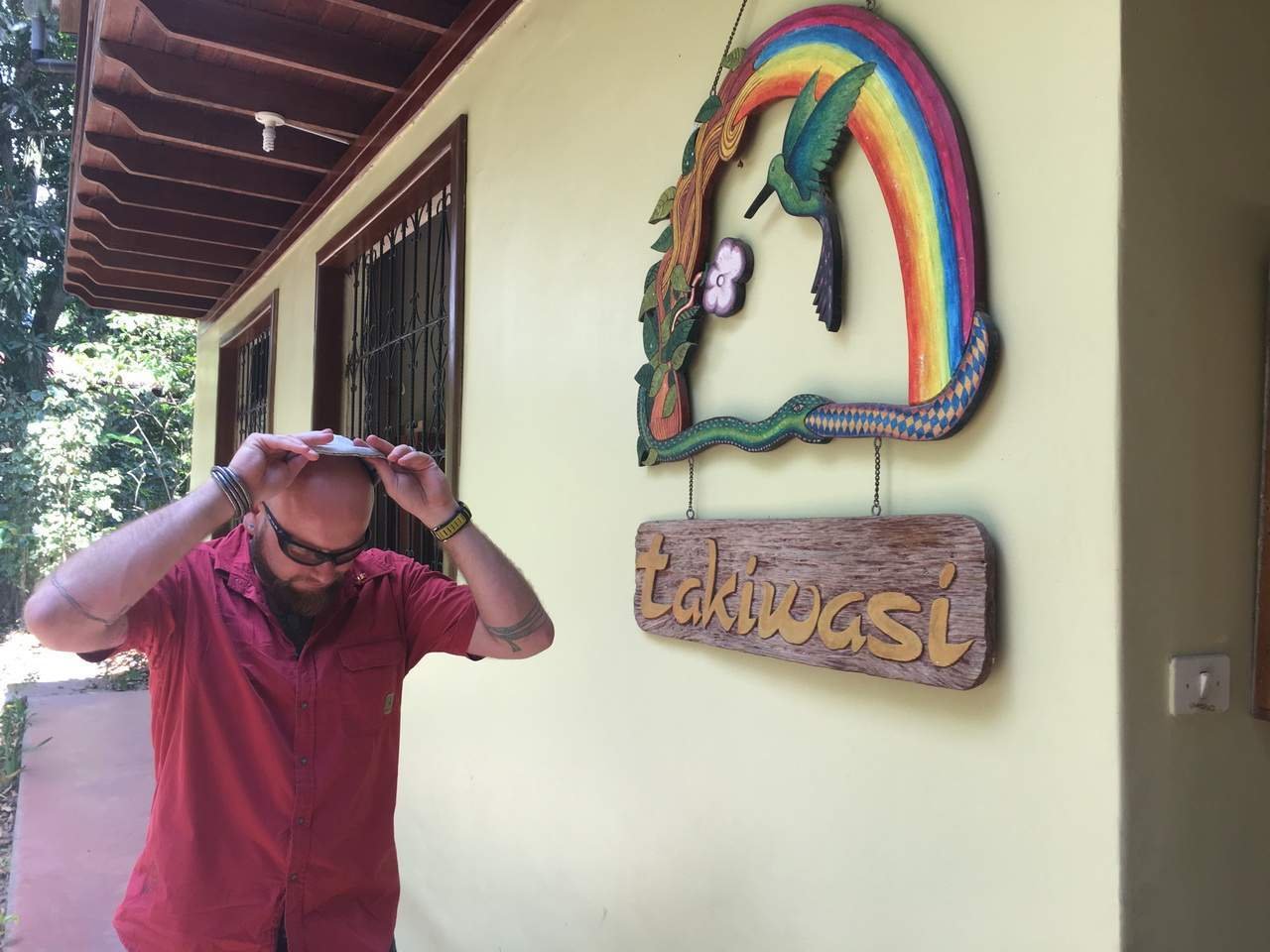
Finding indigenous inhabitants willing to take part in scientific experiments is traditionally demanding. Our situation was to be made easier by an arrangement with a therapeutic centre in Takiwasi in Peru. Some members of the local team indicated that we would be able to begin our research in their group. At least that is what we understood from our mutual communication. It flowed at a pleasant South American rhythm: 1 e-mail every three months. One could even have understanding for such a rate of communication… had they not in the end withdrawn from the cooperation. Apparently science cannot be combined with their conception of healing and of measuring the soul.
A year's work came to nothing.
A contact for a shaman
At the Psychedelic Science 2017 conference in Oakland I happened to meet a colleague, Eduardo Schenberg — a Brazilian who worked at the prestigious Imperial College in London under the leadership of Robin Carhart-Harris. Eduardo is a very capable neuroscientist who has long worked on ayahuasca research. During our discussions Eduardo mentioned that he works closely with one very open-minded shaman, and that this shaman's father is apparently the main representative of an indigenous community of the Huni Kui tribe in the heart of the Brazilian Amazon. And that shaman would join us in our research!
A shaman has an irreplaceable position in the tribe. For someone to become a shaman, they have to undergo several years of careful preparation — much as in the Western world a doctor prepares through long years of study. Shamans are respected in the tribe not least because they know the secrets of the healing power of jungle plants.
One thing led to another. The original project, which was aimed at Peru, we substantially extended to include Brazil. We immediately had the changes approved by the ethics committee at the National Institute of Mental Health, translated them into English and Brazilian Portuguese and sent them for approval to various institutions in Brazil. Unfortunately that was also the end of the brisk part of the paperwork and the beginning of South American bureaucratic hell: the ethics committee wanted a stamp from the commission for the protection of Indians, which in turn wanted the consent of all the representatives of the Indian tribe, further permits and stamps from the ministry of science and so on… After endless running from pillar to post and reams of paperwork, the local ministry of science gave us the green light.
At another conference in Bern the same year I then managed to meet the owner of the company ANT-Neuro. He promised to lend us a professional mobile EEG designed for extreme conditions for our research. That considerably freed our hands and our budget — one such device costs about 40 thousand euros. In the end he was so enthusiastic about the idea of the research that he decided to go into the jungle with us, and moreover to bring seven EEG devices with him. Apparently so that we could record all the participants in the ceremony including the shaman.
Splendid.
On the way to the negotiating table
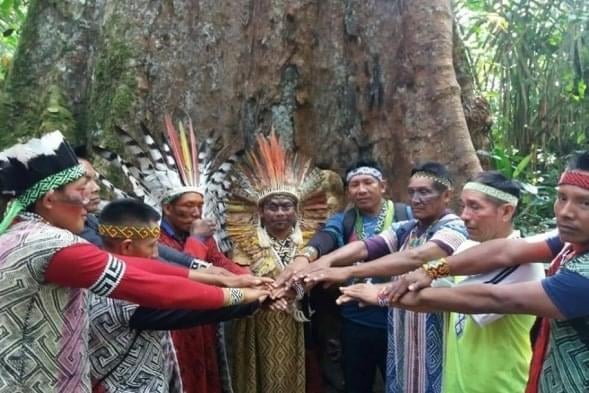
At last the moment came to go into the field. Almost a year late, but still, in January 2018 we set off together with Eduardo and the shaman to Rio Branco, the capital of the Brazilian state of Acre. There we met Ninawa Inu Huni Kui, president of FEPHAC — the umbrella organisation of the Huni Kui tribe in Brazil. This tribe, like a number of others, has for centuries held in its hands the secrets of preparing and using ayahuasca, a medicine that Western science still cannot describe satisfactorily.
For the people of the Huni Kuin tribe, ayahuasca plays a key role in their culture. According to legend, the knowledge of ayahuasca was brought to the tribe by their first mythical shaman — Yube. He is said to have fallen so deeply in love with a woman-anaconda that he followed her to the bottom of a lake. It was there that she revealed to him the secrets hidden in the plants of the jungle. After Yube and the woman-anaconda had raised children together, Yube returned to his village and brought his tribe the secret of the precious medicine. Ayahuasca itself is made by mixing two different plants — only the combination of these particular plants in the right proportion and their correct preparation unlocks the psychedelic — and for some visionary — effects of the drink.
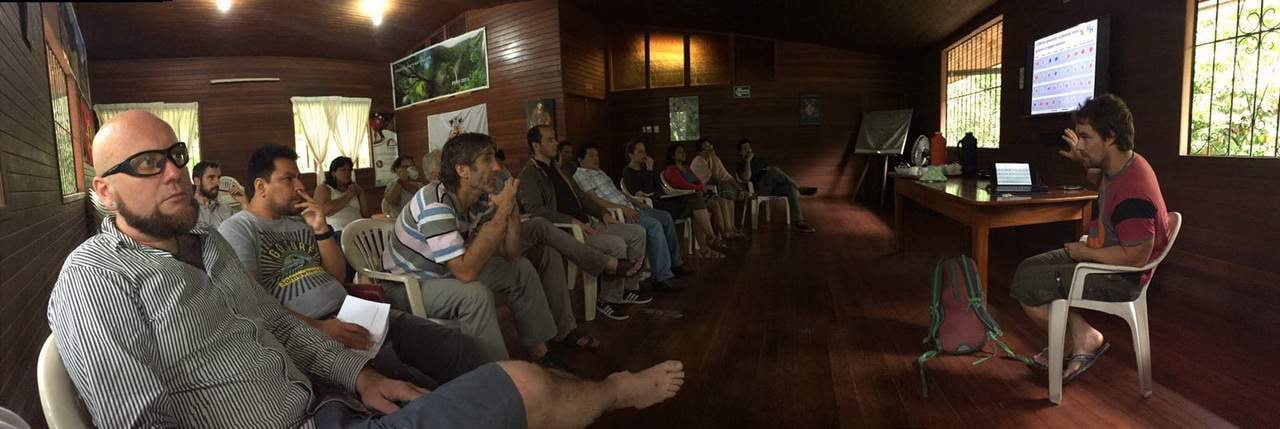
We presented our project to President Ninawa and asked his permission to begin the research in their tribe. After our experiences from the previous stages we were of course prepared for the decision not to come immediately. And once again we were convinced that South America simply has a different rhythm from us spoiled Europeans. President Ninawa not only did not give an answer but asked for representatives of the tribes from all 12 regions to be convened. They were then all to decide the matter together. This unplanned assembly took us by surprise not only in terms of time but especially financially — the transport, accommodation and food of the guests were entirely at our expense. Our sense of hospitality passed another South American test.
They have to confer... they simply have to think about it more...
If the mountain will not come to Muhammad…
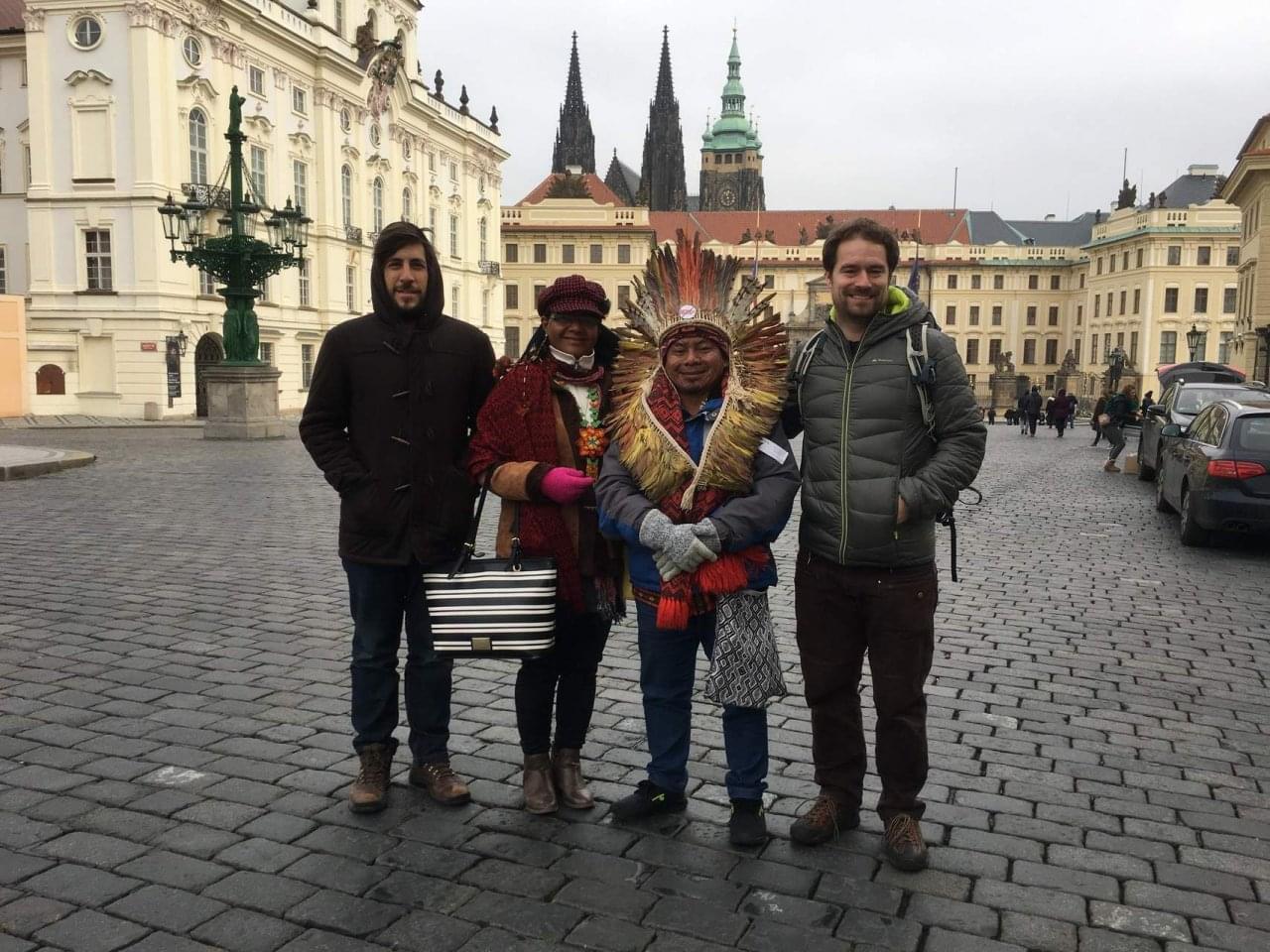
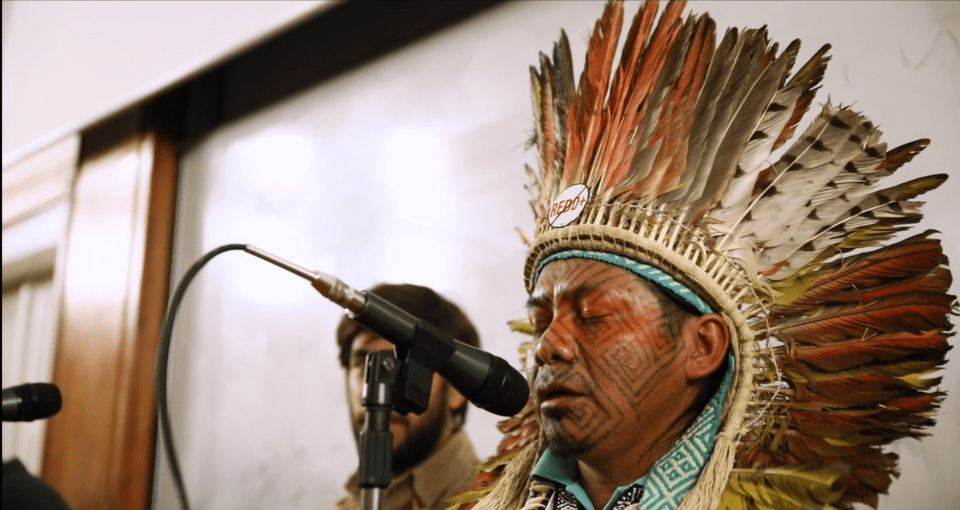
In an effort to really get the situation moving, we decided on a fundamental step. At the end of 2018 we organised the event Science meets traditions in Prague, with the aim of getting the Brazilian Indians to us. We wanted them to speak about their conception of ayahuasca, to get to know the project better and, in return, to get to know our environment. Imagine our surprise when, on a cold November evening, President Ninawa himself really did appear in the airport arrivals hall, in the traditional dress of the Huni Kui tribe and with an enormous headdress on his head…
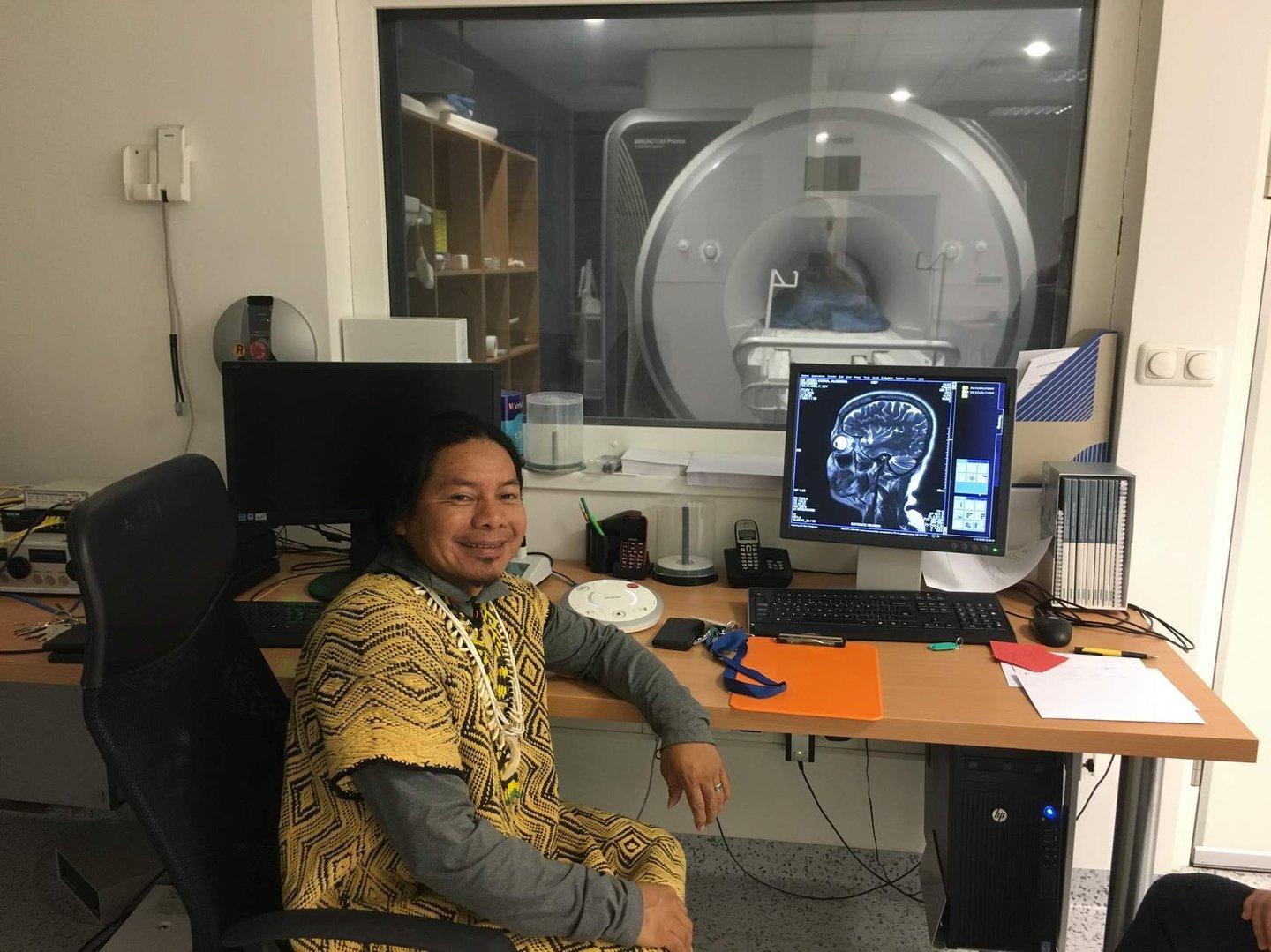
The event turned out excellently. President Ninawa attended several meetings, a lecture for students and trips around the Czech Republic. As a gesture of goodwill he let us record his EEG and even took rapé and sang during it. The high point, and at the same time proof that he is not afraid of the equipment, was undergoing a magnetic resonance scan of his head.
On the way to the research?
It is March 2019 and in a month we are preparing to go to Rio Branco again. There we will again meet representatives of the whole Huni Kui tribe. We believe that after four years of intensive negotiation, countless meetings and mutual visits, the tribe will agree to the research going ahead.
But we have learned our lesson, so on the way back we will, just in case, stop in Peru, where the Mayantuyacu centre has expressed an interest in working with us. After all, fortune favours the prepared.
Tomáš Páleníček
He has worked at the National Institute of Mental Health (NUDZ, formerly the Prague Psychiatric Centre) since 2001, when he began preclinical research into the neurobiology of schizophrenia in pharmacological models of psychosis. Very soon he extended his field of activity to research into the neurobiology of the effects of psychedelics (LSD, psilocin, 2C-B, mescaline and so on) and entactogens (the drug Ecstasy, or MDMA) and of new synthetic drugs. Alongside the research activities carried out during his postgraduate studies he completed clinical training in psychiatry and obtained a specialist qualification in electroencephalography (EEG). He defended his PhD in 2009 and obtained his specialisation in psychiatry in 2012. He has now extended his research activities to human experiments as well. He takes part in projects with ketamine as a model of psychosis and also in studying its antidepressant effects. He is the principal investigator of the first project in the Czech Republic aimed at researching the acute effects of cannabis in healthy volunteers and of the first project in the Czech Republic in which the psychedelic psilocybin is administered to human volunteers as a model of psychosis. The main direction he pursues within this research is the functional connectivity of the brain, studied by means of EEG. In clinical practice he currently works in outpatient care.