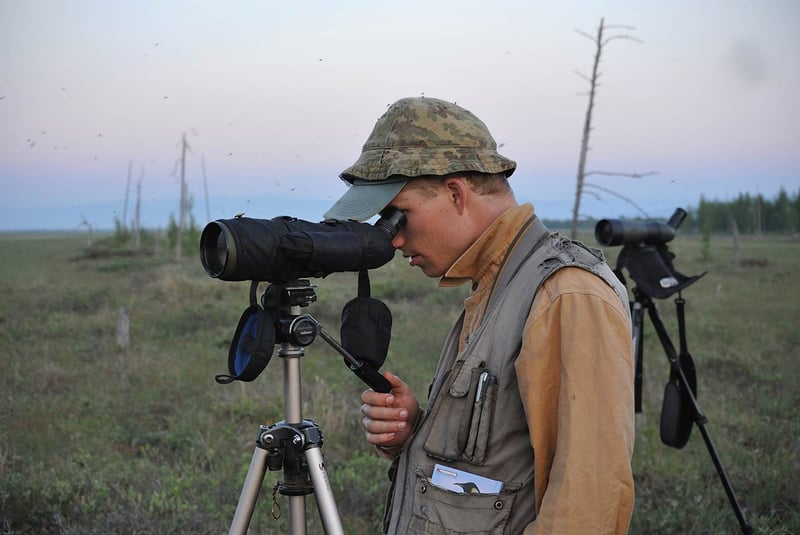
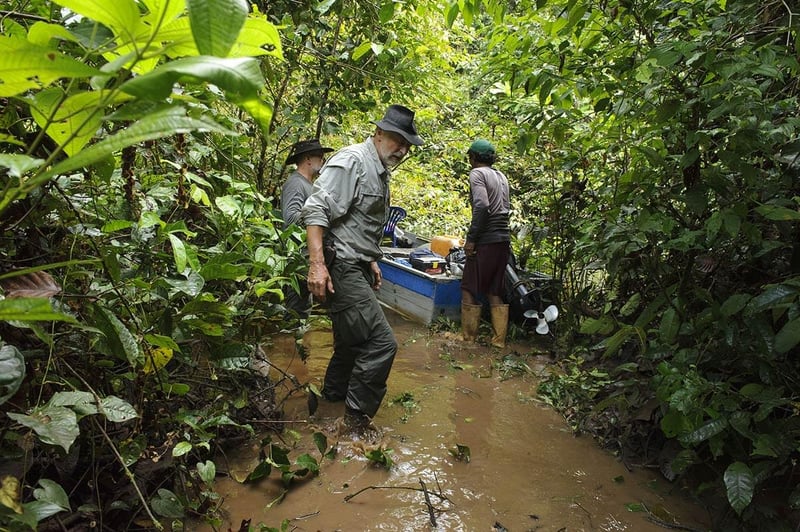
The influence of globalisation on the life of the "rich poor", 2017, anthropologist Radan Haluzík
5 July 2017
They earn abroad and build enormous villas in their native village. For people who became rich quickly, the houses are a calling card of success but also an anchor in their original home. That home they are gradually losing under the pressure of an ever faster pace of life...
The Neuron Expedition of the anthropologist Haluzík has been successfully completed! The anthropologist successfully studied and mapped the villas of the "rich poor" as an embodiment of the tensions of the globalised world. Besides the planned localities in Lebanon, Ghana and Guatemala, the team also managed to map dwellings in Kosovo and Mexico.
The subject of the 2017 Neuron Expedition: the social anthropologist Radan Haluzík has been studying megalomaniac houses all over the world for several years. His aim is to describe the cultural and financial flows and the tensions of the globalised world. Within the Neuron Expedition he set off to visit the villas of the "rich poor" in Lebanon, Nigeria and Guatemala, and beyond the plan also in Kosovo and Mexico. The intention of the project was to study the villas of the "rich poor" as a phenomenon that is not so much a product of its place as a consequence of worldwide changes, of the global flow of labour, goods and capital, but also of ideas and human dreams. In 2017 he received an award of CZK 346,000 from the Neuron Endowment Fund. The research took place, with breaks, from July 2017 to October 2018.
Read his travel notes from Guatemala and Mexico, Ghana, Lebanon and Kosovo.
The villas of the rich poor as a global phenomenon
What do the houses you are interested in look like?
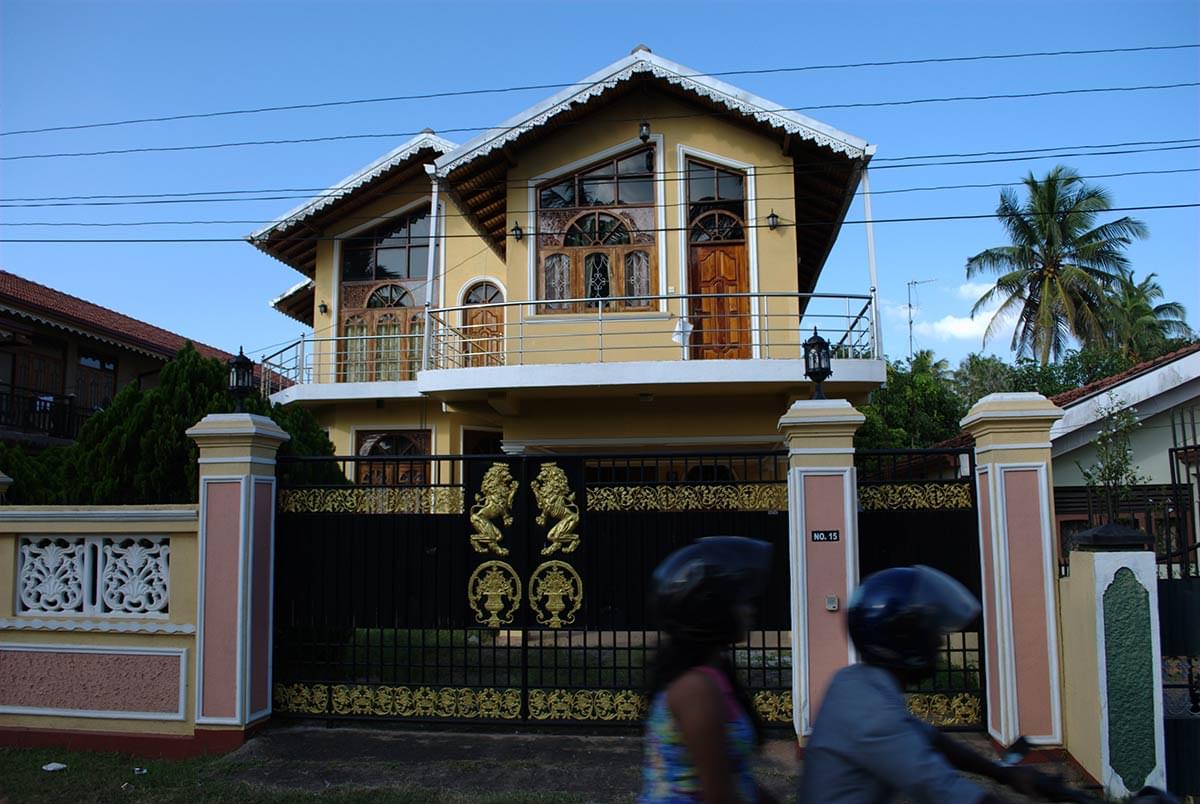
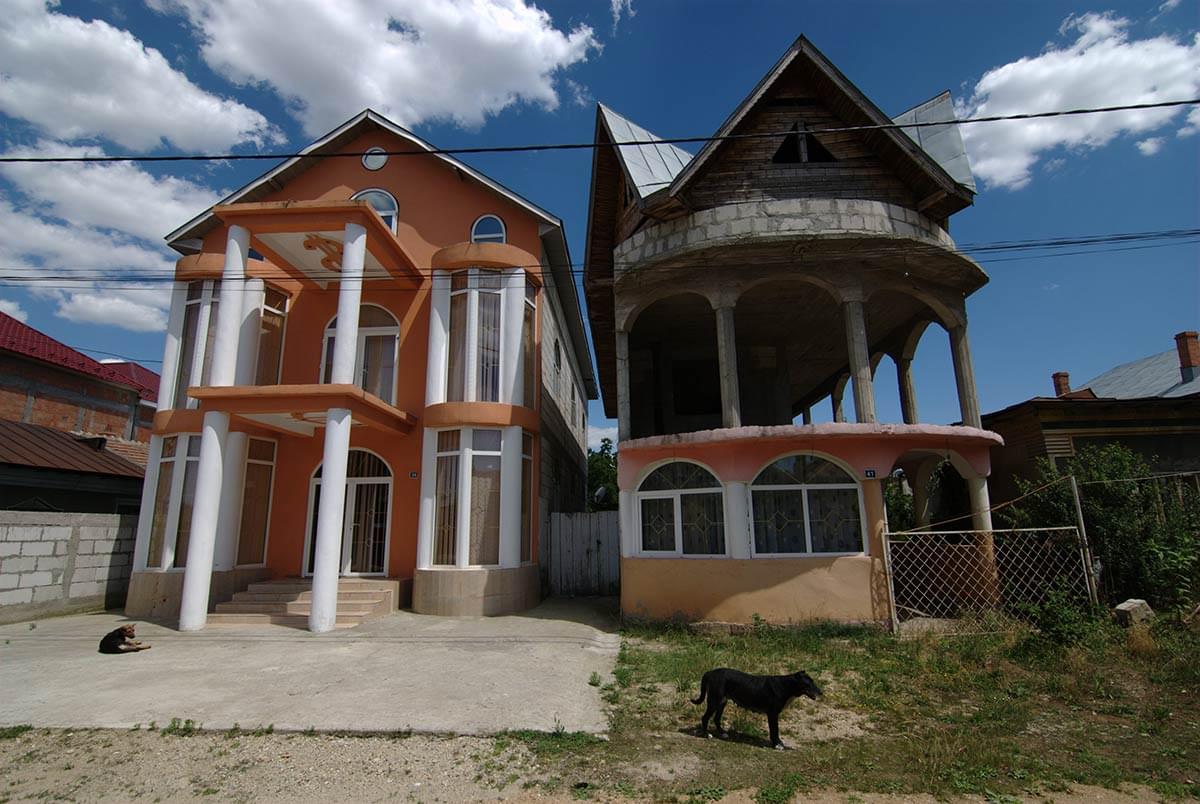
They usually resemble several-storey chateaux with many turrets, bay windows and balconies. Some are only a shell; elsewhere windows and doors are fitted. Most of the houses have exaggeratedly large spaces for receiving guests, in halls decorated with colonnades, chandeliers, carpets and carved furniture. You will find luxurious bathrooms there with glittering taps, coloured mosaics on the walls and so on. Meanwhile the owner and his family often live in one or two small rooms, or in the original little house right next door. It is typical of most of these buildings that they do not yet have water connected, the heating does not work properly, most of the rooms are unfinished and staying in such a house is quite uncomfortable.
How do you choose the areas you travel to for research?
I am interested in rapidly developing parts of the world where people have become rich literally within a single generation. I have travelled a lot myself, I have plenty of friends who travel with a rucksack, and my collaborators and students point out to me where people are building for dear life and bring me photographs. The life of these houses is also reflected in the media and on the internet.
What is the aim of your project?
People in poor countries can today see the prosperity of developed states on their mobile phones or in television soap operas. Money seems within arm's reach and so it seems logical to them to get wealth for themselves too. They go abroad, but at the same time this possibility of reaching the global flows of money tears them out of their roots in their native village. So they build enormous showpiece villas to prove to the neighbours that they are successful and that they are — at least through their house, visible from far away — still there, in place. But they themselves cannot stay at home; they have to earn abroad to finish the building. In the better case they live abroad in undignified conditions and, in order to save money, work six days a week from morning till night; sometimes, though, they also become part of the grey economy or outright of the world of crime. In the project I also want to show that the current idea of a rich north and a poor south no longer entirely holds today. Great global financial flows rise in and pass through even the poorest countries, and this type of house grows out of them.
Which countries have you already visited and where would you still like to go?
On each continent I would like to map two or three countries where this phenomenon is pronounced. So far I have been to Indonesia, Sri Lanka, Afghanistan, the Caucasus, Albania, Croatia, Bosnia, Montenegro, Kosovo, Macedonia, Moldova and Ukraine. This year I am going on the Neuron Expedition to Lebanon, then to Guatemala and Nigeria or Ghana. But I want to visit a few more countries.
How do you make contact with the owners of the houses?
I do not arrange much in advance. Usually I meet them in their garden or at the fence. I often have the impression that they were somehow directly waiting for my visit, so that they could show off and show me the interior and sometimes even offer me a night's stay. I am a model guest; I tell them how we live at home, where I am going, where I have been and what the houses are like there. That interests them very much. It seems obvious to them that people build large villas in other parts of the world too.
Do they believe they will one day finish their house?
Mostly yes; few say they will not finish it. Anyone who fits windows and doors always believes they will finish the house. They have to earn money to connect the electricity, water and heating, which is why they work abroad most of the year and come during the school holidays with their children and slave away at finishing the building. The house is for them like an anchor in their native village; it is proof of their presence in the community. They often say something to the effect of: "Ahmed isn't here, but his house is here!" The unfinished state is the reason for his absence, and he will be here once he finishes it one day. They are still at the stage of imagining and hoping that they will complete the villa. I must stress, though, that these are not the houses of some primitive yokels who cannot count. Investment in building is one of the few sensible ones that makes sense in their incredibly strained, globalised world. A hundred times better than buying a luxury car, say, or simply frittering the money away. The houses bind them to their original community and hold together a family scattered around the world. Theoretically they can finish it one day, even if they have to work far from home to earn the money to complete it. I believe that a number of these unfinished homes will be finished and inhabited at least by the next generation.
Are they not afraid someone will burgle the house during the year?
Usually a grandfather, grandmother or neighbours live nearby and check that everything is all right. When they no longer have grandparents, they fit the house with alarms. If someone broke a single window, they could arrange a repair by telephone within a few days. But there is not much looting, because in a village or in the suburbs everyone knows one another well.
How does the building work?
In each country it is a little different. But in general, anyone who works as a bricklayer in the West usually builds it themselves. I remember a father and son who built a perfect house in a single summer! When the frosts ended high in the mountains at the end of April, the two of them worked without a single day off until the end of October, when it started snowing. Until then the whole family lived in a shed. Others cannot build and take it on themselves anyway. They draw a simple plan on a piece of paper, hire diggers, have a large hole dug, put up the shell and… run out of money. Without a plan they cannot tell how much the complete house will cost. So they continue the following year, when they bring some more money from abroad. Others hire several firms; one does the shell, another the plumbing, another the electrics. So again the owner does not know how much money he needs for the whole house. The firms do enormous business. In Moldova I commonly saw carved and inlaid front doors costing 20 to 40 thousand euros.
Do people from one village help each other with the building?
Families do, but neighbourly help is not so common when everyone around is building. People come in August, when their children have school holidays, and have to work on their own house and on relatives' houses. In the meantime there are also plenty of weddings, christenings and, in some places, circumcision celebrations to attend. If a person also had to help all their neighbours, they would go mad.
A house is almost like a ball and chain. What do the owners' adult children say about such a burden?
They take it that the house is being built for them. They try not to fall out with their parents too much; it would seem ungrateful to them to say they do not want the house. Some adult children do think it a little, but they do not openly say that they no longer want to live in their native village. Usually there is nothing there apart from the houses; there are no roads, pavements, sewerage, infrastructure… But above all no work and no chance of entertainment.
Do they build villas for all their children?
Mainly for sons; daughters usually marry and move away. It is characteristic among Albanians that the money earned by one member of the family is handed over to the head of the extended family — the father or the older brother. But he usually invests it in building several identical houses at once — one for each brother. They build three, four, or even nine enormous villas in a row nicely side by side! When I took my students to villages in Kosovo for a workshop, they thought they were some kind of developers' projects.
What makes such uncontrolled building possible?
It must first be said that this is not about building individual houses; often whole villages and suburbs grow up, literally like mushrooms after rain! In developing countries the lack of control is due to a shortage of local administration, a weak state. In Eastern Europe it is due to the collapse of the socialist state machine, which until recently supervised everything everywhere, when building authorities essentially stopped functioning or were completely corrupt. In some developing countries you do not need any building permit; elsewhere they at least have a zoning plan with regular streets and plots, but without utilities. In the former republics of the Soviet Union it is enough, to obtain a building permit, to say how large the footprint will be and how many storeys you want to build.
The Kalderash Roma in Romania often build huge palaces without permission and occasionally even without registration in the land registry. They bought the land somehow, but perhaps did not register the change in the land registry. Now the Romanian media occasionally show families with children being driven out into the street with police assistance and the house that cost them all their money being demolished before their eyes, and it brings tears to your eyes… Mostly it is the illegal buildings of Roma that are pulled down, rarely those of Romanians.
Here we say that home is where we played marbles. Do they feel at home in their native village, or abroad?
They regard their original community as home, which is why they put so much money into building, even if in practice they are not there much. Abroad, on the contrary, they live in fairly wretched conditions, perhaps in a garage with several other men, while at home they have a three-storey house! With the building they compensate for the highly asymmetrical status of a person who is the last of the last abroad, so that at least at home in the village they can show they are somebody. That they have their dignity.
Why do they not sell the house and build a smaller, more suitable one with the money?
The houses are unsellable, because there are so many of them and so few job opportunities in the community that nobody wants to move there permanently.
Do they think about life in retirement, when they will no longer have the strength to earn for finishing the house?
Anyone who worked legally in the EU, say, is entitled to a pension according to the number of years. Or they have children who already live abroad permanently, so they send them money or they can go to join them. The saddest is the one who built no house at all. Recently I stayed with a family in a little house of less than twenty square metres, without water, without a road. The father worked for a few years in Germany and gets a small pension. Before he came back prices rose and the money was only enough for the land; what is more, his family scattered around the region. Only in such cases can you see that having no house is worse than having a large unfinished house of the kind I study.
What were the greatest obstacles you had to overcome?
I have literally fallen in love with this project and have had plenty of pleasant experiences during it. But it is sometimes sad to follow the fate of some half-built communities. For instance when you come to a beautiful town in the foothills where, until recently, old Turkish houses stood on the çarşı in the "historic centre". Today they would attract crowds of tourists, but instead never-finished concrete monsters jut up towards the sky.
How do you cope with the language barrier?
In the Balkans I get by in Serbian and Croatian, around the former Soviet Union in Russian, in Indonesia, Sri Lanka, Lebanon and part of Africa in English. Now Spanish awaits me in Latin America, so we will see how I cope with that.
Now trips to Lebanon, Nigeria and Guatemala await you. How long will you be there?
Always about a month. In each country I have selected places, but occasionally I see something interesting on the way and drop the area I originally picked. What is important for me is making human contact. I do not arrange visits in advance. I go there blind at first. If things go well in some area, I go back.
That is quite bold, relying on someone offering you a bed for the night?
When it does not work out, I go to a small hotel and the next day walk around the village looking again. I get talking to those who have come on holiday and to older people, local patriots and chroniclers; they have plenty of free rooms and usually invite me.
Do you bring gifts?
Not much, at most postcards. Both they and I are interested in getting to know one another. I am interesting to them for the stories that come out of the contact. It is like coming to visit someone; at the beginning I let the conversation take its own course.
You have been following the phenomenon of megalomaniac houses since the 1990s; do current buildings differ from earlier ones?
Owners strive for better-executed details, better-quality plumbing and wiring, they try to have better paving. The oldest houses from the end of the 1980s are already outdated and many are starting to fall into disrepair prematurely. They are beginning to renovate or totally rebuild them. You can tell that buildings without a plan end up in a blind alley. They decay because they are badly thought out. They leak, something is always rusting somewhere, they cannot be heated properly.
Do the villas differ in different parts of the world, or are they similar everywhere?
Owners decorate the houses with details copied from local folk architecture, historical films or their national monuments. But the more doggedly they strive for local authenticity, the more similar the houses actually become. When you hang all those local turrets, balustrades and ornaments on a modern structure, paradoxically it always turns out rather similar! Anyone who does not know the place in detail cannot even tell which part of the world the houses are from.
Is it worth travelling almost all over the world when the houses are similar everywhere?
The processes around them are similar, and that is an interesting finding. I want to show this sameness as a global phenomenon; that certainly makes sense. The houses I study reflect their time more than their particular place. I try to study them as an embodiment of the tensions of our globalised world.
Will this phenomenon ever pass?
The large houses I study are a kind of avant-garde of globalisation on the economic periphery; they show how the marginal regions of the world might develop further. Broadly speaking, the fate of the whole phenomenon depends on the fate of today's globalisation. I do not know how it will turn out. At present there are very strong anti-globalisation currents from various directions. From nationalists, Eurosceptics, supporters of Brexit, the new right; Trump's attitude to migrants will evidently play a role too. Until now I had the feeling that the river of migration could not be stopped, but recently it looks as if everything may go awry and the movement of labour may stop, leaving whole regions of this planet high and dry. Without work, or conversely without access to their home communities. Anthropologists and historians have known for years that the forces of opening and closing a society go somewhat hand in hand. That they are part of one process. The more globalisation there is, the more communities and people feel the need to protect themselves, to bristle, close up, put on armour and look out through arrow slits. They feel a sense of loss, of uprooting and of threat. This ambivalence is a great danger of our world.
Why are there few people who build a house on a reasonable scale?
There are a few, but people in communities that are growing rich quickly compete with one another a great deal. And above all, as I have already said, the house is meant to be an expression of their newly formed identity and to represent them in the community even when they are not there. So in terms of the possibilities they live with, it simply makes sense.
Is the size of the house related to education?
Of course, educated people are more often able to build a house of appropriate size, but they are dependent on a large city where there is work, the internet, the chance to maintain contacts. What is more, in the generation of people who have newly grown rich, which interests us, there are not many who had the opportunity, the time and the conditions to go to school. That chance usually opens up only for their children.
Have you talked to people who invest in their children's education instead of in a house?
Yes I have, but it is often harder for them than it seems. And it is not only about money. On the one hand it is not easy to bring up a student who studies willingly on their own and enjoys it; on the other hand, for all the prestige education has, they end up somewhat estranged from you. That oddball, buried in books or spending days at a computer, sometimes grows more distant from you than a son who works as a bricklayer on the other side of the world.
Which region do you most enjoy travelling to?
The countries of the former Yugoslavia — Kosovo, Bosnia, Macedonia, Montenegro. And Albania and also the Caucasus. In a small area there is a great variety of landscape, mountains, sea, lakes, plenty of ethnic groups and large houses wherever you look… The Balkans and the Caucasus fill me with great joy.
When will you finish the research?
Within two or three years. Then I want to write some scientific studies and a book for a wider audience. The research reaches out from social anthropology into architecture, urbanism, modern history, social geography… In a book with many photographs I would like to show the unexpected face and the tensions of our globalised world.

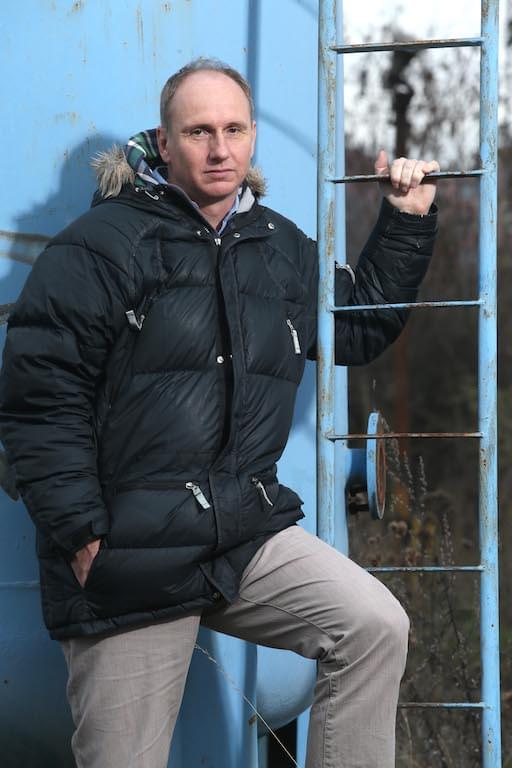
Radan Haluzík
The biologist and social anthropologist Radan Haluzík (47) works at the Center for Theoretical Study of Charles University and the Czech Academy of Sciences. He studied at Charles University in Prague, at Stanford University in the USA and at University College London. He was born in Zlín and lives in Prague. Among his subjects of interest are the social life of things, of housing and architecture, the anthropology of contemporary armed conflicts, revolutions and collective violence, and also the relationship between politics and aesthetics, and the cultural history of the city and urbanism. The Neuron Expedition will allow him to travel to Lebanon, Nigeria/Ghana and Guatemala, in order to study there as an anthropologist, with his students and colleagues, the social life of the houses of the "rich poor", which is often bound up with work abroad, globalised trade, tourism and also crime.
(author: Lenka Vrtišková Nejezchlebová)
What they wrote about the Neuron Expedition:
Emancipatory architecture: dreams and traumas set in concrete (28 November 2018)
About the rich poor (ZEN, autumn 2017)
The rich poor (Radio 1, 22 February 2017)
A big house — a big dream (Nový prostor, 2 February 2017)
The dream that was never finished (TÉMA, 13 January 2017)