Neuron Expedition — to Peru in search of the imperial snipe, 2017
5 July 2017
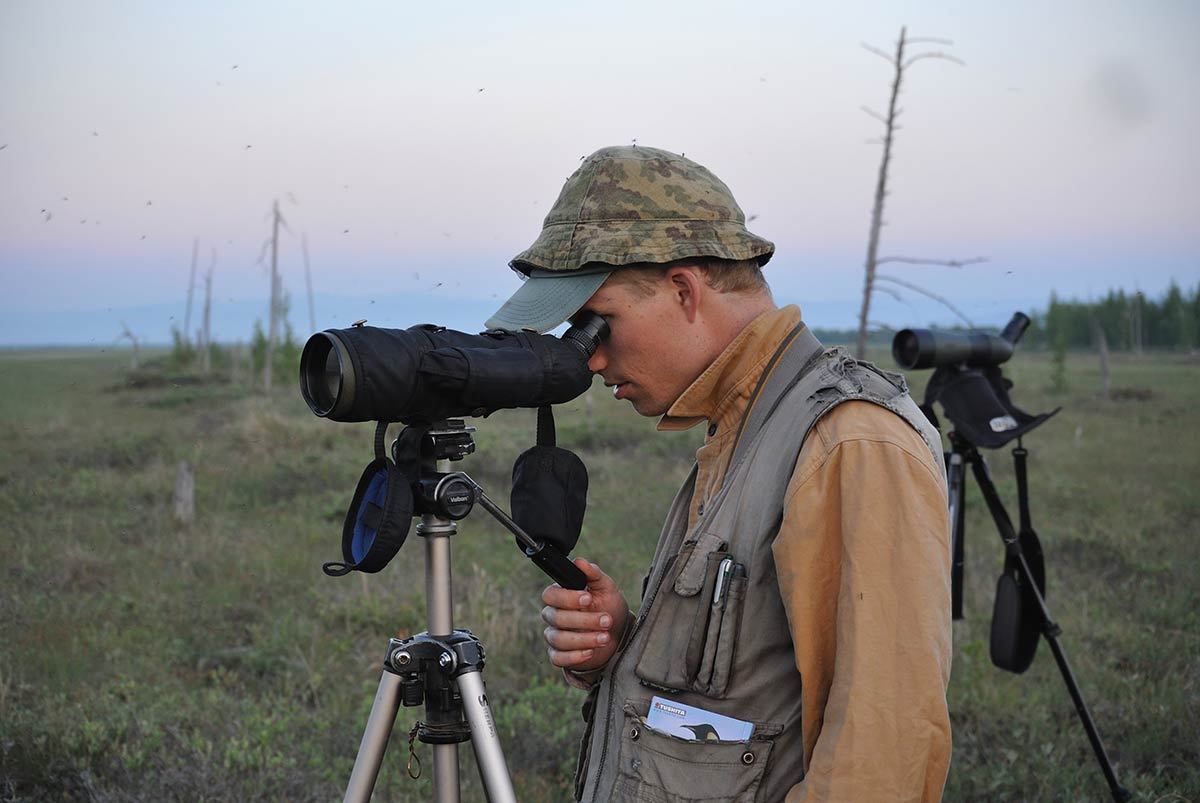
The ornithologist Vojtěch Kubelka set off for central Peru to learn more about the life of the legendary imperial snipe and to answer the question of whether it really is an endangered species or merely escapes human attention.
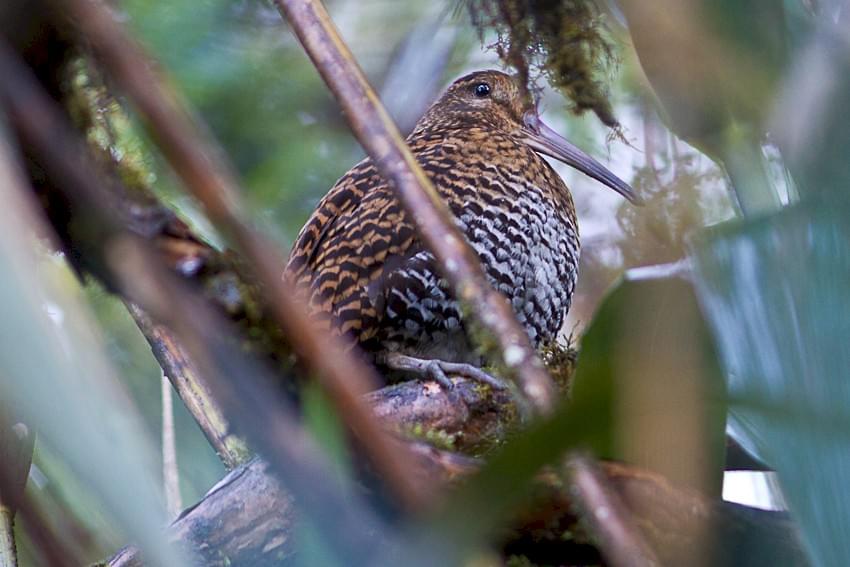
And how did it all turn out? The Neuron Expedition ended successfully! Vojtěch Kubelka managed to track down the imperial snipe and so prove the existence of this legendary bird.
The subject of the 2017 Neuron Expedition: the mysterious wader species the imperial snipe was considered extinct for more than a century. The aim of the expedition of the ornithologist Vojtěch Kubelka was to investigate the presumed territory of the imperial snipe (Gallinago imperialis) in the Peruvian Andes, to verify the records that exist so far and, where possible, to map new localities where it occurs. He spent 40 days in Peru with his team, from 6 November to 15 December 2017. He received CZK 139,000 from the Neuron Endowment Fund for his research.
Read the travel notes
It is a mystical species, says the ornithologist Vojtěch Kubelka of the imperial snipe
The Czech name for the imperial snipe is somewhat odd. Where did it come from?
Both males and females have reddish-golden edges to their feathers and give a somewhat more noble impression compared with other snipe species. It is also slightly larger than most snipes, about the size of a domestic pigeon.
Why did you choose this bird in particular as the goal of your expedition? What interested you about it?
It belongs to a very interesting group called waders. They live all over the world. From deserts through tropical rainforests and high mountains to the Arctic tundra; one species has even settled Antarctica. Their ability to cover enormous distances is fascinating, for example. The bar-tailed godwit can fly the route from Alaska to New Zealand in nine days without stopping. During the flight it takes neither food nor water. The roles of the sexes among waders are interesting too. Usually the male is dominant and more colourful, but in some species, tropical jacanas for instance, it is the female who defends a large territory. She has good reason to. Several partners live in her territory, with whom she successively starts a family. Waders also have very varied and often complicated systems of caring for the clutch and the young. In the grey phalarope, for instance, after laying the first eggs the female leaves the care of the clutch to the male, seeks out another male and lays further eggs. Usually it is the female who then looks after this second clutch. Unlike the first, the second male is thus free to form further relationships.
And why do I want to study the biology of the imperial snipe in particular?
It is in many respects a legendary bird. For almost the whole of the 20th century ornithologists considered it an extinct species, until it was rediscovered at several localities in central Peru. It is active at dusk; otherwise we know almost nothing about it. Now we have a chance to find the imperial snipe and get to know it better.
Why do only one of the parents care for the young in some wader species?
There are a number of theories about that. Songbirds, for instance, feed young that hatch naked, in the nest, and both parents have to provide food for them. In waders the chicks hatch already downy, soon leave the nest and look for something to eat themselves. The parent "only" guards them against predators and leads them to food, and possibly warms them repeatedly in the first days of life. As a rule one of the partners can manage that alone. The other partner can then leave the little family, which opens up room for the creation of varied and complicated mating and parenting systems.
But a parent cannot sit on eggs and at the same time lead already hatched young to food. How has nature arranged for the chicks to come into the world at the same time?
Towards the end of the incubation period an interesting phenomenon occurs. The chicks start signalling to one another by tapping and by voice when they will hatch, and synchronise their arrival in the world. Usually they all hatch within a few hours.
When did the wader group come into being?
At the beginning of the Tertiary, like a number of other bird groups, after the dinosaurs died out at the end of the Mesozoic.
Why were they given the Czech name "bahňáci" (mud birds)?
Most species move about on the sea coast and, inland, in muddy or marshy places. That is probably why the Czech name is "bahňáci". However, some species also occur in deserts and in mountains, where there are no marshes. Thanks to their ability to fly far in search of food, waders can also live in areas where there is no water.
What do they feed on?
From mud or coastal sands they generally pull out various bivalves, worms and other invertebrates, but there are also specialists in plant food or in hunting crabs. Waders are therefore distinguished by very varied bill shapes. Snipes have a bill up to 15 centimetres long; its tip, which opens like a small pair of tweezers, is very sensitive and forms a perfect tool for catching prey by what is called probing. Other species have bills variously massive, long or curved so as to suit the usual way the particular wader obtains its food. The rare spoon-billed sandpiper even has a bill whose end is shaped like a little spoon.
Do waders live in the Czech Republic too?
Nine species nest here regularly and dozens more pass through regularly. The most typical representative is the northern lapwing. In recent decades its numbers have fallen markedly; compared with the 1980s only about 15 per cent as many nest here today.
You leave on the expedition in the autumn — have you already picked out the places you will explore?
We will go to the area where ornithologists heard the typical call of the imperial snipe in 2008, so there is a real chance we will discover one of these populations. It is in mountains at about 3,000 metres above sea level, some 350 kilometres south-east of the capital of Peru. We also know of a locality where the snipe was recorded in the 1990s, but on satellite images only small fields can be seen, so it evidently no longer lives there.
How will you work in the field itself? You arrive at the chosen places — and then what?
During courtship, male imperial snipes fly out at dusk to display, perform acrobatic flights and make characteristic sounds. We will listen carefully and try to work out where they fly. A colleague, a specialist in catching birds in the tropics, will then set out fine nets and we will try to catch at least one bird. If we succeed, we will glue a miniature transmitter weighing one gram to the feathers above its tail, which is almost no burden for a bird the size of a snipe. Using radio telemetry and directional antennas the signal from the transmitter can then be located at a distance of three to five kilometres. Step by step we can thus learn where it flies for food — whether to grassy sites or into the forest — where it rests, and above all which environment it uses for nesting.
Will you try to lure the imperial snipe somehow?
We want to use a recording of a male displaying and defending its territory. This vocal signal should provoke the local male to fly closer, find out who has dared to come into his territory and, if need be, deal with him. Alternatively the recording can serve to attract females.
How did the recordings come about?
There is a database of bird calls from all over the world. Every ornithologist can add their "catch" and experts verify whether it really belongs to the given species. From the intensity and the melody it is possible to estimate whether it is a territorial call or a warning against a predator. Before we leave for Peru we will clean up and amplify the recordings so as to have the greatest possible chance of success. That is the responsibility of a colleague who has by now spent several years at a time in tropical rainforest and has good experience of catching birds.
What are you most worried about?
The greatest risk is whether we will manage to catch the imperial snipe in a net. Some birds may not react to voice recordings at all, or they approach but then take off steeply and avoid the net. It will be very tense.
Might you discover something globally unique?
In the Peruvian mountains the climate is very varied and for a number of species the nesting season is not firmly bounded. But if we were very lucky, it would be truly unique to find out where the imperial snipe hides its nest. With an installed mini-camera it would be possible to observe how often the parents take turns incubating, how the chicks hatch and generally what goes on around the nest… But I am not counting on that very much, because it really would be a great coincidence if we managed it. Even so, it will be a fundamental contribution to establish whether the imperial snipe really does live at the chosen localities, whether it stays rather in wetlands above the tree line or in forest cover… These findings will help us understand better which habitats it uses and what threatens any population of these birds. Nevertheless the slopes of tropical mountains still hide many unexpected surprises, so one has to keep one's eyes open.
What will the benefit of your findings be?
They may serve, for instance, to protect the habitat better, or even to declare a reserve. On the basis of our research it might also be possible to estimate roughly how large the population is in the areas where the imperial snipe may live. We would know whether it really is an endangered species or merely escapes human attention. We want to share the findings from the expedition at international conferences on waders, perhaps as soon as the meeting to be held this autumn in Paracas in Peru. We would also like to publish the results of the research in a specialist journal. I am going to Peru with three collaborators, and in South America two local ornithologists plan to join us. I regard the expedition as the beginning of longer-term cooperation in which local ornithologists could monitor the occurrence of the imperial snipe and study its biology all year round.
Vojtěch Kubelka
He was born in 1989 in České Budějovice. In 2014 he graduated from the Faculty of Science of Charles University in Prague, then continued with a practical work placement at the University of Bath in the United Kingdom, and is now in the third year of PhD studies in the department of ecology of the Faculty of Science of Charles University. Since 2004 he has been a member of the Czech Society for Ornithology and since 2014 a member of its committee; since 2007 he has been coordinator of the Group for the Research and Protection of Waders in the Czech Republic, and since 2014 a member of the executive committee of the International Wader Study Group. He has prepared and led, or taken part in as a member, several ornithological expeditions, among others to Alaska, to Chukotka in Russia and to Lake Baikal, to Georgia, Egypt and Morocco.
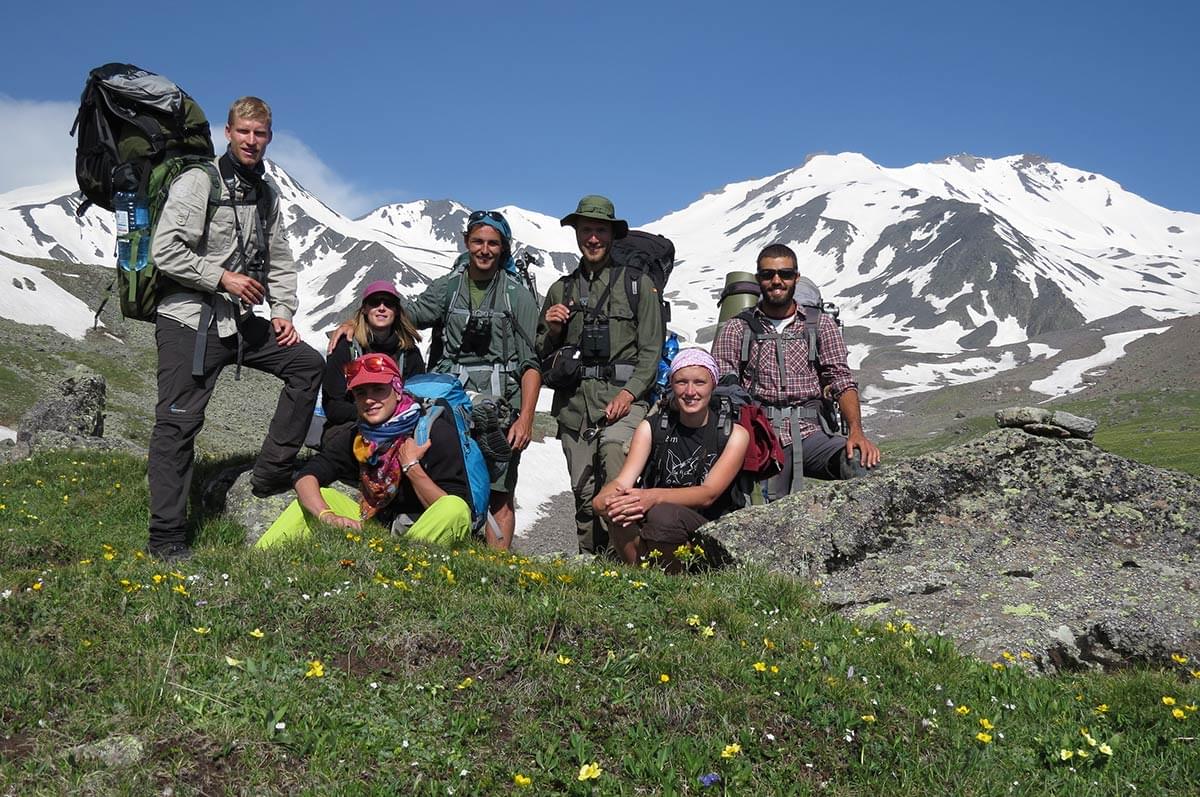
What they wrote about the Neuron Expedition: