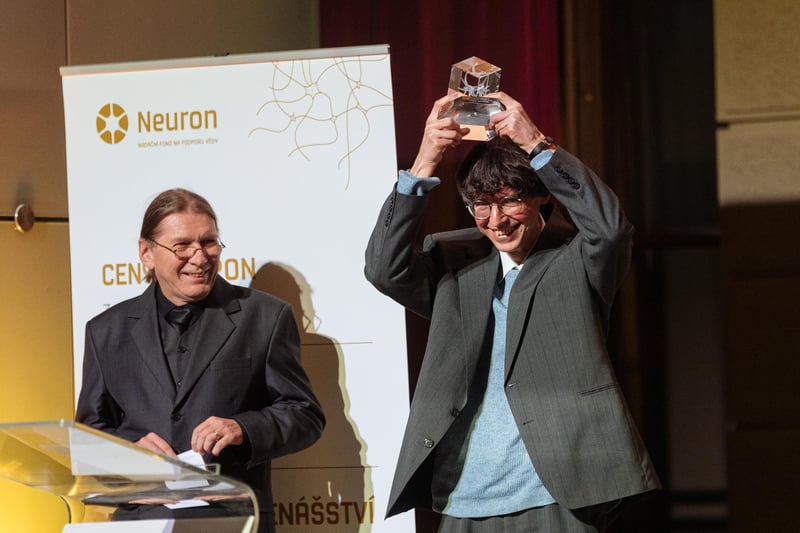
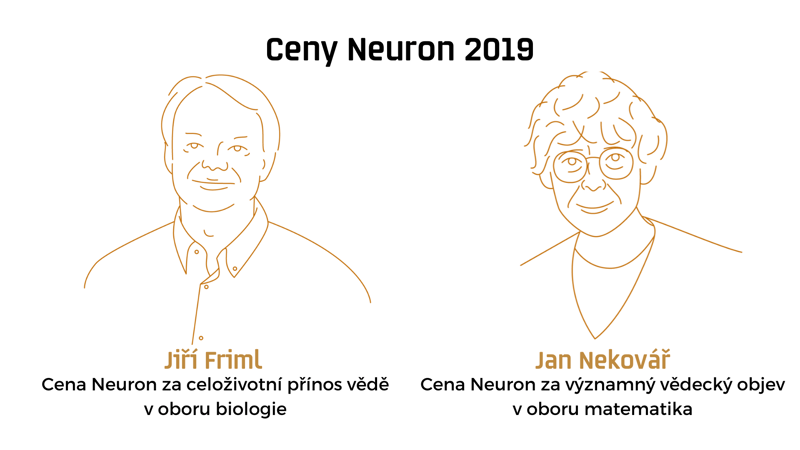
The man who understands the language of plants, or Jiří Friml for Neuron
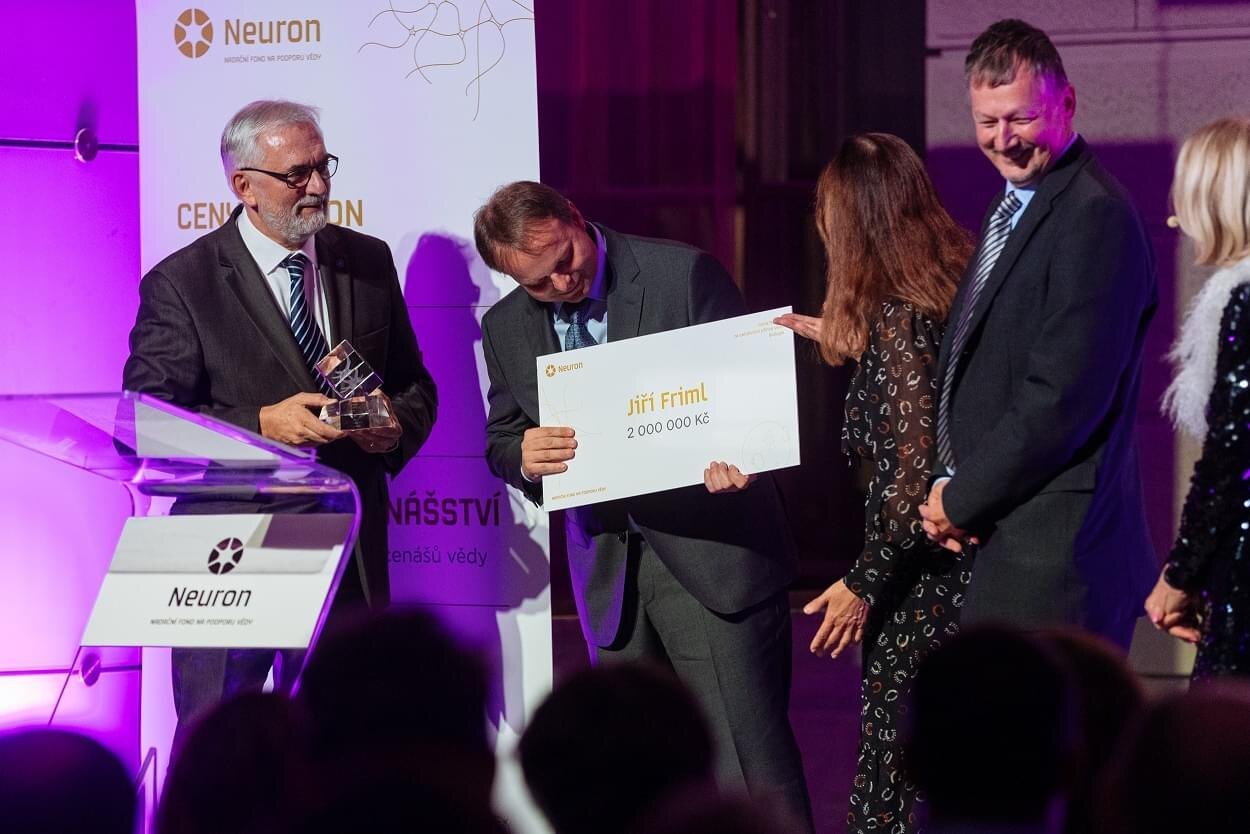
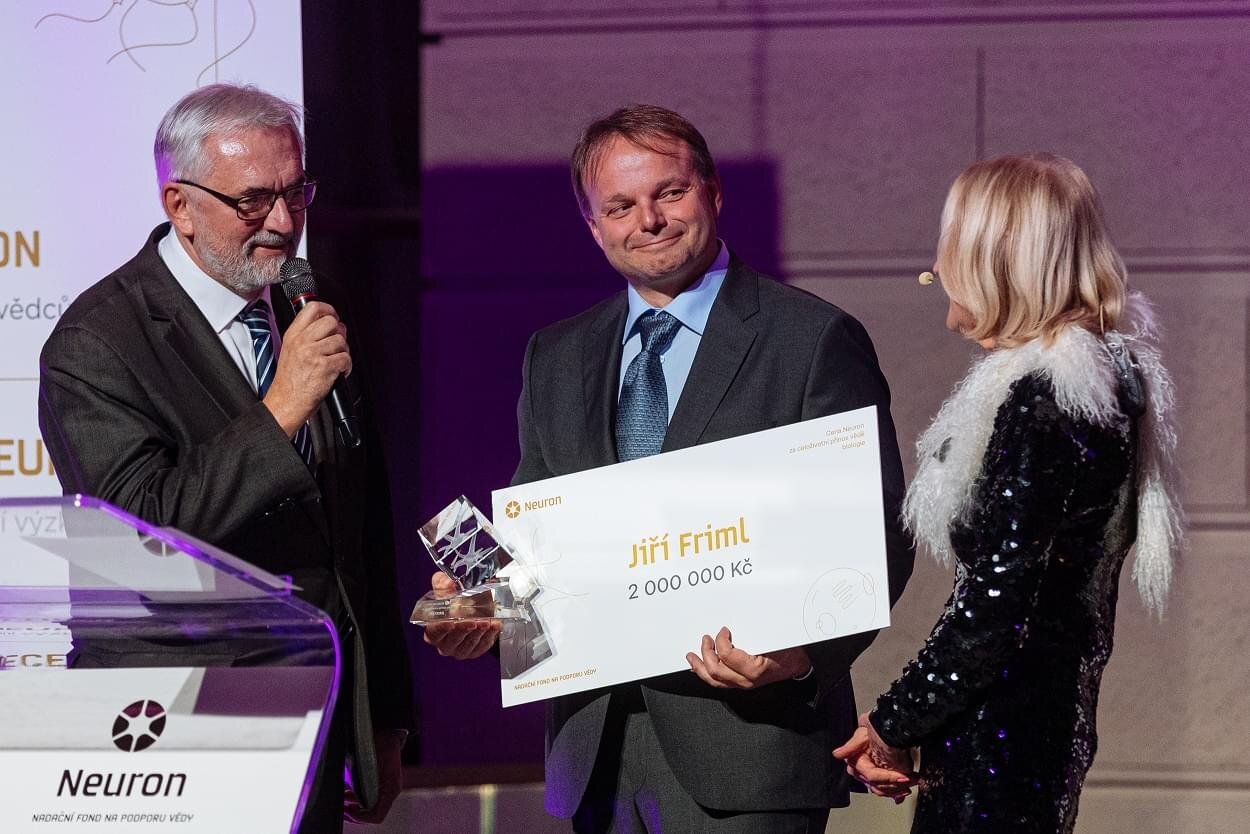
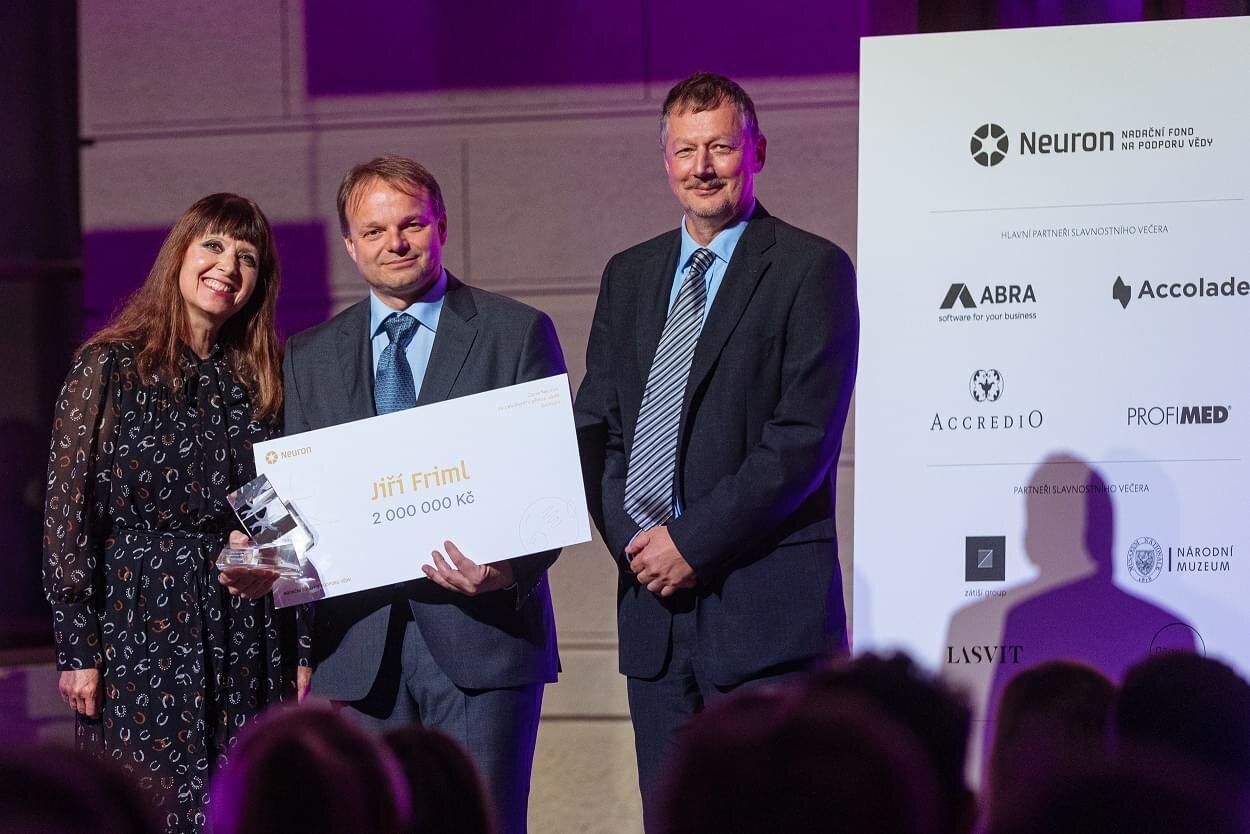
It does not often happen that someone receives an award for lifelong contribution at the age of forty-six. The biologist Jiří Friml is an exception. One of the most internationally recognised and most cited Czech biologists, currently a professor at the Institute of Science and Technology Austria near Vienna, he is a pioneer of genetic research in the area of plant cell biology and physiology.
"I try to understand how plants grow and develop. How is it that exactly the same plant growing in the mountains and in the wind looks completely different from its identical twin in the valley or even in a greenhouse," he explains. "That is where plants are brilliant, in how they can reprogram their own development. Because unlike us they cannot get dressed, run away, attack or half-kill anyone, they simply stay where they are and adapt their development to the given situation. From a tiny piece, or even from a single cell, they can create a whole new plant again. And that is exactly what interests me — how it works, how a plant perceives and processes signals from outside and translates them into some response, which means it starts to grow in a particular way. Of all that we still know only fragments."
Jiří Friml has, however, contributed to understanding one fairly fundamental fragment. He won worldwide attention with his work on the plant hormone called auxin. With his team he discovered that it is auxin that is the universal signal plants use and that they invented for themselves. It is the answer to why sunflowers turn towards the sun, how it comes about that a plant can grow new "arms" and new "heads", and how it knows which way is up and which is down.
Jiří Friml himself attributes the fact that he was present at the birth of such a discovery to several circumstances. Firstly ability: "I probably have the ability to see the paths that lead to the goal." Secondly hard work: "For a while I worked like a madman, it completely absorbed me, I thought about almost nothing else, I simply wanted to get to the bottom of it. You take thousands, hundreds of thousands of seeds, which you poison in various ways so as to damage their genetic information, and then by comparing them you look for the damaged thing that the plant needs in order to react correctly." And thirdly there is of course an element of luck: "I was lucky to find myself in the right place at the right time and to start connecting those fragments."
That place was the Max Planck Institute for Plant Breeding Research in Cologne, where Friml ended up, as happens in life, purely by chance. His original plans for life were quite different — as a physical chemist he wanted to develop methods for determining the amount of vitamin C in oranges in Brazil.
The chance that changed it all was rather odd. At the end of the 1990s, while still studying biochemistry in Brno, Friml poisoned himself with mercury. "It was not carelessness but madness," he admits, adding that he was "a very alternative student". In the 1990s, when the borders were opening, his main goal was to travel and spend as little time at university as possible, and so, with visions of climbing in the Atlas Mountains, he somewhat "condensed" the writing of his diploma thesis. "In the laboratory, where I essentially slept, I was measuring with a mercury electrode and got a far bigger dose than was healthy." One day he woke up and the world was upside down; he could not even get to the toilet. Doctors found in his blood a level of mercury ten thousand times higher than normal. He recovered quickly, but in such a case the regeneration of the nervous system and full recovery take more than a year.
Let us go back a few months, though, when he was climbing some mountains again and a thick envelope arrived at home. His parents opened it and found in it a confirmed scholarship to Germany. Jiří Friml had meanwhile successfully forgotten the circumstances of the application for this scholarship; he had been promised a doctoral place in Brazil. But the head of department had once asked him at least formally to fill in an application for a scholarship to Germany, for which the department had to nominate one student, saying it would not come off anyway. Friml helped, repaying his boss with one small good deed for a lot of big ones, when the boss let him travel; he applied for a field he knew nothing about and put it out of his mind.
"I remember standing at a station somewhere in Morocco when my mother rang me. How I then sat down on a bench in a little park and thought about what to do. Surely I wasn't going to go to Germany just because my boss needed to nominate someone for some scholarship. Surely I wasn't going to change my life and my Brazilian plans over such a silly thing."
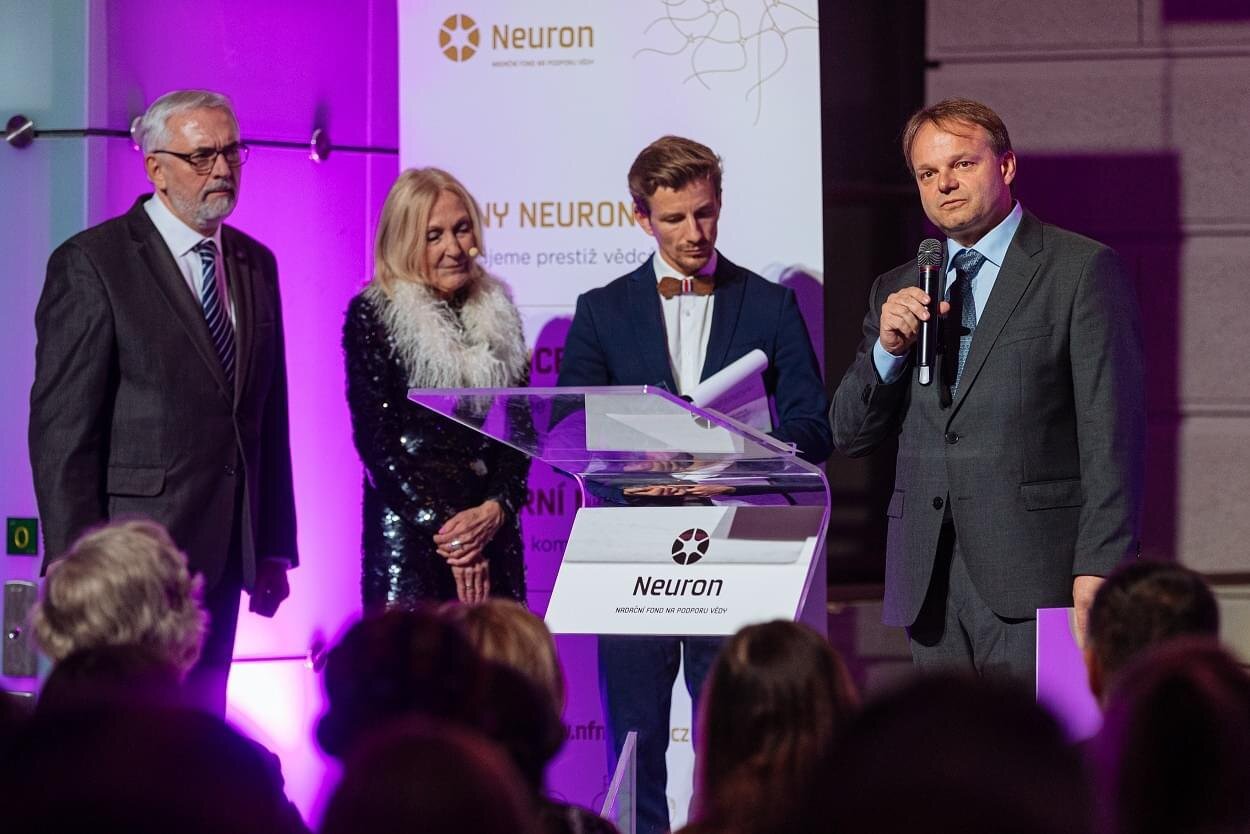
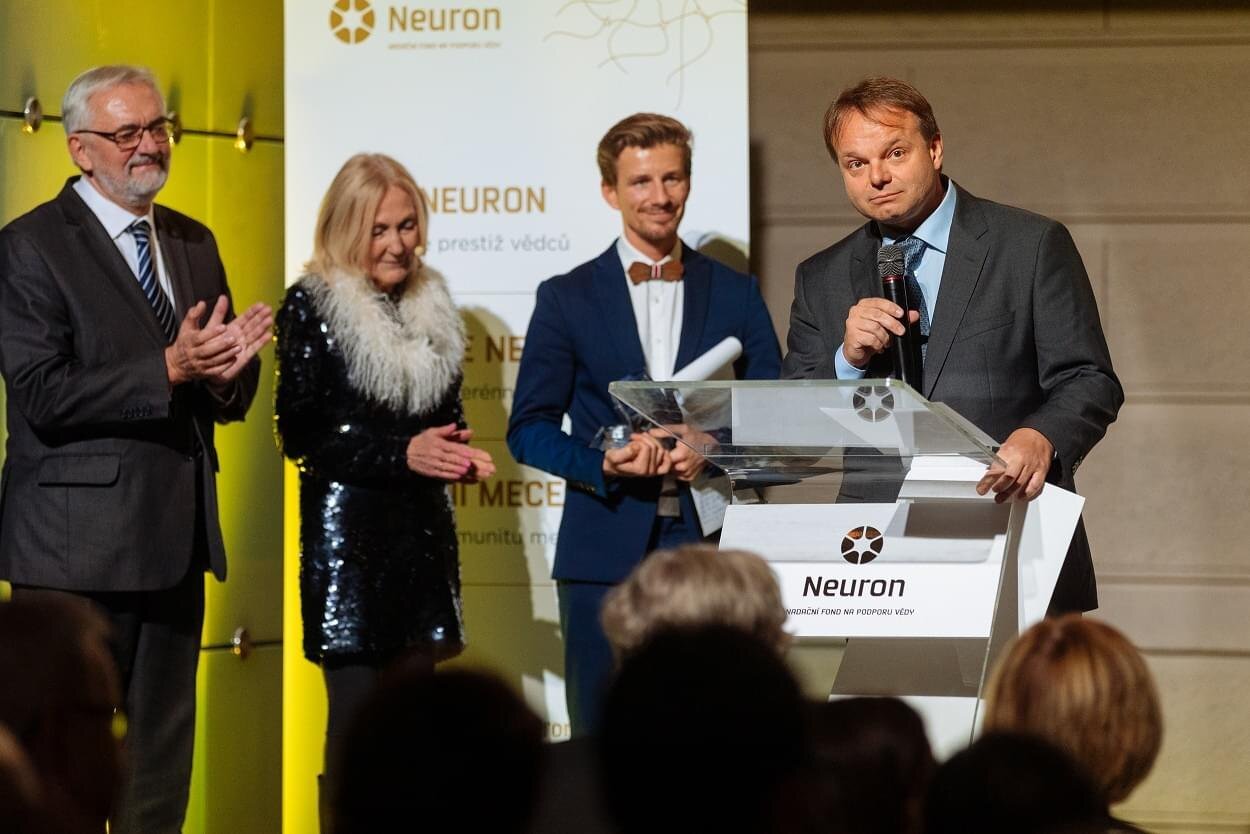
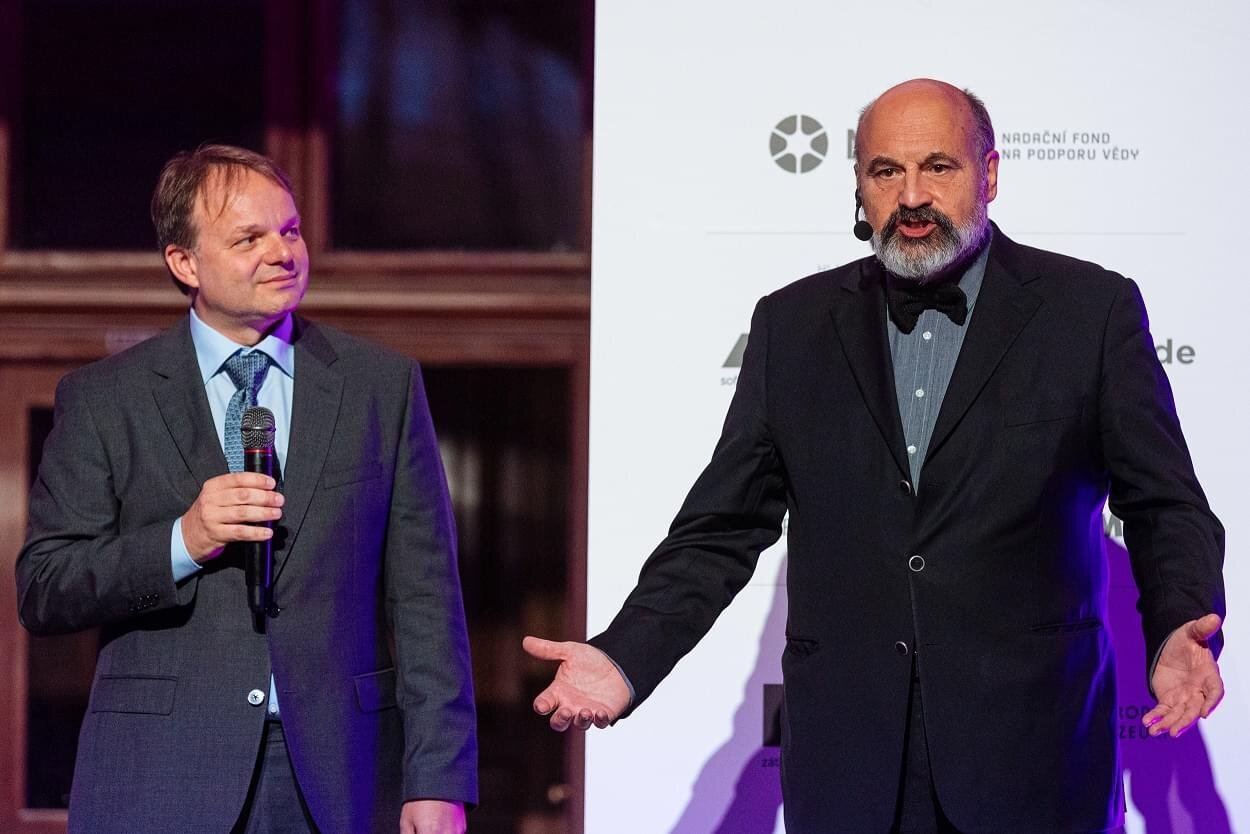
But then came the episode with the mercury. And nearby Germany suddenly seemed far safer than Brazil. So he took the envelope and started studying it. He found he was to do research on plants; he did not understand every second word. But never mind, he told himself, at least nobody will expect anything from me, and if it doesn't work out I'll go home.
Looking back, he rates that moment as one of the boldest in his life. "I didn't know anyone there, I had no idea how science as a human activity works, I didn't know how that country works — and above all I was supposed to work on a subject I knew nothing about, in a field I hadn't studied. So it was a very big leap into the complete unknown on every level."
But science caught him, and plants doubly so. "I was thrilled that I had a scientific question and the chance to think about it in a laboratory, with nobody interfering, because they knew I wasn't much good at it anyway, and thirty other people doing research beside me. And I also found that with plants you can do much freer science than in cancer research, say; here no pharmaceutical company breathes down your neck saying that since they're paying you, they want a specific result."
After ten months his boss realised that Jiří Friml was a goldmine producing results nobody expected. He arranged for the non-extendable scholarship to be extended to three years so that the young scientist could finish his work. After those three years Friml had his first big results and publications behind him, and also an offer of three million marks to set up his own research team. And because he had plenty of further ideas, he took the money, set up a team — and stayed. That was when the greatest discoveries came. He was about thirty.
With his wife, also a biologist, whom he met in the laboratory in Cologne, he moved over time through several institutions — via Tübingen and Göttingen in Germany and Ghent in Belgium they made their way to Vienna. "The last move to Vienna was partly for family reasons. We have less money for research than in Belgium, but we are closer to home, we cooperate better with friends and colleagues in the Czech Republic, we are more settled. For twenty years I have been planning to return to the Czech Republic, because Czech beer still tastes better than Austrian," Professor Friml laughs. "But so far I still have the feeling that I do more for Czech science by being abroad than I would at home."
His Czech colleagues rate him as a man of unswerving logic who tries to get to the heart of things and who is also not afraid of conflict even at the cost of making enemies — which at one point cost him the chance of heading a large institute in Germany (the words of Eva Zažímalová). And also as a very dynamic and at the same time tough gentleman (the words of Libor Grubhoffer).
Jiří Friml wants to get to the bottom of many more things in his scientific life. For instance, why plants are in principle immortal, because when you plant a twig, life goes on and on, there is no limit in the cells that would stop it, and how all these mechanisms of plant life evolved hundreds of millions of years ago. But he does not consider himself a visionary who falls asleep with a clear vision of the goal. "I let myself be led wherever my observations direct me — and I willingly follow every path that leads somewhere."
Where does it lead, concretely? What practical thing follows from Friml's work? To that the professor has a laconic answer: "If the legislation were different, if genetically modified foods were permitted, if Greenpeace and Catholics did not exceptionally share the same view of their harmfulness, it could be useful right now. We could persuade plants in a field not to compete with one another and to put all their energy into fruit and seeds, to have a root system or to branch as needed, so that in dry conditions the roots grow deeper. We could improve the nutritional composition of food, reduce the use of pesticides and herbicides and so on and so on. But, frankly, I am not saving the world. As a scientist primarily interested in the basic mechanisms of life, I am somewhat indifferent to the specific, immediate practical use of our discoveries. The problem is not whether we can get thirty per cent more grain from one hectare, because if we succeed, the human population in developing countries will grow by those thirty per cent and we will be where we were. These problems are sociological and political and I do not see my mission as raising yields per hectare," Jiří Friml states, and adds: "Knowledge and a real understanding of the basic principles of how the world around us works — all of that is at present incomprehensibly underrated. When we advance our understanding of the world by any amount, that is important in itself. Without such efforts there would never have been discoveries such as electricity, radio waves, lasers and plenty of other things. First we need to understand things correctly — and the usefulness will come one day. Doing good basic research is, in my view, one of the greatest services to humanity we can perform."
Text: Martina Riebauerová
NEWS & CURRENT AFFAIRS
Unexpected discoveries, happy accidents,
hard work and dreams come true.
Be informed
Discoveries lie waiting all around, do not let them slip by! Every month we will send you a fresh batch of information about the world of science and Neuron.