The secrets of blood. Josef Prchal helps as both scientist and doctor
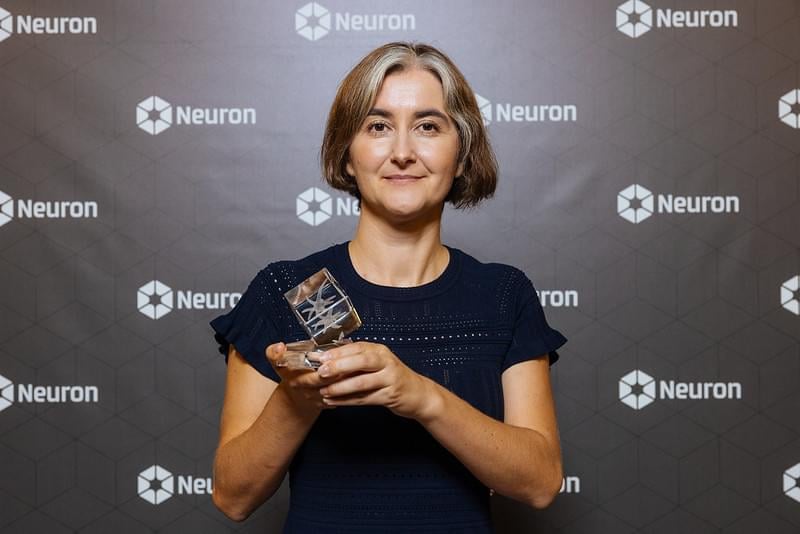
Josef Prchal is a laureate of the 2021 Neuron Award for lifelong contribution to science in the field of biology and medicine — a world-renowned haematologist who helps his field as both scientist and doctor and who has described several breakthrough phenomena applicable in biomedicine. Josef Prchal studied at Charles University and after the military invasion in 1968 left for the USA, but he maintained intense ties with his homeland and went on working with Czech colleagues and students. Today he works in Utah. In his academic career he created a comprehensive laboratory for research into disorders of red blood cells. He contributed to the field by describing the common origin of stem cells, by discovering the molecular basis of Chuvash erythrocytosis (the first disease of a disrupted physiological response to a lack of oxygen) and, using the example of Tibetans, by identifying the genes responsible for human adaptation to high altitudes. Josef Prchal is a holder of the Stratton Award, his research has been published by both Science and Nature, and two current Nobel Prize laureates regard him as their "scientific father".
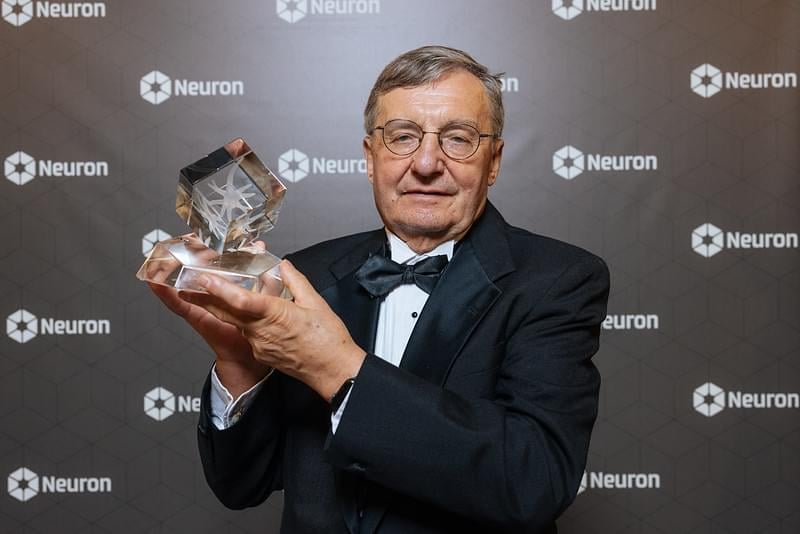
**Josef Prchal is a laureate of the 2021 Neuron Award for lifelong contribution to science in the field of biology and medicine — a **world-renowned haematologist who helps his field as both scientist and doctor and who has described several breakthrough phenomena applicable in biomedicine. Josef Prchal studied at Charles University and after the military invasion in 1968 left for the USA, but he maintained intense ties with his homeland and went on working with Czech colleagues and students. Today he works in Utah. In his academic career he created a comprehensive laboratory for research into disorders of red blood cells. He contributed to the field by describing the common origin of stem cells, by discovering the molecular basis of Chuvash erythrocytosis (the first disease of a disrupted physiological response to a lack of oxygen) and, using the example of Tibetans, by identifying the genes responsible for human adaptation to high altitudes. Josef Prchal is a holder of the Stratton Award, his research has been published by both Science and Nature, and two current Nobel Prize laureates regard him as their "scientific father".
The secrets of blood
To reveal the molecular basis of blood diseases and to call established dogmas into question — that is the fundamental point of the scientific effort of Josef Prchal, a globally recognised haematologist with Czech roots who pursues a not entirely usual double event: he combines science and medical practice.
At American universities in Birmingham, Alabama, at Baylor College of Medicine in Houston, Texas, and now in Utah in Salt Lake City, where he currently works, he built one of the world's most comprehensive laboratories focused on research into many disorders of red blood cells. Besides that he is an external professor at the First Department of Internal Medicine and the Institute of Pathological Physiology of the First Faculty of Medicine of Charles University and the General University Hospital in Prague. He holds a number of distinctions, especially the prestigious Henry Stratton Award, which he received in 2017 from the American Society of Hematology for his lifelong contribution to the field — and which he also regards as his greatest success.
From his great teacher, Ernest Beutler, he took over the editorship of the important "haematological bible" Williams Hematology, and his scientific publications (there are more than 400 of them) have over 26 thousand citations. He made his mark on world science especially by his part in revealing the origin of blood elements from a common haematopoietic stem cell, by the characterisation and classification of congenital polycythaemic conditions and also by the discovery of congenital mutations affecting the hypoxic signalling pathway.
Whereas most scientists are focused on one thing, thanks to his patients Josef Prchal has a broader range and works on whatever, as the saying goes, comes into his surgery. "I enjoy looking for the molecular basis of human diseases, and blood cells are easily accessible," he says.
Experiments with proteins
Already during his studies at the Faculty of Medicine of Charles University he was helping in biochemistry as what was called an auxiliary research worker. At that time it was discovered that mutations of specific proteins cause human diseases and that among Black people or Italians, for instance, a deficiency of what is called glucose-6-phosphate dehydrogenase is common, causing various illnesses from neonatal jaundice to anaemia. The year was 1965 and Josef Prchal was interested enough to decide to investigate this phenomenon in Black students studying at Prague universities. The later well-known oncologist, associate professor Bohuslav Konopásek, took part in it with him.
"We obtained blood from the Black students easily; it was worse with the chemicals," Professor Prchal recalls. They managed to get hold of some things and improvised with the rest. From a killed rabbit they obtained isomerase, from potatoes kinase, and from glucose they prepared glucose-6-phosphate. They mixed it all with the blood they had taken — and it worked. For these experiments they then received the Purkyně Award, which turned out to be crucial for Josef Prchal's further career.
The road to the best laboratory
In 1968, after the Soviet occupation, he decided to emigrate. With his then fiancée he fled via Hamburg to Canada. They travelled on a cargo ship because it was cheaper, but Josef Prchal's goals were a good deal less modest: he dreamed of getting to Ernest Beutler, who had discovered glucose-6-phosphate dehydrogenase. "I was a young lad from Bohemia, not a student from Harvard, my English was very broken. But the Purkyně Award from Czechoslovakia had an effect and opened the way to the very best laboratory for me."
At the time of the occupation he happened to be in Denmark. Originally he had planned to return home, do his military service and then take up a position in academia. "When I learned that the troops had come in, I thought about whether to stay outside or go back. I thought there would be resistance at home, but that did not happen." And so he decided to stay abroad. Looking back, he regards the unplanned emigration and the need to communicate in another language as the greatest obstacle he overcame in his life. "My English isn't the best, but perhaps I knew a lot about molecular biology," he told himself. "It was clear to me that I had to earn a living and take the work seriously. And so I tried to be good, and under that stress I remembered quite a lot."
At the University of Toronto he completed his basic academic training in haematology and, after a year's placement with Professor Beutler in California, returned to Canada, where he was to take up his first faculty post at McGill University in Montreal. This career was prevented, however, by a new law in the Canadian province of Quebec introducing a compulsory knowledge of French. As Josef Prchal puts it: "The nationalists overdid it a bit and without French I ended up without a post." But Ernest Beutler helped and recommended him to the university in Alabama. "They offered me excellent conditions there and I could combine clinical work and science."
From the Dalai Lama to the journal Science
Such a double event is on the one hand a joy, but on the other it is ever harder in science to succeed in the effort to win grants.
Nevertheless Josef Prchal has contributed significantly to world science with a series of unique findings. For instance he studied enzymes from red blood cells — the previously mentioned enzyme G6PD, which is located on the X chromosome. This study, in which Josef Prchal and his colleagues managed to describe that all blood cells arise from a common haematopoietic stem cell, was published in Nature in 1978 and won recognition. "We also clarified the molecular basis of some other congenital blood diseases," the professor explains of the fundamental contribution of this work.
He then devoted a large part of his research to what is called polycythaemia, a disease in which people have a lot of red blood cells. This phenomenon often arises from a lack of oxygen. As part of his research, Josef Prchal was invited to a conference in Russia, where he learned about Chuvash polycythaemia, on which no publication existed in English.
It was here that one of the most interesting stages of his professional career began, the research into this phenomenon in Tibet. "Surprisingly, most Tibetans do not have more red blood cells, even though they live five to six thousand metres above sea level, where there really is very little oxygen. But some Tibetans do. That interested me and I wanted to find out why." Going to Tibet was not easy; the Chinese did not want to let the research team in to the Tibetans. "In the end everything worked out, thanks in part to the intercession of the Dalai Lama, who testified that we were interested purely in science, which he supported. The Tibetans then cooperated more and let us take their blood, which is particularly unpleasant for Buddhists. And we found evolutionary mutations that change the reactions to a lack of oxygen. We subsequently published it all in Science and Nature Genetics," Josef Prchal recounts.
Long-lasting enthusiasm
The most important thing for success, he believes, is being ready to make use of an opportunity that presents itself, to ignore conventional thinking and to follow new approaches in science. "I was lucky to be able to work with the very best. Whenever I needed something, even at the weekend or in the evening, Professor Beutler and my other teacher Y.W. Kan, who discovered the mapping of the human genome by genetic polymorphism, were always glad to help me. I try to repay them and to pass this attitude on," says the globally recognised haematologist. "I felt that I in turn should repay young people and students. Many of them have been here with me and then set up their own laboratories."
Incidentally, just as Ernest Beutler fascinated Josef Prchal, it was Josef Prchal who fired the enthusiasm for science of Ernest Beutler's son, a future Nobel Prize laureate. While still at secondary school, Bruce spent a month in Prchal's laboratory. The flame of interest caught, and in 2011 Bruce Beutler, together with Jules A. Hoffmann, received the Nobel Prize in Physiology or Medicine for a discovery concerning the activation of innate immunity.
What would Josef Prchal advise students from his experience? Firstly, to have their own interests and opinions. Not to be afraid to disagree with professors and to fight for their differing views. And then also — to be aware of one thing: that science is hard and that things often do not work out in it. That science is for people who are curious and for whom every partial success brings such great pleasure that they overcome all the failures that will inevitably come as well.
"There are plenty of very clever people who tried to do science but gave it up. Many of us do not succeed and failure is disheartening. But when something occasionally works out, you overcome the previous failures and can carry on. And I was lucky that every burst of enthusiasm always lasted me a very long time, usually until the next success, and that is how I overcame those partial failures. In such a constellation a person then sacrifices even the moments when they could have been with their family, travelling and living what is called a normal life," notes Professor Josef Prchal, who besides his work enjoys getting to know previously unknown places, white-water canoeing, gardening, skiing and mountain hiking.
Speaking of family, it was perhaps one tragic circumstance that set Josef Prchal on the path of his life.
WATCH THE RECORDING OF THE 2021 NEURON AWARDS GALA EVENING
WATCH THE RECORDING OF THE DEBATE WITH THE 2021 NEURON AWARD LAUREATES
WE THANK THE PATRONS AND PARTNERS OF THE NEURON ENDOWMENT FUND AND THE NEURON AWARDS