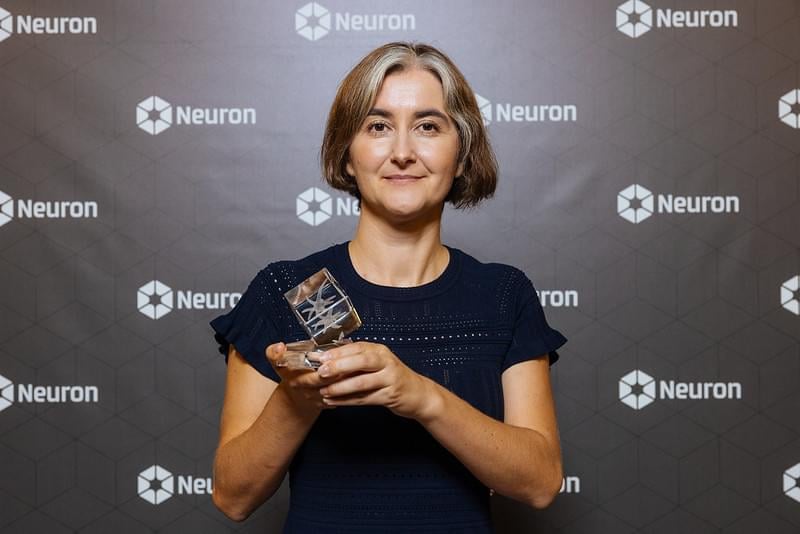
Covid showed that we cannot do without scientists, Monika Vondráková tells Vogue
For twelve years she has worked to make Czech society notice and value its scientists. The pandemic sharply illuminated the importance of science even for those who had taken no interest in it before. Does that mean the role of the Neuron Foundation, which Monika Vondráková co-founded, is over? Far from it. First: contact with brilliant, kind people is somewhat addictive. Second: the voice of educated people in public life will never be loud enough. And she knows how to hand them a megaphone.

Read an extract from the interview with the chair of the board of the Neuron Foundation; the full interview with Monika Vondráková is available in the print edition of Vogue Leaders 12/21
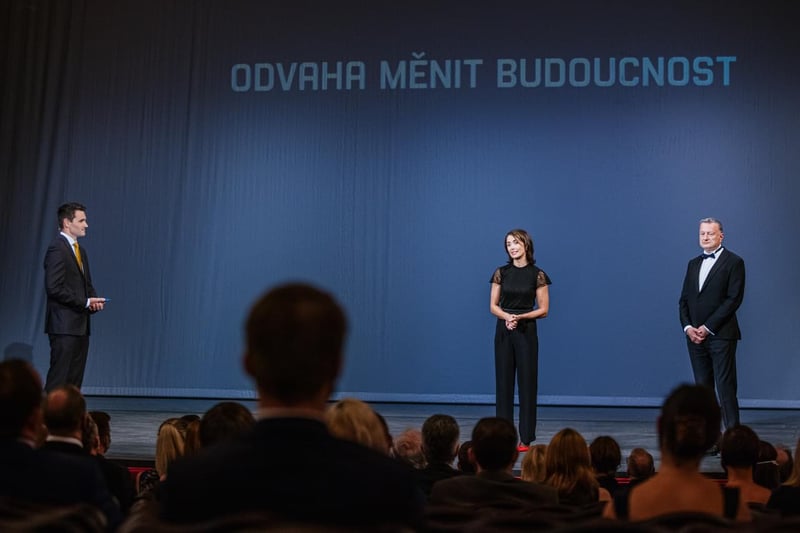
Your foundation's season this year culminated at the end of September in the breathtakingly restored National Museum, where you handed out awards to scientists. How long does it take to gather your strength after raising that much money, deciding who gets it and staging a gala?
It was extremely demanding, but at the same time beautiful. I would have needed a fortnight to recover, but since we are a team of three I could not allow myself that.
And at what moment did you look around at the red carpets, feel relieved that the laureates were in their places and that Kovy as host was funny — and start to enjoy the evening?
I like perfection, so I tend to stay tense longer than others. When I see that the programme is moving along and the guests are enjoying themselves, I feel relieved. Even so, the moment when I can have a glass of something only comes after my closing speech. I am not a born speaker and it matters to me that I share clearly the things I find essential. Only at that moment does it finally fall away from me.
With the scientists you support you do not only talk about what they need for their work. Information about all kinds of research reaches you and you meet leading figures across disciplines. What is the most interesting thing you have learned recently?
It is true that all sorts of things reach me. Recently, for instance, we supported an expedition by the biologist Marie Šabacká in search of melting glaciers — but in the tropics. Until then I had no idea tropical glaciers existed. But from time to time things other than research surprise me too. Our foundation supports children, for example. Six years ago the Faculty of Science of Charles University approached me saying it would welcome support for a children's science conference. At first I could not really imagine how far that could be connected with our activities and goals, but in the end the event completely enchanted me.
Imagine a two-day conference where clever children from various corners of the country gather on the Friday and stay until Saturday. Instead of coffee breaks they have cocoa breaks, and they give presentations just like adults. Among those who came was twelve-year-old David, a hugely enthusiastic physicist and lover of black holes, who even turned up in a shirt and bow tie. It emerged that his life's dream was to see the Large Hadron Collider at CERN in Switzerland. Because we have the necessary contacts at the foundation, I approached the entrepreneur and patron Dalibor Dědek to ask whether he would make the trip possible for him. He was delighted by the idea. The boy flew to Switzerland with his parents, enjoyed the trip enormously and it gave him an incredible boost in life. And there was a sequel: a year later the world-famous physicist Lawrence Krauss came to Prague. We arranged for David to meet him. At a large conference with a great many questions, David put his hand up too. Lawrence answered his question by saying: "That one is up to you now, you have to solve it." We have supported another six children in a similar way.