I kept being there for a "first time", recalls prof. Pavel Hobza
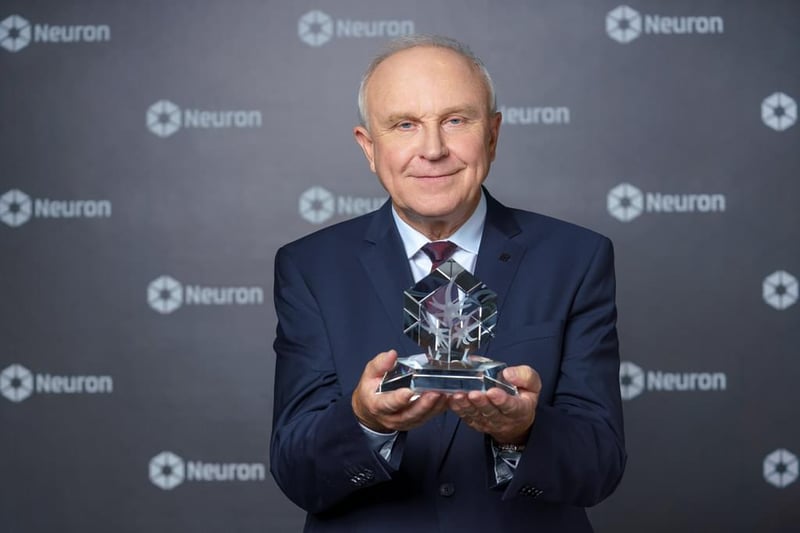
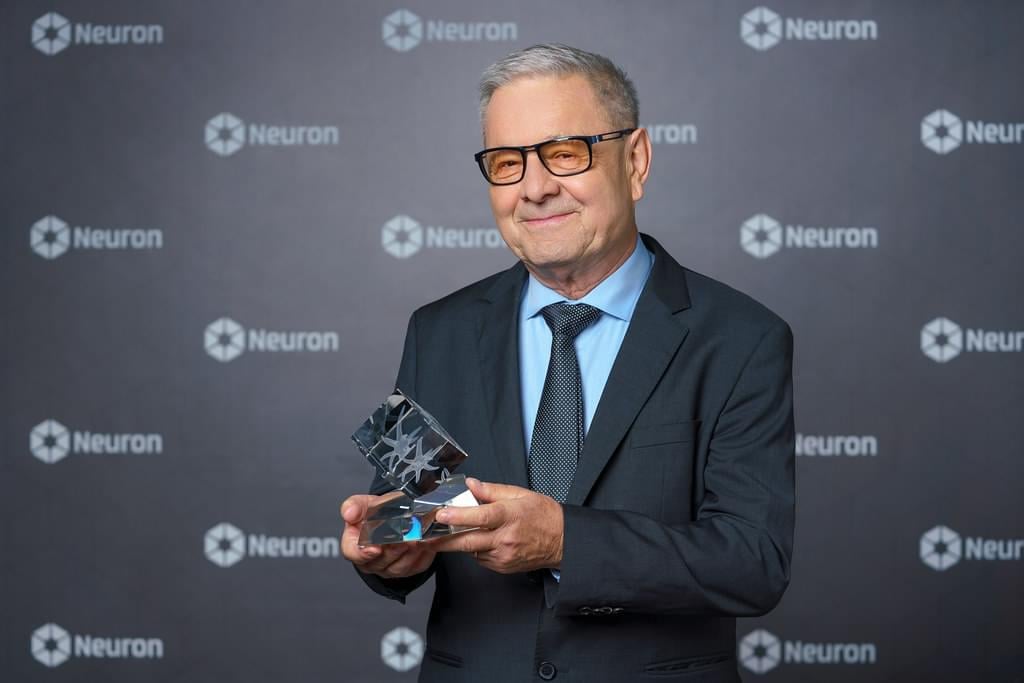
In the field of computational chemistry Pavel Hobza is one of the most significant scientists on a world scale too. He discovered a new model of hydrogen bonds and his scoring functions (based on quantum mechanics) are used in drug development. Even though he was "clumsy" at working with flasks and burners, as he puts it, by way of quantum chemistry he is indirectly returning to the pharmacy of his childhood. Prof. Pavel Hobza received the 2022 Neuron Award for lifelong contribution to science in the field of chemistry.
In the field of computational chemistry Pavel Hobza is one of the most significant scientists on a world scale too. He discovered a new model of hydrogen bonds and his scoring functions (based on quantum mechanics) are used in drug development. Even though he was "clumsy" at working with flasks and burners, as he puts it, by way of quantum chemistry he is indirectly returning to the pharmacy of his childhood. Prof. Pavel Hobza received the 2022 Neuron Award for lifelong contribution to science in the field of chemistry.
For half a century now he has worked as a computational chemist on non-covalent interactions; he is one of the pioneers of his field. "When Professor Rudolf Zahradník gave me the subject of my dissertation, it was a field we did not even know the name of yet," Pavel Hobza smiles. "I wanted to work on interactions between molecules."
Being there for the "first time"
Non-covalent interactions are the fundamental bonds between molecules in biology, but also in the area of nanomaterials. "It was marvellous to watch from the beginning how my field swelled, how it grew. I submitted my dissertation in 1973; today world conferences are held on non-covalent interactions and Nobel Prizes are handed out."
"I know that in science it is said one should change subject once or twice, whereas I have had mine all my life. But people came to Professor Holý too saying he should change his subject and he refused them. Fortunately! Where would world medicine be without him and where would this beautiful institute be?!" he says, spreading his arms in his office at the Institute of Organic Chemistry and Biochemistry of the Czech Academy of Sciences in Prague.
"I have been very lucky. Although I have always worked in the same field, it often happened and still happens that I was there for something for the 'first time'; we often got and still get to something completely new."
We have it, it fits
In the world of chemistry Pavel Hobza is inseparably connected with the term improper hydrogen bond, the discovery of which made him one of the most cited Czech scientists in world rankings. He managed to do what few manage. He broke a dogma that had been settled for a hundred years.
"The hydrogen bond is absolutely dominant in our field," he stresses. Life itself rests on it. Hydrogen bonds determine the structure and properties of water, of proteins and of DNA itself.
When a hydrogen bond forms, what is called a red shift of the vibrational frequency occurs. "That held for a hundred years. Full stop. But we predicted that the opposite phenomenon can also occur. Not a lowering of the frequency, but a raising of it. A shift into the blue part of the spectrum," Hobza explains.
When a scientist comes along saying that something is completely different from what has been maintained for decades, it is rightly expected that a mistake may have crept in somewhere. "But the first person who thought that was me," he says. "There are thousands of papers about the hydrogen bond and the red shift. It comes out differently? You lose confidence. You calculate it again and again and again and again it comes out that way. But you have to prove it. Theory is beautiful and marvellous, but experiment has to confirm it."
From today's point of view, Hobza says, it was a trivial experiment. "But at the time it wasn't simple, because nobody wanted to do it. 'We know it's the other way round, why would we do it?' Or: 'What if we show it isn't so — how will we publish it?'" In the end the computational chemist asked a friend of his, an experimenter from Frankfurt. "A week later he called: 'We've measured it, it fits!' And the day was won," he recalls of the moment when he opened the champagne.
In the meantime Pavel Hobza discovered that there were papers that had reported this phenomenon earlier, but timidly and deliberately inconspicuously. "I spoke to those authors and they told me straight out that they had been afraid to publish it, because no relevant journal would have taken it — simply put, they lacked confidence. But at first a reviewer did not accept our paper either," he says. Once experiment confirmed the theory, however, it went out into the world.
The third shift at Poldovka
For computational chemistry one thing is fundamental: computing capacity. That is, a powerful computer. Today he has genuine supercomputers at his disposal, but he likes to remember the night shifts long ago at the Poldi works in Kladno.
It was like this… When, after successfully defending his candidate's degree, the regime did not allow him to continue his research at the "normalised" Academy of Sciences, he found refuge at what was then the Institute of Hygiene and Epidemiology (today's National Institute of Public Health), but even there he went on cooperating with his supervisor Rudolf Zahradník. For his calculations, though, the young scientist needed a good computer.
And Pavel Hobza discovered that Poldi Kladno had an IBM supercomputer, but used it "for steel" on only two shifts. "As it happened, at the institute I could use a pot of money for buying computing time. An hour cost an unbelievable ten thousand crowns! My salary at the time was about two or three thousand," he explains.
And so once a week he loaded boxes of punched cards into the car (with his colleagues' help) and set off for Kladno. "Then I waited for the big hand of the wall clock to pass 10 p.m. From that moment until six in the morning the computer was ours."
Back to the pharmacy by a detour
Although he grew up among flasks and test tubes in his father's pharmacy in Olomouc, Pavel decided on computational chemistry while still at grammar school. "It's simple, in the laboratory I was all thumbs," he laughs.
In the end, though, the calculations of Hobza's research group became a platform for the creation of new drugs, and their procedures are now licensed by the pharmaceutical giant Pfizer. "My father would be delighted."
Hobza is proud of the contract with the pharmaceutical company. "Fifteen years ago we started from pure theory. And today we have a very lucrative contract. They want to use our procedures for their extensive oncology programme. We did not knock on Pfizer's door, they knocked on ours," he says, not hiding his pride.
When looking for a drug for any disease, it is first necessary to determine the biological target. And that is a specific protein. Then it is necessary to know and describe its structure in detail. "In every protein there is some active site; it looks like a cave, a hollow. And it is into this cave that a ligand, which may be a drug, should fit as well as possible. It is necessary to compute the structure of that hollow with the ligand, and we look for a ligand that will be held in the hollow as firmly as possible.
And all of that we determine using what is called a scoring function. There are many of them, but ours is based on quantum mechanics and has great advantages over the others," Pavel Hobza explains. And that is evidently what Pfizer appreciated when it licensed their scoring function for its treatment programme. "Whether and which drugs will come about on the basis of our platform, we will probably never learn; that is their sweet secret now," he adds.
Pavel Hobza clearly feels satisfaction in his professional life. In his personal life what he enjoys most is the time he spends with his five grandchildren. He and his wife Pavla have a son, Pavel, and a daughter, Martina, who studied the humanities and social sciences. "Fortunately they listened to their father and did not go in for the natural sciences; a father and a child in a similar field — that does no good. But we will see which way the grandchildren go."