Before our eyes people's lives were changing, says Prof. Jan Starý
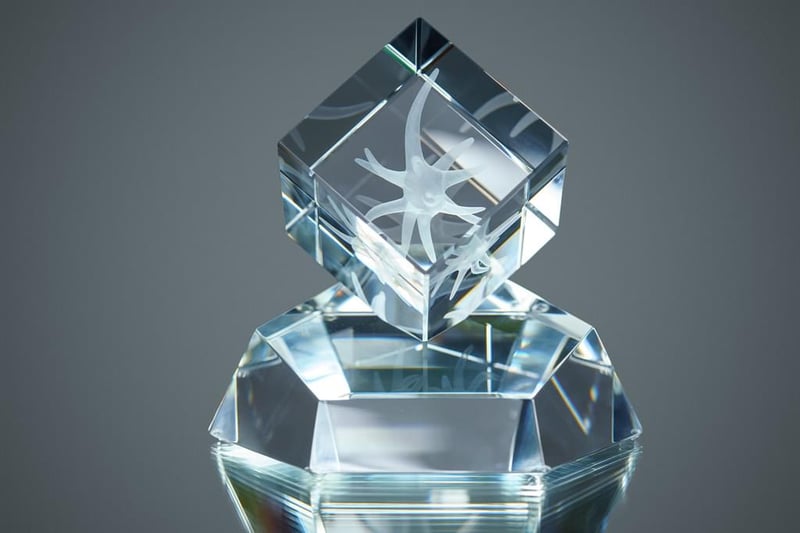
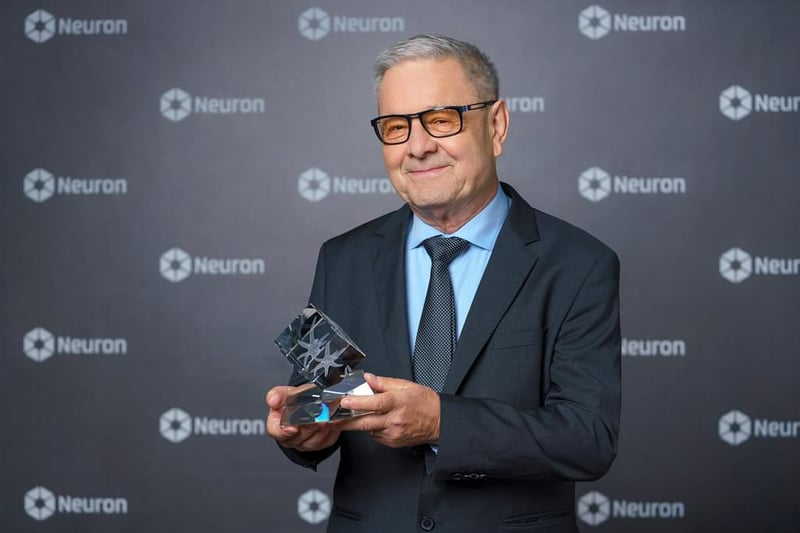
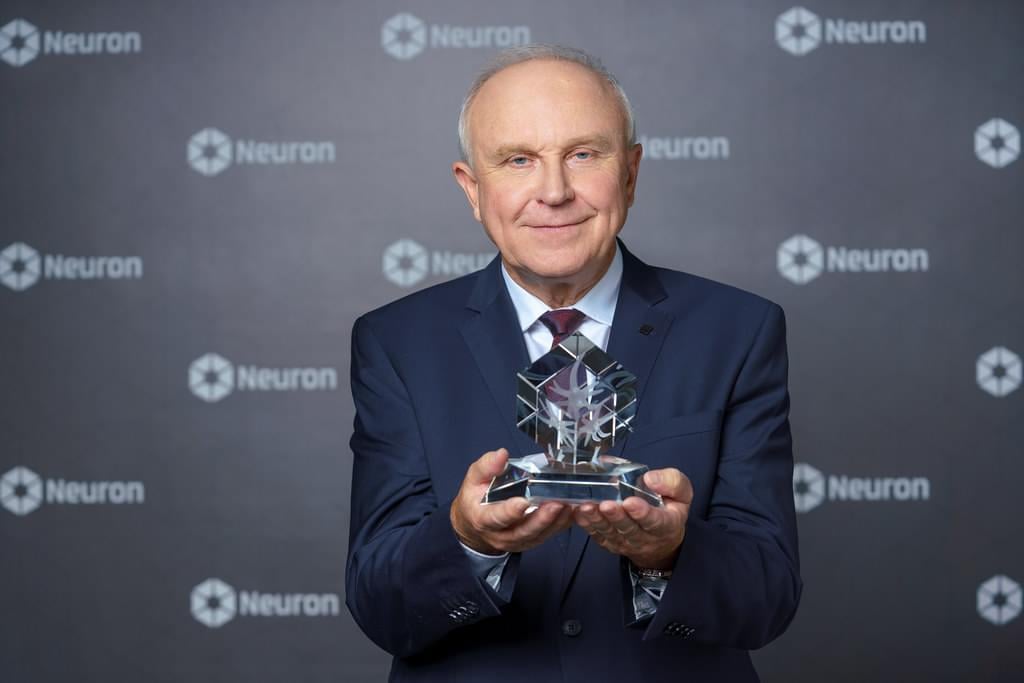
He says of himself that he belongs to a lucky generation of doctors who lived through astonishing progress in their field. When Jan Starý started out in paediatric haemato-oncology, nine sick children in ten died. Today the ratio is the other way round. It is largely thanks to his enthusiasm and commitment that leukaemia began to be treated here to Western standards in the 1980s, and thanks to his efforts that bone marrow has been transplanted here since the early 1990s. Prof. Jan Starý received the 2022 Neuron Award for lifelong contribution to science in the field of medicine.
Originally it was neurology that attracted the freshly qualified medic. But the points on his professional plans were switched by the head of the children's clinic at Motol, Dr. Houštěk. "You'll join me and that's that," he announced categorically. The young doctor resisted for a while, then gave in. After that he stopped asking what if. "I threw myself into 'children's medicine' fully and with great appetite," he says.
But he also seized the chance to do an exploratory "round". He stayed longest on the infant ward at Motol, learned intensive care of newborns at Apolinář, and stopped off at the infectious diseases clinic at Bulovka too. "I liked it almost everywhere," he says. "It was only in the army that I didn't like it so much," he adds with a smile. He regards compulsory military service as a lost year.
"They all died anyway"
When he found his way back to haematology at Motol, he knew at once that this was where he would be at home. "Thanks to the personality of Professor Otto Hrodek I fell for it. This is going to be my field."
The year was 1980 and Jan Starý focused on paediatric haemato-oncology. It very quickly became clear that the field was gaining a progressive doctor and scientist. "I carried out my own survey across all the Czech departments that treated leukaemia at the time. It turned out that everyone treated it as they saw fit. There was no unified approach. Treating leukaemia was the 'Cinderella', because 'they all died anyway'," he says, describing the dismal state of care back then.
It was impossible not to see how socialist health care lagged behind the West. "There was a family here at the time whose child was dying of leukaemia. They had relatives in Switzerland. Those relatives said our methods had long been abandoned there. We were getting warnings, it was very unpleasant," he recalls of the dark times.
He decided to change that. The management were sympathetic and gave him a free hand, and he travelled regularly to East Germany for conferences. "Doctors from West Germany lectured there too, and at that time West Germany was the European leader in cancer treatment."
Curious and open to everything, the Czech oncologist obtained valuable information and treatment protocols from his Western colleagues and was able to discuss them in detail. "Gradually we started applying them here. At first we were just getting a feel for it, but within a few years we had pushed the protocols through at every Czech department."
A transplant instead of a strike
We are in the mid-1980s. The beginnings were not easy. The treatment was more intensive, longer, more demanding. Complications appeared in children that the doctors had not seen before. Some medicine or other was constantly missing. "It was quite an adventure. But it soon became clear that we were on the right track. Relapses of leukaemia fell markedly, fewer children died, even if it still wasn't good," he notes. But the statistics were far more optimistic than before.
"Then I became obsessed with the idea that we would start transplanting bone marrow. I threw all my energy into that," he says, opening the next chapter of the story. It cost him several years of effort and preparation. But on 28 November 1989 — the day after the general strike in a Czechoslovakia shaking off the reins of totalitarianism — they carried out the first bone marrow transplant at Motol.
"Instead of striking, we were transplanting. It was a beautiful time in every respect. The operation was demanding, but it worked out. The first transplant patient is still alive today. So is his brother — the donor."
For several years they transplanted marrow only from related donors. But after the revolution Jan Starý could finally travel further west as well, and learned from the most experienced, in Bristol, Hanover and Paris. From 1 January 1997 they began unrelated transplants at Motol.
People's lives were changing
There were more and more donors — of bone marrow, but also of funding to support oncology programmes; patients recovered, complications declined, survival began to outweigh dying, the quality of life of the cured rose. The transplant programme was extended to other rare blood diseases as well.
"Before our eyes people's lives were fundamentally changing, it was fascinating. I lived in complete enthusiasm," recalls the oncologist, who between 2002 and 2007 also became the coordinator of a large international study.
Gradually other experimental methods and approaches came along (and keep coming). More or less successful; some pass into ordinary practice, others are still being tested. Whether that is biological treatment, immunotherapy or the use of genetic engineering methods. "They are fascinating things, but they all have their flaws. Still, they are further steps forward and I follow them with great interest," says Jan Starý. Diagnostics themselves have also advanced a great deal, making it possible to tailor the treatment.
Who is doing what, and how
The children he once treated successfully are now in their forties. "People's lives have always interested me, and in paediatrics your patients have their whole lives ahead of them. I have a rough idea about many of them, who is doing what and how. Many come back for regular check-ups or in case of some complication, others get in touch of their own accord. Most of my patients lead normal lives, they have their own children and their own joys and their own problems, regardless of the illness they went through," he observes with satisfaction.
He says children are wonderful patients. "Especially the younger children, up to the age of twelve, who don't worry about what will be and how at some point in the future. They live in the moment. They don't put on an act, they don't pull your leg." Communication is more complicated with adolescents. And that is hardly surprising. "They can see into the future, they have worries, they are well aware of the pleasures the illness is costing them. Fortunately they have social networks these days, so they don't have to lose touch with their peers." But it is adolescents in particular who more often fall into depression. "They are already aware that they may die."
And even when everything goes well, being "taken out" of normal life for a year in childhood or youth is hard. "They have no hair, they feel ill, they get inflammations and their prognosis is uncertain. Generally we say we cure nine children out of ten, but with some types of leukaemia that still doesn't hold," the doctor shrugs.
And talking to parents and children about a poor outlook is one of the hardest of a doctor's tasks.
Following the red
Since July 2021 Jan Starý has been emeritus head of the clinic. He teaches medical students and lectures. He leads the paediatric haematology working group in the Czech Republic and several studies of the treatment of childhood leukaemia, but he will give up these activities over the coming years. He is also scientific secretary of the committee of the Czech Haematological Society. But he wants to devote more time to his hobbies, for which he has not had as much time as he would have liked.
"I'm also enjoying my grandchildren. My son said to me recently, if only I'd given him as much attention as I give them. I know I could have been a better dad," he admits. But with all the work at the clinic and the travelling, the centre of gravity of caring for their son lay with his wife, also a doctor — a gynaecologist. "I'm grateful to her, but whenever it was possible we took turns. And I believe my wife also had a professionally fulfilled life."
So what will a doctor and scientist leaving his duties behind do with the time he gains? "I've always liked walking through the Czech countryside, with a rucksack on my back. Following the trail markers, criss-cross. So I'll set off. Following the red, perhaps."