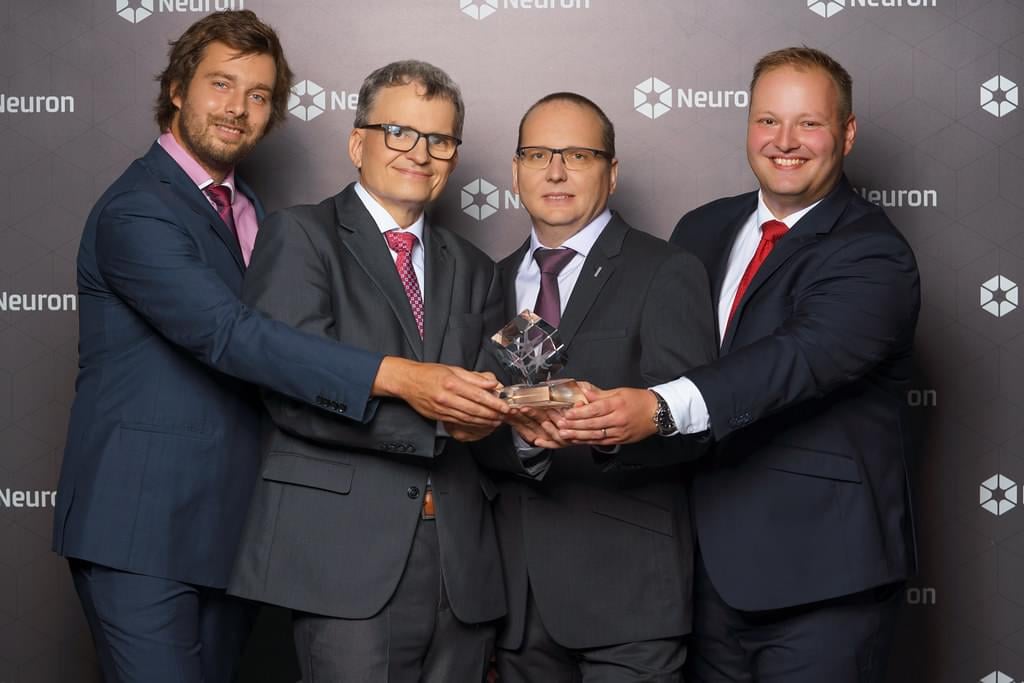
They call us the Pin Floyds, laugh the laureates for the best transfer
Four engineers have developed, manufacture, refine and by now also sell batteries that contain not only energy but the future. They have a service life of a quarter of a century. They are non-flammable. Non-explosive. They can separate "stored" capacity from output. Redox flow batteries. They called their startup Pinflow energy storage. Juraj Kosek, Jiří Vrána, Petr Mazur and Jaromír Pocedič have connected their scientific and engineering skill with business. They have a production hall in Pilsen and can assemble energy systems even for large installations. They have customers in fifteen countries. And they are looking out for a strategic investor.
Four engineers have developed, manufacture, refine and by now also sell batteries that contain not only energy but the future. They have a service life of a quarter of a century. They are non-flammable. Non-explosive. They can separate "stored" capacity from output. Redox flow batteries. They called their startup Pinflow energy storage. Juraj Kosek, Jiří Vrána, Petr Mazur and Jaromír Pocedič have connected their scientific and engineering skill with business. They have a production hall in Pilsen and can assemble energy systems even for large installations. They have customers in fifteen countries. And they are looking out for a strategic investor.
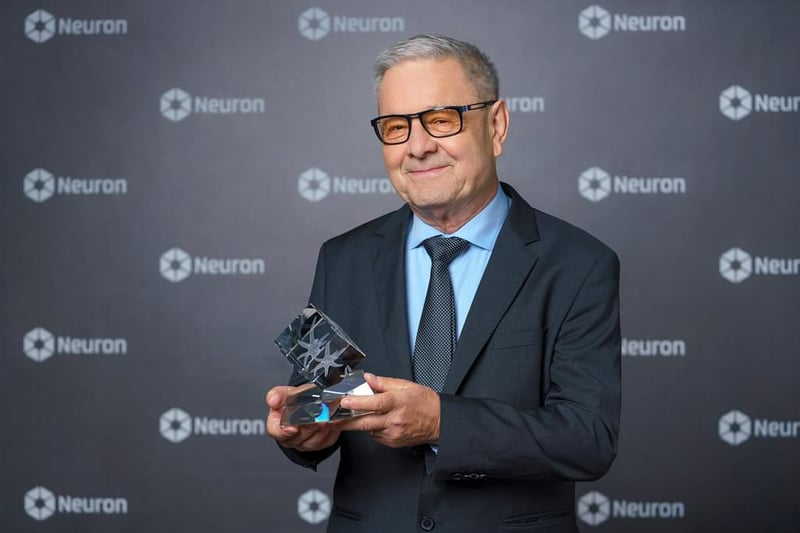
For their project they received the 2022 Neuron Award for the best connection of science and business.
Taking on something new
"We mustn't forget Honza Dundálek, who was with us from the start but then decided to go elsewhere. He's the proverbial fifth Beatle," the members of the Pinflow startup "band" say, helping themselves to musical terminology. Indeed, music was apparently what bound this group together from the beginning; each of them was or is a member of some musical outfit. "Sometimes they call us the Pin Floyds."
The original idea of getting into the development of flow batteries came to Juraj Kosek twelve years ago. By that time he was already a respected leading figure at the University of Chemistry and Technology in Prague, famous for founding a new laboratory with a new idea every five years. "Until then I had worked on polymers, but I wanted to take on something new that addresses society's current challenges and that fits into engineering," Juraj Kosek recalls. And in flow batteries he discovered "a marvellous connection between engineering and chemistry."
I caught fire
He also quickly managed to motivate his students, Jiří Vrána and Jan Dundálek, who threw themselves into the project with gusto. "I wanted to do polymers, my dad worked in a company where polystyrene was made, so I came to Juraj. But he turned my subject inside out and I was thrilled by the batteries," says Jiří.
They got to work, and it went well. They were joined by Jaromír Pocedič and the electrochemist Petr Mazúr and together they built a new laboratory in Pilsen. Pinflow thus links two institutions: the Department of Chemical Engineering at the University of Chemistry and Technology in Prague and NTC — New Technologies Research Centre at the University of West Bohemia in Pilsen.
"I'll be brief. But sentimental," Petr smiles. "Ten years ago I was due to go on a placement to London where I was to work on flow batteries. I dropped in on Juraj to have him tell me something about them. He gave me a lecture and an offer. That after my doctorate I should join them. In England I caught fire for flow batteries, so I joined the lads. And we've taken the project further than I hoped for a long time," he says. "Thanks to a strong team. And thanks to Juraj's 'fathering'."
Immortal batteries
Their (vanadium) flow batteries work on the basis of two electrolytes. They make it possible to separate capacity from output. Capacity is given by the volume of the electrolytes, the volume is set by the size of the tanks, and the output is given by the area of the electrodes in the battery stacks.
The gentlemen from Pinflow believe that the time of flow batteries will come, even though in Europe — despite the current energy problems — it is chiefly the gas lobby that rules for now. In their view flow batteries are in a situation similar to that of their lithium competitors until recently. They take it as a challenge.
Jiří Vrána sees an opportunity in, for example, the growing interest in photovoltaics. Flow batteries can be used precisely for storing energy obtained from the sun during the day and releasing it at night. "Our battery has several functions. One of them is exactly this shifting of electricity production to the time of consumption. And bound up with that is the stabilisation of the transmission system, of which a flow battery can be one element. But first we need to grow to grid scale," he explains.
First, though, they have to move from a capacity of tens of kilowatts to tens of megawatts. The batteries Pinflow can now manufacture are able to cover a small or medium-sized company. "For instance where there is production that even a short power cut would stop and cause problems and losses. When there is a flow battery in the system, it starts supplying back-up energy the instant the power fails. If the company has photovoltaics, thanks to our battery it can manage its own electricity," he explains.
A salesman, a McGyver and where the way leads
But to become really strong players, their batteries have to grow a thousandfold. "To the size of a gym or a sports field. It will be a smallish chemical plant of sorts," says Jiří Vrána. And he repeats the advantages of their batteries — non-flammability, non-explosiveness, long service life. "And recycling is a big topic. What will happen to lithium batteries is not yet known. We exhaust the electrolyte and then simply use it in another battery. If it is not contaminated, it is immortal," says Jiří Vrána, living up to his reputation as a salesman who could apparently sell "sand in the desert".
"Jirka is technically very competent, but above all he is a salesman. Without him there would be no new customers and no new contracts," says Juraj. "Yeah, they make fun of me for being a fairground vendor of chemical engineering," Jirka laughs. "But part of my work is also communicating with other research teams that use our batteries for their own research."
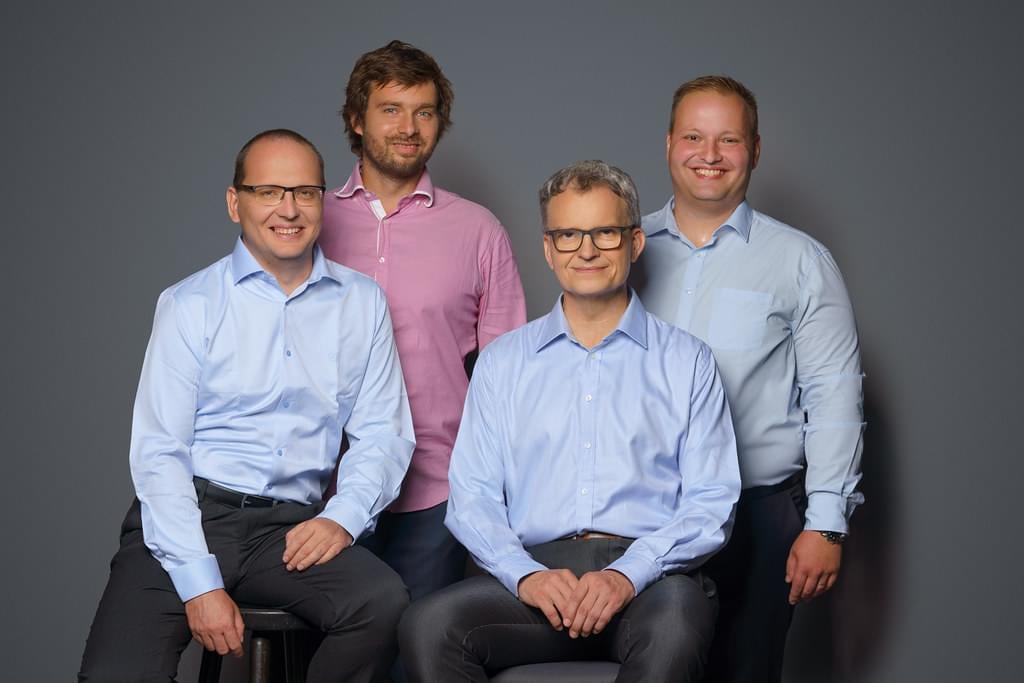
Each of them can find some superpower in every colleague on the team. "Jarda is technically very broadly focused, he can think things up, make them and program them," says Juraj. "He's our McGyver," Petr adds.
Of Petr, in turn, Juraj says: "He is an absolutely reliable colleague whose style of work looks disorganised at first sight; he does ten things at once and you think to yourself, goodness knows what will come of it! And suddenly clear knowledge crystallises out of it. This is the way. This is not the way." "Usually it's not the way," Petr comments with dry humour.
We still see progress
"Juraj knows how to find the right — and often unexpected — words at the right moment. As a boss he is invaluable in his generosity, trust and support," is how Jiří Vrána rates the project's "dad". "He has a nose for opportunities, a broad education and a sharp mind. He is inspiring in his industriousness too, though I try not to succumb to that," Petr jokes.
How did they manage to stick with the project for twelve years? "Through all the doubts, worries and slumps, the whole process was and is inspiring at every step. We still enjoy it," they say. "We started from nothing, from assumptions and literature searches. Step by step we developed systems, carried out experiments, applied findings, increased the scale. We can see a lot of work behind us, further challenges stand ahead of us and we still see progress," they agree.
They are rolling a stone in front of them. Upwards, but not up a hillside — up a staircase. Every time they push it a little further, the stone stops and no longer rolls back down. "And it's the work of our heads and our hands, which strikes me as marvellous," Petr adds.
One day they may become very rich. "We're rich already, the subject enriches us enormously," Jiří smiles. "We're definitely rich. In experiences," Petr adds. Jiří adds: "Money isn't the dominant motivation, it's more about doing something meaningful. And if we do happen to get rich, I hope it won't spoil us."