"INTERVIEW: Known problems will be cracked by a combination of fresh ideas, says mathematician Martin Balko"
What was their year like, what has changed and what lies ahead of them? We invited Neuron Award laureates to our survey — Neuron gives the impulse with the first sentence, the scientists finish the theme.
"Even though it is said that mathematicians and theoretical computer scientists can manage their research with a pencil, paper and a computer, research meetings, trips and conferences really are necessary. Without them the exchange of ideas and joint enquiry is very limited, and last year convinced me that without meeting in person, science is much harder to do," says the mathematician Martin Balko.
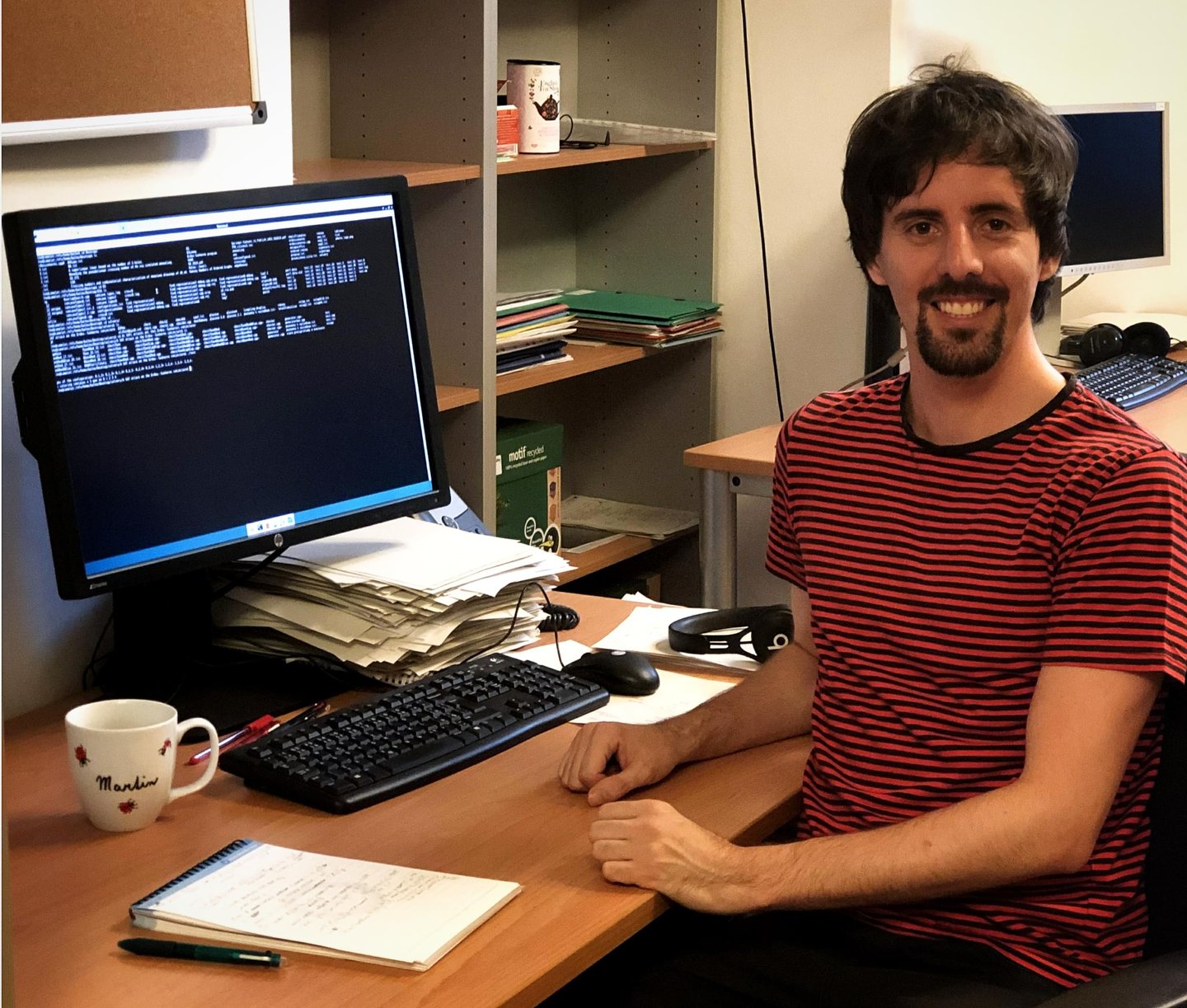
Martin Balko received the 2019 Neuron Award for solving mathematical problems in combinatorics that scientists had been unable to deal with even for decades, with the help of computers. He now works in the Department of Applied Mathematics of the Faculty of Mathematics and Physics of Charles University.
When I received the Neuron Award, I could not imagine that
life would essentially come to a halt for almost a whole year with the arrival of the pandemic. At the time of the awards ceremony, in the autumn of 2019, there was practically no news about the coronavirus and nothing suggested the onset of a pandemic. All the more forcefully was I taken aback by the measures which, for instance, cancelled all in-person teaching at the faculty in the very next semester.
Last year was for me
fairly demanding precisely because of adapting to all the new measures. Fortunately I think that at least in the area of teaching we coped with the restrictions fairly successfully.
My field responded to the pandemic by
moving all contacts into the online world. Even though it is said that mathematicians and theoretical computer scientists can manage their research with a pencil, paper and a computer, research meetings, trips and conferences really are necessary. Without them the exchange of ideas and joint enquiry is very limited, and last year convinced me that without meeting in person, science is much harder to do.
What will hopefully remain good about it is that
we experienced distance teaching and adapted to it well, whether by equipping classrooms or by getting to know applications for online meetings and lectures.
And we will definitively lose
the certainty that a similar thing will not happen again in the future. Which is perhaps fairly pessimistic, but unfortunately I cannot see anything more positive at the moment.
Because I expect that in the coming months we must prepare for
a gradual easing and a return to normal, which in my view should be done carefully so that we are not in the same situation in the autumn as we were last year.
In practical terms I am getting ready for that by
trying to observe the measures in force, even though because of the often chaotic and hasty changes that is frequently not the easiest thing.
And my field should focus above all on
renewing somewhat dampened relations with colleagues abroad. Because of travel restrictions, research visits between scientists from different countries were significantly reduced, and I think that despite plenty of online seminars, often with international participation, it is important to get classic workshops and conferences going again, where researchers from all over the world can meet.
So that the next Neuron Award laureates can successfully crack
some of the known open mathematical problems, which may well be cracked with the help of a combination of fresh ideas — the kind that often surface precisely when meeting people with the most varied experience and knowledge.