The polar scientist Josef Svoboda has received Canada's highest honour
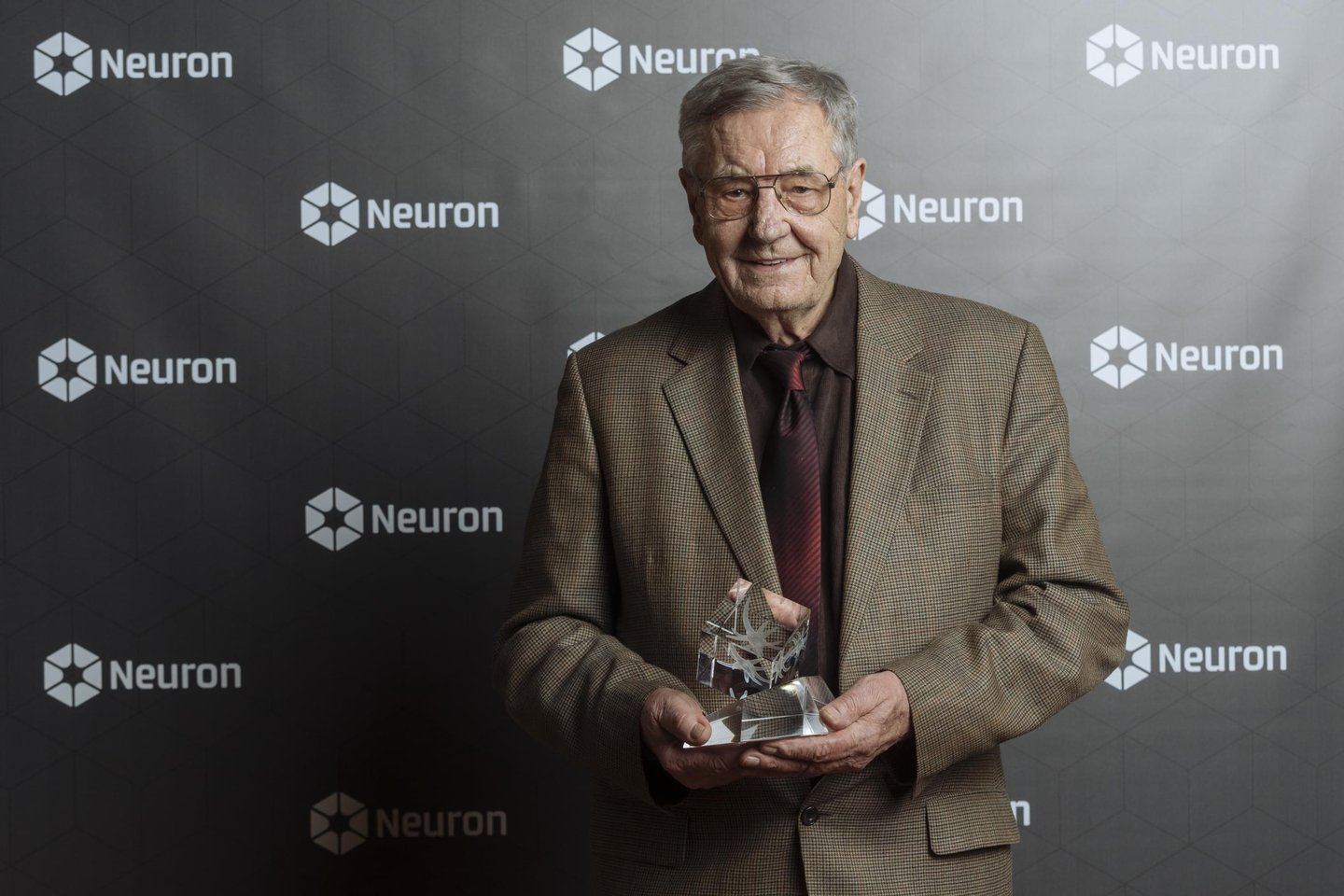
In his native Czechoslovakia they had a place for him in a labour camp; in Canada, words of recognition for his fundamental research in the Arctic. Josef Svoboda, laureate of the Neuron Award for contribution to world science for 2017 in biology, has now been honoured by the Canadian government with its highest distinction, the Order of Canada. Professor Svoboda speaks of his three "incarnations". In the first he was a child and a scout. In the second a political prisoner. And only in the third a polar scientist in Canada and the High Arctic. He lived through it all with the motto: nothing in life is ever lost.
In his native Czechoslovakia they had a place for him in a labour camp; in Canada, words of recognition for his fundamental research in the Arctic. Josef Svoboda, laureate of the Neuron Award for contribution to world science for 2017 in biology, has now been honoured by the Canadian government with its highest distinction, the Order of Canada.
Professor Svoboda speaks of his three "incarnations". In the first he was a child and a scout. In the second a political prisoner. And only in the third a polar scientist in Canada and the High Arctic. He lived through it all with the motto: nothing in life is ever lost.
Research on life in the Arctic
Josef Svoboda gained a bachelor's degree at Western University in Ontario, continued at the university in Edmonton and focused on Arctic plant ecology. In 1973 he settled as a professor at the University of Toronto and, with his students, continued summer expeditions to the Canadian Arctic for thirty years. There he studied how life can exist and spread in such conditions, and his polar experiments helped build Arctic plant ecology.
Field experiments clarified the factors and processes that allow Arctic plants to produce flowers and ripe seeds after the thaw. In Hudson Bay and Alexandra Fiord on Ellesmere Island, Professor Svoboda and his doctoral students grew local and cultivated plants in unheated polytunnels with fertilised local soil and increased their productivity as much as thirtyfold. They studied the accumulation of radioactive caesium in mosses and lichens as a result of nuclear tests before 1964. And of course they were also interested in the retreat of the ice, connected with global climate change.
He built respect for Czech scientists
He only reached Canada after several stages and hardships in life. In the autumn of 1949 he was arrested as a biology student for anti-state activity and spent more than 8 years in prison, including the Jáchymov mines. Because of his profile he could not return to the university in Brno, so he took a job at a botanical institute — but the occupation in August 1968 forced him to leave Czechoslovakia and he emigrated to Canada via Germany.
There a new and happier stage of his life began. Not only for him, but for Czech science as a whole: thanks to Professor Svoboda, Czechs are respected in ecological research in polar regions. For his work he has received recognition not only in the form of honorary doctorates; a research station on Svalbard is named after him.
And how does Josef Svoboda view the current discussion of global change? "I do not blame humanity entirely for warming," he says. "Climate change would have come even if we behaved like Neanderthals. But I do have one appeal: do not fell, do not burn, do not extract everything in 200 years, and leave something for future generations."