If we follow the rules, the pandemic will soon be over
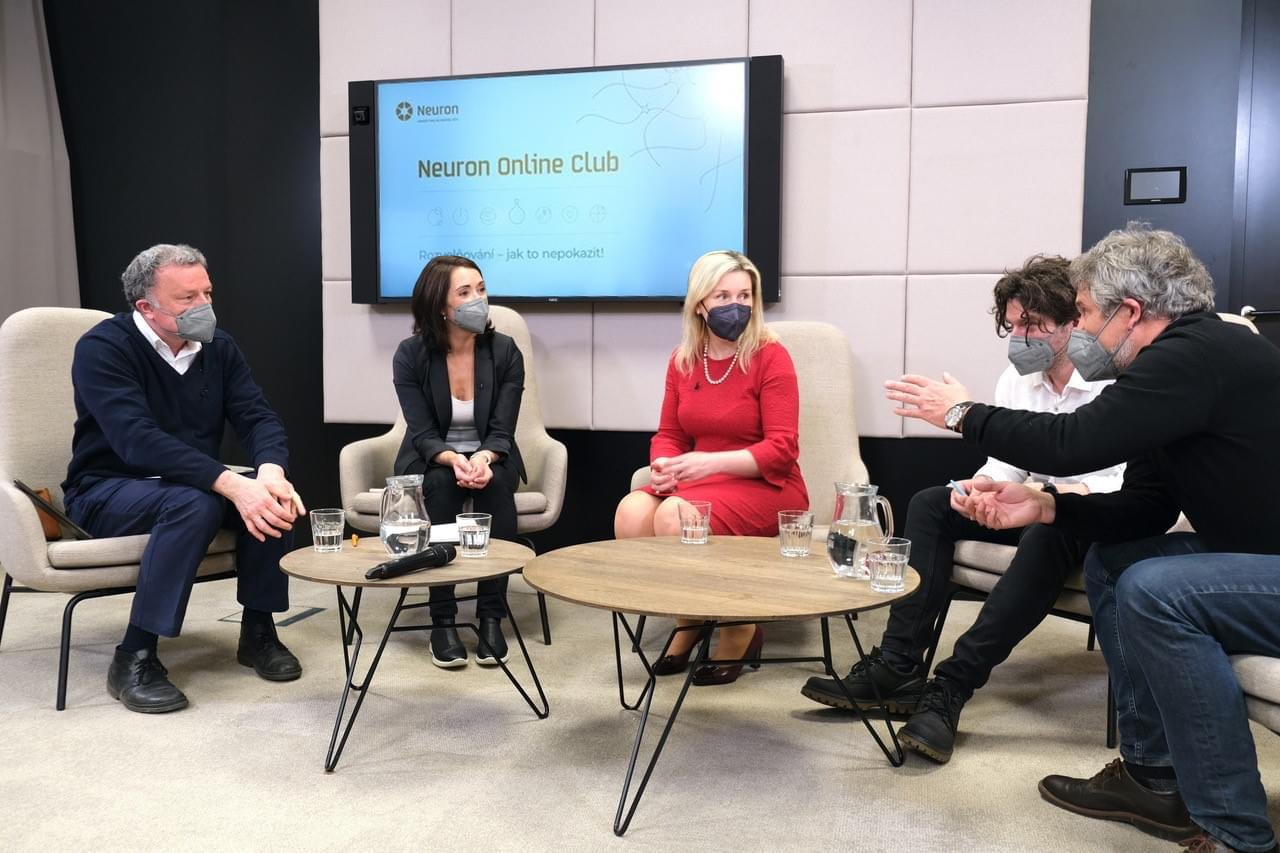
Conclusions from the panel discussion Relaxing the rules — how not to get it wrong!
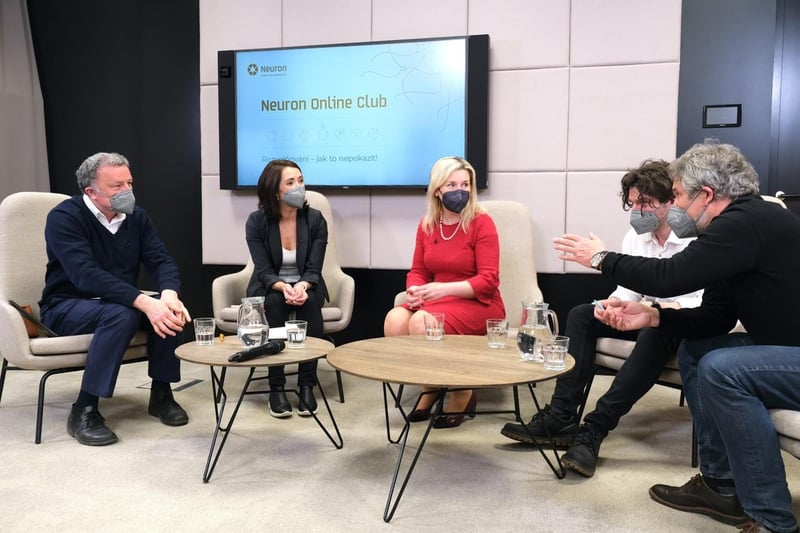
"Another wave probably will not come, but we have to learn to live with covid-19. The pandemic will be over when we go to the theatre or a concert, whether with a test or vaccination. A summer holiday in Europe need not be a problem." This was heard at a Neuron Club meeting that concluded the series of discussions on covid-19.
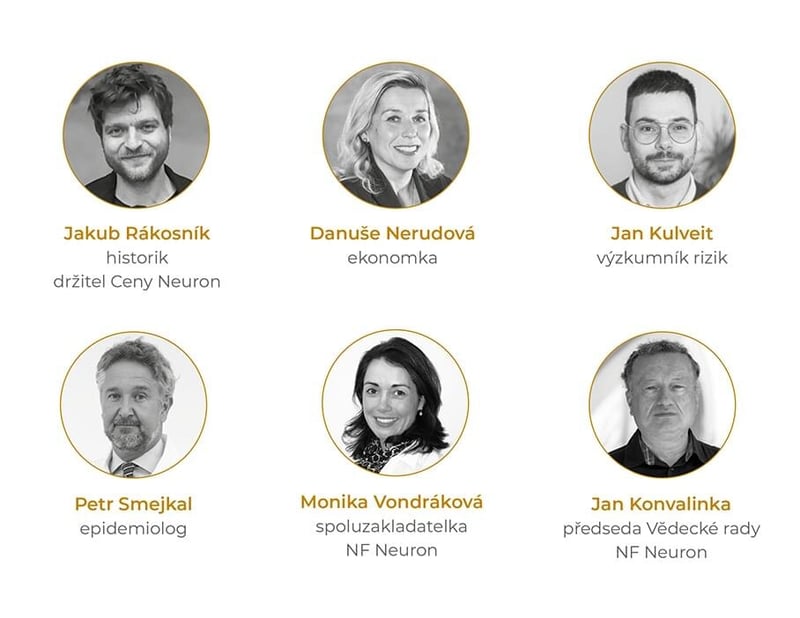
The Neuron Foundation, which thanks to the support of patrons and partners raises the prestige of scientists in our country, invited the epidemiologist Petr Smejkal, the economist Danuše Nerudová, the risk researcher Jan Kulveit and the historian Jakub Rákosník to an online discussion.
The discussion Relaxing the rules — how not to get it wrong! was held immediately after the end of the state of emergency, when the ban on travel between districts ended and the first pupils returned to nursery and primary schools. The topics were therefore clear: what the latest recommendations for relaxing restrictions are and where to look for inspiration, what the new normal will look like, and how each of us can help make sure we do not get the relaxation wrong.
The meeting was hosted by the biochemist Jan Konvalinka, chair of Neuron's scientific council, and Monika Vondráková, chair of the foundation's board. What was said during the evening?
The pandemic is weakening; we can see the end
"The data show that the pandemic is slowly weakening. We must not get it wrong and must accept covid-19 as part of our future lives," said the biochemist Jan Konvalinka. As the epidemiologist Petr Smejkal added, we will be wearing respirators for a long time yet and at mass events we will be showing a vaccination passport or a negative test. "We can start talking about the end of the pandemic when 80% of the population, children included, has been vaccinated," Smejkal explained. The risk researcher Jan Kulveit recalled that a new mutation of the virus, or our own irresponsibility, could interfere with everything: "As examples from around the world show, with vaccination the situation can be managed. So well, in fact, that we could be travelling to the seaside as early as this summer."
A historical episode that will change us
Encountering a pandemic is shocking for us because we have no personal comparison with a similar problem in history, but future generations will judge covid-19 as an episode. A pandemic has a cleansing function for society; the medieval plague, for instance, ultimately helped the poorest classes to a better life, because the price of labour rose. Today too we have to reassess our economic model: the pandemic has forced us to digitalise and to recognise the globalised world. The lesson for the Czech Republic is that it has to secure greater self-sufficiency and stop exporting a cheap economy.
The importance of science
Covid-19 increased the speed of vaccine development, and that experience will be useful to us in treating other diseases. Although our specialists are among the best in the world, without international cooperation there is no point in producing a Czech vaccine against covid-19. Today it may seem that scientists are responsible for everything during the pandemic, and yet a year ago nobody listened to them. Expert groups were already emphasising mass testing and tracing last year, but the state deals with the pandemic by alternating brake and accelerator. That can be a lesson for next time: everyone bears their own responsibility, and scientists' views should be an important aid.
Recommendations
- do not try to relax restrictions quickly; once daily infections are in the low hundreds, start tracing
- do not make chaotic changes; let the measures work for a while
- gradually replace antigen tests with PCR tests, which will thereby become cheaper and could serve as a "weekly" ticket to normal life
- give the public simple rules; do not create complications
- during the holidays, stay within Europe
Great thanks go to our patrons and partners.
We also thank the event's partners: ABRA Software, Deloitte, Pilulka, Seznam, Forbes and Economia.
The panellists:
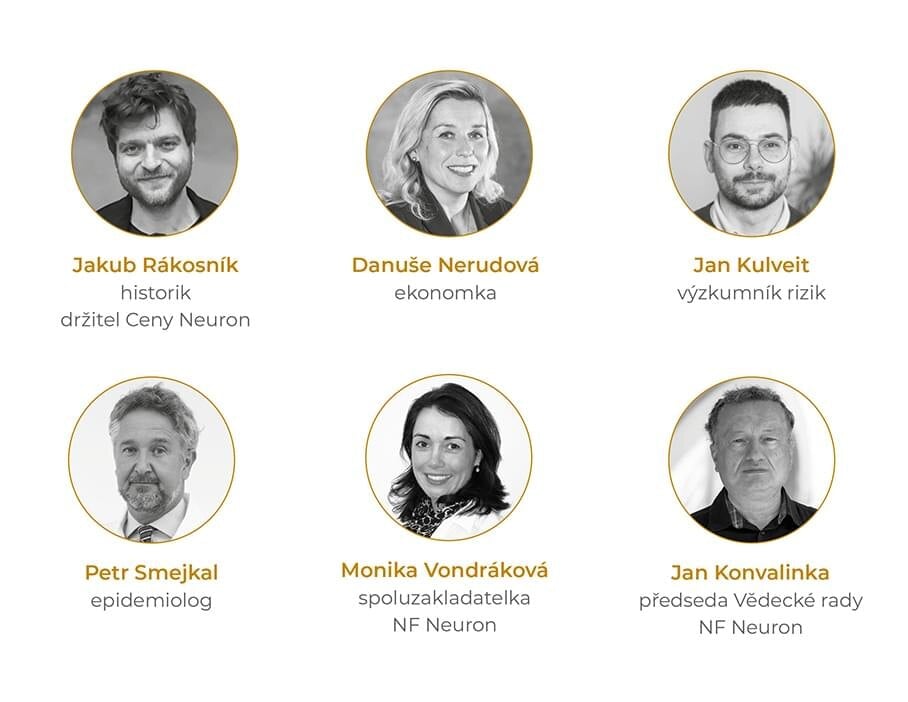
historian Jakub Rákosník
Doc. PhDr. et JUDr. Jakub Rákosník, PhD. is a laureate of the Neuron Award for young scientists in the social sciences. He specialises in the economic and social history of the 19th and 20th centuries. He works at the Faculty of Arts of Charles University.
risk researcher Jan Kulveit
The mathematician Mgr. Jan Kulveit, PhD. works on modelling complex interacting systems and strategies affecting the long-term future. He works at the Future of Humanity Institute at the University of Oxford.
economist Danuše Nerudová
Prof. Ing. Danuše Nerudová, PhD., professor and rector of Mendel University in Brno. Besides economic topics she also works on questions of equality between men and women and regularly comments on the sustainability of the pension system.
physician Petr Smejkal
MUDr. Petr Smejkal has long worked in internal and infectious medicine; he currently works at IKEM in Prague as chief epidemiologist and, since 2008, also in the USA on the coast of Maine at Maine Coast Memorial Hospital.

Join our neuron network
Sign up for our regular monthly newsletter, in which we bring you news from Neuron and from the world of science.
General partners of the Neuron Foundation: