The view of Neuron Award laureates: what is stifling Czech science?
Czech science has an excellent international reputation and achieves top-class results. At home, though, it is held back by needless bureaucracy, distrust and unpredictable funding that resembles a lottery. Leading Czech women scientists agree on this, including the Neuron Award laureates Martina Živná and Lenka Zdeborová. Instead of making groundbreaking discoveries, they often "fill in tables".
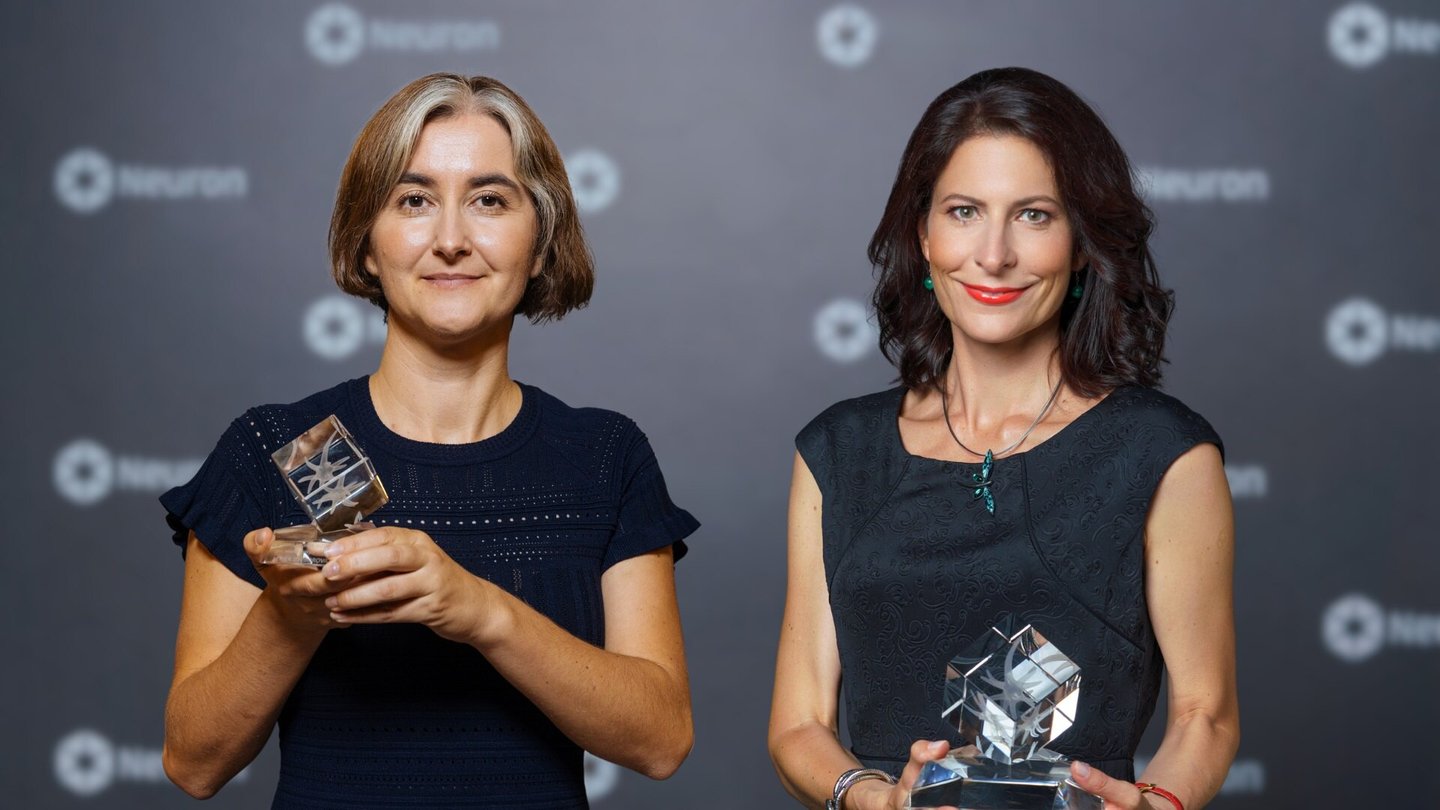
When you ask leading Czech women scientists what would help science in the Czech Republic, surprisingly they do not talk primarily about money. The main obstacle, they say, is a system that forces the country's best minds to spend months filling in pointless forms more complicated than European or American ones. Research is thus held back by an administration that does not trust its own experts.
"Whether a given project will be funded or not is utterly unpredictable and borders on a lottery," points out Martina Živná, a Neuron Award laureate from 2022 and a geneticist at the First Faculty of Medicine of Charles University.
According to Martina Živná, what biomedical research lacks above all is long-term financial support and a clear concept. Most grants are awarded for only three or four years, too short a time to achieve genuinely groundbreaking results. Scientists are moreover forced to plan in detail in their applications exactly what they will discover and when they will publish it.
An outside view is offered by Lenka Zdeborová, a Neuron Award laureate from 2021, who has long worked at the prestigious EPFL in Switzerland. In her view, what would help Czech science most is if it managed to open up to the world and actively attract leading scientists from abroad — whether Czechs who left or foreign experts.
"That is exactly what other small countries that are very successful in science do, such as Belgium or Switzerland," Zdeborová says. And it is not only about money. "What is key is simple administration, openness and trust in qualifications, wherever they were obtained," she explains.
The most important thing, though, according to Lenka Zdeborová, is to give young scientists freedom. "Young scientists need freedom. The chance to set up their own group, study their own subject, take responsibility for the direction they choose," she concludes.
Read the full article at Forbes.