Invisible allies: the microbiologist Schwarzer revealed the microbiome to students
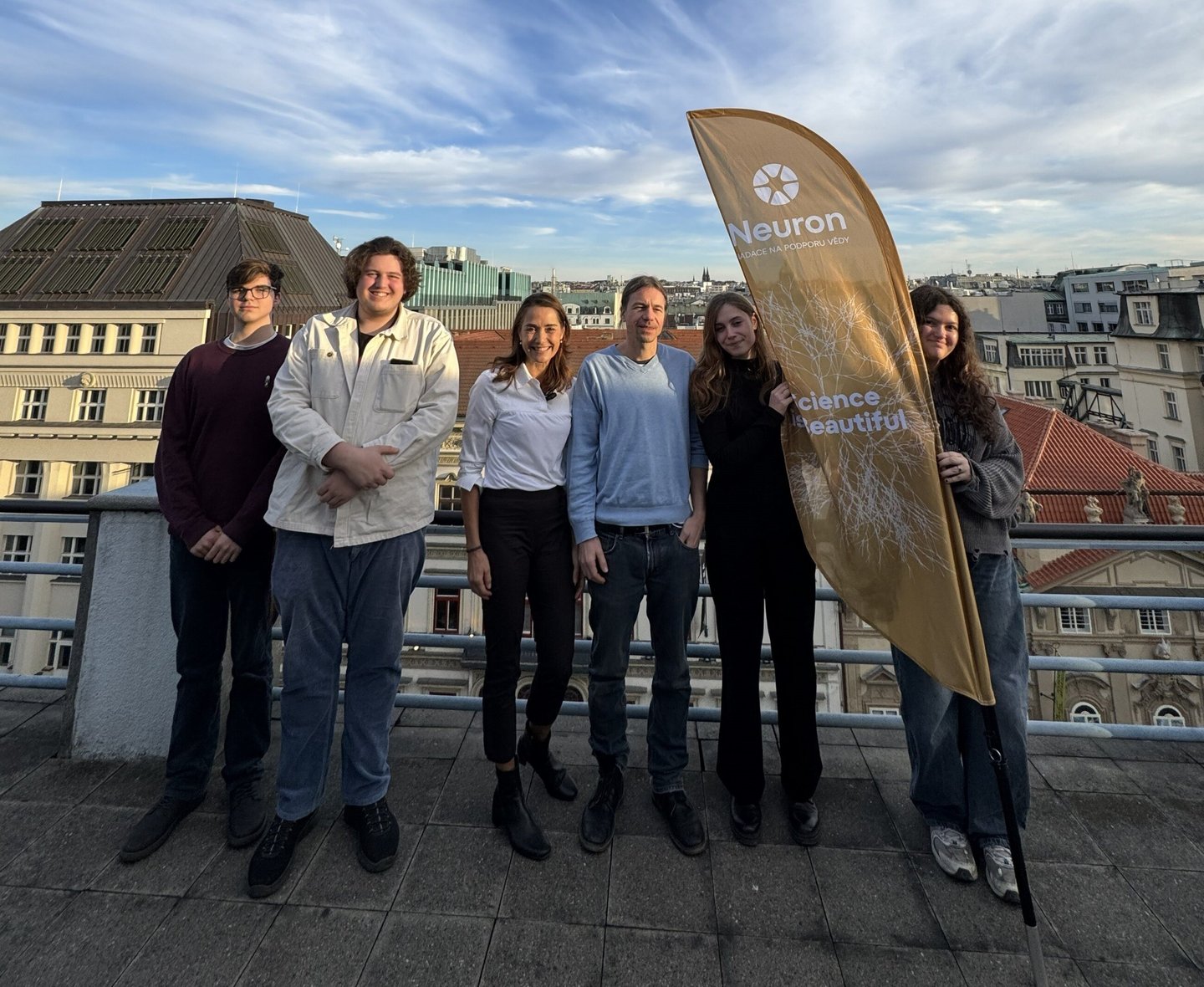
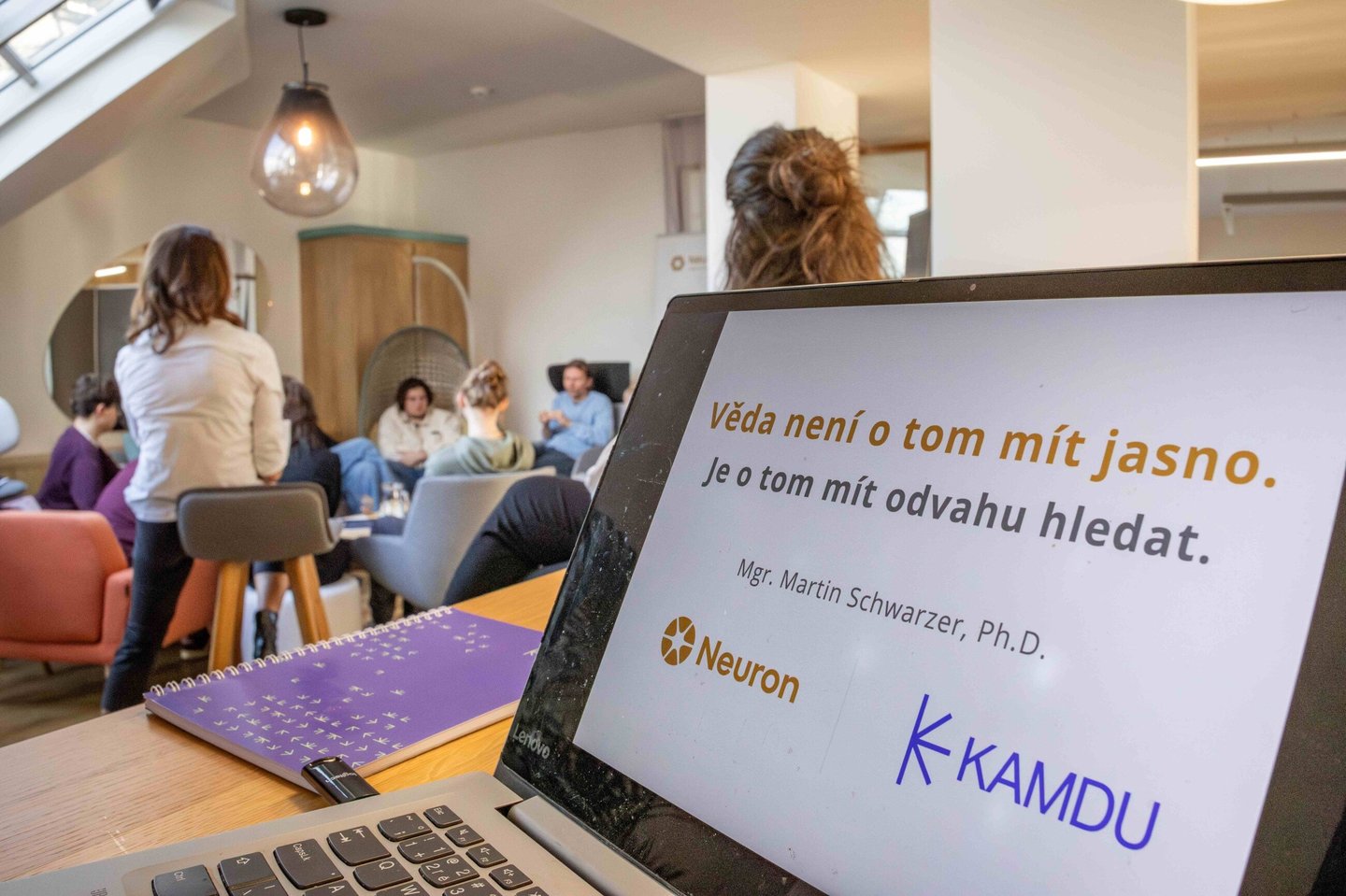
Young, curious people still deciding what to study headed for the Neuron Foundation's offices on Thursday 26 February. They came to hear a very interesting guest: the microbiologist Martin Schwarzer, who received a Neuron Impulse in 2017 and even has a paper in the prestigious journal Science to his name. About a dozen secondary school students listened to his unique lecture Invisible allies: how do gut bacteria influence an organism's development?
Young, curious people still deciding what to study headed for the Neuron Foundation's offices on Thursday 26 February. They came to hear a very interesting guest: the microbiologist Martin Schwarzer, who received a Neuron Impulse in 2017 and even has a paper in the prestigious journal Science to his name. About a dozen secondary school students listened to his unique lecture Invisible allies: how do gut bacteria influence an organism's development?
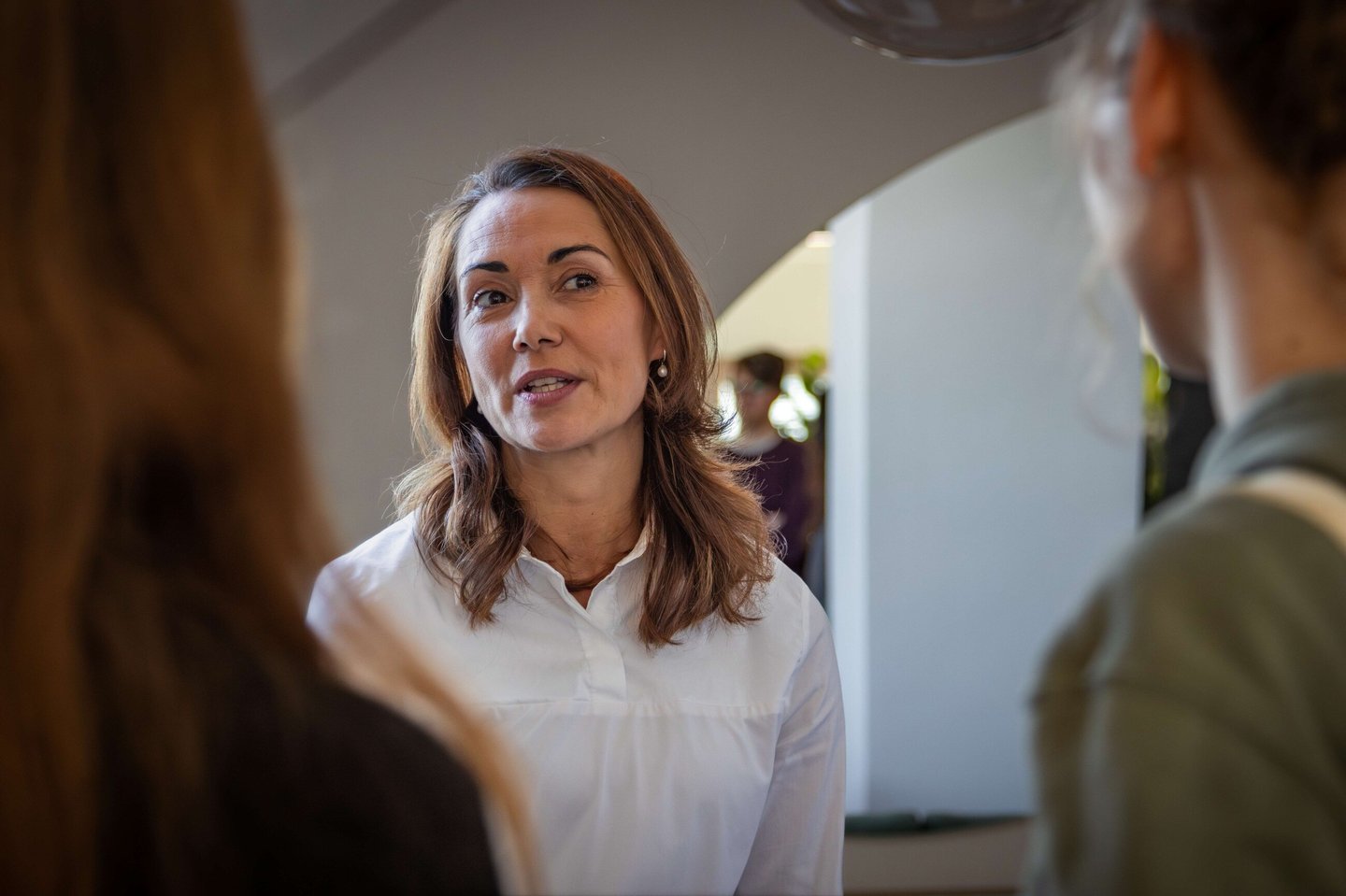
The meeting, held under the auspices of the organisation Kamdu, was opened by Neuron's director Monika Řasa Vondráková, who had already taken an interest in the microbiome. Martin Schwarzer (46) once wanted to be a journalist (he even applied to a related course of study in Brno), but in the end chose biology. Only to break off his studies in the fourth year. He burned out… So he openly shared with the students his own floundering and his experience in England, where he helped people with intellectual disabilities and wove baskets in the French and English styles.
But he managed to come back to biology. He also met friends from Nový Hrádek in the Orlické Mountains and began working on gnotobiology — the science of raising germ-free animals. And in that he found himself. He began working at the Institute of Microbiology of the Czech Academy of Sciences, and since February this year he has headed that detached workplace, which breeds "ultra-clean" mice and pigs.

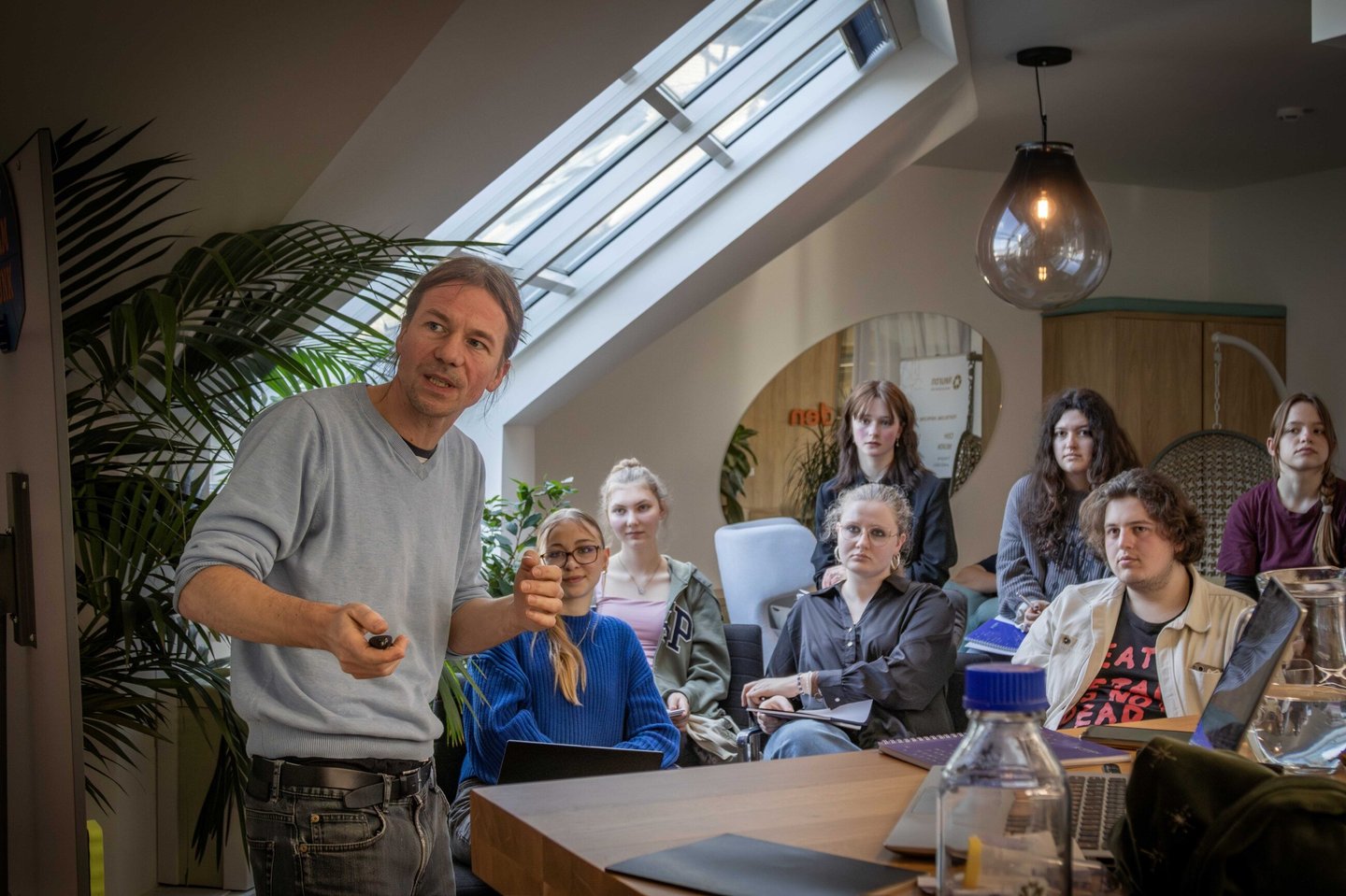
Then the first questions came. "The best fields are the borderline ones, where different disciplines meet. Any science can take you to all sorts of places in the world. On the basis of our work and research I was invited as far as Japan, somewhere I might never have got to otherwise. And later Professor Takahashi from the University of Tokyo came here too," Schwarzer said, tempting the talented students into the world of science while explaining the importance of germ-free animals for research (the first such guinea pig was successfully prepared as early as 1895).
Or he offered a smell test of mouse droppings — fresh germ-free ones on one hand and microbial ones on the other. The laughter loosened the questioners up and they grew bolder. And asked more and more.
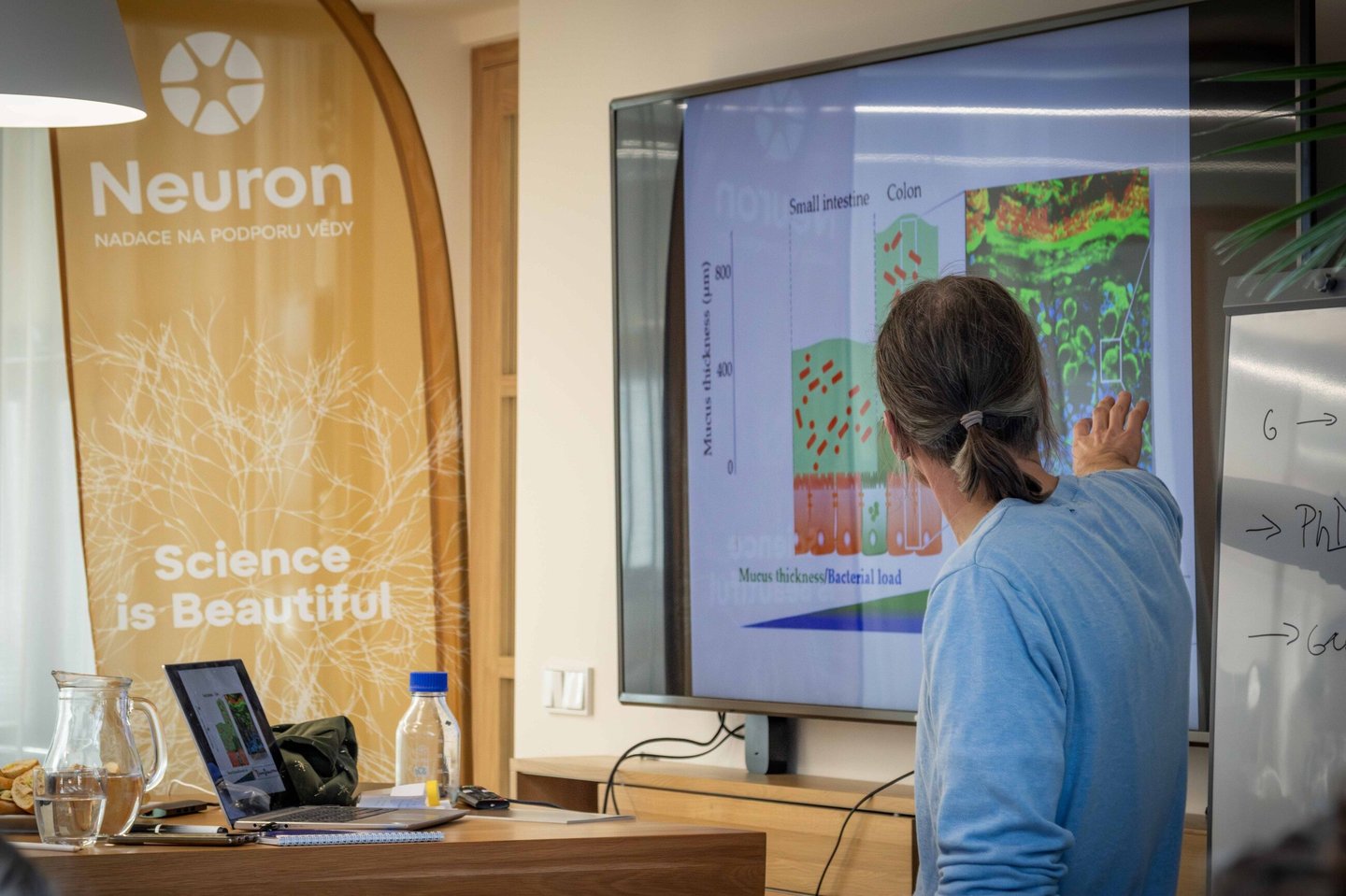
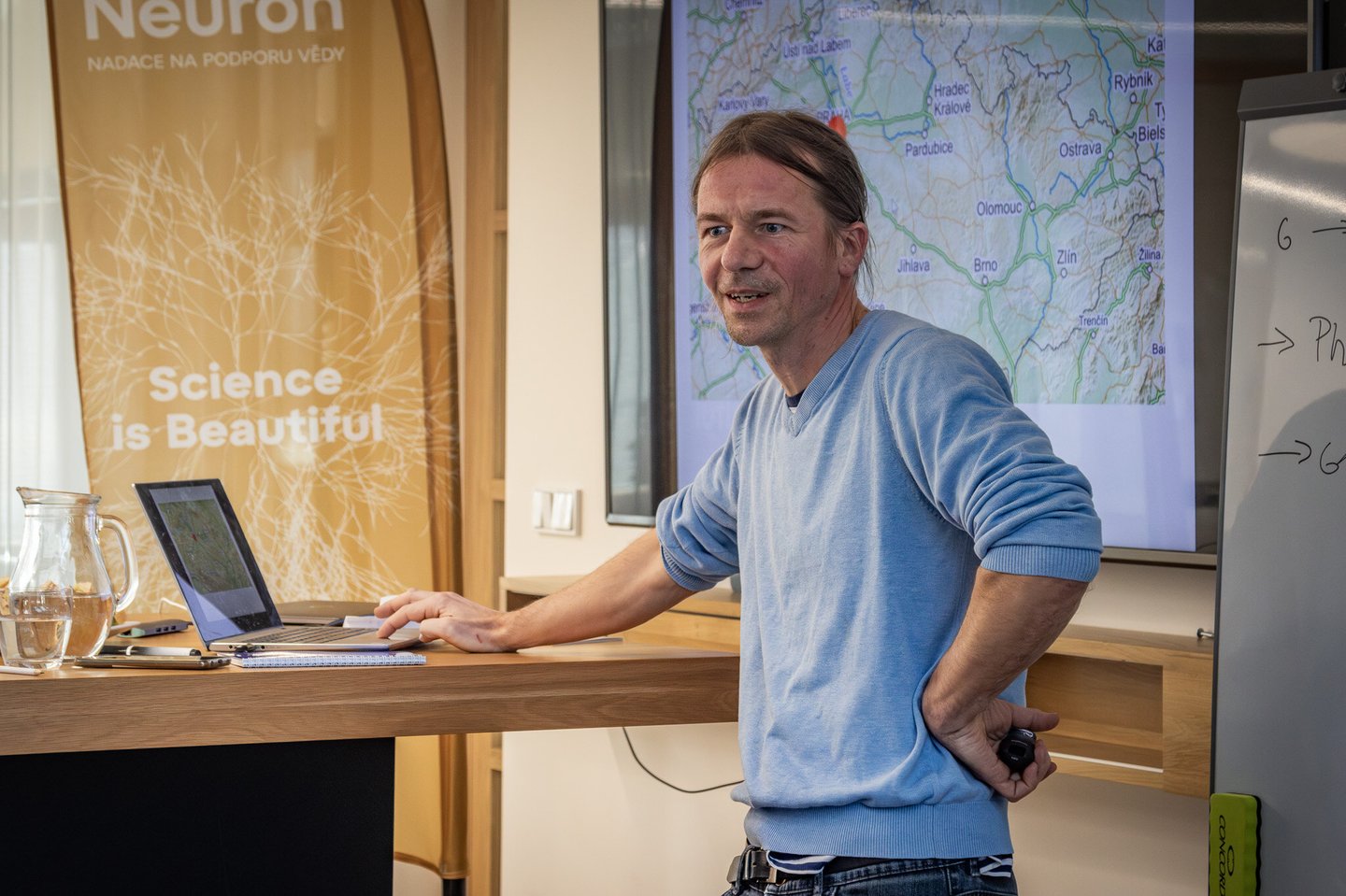

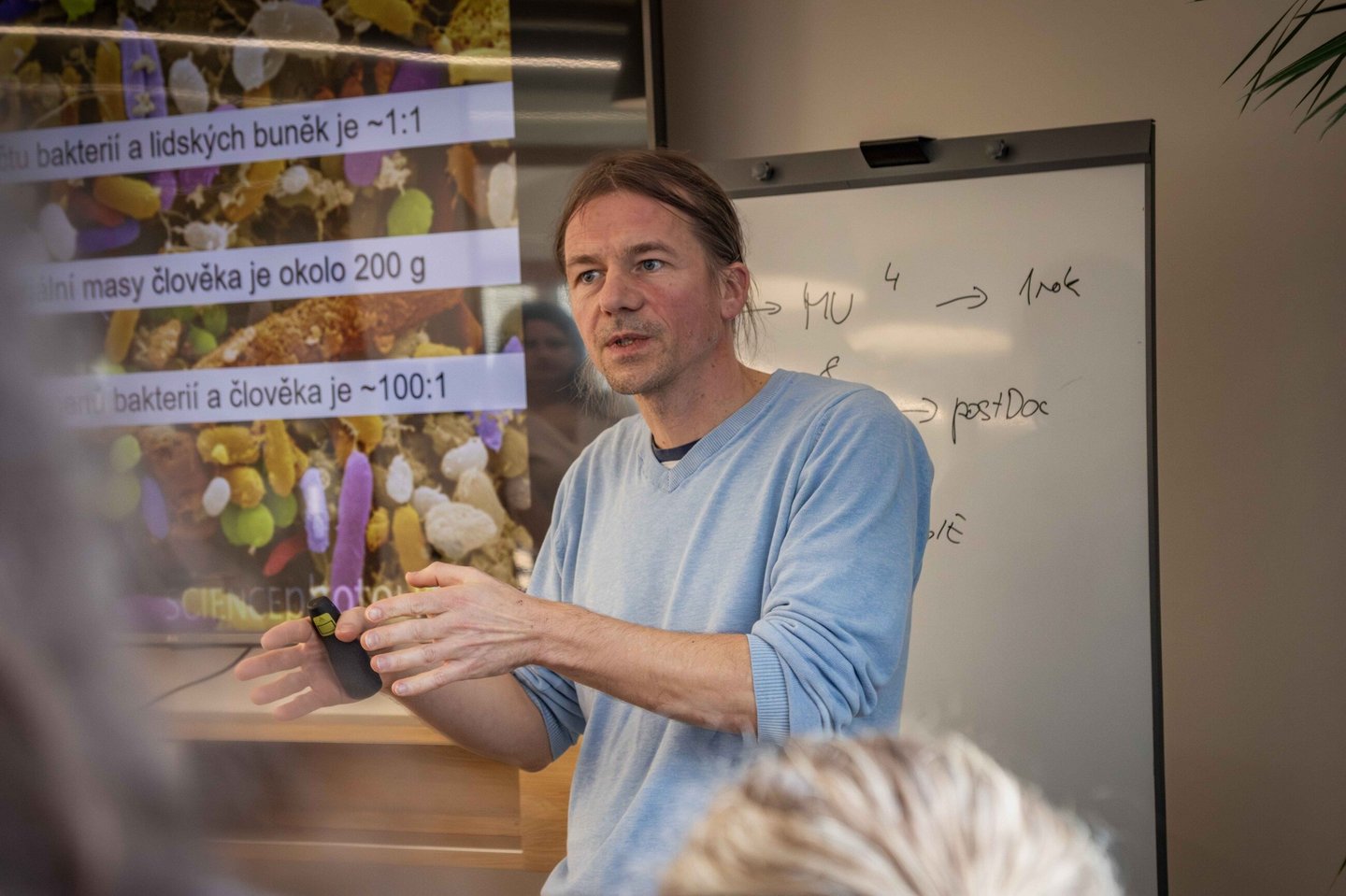
How is a faecal transplant done? How are clean laboratory mice prepared? Who is the best person to work with? How do you choose a supervisor? How many failures roughly lead to one scientific success? From Martin, who explicitly pointed out that every success comes with a string of failures, the students learned astonishing things. "The weight of the bacterial mass in a human gut is only about 200 grams, but the ratio of bacteria to human cells is roughly one to one," Schwarzer explained.
The microbiome is of enormous, and perhaps still underestimated, importance for the whole organism. "Balance in the gut is the foundation. It is not enough to supply nutrients; you also have to take care of the microbiome," the scientist explained to these young candidates for university study. And he ended this pleasant meeting of generations with the words that "science is not about being certain, it is about the courage to search". The rest is up to the young students.