Neuron's women laureates: curiosity and perseverance are key to science
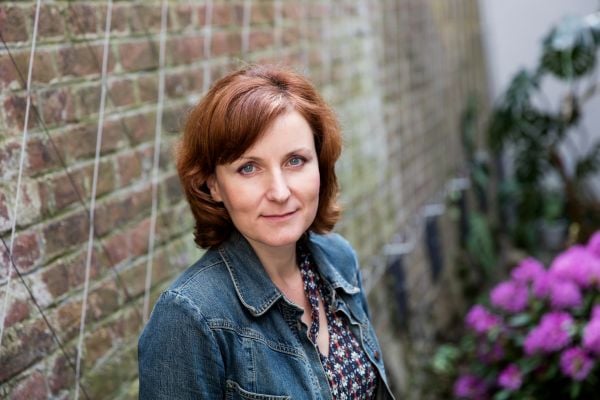
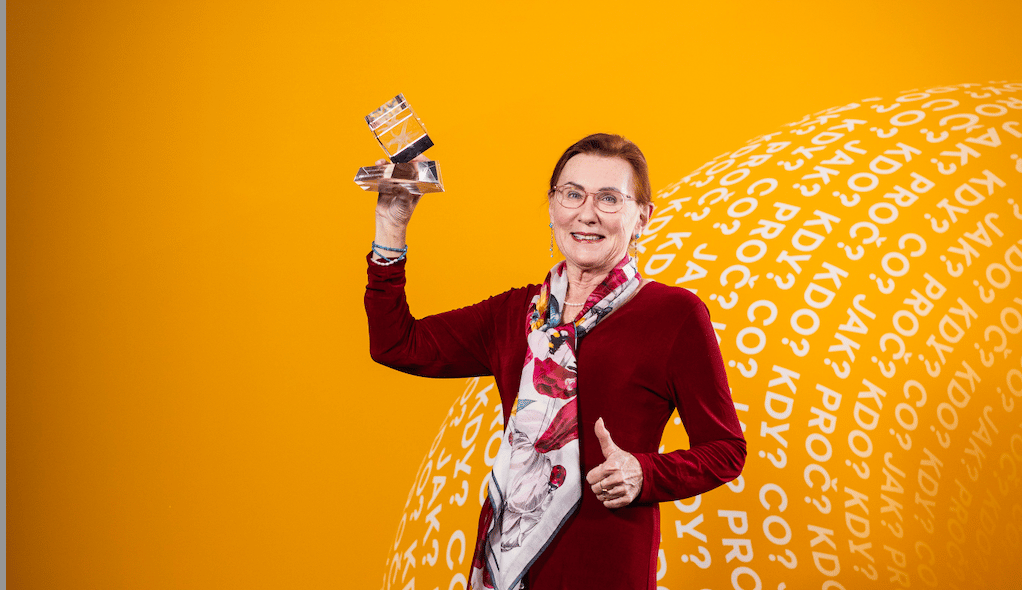
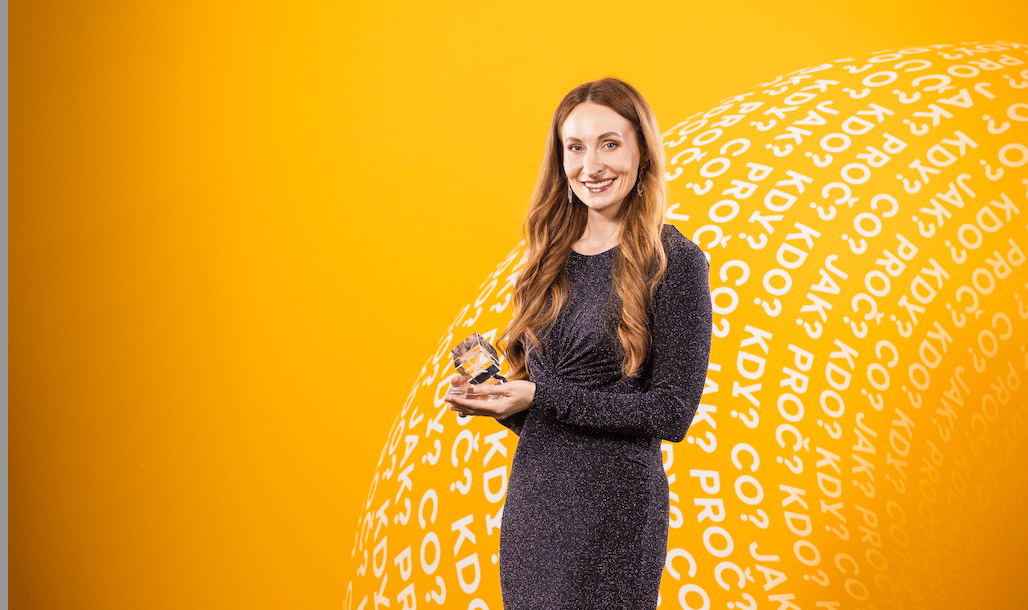
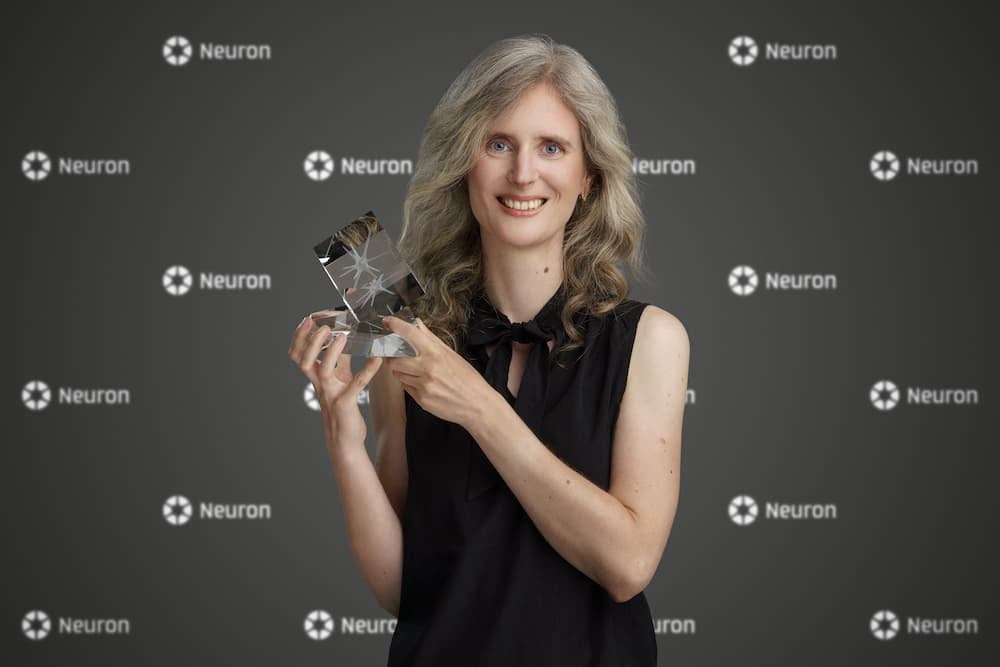
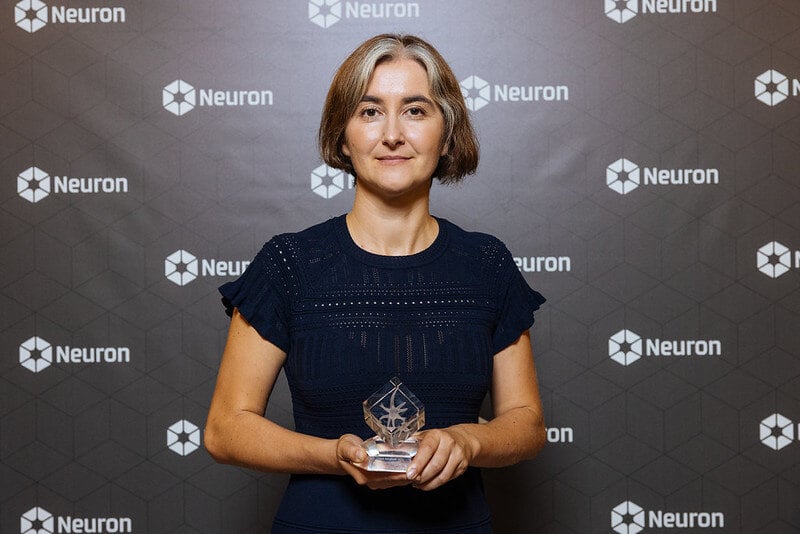
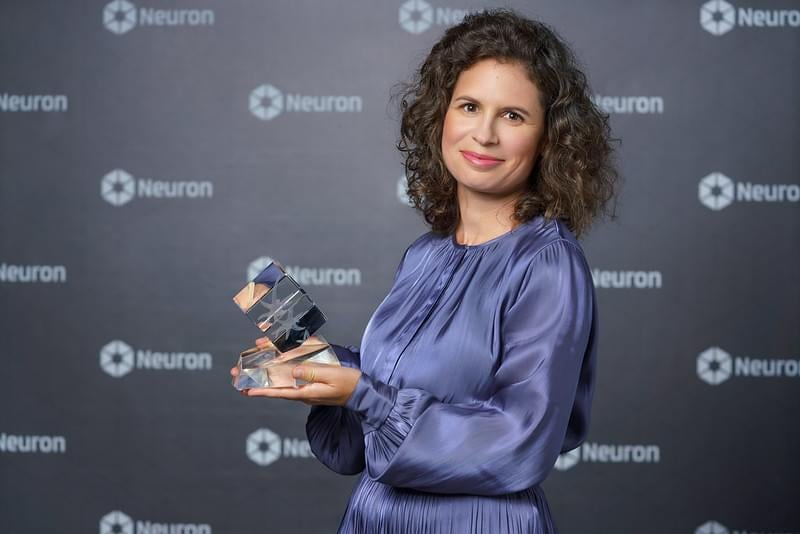
It is 11 February, the day of women in science. Today traditionally belongs to the International Day of Women and Girls in Science, when the talent, ideas and skills with which women improve our world are celebrated every year. The United Nations declared this important day in 2015 with the aim of promoting equal access and full participation of women and girls in science, technology, engineering and mathematics (that is, the STEM fields), and thus of recalling that the contribution of women scientists is essential to the progress of society as a whole. The day was first celebrated in 2016 — so this year is the tenth anniversary.
The Neuron Foundation has been supporting outstanding scientists for more than fifteen years, so some thirty distinguished women feature among the holders of its awards and grants! We asked a selection of them to tell us what they consider important and who their role models are. They often mention the necessary curiosity, perseverance and effort to pursue their own vision; their most frequent role model is Marie Curie-Skłodowska, who managed to make her way. We congratulate all women scientists and thank them for their work!
1) What quality do you consider most important for success in science?
2) Which woman is personally your greatest role model, and why?
Hana Macíčková Cahová
biochemist, Neuron Award 2018 for promising young scientists – chemistry
(Institute of Organic Chemistry and Biochemistry of the Czech Academy of Sciences)
- I consider psychological resilience the most important quality for success in science. It is resilience that allows us to overcome everyday setbacks and see them as an opportunity to learn. Scientists set out into uncharted territory practically every day — we try something nobody has tried before us. That naturally carries a high risk of failure. It is therefore essential to be able to look at failure positively and take it as valuable information. I often tell my students that a negative experimental result is not a failure — it is simply an indication that we will get no further this way and have to take another route.
- At present I take inspiration from three women who are only a little older than me. Jana Roithová is a scientific star for me — she recently gave a superb lecture and workshop at our institute that made a great impression on me. Within my own field I have long been inspired by the excellent RNA biologist Štěpánka Vaňáčová, who is also a valuable support and a "friend on the phone" for me. I also have great respect for Pavlína Řezáčová of our institute, who does excellent managerial work as deputy director and who manages to bring positive, open female energy into the institute's leadership.
Martina Benešová-Schäfer
nuclear chemist, Neuron Award for promising scientists 2024 – medicine
(DKFZ Heidelberg)
- In my view the most important quality is a combination of fascination and resilience. Fascination motivates and drives you forward; it is a deep interest and enthusiasm that give you strength and energy. Resilience then helps you overcome the setbacks and obstacles that are unavoidable in scientific work.
- My greatest role model is Marie Curie. She was an incredibly exceptional woman who studied what for me is the most amazing natural phenomenon. I greatly admire the fact that she worked side by side with her beloved husband, helped develop and operate the X-ray vehicles known as "Little Curies", and changed the world through her fascination and resilience.
Jana Roithová
organic chemist, Neuron Award for promising scientists 2014 – chemistry
(Radboud University)
- I don't think there is one most important quality. Success requires at least a combination of hard work, perseverance and curiosity.
- Emmy Noether was one of the most significant mathematicians of all time. She had an incredibly hard path in a largely misogynistic academic world, but she managed to be successful, to win the recognition of the leading mathematicians and physicists of her day and to contribute to the development of groundbreaking physical theories at the beginning of the last century. Her biography is well worth reading!
Zuzana Holubcová
molecular biologist, Neuron Impulse 2016 – medicine
(Faculty of Medicine, Masaryk University)
- Perseverance.
- Marie Curie-Skłodowska — an outstanding woman scientist in a totally male science. Otherwise, though, I do not divide scientists into male and female; we are one community and we are after the same thing.
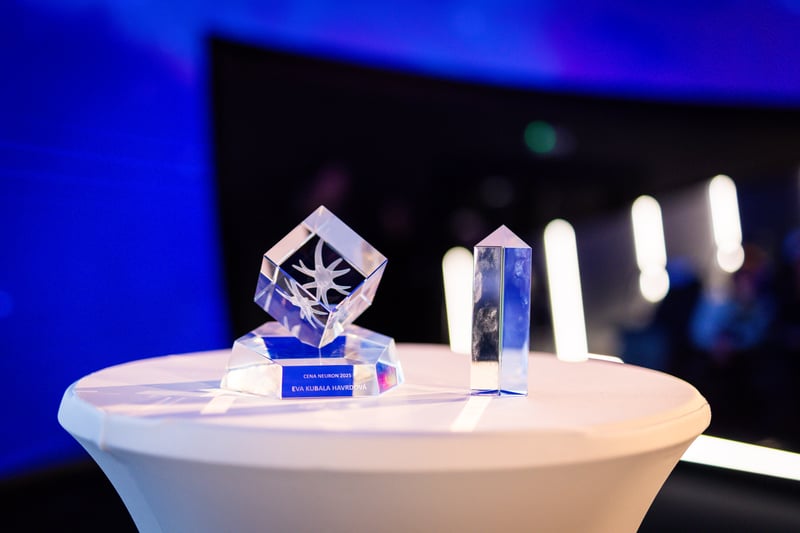
Eva Kubala Havrdová
physician, main Neuron Award 2025 – medicine
(First Faculty of Medicine, Charles University; General University Hospital)
- Not giving up at the first setback and pursuing your vision. There is always a way; it is just sometimes hard to find.
- I have never thought about it, but probably Professor Terezie Fučíková. She was a pioneer of clinical immunology at a time when the field essentially did not yet exist internationally. She was not politically engaged (she refused to join the Communist Party) and could not advance academically until 1989. She taught me everything I needed from immunology in order to follow in Professor Pavel Jedlička's footsteps and move the treatment of multiple sclerosis forward.
Zuzana Libá
neuroimmunologist, Neuron Impulse 2014 – medicine
(Second Faculty of Medicine, Charles University / Motol University Hospital)
- Curiosity, creativity, tenacity and an eye for detail, plus the ability to work with people with managerial skills, or to have them yourself.
- Marie Curie. An absolutely timeless and, in her day, progressive woman who achieved what was then practically impossible — making her way in a marginal field still dominated by men and applying her talent and unique gifts, however unbelievable that must have been at the time she was born.
Dáša Bohačiaková (Doležalová)
neurobiologist, Neuron Impulse 2017 – medicine
(Faculty of Medicine, Masaryk University)
- For me the key is curiosity and creativity combined with a growth mindset, that is, a willingness to learn, to develop and to see mistakes as a natural part of scientific work.
- I have no single scientific role model, female or male. I rather watch the people around me, successful scientists, and take inspiration from their approach, whether in a positive or a negative sense, regardless of sex.
Zuzana Musilová
biologist, Neuron Award for promising young scientists 2021 – biology
(Faculty of Science, Charles University)
- In first place is certainly curiosity and the motivation to discover. Without an inner engine of that kind it cannot work over the long term. That of course then has to be complemented by other important qualities such as the ability to explain your idea satisfactorily (to obtain funding), test it (carry out experiments) and then present it to the world (publish the results in the written form of a scientific paper). Science is a complex business requiring a mix of intellect, knowledge and the ability to communicate with people.
- It is odd, but personally I have no woman as a role model; I took my inspiration from scientists in general (regardless of sex). Among women, Jane Goodall or Marie Curie come to mind; both went their own way regardless of the views of those around them and of society. That is sometimes necessary.
Lenka Zdeborová
physicist and computer scientist, Neuron Award for promising young scientists 2021 – physics
(EPFL Lausanne)
- I consider curiosity the most important quality for success in science — the kind you cannot resist. Curiosity that makes you carry on even when things are complicated, uncertain or fail to produce a result for a long time.
- My most striking personal role model is Ingrid Daubechies. Not only because she is among the most outstanding scientists of our time, but also for her human qualities. You can feel a deep love of science, of beauty and of truth in her, as well as the joy of learning and of sharing knowledge with others.
Lenka Slavíková
mathematician, Neuron Award for promising scientists 2023 – mathematics
(Faculty of Mathematics and Physics, Charles University)
- Curiosity, the desire to understand how things work. And also patience, because scientific research is a long-term business and you often have to go down a number of blind alleys before a route to solving a problem appears.
- The Iranian mathematician Maryam Mirzakhani, who despite a difficult life achieved superb scientific results and in 2014 became the first woman to win the Fields Medal, the highest honour in mathematics. Sadly, Maryam succumbed to serious illness in 2017 at the age of forty, but I believe her life story will remain an inspiration for coming generations of women students and young scientists.
Kateřina Rohlenová
cancer biologist, Neuron Award for promising scientists – medicine
(Institute of Biotechnology of the Czech Academy of Sciences)
- For me it is perseverance. Science is a bit like a climb in difficult terrain: even when the summit is already in sight, the route to it can still be long and complicated. So I try not to fixate on the result alone but to find meaning and inspiration in the whole process.
- My greatest role model is Aviv Regev, a computational biologist and one of the pioneers of research into gene expression at the single-cell level, who leads biomedical research and early drug development at Genentech. I admire her exceptional vision, her ability to open up entirely new directions in science and her courage in stepping into the unknown when it moves the field forward.
Zuzana Kúkelová
computer scientist, Neuron Award for promising young scientists – computer science
(Faculty of Electrical Engineering, Czech Technical University)
- There is probably not just one. The most important are probably: courage — not being afraid of challenges, not being afraid to take risks, to try non-standard solutions and to ask questions that look hard at first sight. Patience and perseverance — being patient when the desired results do not come at once or when the chosen solution does not work. Curiosity — being curious and constantly asking new questions and looking for answers to them. And finally, certainly, intuition, imagination and creativity. It is imagination, creativity and intuition that drive research forward. It is important to think creatively and out of the box and to be able to imagine things that cannot be seen directly.
- My greatest role model is certainly my mother. I admire her devotion, patience and strength. She always supported me and taught me responsibility, and it is thanks to her that I know how important it is not to give up. From the world of science it is Katherine Johnson, an exceptional mathematician whose calculations contributed significantly to NASA's successes. I admire not only her intelligence but above all her courage in making her way at a time when women, and African-American women in particular, were markedly disadvantaged in science.
Erin Carson
mathematician, Neuron Award for promising scientists 2025 – mathematics
(Faculty of Mathematics and Physics, Charles University)
- It is hard to choose just one. I think two of the most important are honesty and perseverance.
- My greatest role model is my mother. She is patient, kind and wonderfully creative. And above all she knows how to have fun and not take life too seriously.
Mariya Shamzhy
inorganic chemist, Neuron Award for promising scientists 2022 – chemistry
(Faculty of Science, Charles University)
- For success in science, as in any other field, I consider commitment the key quality. Research is full of attempts that do not work out and of blind alleys — and it is precisely the willingness not to give up, to learn from mistakes and to keep going, combined with curiosity and critical thinking, that gives good ideas the chance to grow into real discoveries.
- I have no single role model. Throughout my life I have been inspired by women, famous and unknown alike, who despite obstacles had the courage to follow what made sense to them. In science, Marie Curie is a powerful example for me; at a time when university education was forbidden to women in her native country, she found the strength and discipline to study the natural sciences, to persevere in scientific work, and showed that fidelity to one's own calling can change the world far beyond the span of a single human life.
Anežka Kuzmičová
literary scholar, Neuron Award for promising scientists 2022 – social sciences
(Faculty of Social Sciences, Charles University)
- Patience, or the ability to hold on to an idea despite obstacles, combined with the ability to recognise at the right moment when an idea has to be abandoned.
- I have never had individual people as role models. What impresses me most are women who work tirelessly for systemic change. In the Czech setting at the moment, for instance, the former commissioner for human rights Klára Šimáčková Laurenčíková, and in science Vlaďka Petráková.