"Our expedition succeeded in full measure," Tomáš Jůnek says of the research in Congo
5 May 2021
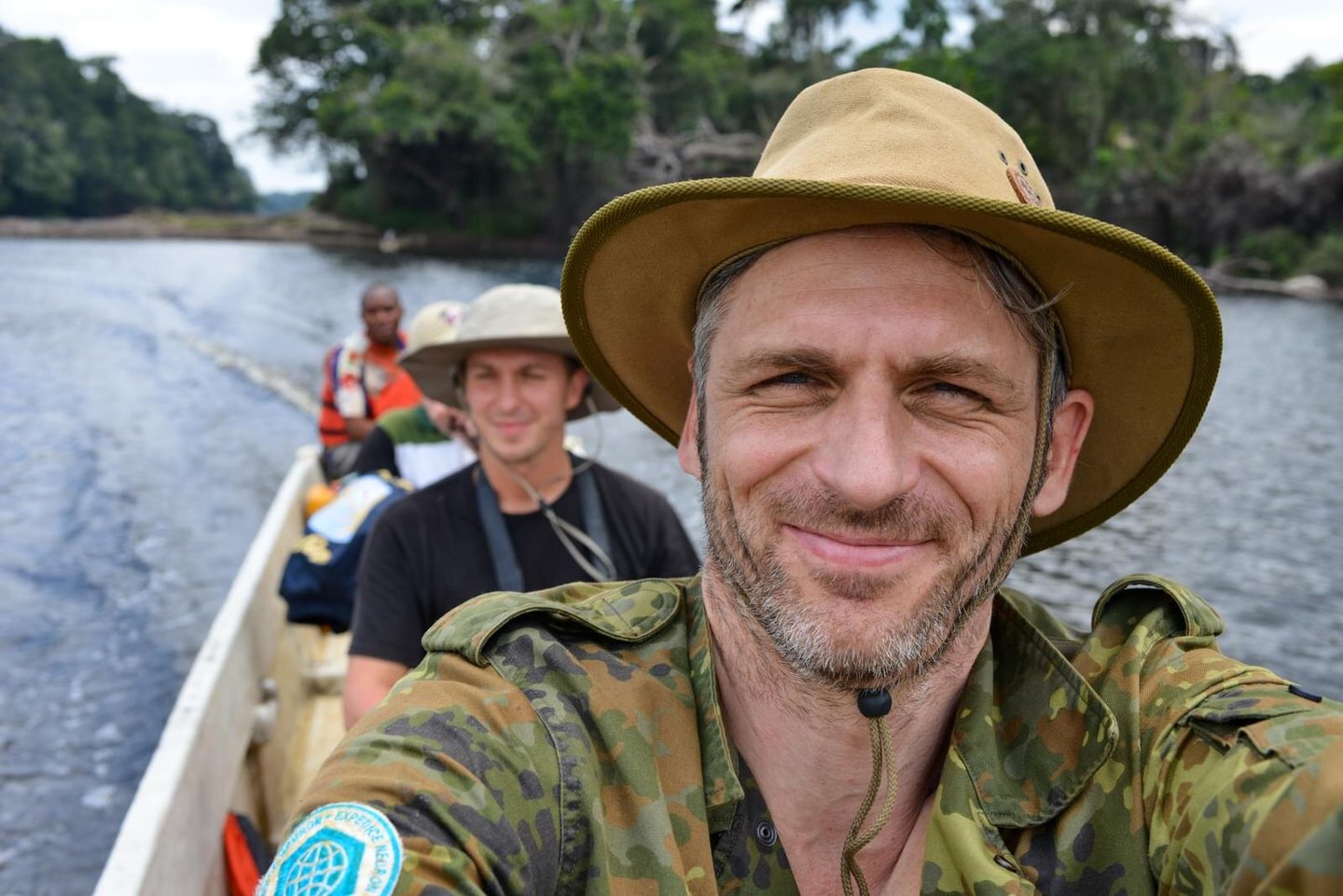
The zoologist Tomáš Jůnek was one of the leaders of the Neuron Dzamba Ya Lobi expedition. Two years ago he set out with Arthur Sniegon and other colleagues into the rainforests of Congo to map areas neighbouring the national parks. "Most grants require you to bring back specific scientific results and outputs, but from Neuron we received support for a mission that gave rise to something greater than reaching a summit," says Tomáš Jůnek.
The zoologist Tomáš Jůnek was one of the leaders of the Neuron Dzamba Ya Lobi expedition. Two years ago he set out with Arthur Sniegon and other colleagues into the rainforests of Congo to map areas neighbouring the national parks. "Most grants require you to bring back specific scientific results and outputs, but from Neuron we received support for a mission that gave rise to something greater than reaching a summit," says Tomáš Jůnek.
What did the Neuron Dzamba Ya Lobi expedition bring — two years on?
It was a starter for us, letting us give our work a long-term platform, cooperation based on a mutually supportive partnership with the conservation organisations working in Congo. Two years ago we did not go to Central Africa with the ambition of bringing something back or sticking a pin in a map, but of starting to take part in the future of the African wilderness and of the world's ecosystem. Neuron's contribution allowed us to give unity and strength to the people working on the issues of Central Africa and Congo, biodiversity and environmental protection. A community came into being that is more credible to local people and authorities than when each of us travels to Africa on our own account.
Why did you choose Congo, and did it turn out to be the right choice?
The last remnants of wilderness are "parcelled out" even among conservationists; other teams are already working on animals in the reserves, on rhinos or gorillas, and getting to them is practically impossible. We wanted to map unprotected areas and get to know "ordinary" forests under community management, how people live and hunt there, or forests managed by logging companies. And Congo is ideal for that — in the north of the country there is an enormous unprotected area between national parks covering over 20,000 km².
What contacts did you make and what cooperation did you help bring about in Congo?
Our expedition was about starting the journey and about everyone involved in the work in Congo presenting themselves as a single body with something to offer. And that succeeded in full measure. Two years ago we began cooperating with the World Wide Fund for Nature. Together we set up large-scale monitoring with camera traps in Congo to get basic information about which animals live there and where they move through the landscape. We will then show the data to the government or to the owners of the logging companies to convince them that a rainforest corridor for the animals has to be preserved. I am developing further cooperation with the WWF within the Faculty of Environmental Sciences of the Czech University of Life Sciences; we are working on the illegal trade in bushmeat and pangolins and on an early warning system in Gabon against illegal logging. We are now working on a project to use satellites and drones to detect environmental change or determine the biomass in a given area.
Have you followed up the Neuron Dzamba Ya Lobi expedition in recent years, or are you planning a continuation?
I was last in Congo at the turn of November and December, when we explored a new research site that the WWF would like to have declared a protected area. If possible, I am planning the next trip for the summer holidays. And of course we are raising money to continue the expedition, whose main goal for me personally is this: to show a way of using an environment in which wild animals can go on surviving.