A magical teleportation on a tropical glacier
31 May 2022
How do glaciers at the North Pole differ from glaciers at the equator? Are they part of the same ecosystem, or do they host unique, isolated communities? These are the questions the Neuron Expedition is trying to answer.
In 2018 the expedition studied glaciers in the northernmost part of Svalbard; in May 2022 it set out for the Rwenzori Mountains in Uganda to collect samples for further analysis. That analysis will serve to identify the causes of the retreat of tropical glaciers and its consequences for global biodiversity.
The project's leader Marie Šabacká, a polar ecologist from the University of South Bohemia, and Jan Lukačevič, a space engineer and populariser of science, describe their African expedition in a joint interview — a journey that brought both pitfalls and rewards.
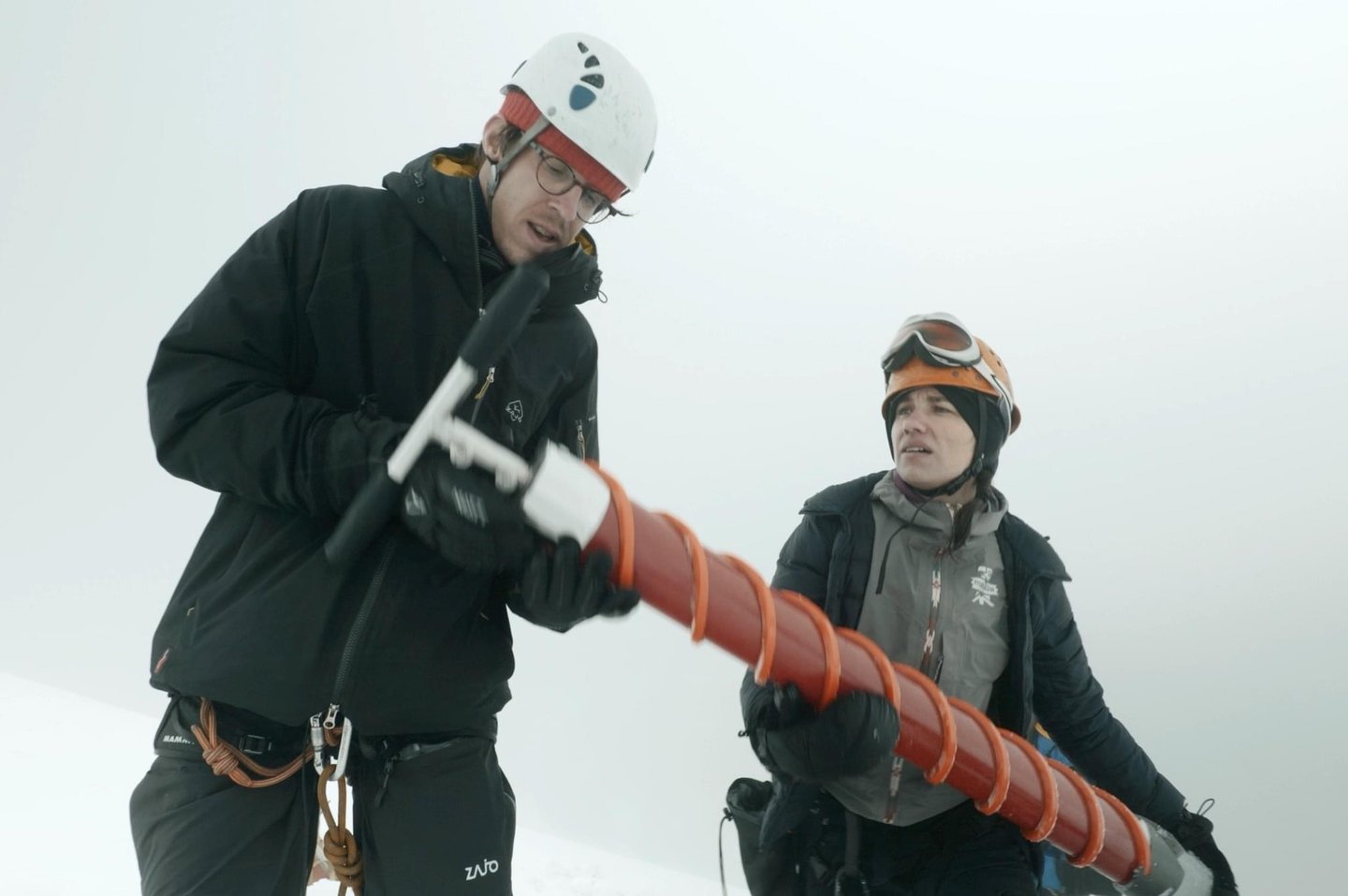
The Neuron Expedition In Search of Tropical Glaciers. Jan Lukačevič and Marie Šabacká in Rwenzori National Park.
You spent a month in Uganda, half of it in the national park itself. How long does it take you to acclimatise after such a demanding trip?
Marie Šabacká: We came back from Africa on Sunday afternoon and Monday was already a working day for me. I am used to travelling to polar regions and I don't need to acclimatise.
Jan Lukačevič: If we had come back from the glacier straight to Prague it might have been a shock, but before we left we spent a few days in Kampala, where there are rather too many people. So the return was quick and thoroughly pleasant.
How large was your expedition and who was responsible for what?
Jan Lukačevič: Its size changed somewhat surprisingly during the expedition. Because of health problems one of our colleagues had to go home, so two scientists were left and I was the link between the expedition and the two members of our crew, whom I was trying to direct for the film we are preparing. And I was also Maruška's right hand.
Marie Šabacká: Responsibilities evolved during the expedition. In the end another colleague's health let him down too, so Honza had to help me on the glacier. But we were actually a large group; three guides and dozens of porters with food and equipment went with us as well.
Where was your destination and how did you get there?
Marie Šabacká: The glaciers we were heading for are in Rwenzori National Park on the border of Uganda and the Democratic Republic of the Congo.
Jan Lukačevič: And the journey to the national park from Kampala takes about ten hours by car.
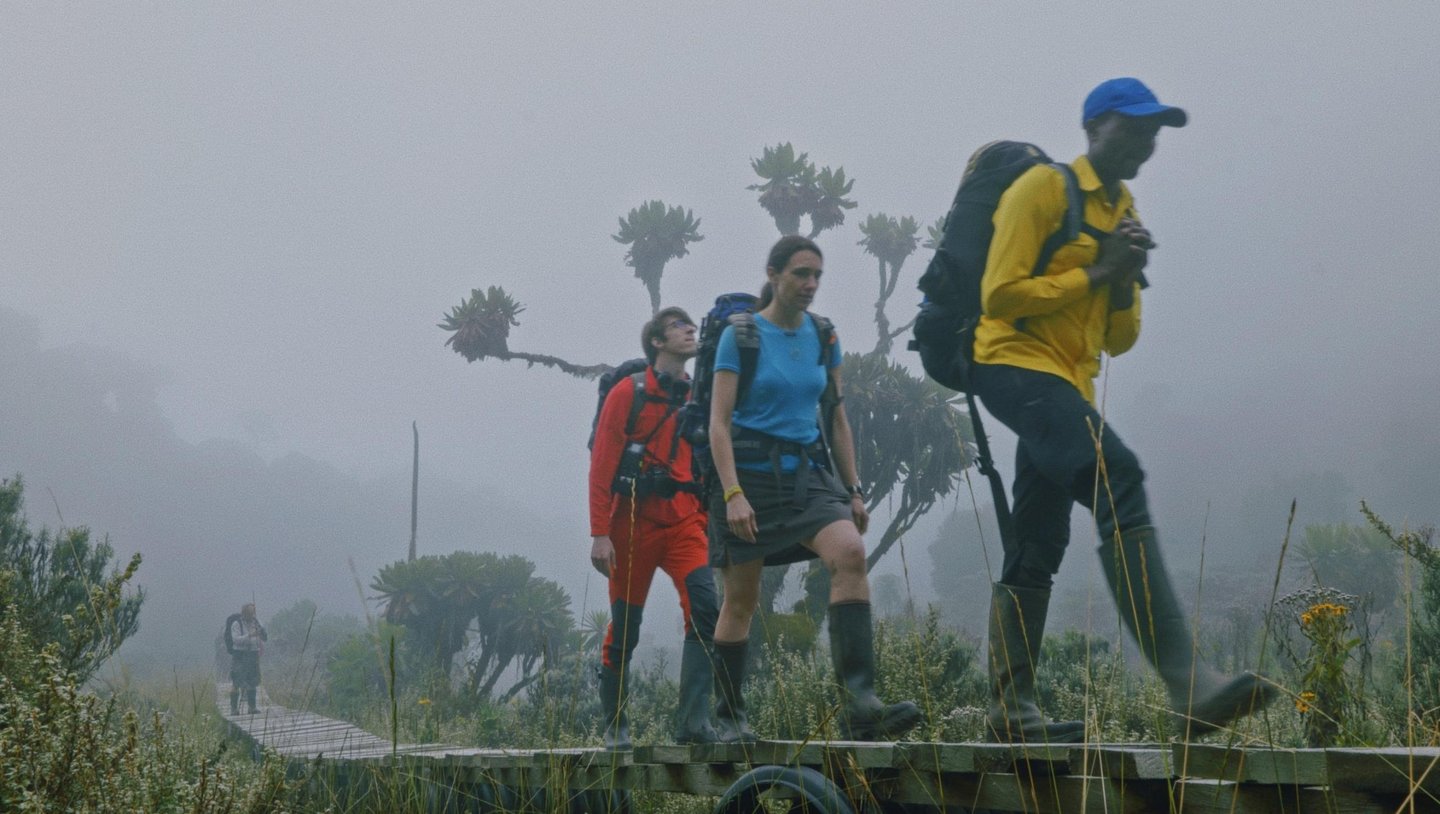
Marie Šabacká: We began the trek at 1,400 metres above sea level; first we passed through rainforest inhabited by chimpanzees and elephants, then climbed into bamboo forest, and then went through a belt of heathland and wetlands and Afro-alpine vegetation up to the glacier at 4,900 metres.
Jan Lukačevič: It has to be said, only half in jest, that an African kilometre is a completely different length from a Czech one! Towards the glacier we covered a little under forty kilometres, along a hypothetical path on the map, but there is nothing like a path there. Just marshes and peat bogs, where you look for the spot with the firmest tussocks to jump between and weave through — two steps forward, one back. Our average speed was less than a kilometre an hour. It is an experience for the first few hours, but after that it becomes a mental exercise that wears you down. Survivor bias sets in: nature looks superb in photos and videos, because they are all taken in places where the going is not so hard; in reality you have to think about every step.
Does a reward come afterwards?
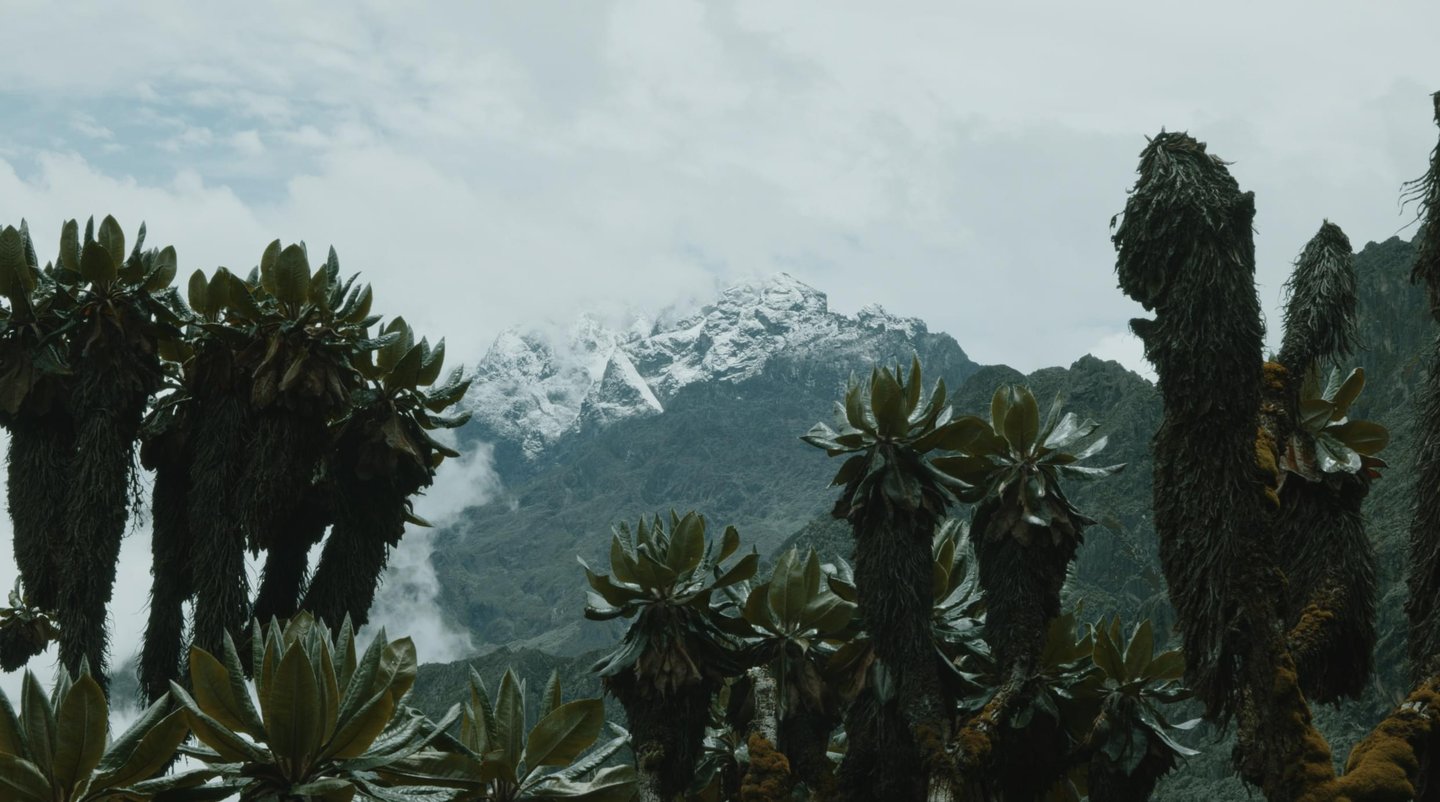
Jan Lukačevič: The scenery was greatly affected by the rainy season; it reminded me of teleportation. You walk, the cloud closes in, you can see nothing, then the sky opens and you are in a dramatically different landscape. What happened in that hour of walking, you ask yourself. The weather and the vegetation had both changed — that was magical.
How much visited is the Ugandan glacier and the national park?
Jan Lukačevič: It is an extremely remote corner of the world; that is the first major barrier to tourism. The second thing is that it lies on the border with the Democratic Republic of the Congo, where rebels operate, so everyone immediately asks me whether it was safe. On the trek we met only one tourist. On the other hand, when I looked at the visitors' book at the huts where we stayed, fifty or sixty people had signed it this year.
Marie Šabacká: Relatively few scientists go there; research is usually a one-off project between local and foreign universities. It is hard for tourists to get there; people are more attracted by the neighbouring national parks and safaris. What is more, children are only allowed up to the glacier from the age of twelve, the trek is hard, and compared with Kilimanjaro or Mount Kenya the Rwenzori are emptier.
When you climbed up to the glacier, did you have a fixed point for your research or were you interested in a larger area?
Marie Šabacká: We moved around the whole glacier and covered a number of places. Everywhere I collected samples of ice and sediment, measured the basic physical characteristics of the snow, and let some of it melt and filtered it for analysis.
Did any discovery come immediately, on the spot?
Marie Šabacká: I work with microscopic research, so we have to wait until we are in the laboratory. What was obvious at first sight was how much the glacier's area and volume have shrunk in recent years. Another glacier we wanted to take samples from has almost entirely disappeared.
Jan Lukačevič: When we were collecting samples below the glacier in the rocky belt at around 4,500 metres, we unexpectedly came across a small colony of earthworms under the moss. At that altitude such a complex organism should not exist at all, so we will see whether we have discovered a new species.
What is happening now with the Ugandan ice and snow?
Marie Šabacká: I have them stored in our laboratory in České Budějovice at minus eighty. Over the summer I am preparing to do biological and chemical analyses on them, isolate RNA and DNA, and we will analyse the ice core and the isotopes from it.
Is there a difference at first sight between a glacier in Uganda and one on Svalbard?
Marie Šabacká: When you stand on a glacier there is snow everywhere. But the surrounding landscape is completely different. In Uganda you see giant groundsels at lower altitudes, which look a bit like trees; there is nothing like that on Svalbard. In Uganda mosses grow right where the glacier is retreating. You are high in the mountains, and at the same time it resembles no other high mountains.
What is the temperature on an equatorial glacier?
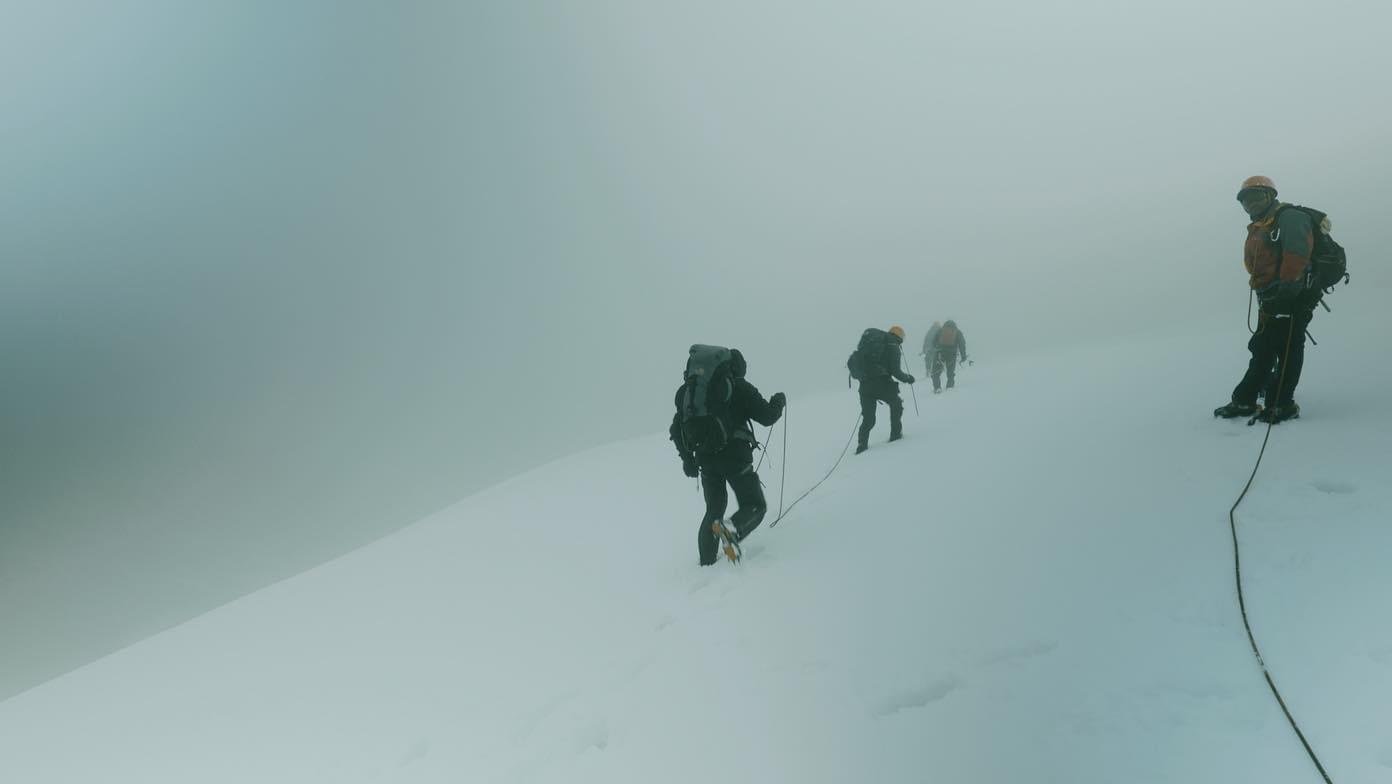
Jan Lukačevič: For two days I was really cold. When it cleared, the cloud cover no longer insulated and the ground cooled immediately. At night all the rocks froze over. You are at the equator in a down jacket and even so, at times, it is not much fun.
Marie Šabacká: The temperatures were slightly above zero most of the time, essentially constant. On a glacier they ought to be below zero; unfortunately they mostly are not, and that too contributes to faster melting. I had already been on the same glacier in 2014 and you could see that it had thinned and shrunk considerably since then. It is much steeper and harder to move about on.
How do local people react to the glacier's retreat?
Marie Šabacká: The loss of the glaciers affects the local guides and porters greatly. In future it means economic losses for them; without glaciers the Rwenzori will lose their main attraction for tourists, and they are also aware that it is caused by climate change, about which they can do little. That causes weather fluctuations in the lowlands where they live too, which can lead to natural disasters such as floods. Some people from the village are superstitious, though, and reproach their neighbours who go up into the mountains, saying that they are the cause of these misfortunes because they angered the local deities. We did not anger them, we hope.
Are you sure of that?
Jan Lukačevič: In an old joke a Russian cosmonaut says: "I was up there and I saw no god." But the local landscape really is magical and I can imagine why local people think the gods live there. We of course treated the environment with respect and tried to capture its beauty for those who cannot come and see this exceptional place.