Jan Konvalinka is the new director of the IOCB
Prof. Jan Konvalinka, chair of the Neuron Foundation's scientific council and its guarantor for chemistry, has become the new director of the Institute of Organic Chemistry and Biochemistry of the Czech Academy of Sciences. We congratulate him and wish him fulfilment and joy in his new position. Here at Neuron we look forward to continuing to work together.

Prof. Jan Konvalinka, chair of the Neuron Foundation's scientific council and its guarantor for chemistry, has become the new director of the Institute of Organic Chemistry and Biochemistry of the Czech Academy of Sciences. We congratulate him and wish him fulfilment and joy in his new position. Here at Neuron we look forward to continuing to work together.
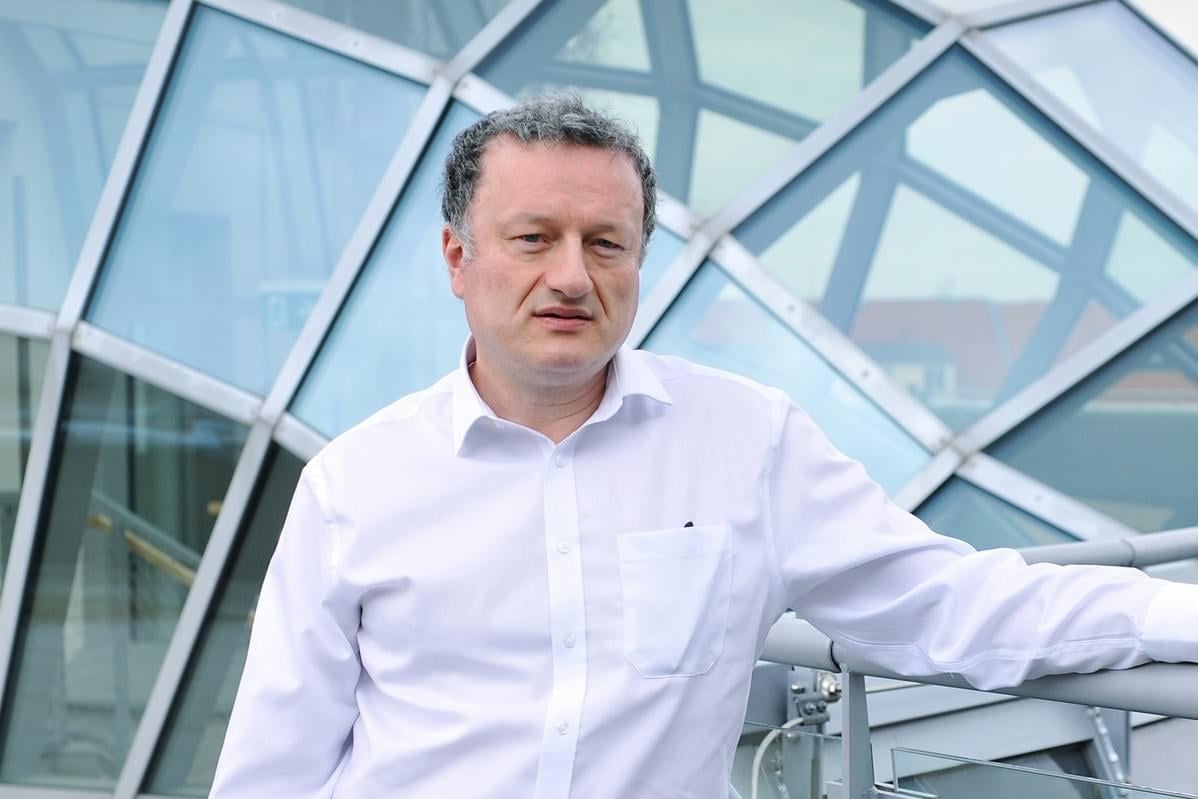
The new director of the IOCB, Jan Konvalinka. Photo IOCB/Dominika Bouma
Jan Konvalinka was appointed on the recommendation of the IOCB Council, which held an open international competition for the position. The new director takes up the post on 1 June, succeeding the outgoing director Dr Zdeněk Hostomský.
Prof. RNDr. Jan Konvalinka, CSc. (b. 1963) studied biochemistry at the Faculty of Science of Charles University. From 1987 to 1991 he completed postgraduate studies at the Institute of Organic Chemistry and Biochemistry of the Czech Academy of Sciences, to which he returned in 1997 after research placements at Birkbeck College in London, the University of Cardiff, and in Heidelberg and Hamburg. Today he leads the Proteases of Human Pathogens group there as Distinguished Chair. From 2014 to 2022 he was vice-rector for science and research at Charles University. He is a member of the Learned Society of the Czech Republic and of other scientific societies. He also serves as chair of the Neuron Foundation's scientific council and its guarantor for chemistry.
Jan Konvalinka has published over 140 specialist papers in international journals, which have received more than 4,600 citations. His research focuses in particular on retroviral proteases and neuropeptidases. With his colleagues he developed the first sensitive methods for testing the activity of the HIV protease and discovered new mechanisms by which viral resistance arises. Several promising technologies have also come out of his laboratory, for instance the synthetic antibodies iBodies, developed in cooperation with the Institute of Macromolecular Chemistry of the Czech Academy of Sciences, which make it possible to image specific proteins on the surface of cells or to isolate them from blood and other tissues; and the DIANA technology, which allows the quantity of enzymes and other proteins in human blood, urine or saliva to be determined very sensitively, thereby significantly improving the diagnosis of disease and speeding up the development of new drugs. This technology led to the founding of the successful start-up DIANA Biotechnologies. He has received a number of awards for his work, for instance the Datta Medal of the Federation of European Biochemical Societies (FEBS) and, most recently, the Medal of the Learned Society of the Czech Republic.