How green will Europe be?
In cooperation with the Aspen Institute and Opero, the Neuron Foundation hosted another meeting in the Society 4.0 series. The subject of the May debate was the Future of the European Green Deal. Among those taking part were Minister Mikuláš Bek, MEP Mikuláš Peksa and Dana Drábová. "It will be costly and perhaps painful, and at the same time it is an opportunity for new technologies," was heard before a full hall at Opero.
In cooperation with the Aspen Institute and Opero, the Neuron Foundation hosted another meeting in the Society 4.0 series. The subject of the May debate was the Future of the European Green Deal. Among those taking part were Minister Mikuláš Bek, MEP Mikuláš Peksa and Dana Drábová. "It will be costly and perhaps painful, and at the same time it is an opportunity for new technologies," was heard before a full hall at Opero.
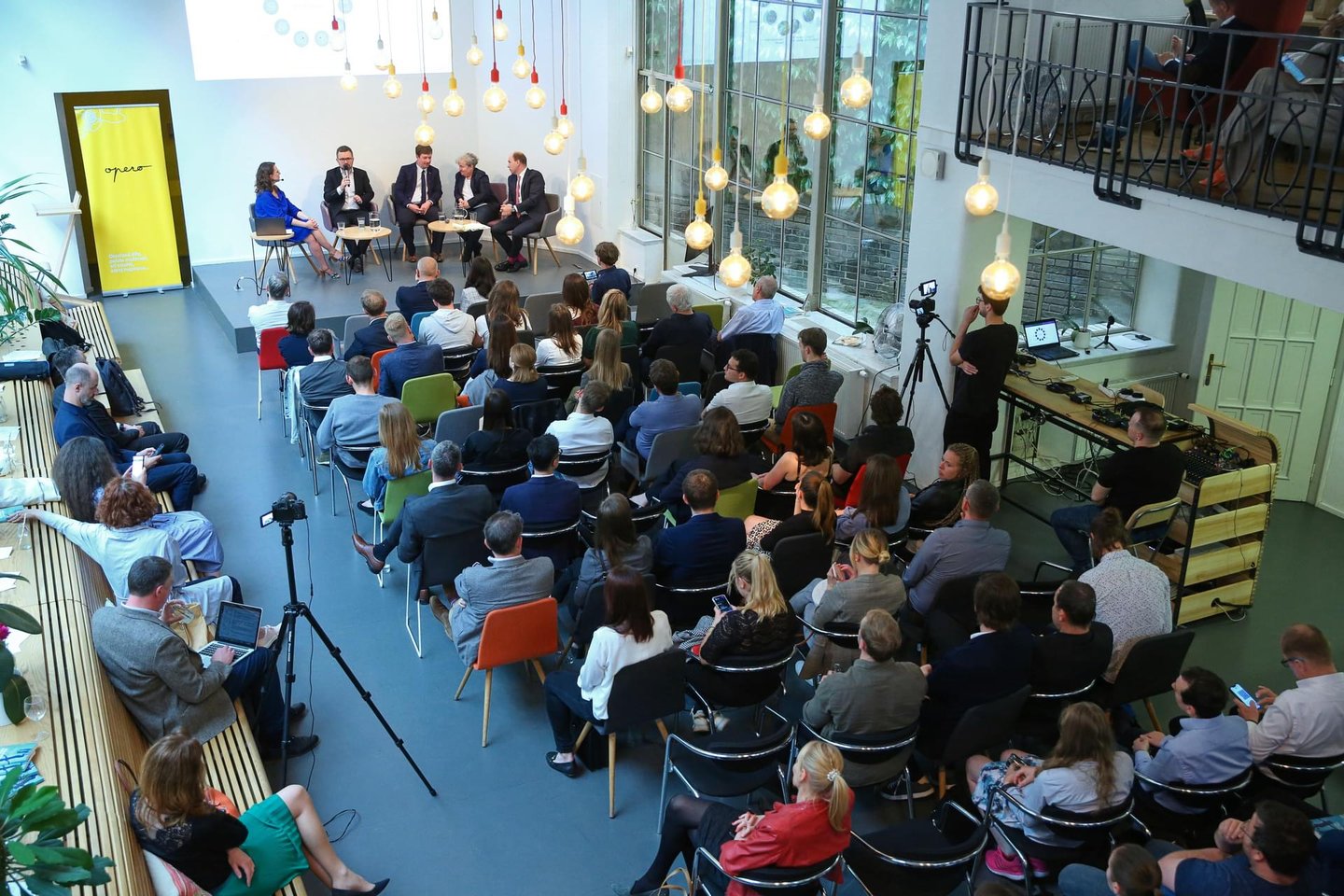
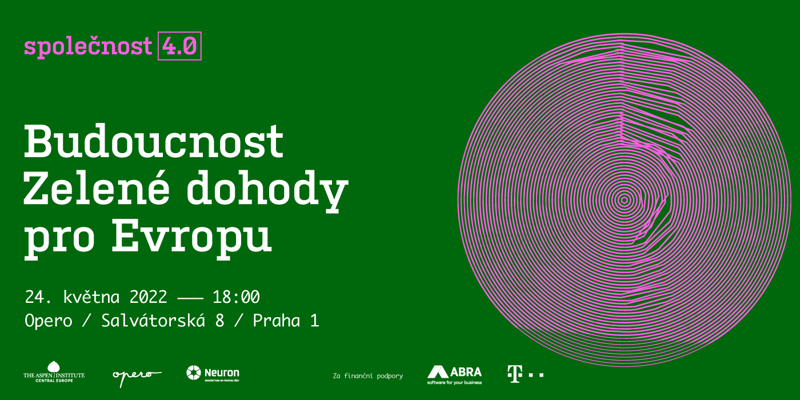
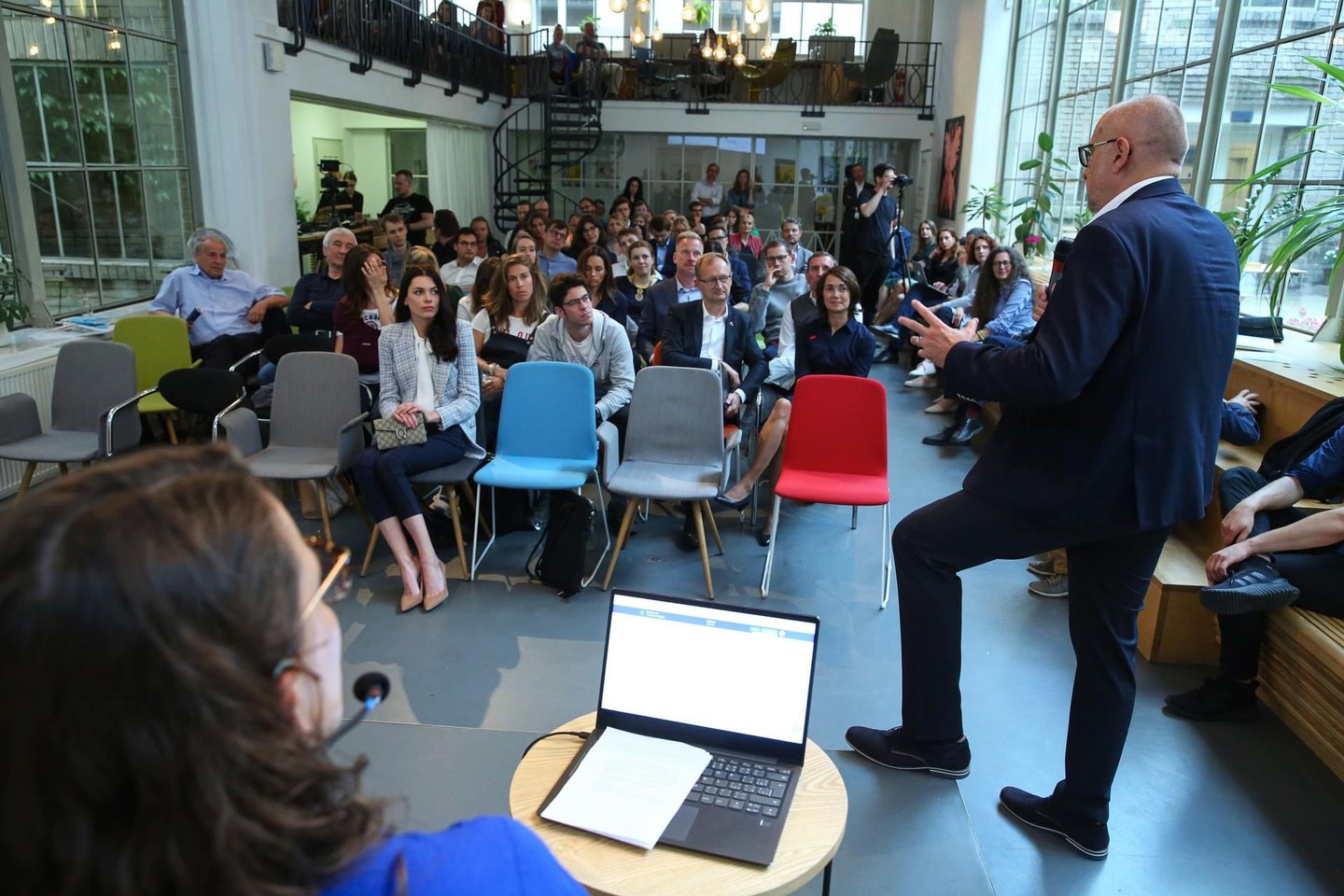
The Future of the European Green Deal. The Society 4.0 meeting took place on 24 May at Opero.
The debate was framed in the context of the forthcoming presidency of the European Union, which the Czech Republic takes over on 1 July. How will we approach the shaping of an updated European energy policy strategy?
"The development of energy is moving forward turbulently," the chair of the Neuron Foundation's board Monika Vondráková said by way of introduction. "As late as the 18th century wood was the most important thing, then came the age of coal. Now we are at a crossroads — the problem is how to store and distribute energy. I believe Neuron's scientists will help with that."
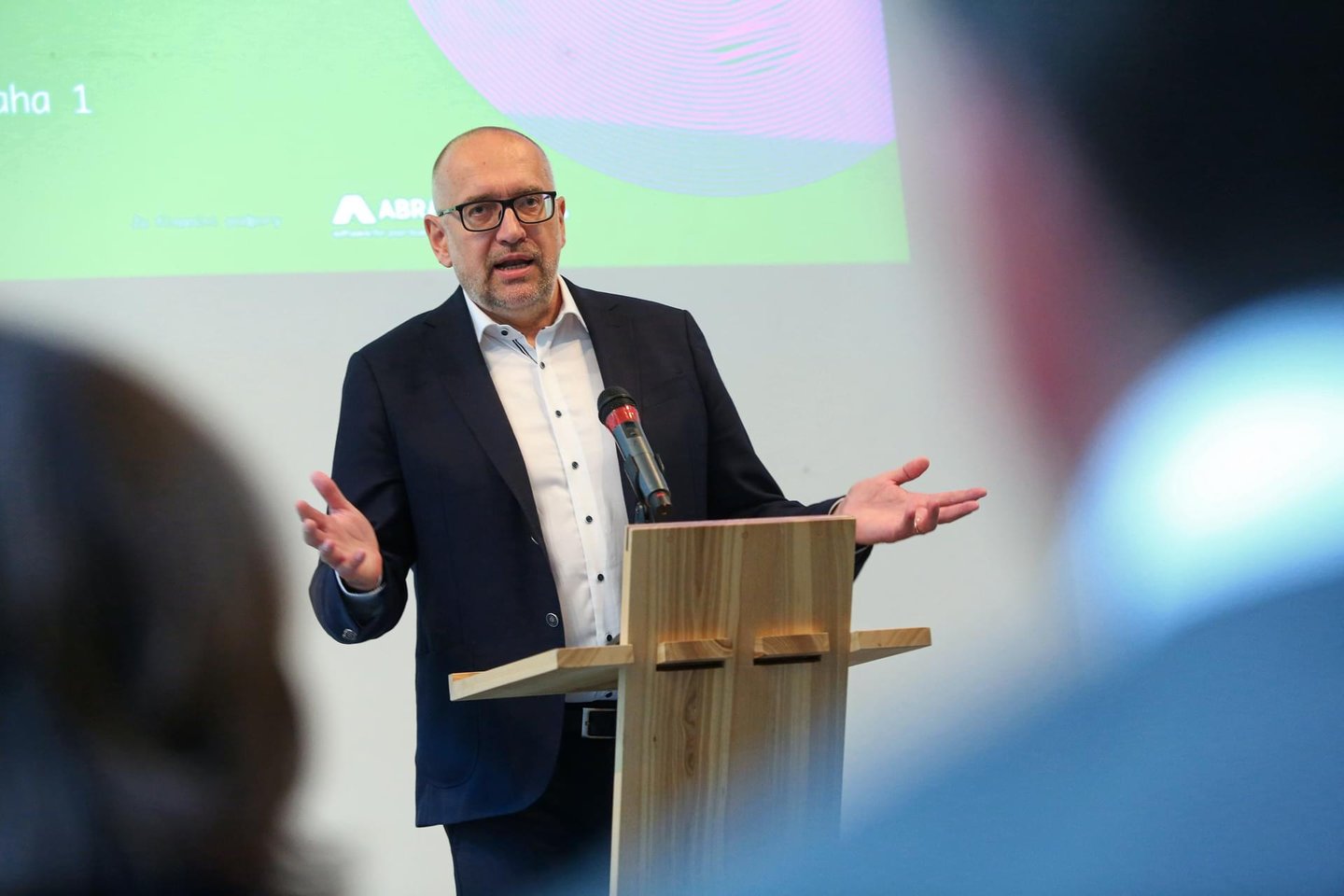
Mikuláš Bek, Minister for European Affairs of the Czech Republic
We were know-it-alls
The first guest at the meeting was Mikuláš Bek, Minister for European Affairs. In his address he pointed out that the coming decade will be complicated in energy terms because recent years brought nothing good where energy is concerned. "It was a time when the political mainstream took its inspiration from Dunno and the know-it-alls; strategic thinking was missing. We did not build a single new energy source, we did not support the energy mix, the years of prosperity were wasted, we watched short-term profits instead of long-term investments," the minister said.
He added that during the EU presidency the Czech government will seek agreement among the other countries but does not expect major complications. Public opinion is on the side of the greenhouse gas emission reduction targets known as Fit for 55, and the expert community supports them. "Even earlier sceptics have been forced by the change in geopolitical circumstances to change their minds. It is clear that we will be burning coal for somewhat longer, but the basic equation of reducing emissions will remain," the minister believes.
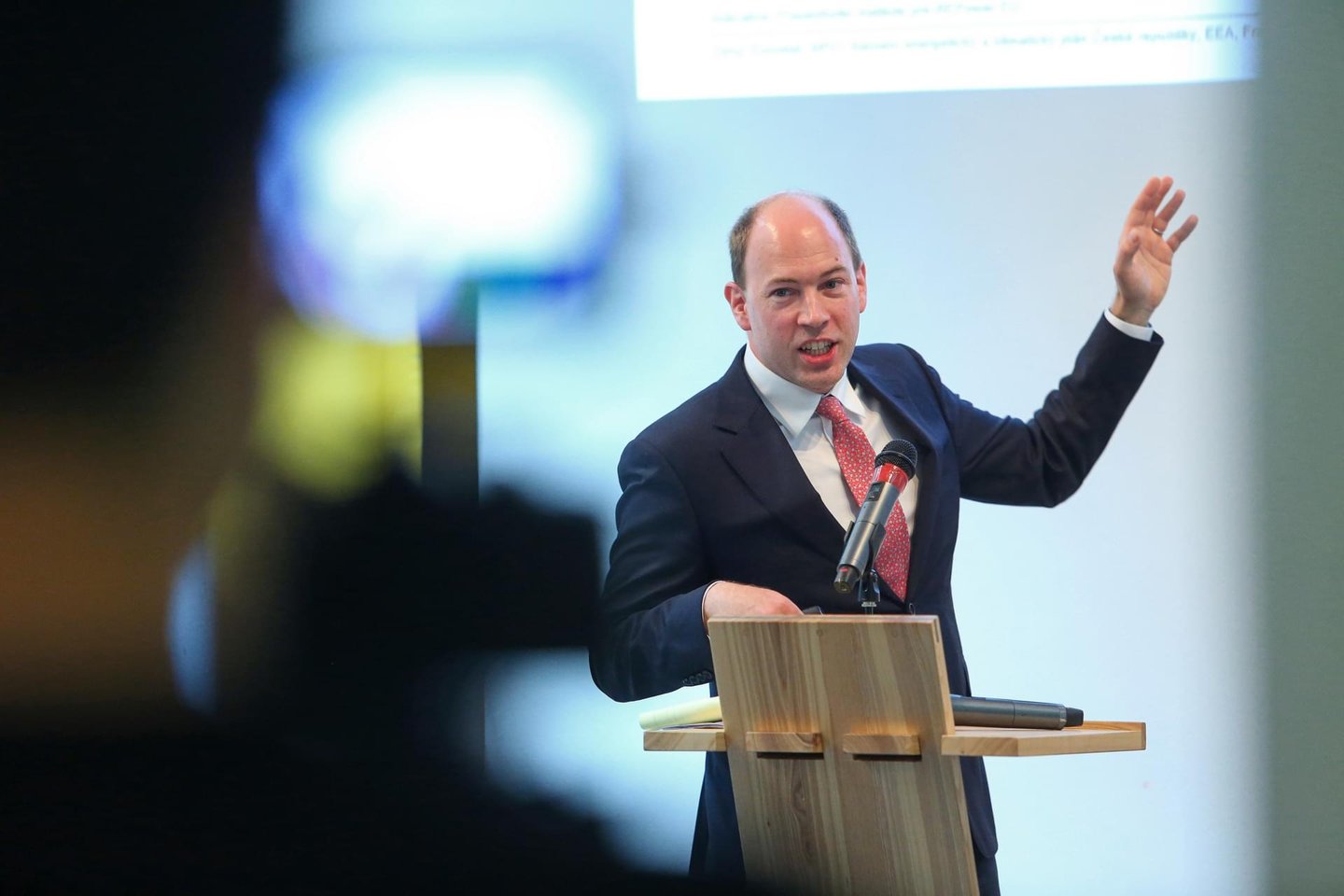
Viktor Hanzlík, partner at McKinsey & Company
It will be hard
The next part of the meeting belonged to Viktor Hanzlík, a partner at McKinsey & Company and the author of a report on the decarbonisation of the Czech Republic. As he noted, he wrote it two years ago, so he gave the audience an update: to rid ourselves of emissions we have to halve them by 2030 and achieve a carbon-neutral economy by 2050.
"The first task, emissions 55% lower, will be easy for us, because it relates mainly to coal. But the next steps will be hard; we have to reduce emissions outside the large power plants too, work more with renewable sources and be energy efficient," he said. Such a change is radical; the additional investment will amount to 0.5% of GDP, and after 2030 up to 4% of GDP. "The banking sector and the emphasis on climate risks will play a key role in this; banks will have to say goodbye to some energy-intensive clients and acquire new ones," Hanzlík added.
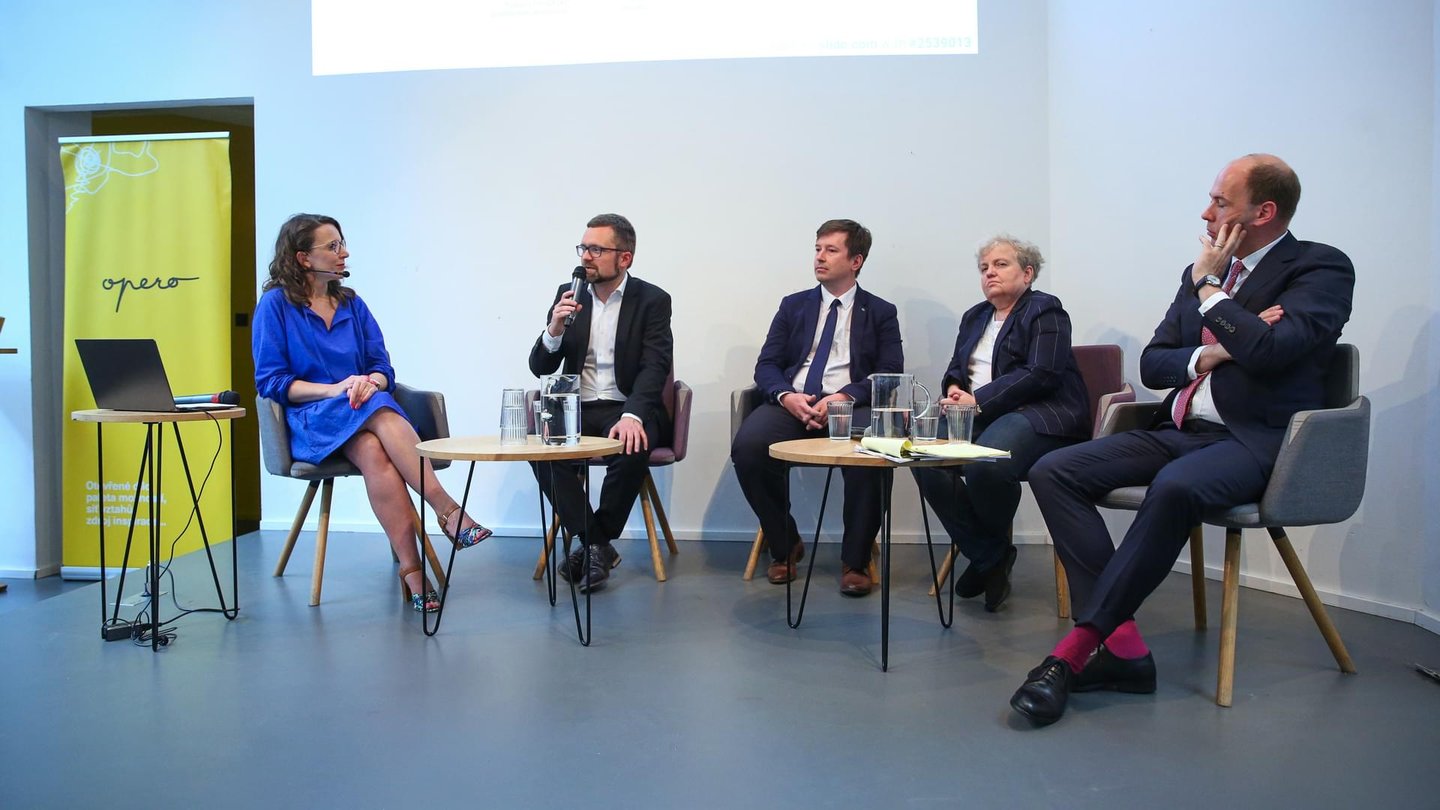
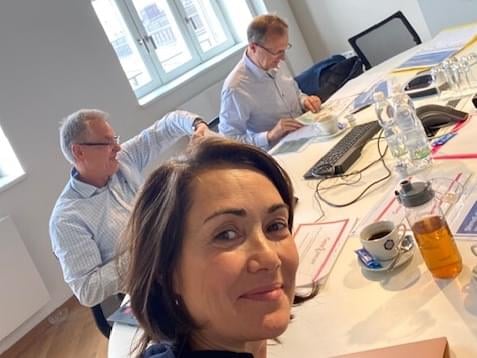
The debate's guests. From the left: Soňa Jonášová, Mikuláš Peksa, Jan Hendrych, Dana Drábová and Viktor Hanzlík.
An opportunity to modernise industry
The final part of the meeting on the Future of the European Green Deal was a discussion between Dana Drábová of the State Office for Nuclear Safety, MEP Mikuláš Peksa, Jan Harnych of the Confederation of Industry and Transport of the Czech Republic and Viktor Hanzlík. The debate was moderated by Soňa Jonášová, whose questions were supplemented by questions from the audience. What were the most interesting points?
Dana Drábová: The future is unquestionably green and the main challenge is to rid ourselves of dependence on fossil fuels supplied to us by appalling regimes. Our task is to survive the next two or three winters. The Czech Republic is one of the few EU countries without access to the sea, so we will have to negotiate "this for that", something we have practically never had to deal with. We are used to our comforts and restrictions will hurt, but everyone has to know why it is happening and what we will gain from it.
Mikuláš Peksa: The debate on the Green Deal is being conducted by the whole of Europe, which has a common energy market; everything is interconnected. If the Russians switch us off it will affect everyone, but that is our own fault — we did nothing about the situation over the past ten years. The Green Deal is also an opportunity to modernise industry, so let us work on the technologies that can manage it in a way that hurts us as little as possible.
Jan Harnych: Energy topics dominate the agenda of the Confederation of Industry and Transport, and we stress above all that we should meet the Green Deal's targets without wrecking our economy and industry in the process. At the moment we are working out how to secure gas for the winter, and that will carry considerable investment costs. At the same time we export electricity, which we can trade for gas; emissions trading and its revision are connected with that too. We are dealing with the carbon border adjustment mechanism and with energy savings, where we are not doing well — we have to find strong allies and make the path to the deal's targets more realistic.
Viktor Hanzlík: It is not only about industry but about households too; tens of per cent of people will fall into energy or real poverty. Until now we have been using written-off sources, so energy prices would rise even without the Green Deal. But people will not want to give up comfort and restrict themselves, which is why I rely on new technologies and investment in infrastructure so that we can distribute gas across Europe. At the same time we have to realise that industry will play a smaller role in future than it does today and prepare accordingly for what our energy needs will look like.
Thank you to everyone who took part in the Society 4.0 meeting, and thank you to the companies ABRA Software and T-Mobile, which supported it.