How can an economic recession show up in our health?
Lucie Kalousová, a sociologist and laureate of the Neuron Award 2019 for promising young scientists, studies the relationship between socio-economic factors and the health of the population. In an article for the magazine Pátek Lidových novin she describes, among other things, how West Nile virus can be connected with a crisis in the property market.
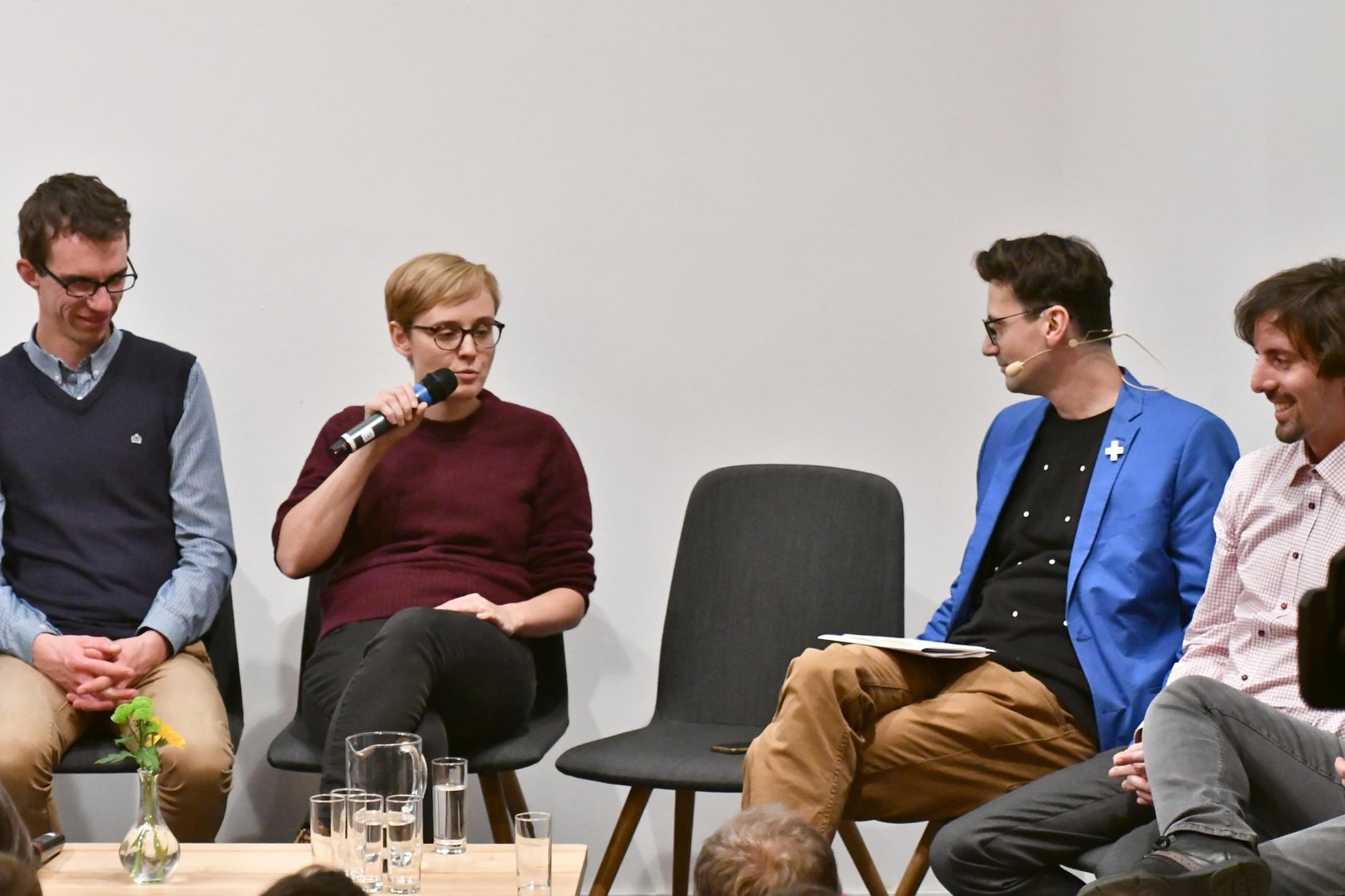
Lucie Kalousová, a sociologist and laureate of the Neuron Award 2019 for promising young scientists, studies the relationship between socio-economic factors and the health of the population. In an article for the magazine Pátek Lidových novin she describes, among other things, how West Nile virus can be connected with a crisis in the property market.
The interview was conducted by Iva Vokurková for Pátek LN.
At seventeen she left Brno, where she was studying library science, on a two-year scholarship to Italy. Then, when her classmates were applying to universities abroad, she told herself she would try too. And it worked. From Italy she headed to a university in Indiana in the United States and then to another in Michigan, where she studied sociology and health policy. Today, at the University of California, she lectures on how health is connected with, for instance, the neighbourhood we live in or the number of relatives and friends we can turn to.
"From research we know that socially connected people enjoy better health. So sudden isolation as a result of coronavirus quarantine can worsen the health of those who do not manage to switch to electronic contact," the holder of the Neuron Award for promising scientists warns of one risk of quarantine, which is otherwise beneficial to health.
Another is the increase in domestic violence already being reported by France and Spain. And that is not all: "I recently read an interesting article by the American physician and anthropologist Paul Farmer. According to him, during epidemics and pandemics those most disadvantaged are the seriously ill. But not with the particular disease the whole health system is intensively focused on. In an overstretched health service such a person may receive less adequate care than at other times," the sociologist says.
* Economists warn that a recession is coming, and every economic downturn also affects the population's health. But you say it is impossible to say in advance which part of the population will be affected, and how. What does that depend on?
On the type of industry the crisis hits, for instance. At its start the recession of 2008 severely affected the car industry, and so it showed up above all in the health of men who worked in car plants. Usually for relatively good money, on which whole families often depended. When they lost their jobs, it gradually showed up in all the family members. But these consequences are very hard to predict in advance. And sometimes it takes a while before we discover their cause.
* When, for example?
Few people would connect the sharp rise in West Nile virus in 2008 with the crisis in the Californian property market. Even for specialists, the rapidly rising number of patients was a mystery for a long time. Then they realised that many of the properties their original owners had had to leave have outdoor pools that now nobody maintains. And so they served as a breeding ground for the mosquitoes that carried the virus. The situation only improved once the authorities had the pools drained and cleaned. Greece, hit by the crisis, took money as part of austerity measures from the non-profit organisations that cared for drug addicts, exchanged needles for them and so on. And in the following years there was a sharper rise in HIV infections among intravenous drug users. The problem is that at a moment of economic hardship it can seem appropriate to cut money earmarked for prevention and redirect it to seemingly more urgent areas. In the long term, though, that does not always pay off. The coronavirus crisis may be an exception; thanks to it, more may on the contrary be invested in preventing infectious diseases.