COVID-19 and what next?
The current crisis is a global story about science. It is also a challenge for scientists — they normally work on a horizon of years, and now it is a horizon of days. Businesspeople, likewise, are changing the foundations of whole sectors within days. The Neuron Foundation's platform is where these two worlds — of scientists and of businesspeople — come together. Read a summary of the discussion held at an online Neuron Club.
The current crisis is a global story about science. It is also a challenge for scientists — they normally work on a horizon of years, and now it is a horizon of days. Businesspeople, likewise, are changing the foundations of whole sectors within days. The Neuron Foundation's platform is where these two worlds — of scientists and of businesspeople — come together. Read a summary of the discussion held at an online Neuron Club.
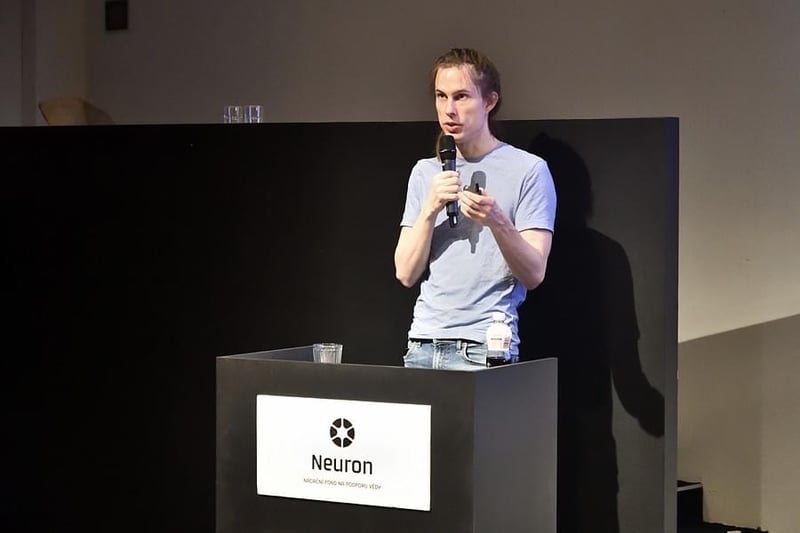
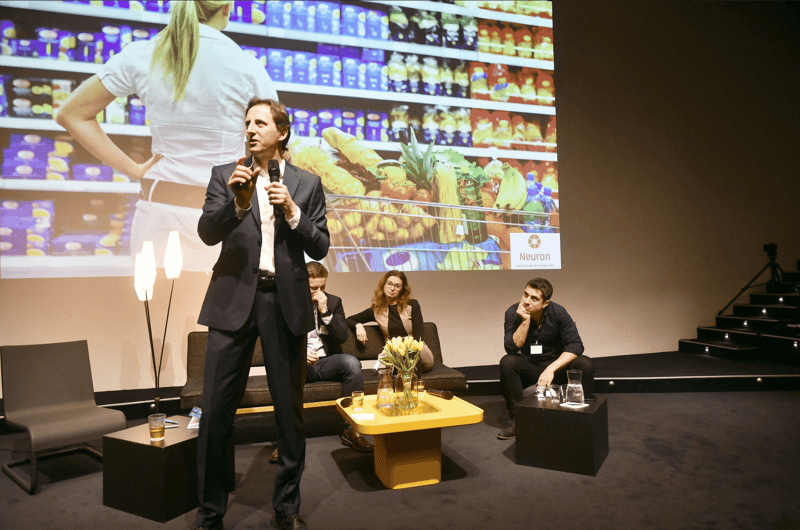
Speakers for the scientists: the economist Filip Matějka, the Egyptologist Miroslav Bárta, the parasitologist Julius Lukeš
What is happening now
- the government has just adopted measures (packages) that will hopefully delay across-the-board redundancies and stabilise the situation. Budget chapters will have to be rearranged; spending on army equipment, for instance, will be reallocated to fighting the epidemic,
- the problem is missing data, which are needed to get one's bearings in the problem. Within two weeks we could have new figures which, if developments are positive, could bring forward the end of the government measures, which in the long term the government will not be able to pay for (no longer than two months),
- we have little information about the disease as such. We do not even know the case fatality rate yet, because states are not testing across the board. Nevertheless, the drastic government measures adopted in the Czech Republic (social distancing and so on) saved us from the Italian/Spanish model. The arrangements that are working now will have to be maintained until the numbers start falling, despite the growing economic losses,
- positive news — so far there has not been a single death in the Czech Republic caused solely by COVID-19; it is becoming clear how good our health care is compared with other countries; civil society has worked, starting up admirably; it is likely that in future people will be more sensitive about what is produced in the Czech Republic and will support local companies even more — good news for business.
Challenges
What happens once the economy and society thaw out?
Businesspeople are worried not so much about the economy being frozen as about whether there will be enough paying customers once it revives.
International cooperation / revisionism
The Czech economy is export-oriented and open. Even if the rules were relaxed locally, that would not help. We need to travel and trade, and if large blocs start closing in on themselves, we will have a problem.
International cooperation has collapsed — the EU, for instance, has no powers to fight the infection actively, but it did not take the opportunity for more active leadership, which will have consequences for how it is judged in future. Instead, the Germans, the Swiss and others began offering their free hospital bed capacity to the worst-affected countries as a gesture of Europeanness. People need to be shown that cooperation is possible, and it is a great pity that our leaders are not doing that.
The importance of good leadership
A crisis can have two basic consequences — either society closes ranks and cooperation deepens, or it fragments and becomes antagonistic. An important role for leaders now is to calm the population and motivate it positively. Leaders find society easier to manipulate when fear is being stoked. It is a pity that Czech leaders are casting doubt on whether democracy as a system is capable of dealing with a crisis as effectively (Taiwan) as totalitarian states. Crises are not managed with technology alone; high spirit in society matters too.
Possible developments
At present everyone is waiting for the curve to start flattening. But nobody yet knows when relaxation should come or how far it should go, even though optimistic estimates prevail. In any case it is important that ideally two scenarios (a positive one and a less successful one) be presented to the public, so that everyone can get their bearings and know what will happen and when.
Society needs to press its leaders for clear statements: under what circumstances can the rules be relaxed? When will the right moment be? What will happen once the curve flattens? Only then will society feel that its leaders have a firm grip on things, and panic will be reduced.
The Hammer and the Dance, or are the current measures excessive?
The measures at the start of the crisis were right: we were responding to the unknown. It was right to close everything and to frighten the population a little. "No other nation in the world can make itself face masks in three days." Now it is time to relax them. We have all the essential information and it is now the responsibility of each of us. The goal cannot be to wipe out the virus or achieve zero mortality. People in the Czech Republic die of various diseases — why should society come to a halt over COVID-19 in particular? Even if every fourth person in the country were infected and 1% died, that is 25,000 people a year. "The state is surely not responsible for running people's lives. If at-risk groups decide to isolate themselves from the world, the state should support them."
The problem in the UK, the USA and Sweden is precisely that their governments did not frighten their nations enough. In the first phase of a crisis people have to switch their perception and understand that something really serious is happening. Otherwise nothing happens. Unlike in those countries, that did happen in the Czech Republic: everyone knows what is going on and that it is serious.
"The leaders' task is to convince the nation that there is no other way here, that the moment we are able to cope with it medically, relaxation has to come."
Is something extraordinary happening?
Yes and no. There have been far more severe epidemics in the past (the Spanish flu, for instance). On the other hand, in today's globalised world this epidemic may recur cyclically. The only solution is for the population to acquire immunity.
Unlike in the past, we can also use data in the fight. Google, for instance, will provide its high-quality data to leaders so that they can make good decisions. The priority is to calm society and prevent panic: fighting fake news and so on.
What next?
We can gain from the crisis:
– more flexible (e-)legislation, use of the online space in business, in education, in organising work,
- business will largely shift from offline to online and become more efficient,
- better protection of the planet: "If we hold a conference online, we reduce our carbon footprint,"
- a strengthened sense of responsibility in each of us — we need to be prepared for crises,
– pharmaceutical companies will speed up testing and wealthy societies will get themselves vaccinated.
Threats
– this crisis is the flip side of globalisation, and at the same time it is true that unless we tackle things globally we will get nowhere. It may be a positive impulse for globalisation, but it may not,
- in times of crisis democracies are more fragile — we must not lose freedoms in the name of protection,
- if global factors were to chain together (environmental change, migration), our current system could collapse entirely, because it would no longer withstand the pressure,
- the political map of Europe and of the world will be redrawn. "If we survive this economically, the existing political arrangement will not survive it,"
- much will depend on how the large economies (the USA, Germany, China) deal with the crisis. The rest of the world will then follow their model,
- insufficient coordination in the world — what will crossing state borders look like, for instance; will we test everyone? A new planetary order can arise out of such details. "If we fail to work out how to coordinate with each other, it may end very unpleasantly."
Regeneration after collapse
Our government's response was one of the best, as was the surge of civil society. At the same time, people need to be brought to take responsibility themselves, because the damage from halted business may be greater than the damage to health. We also have potential in leadership: since the revolution, people have matured who are in a position to make good decisions. Not only here, but throughout the world, because how well off we are here in future will depend on the decisions of the big players.
Battles are decided by mindset. The solution is not in the air; it rests with each of us.