Neuron Expedition — after the mysterious crocodile to Congo, 2016
18 August 2016
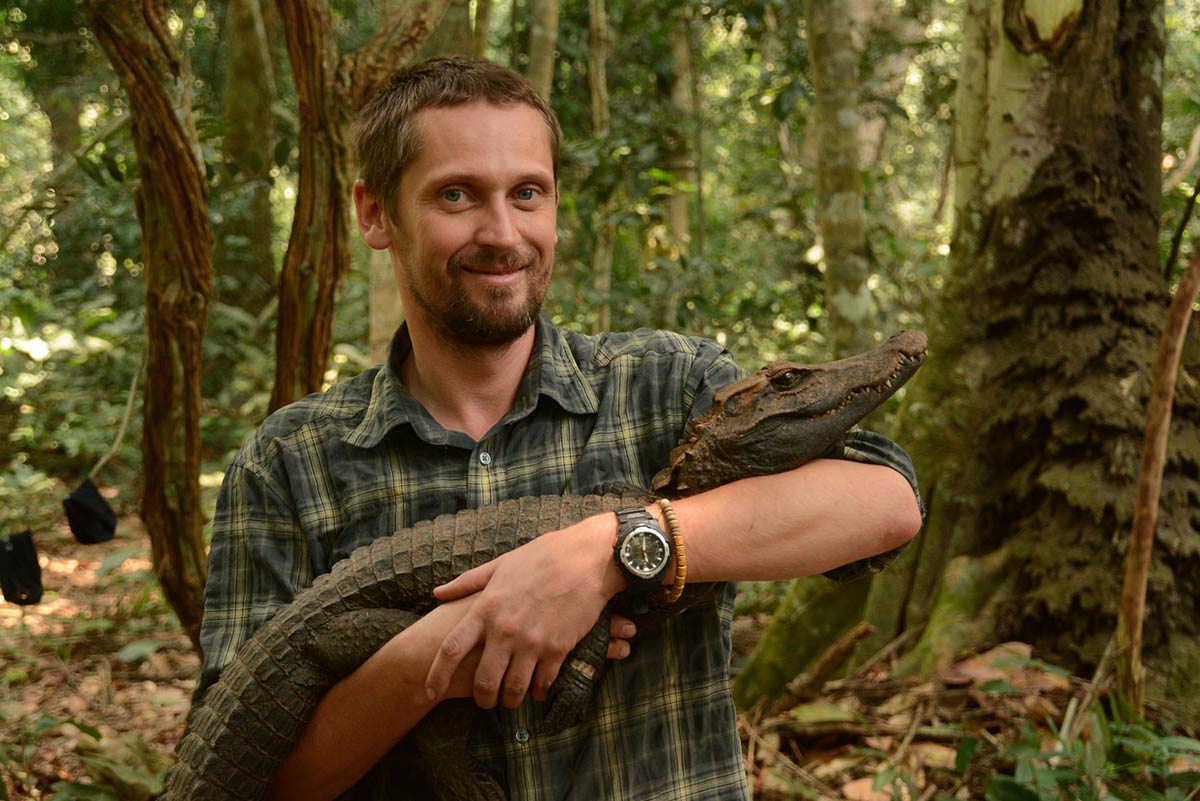
The Congo dwarf crocodile — so far only an unofficial name for a crocodile that history forgot. Or did it?
Another highly successful Neuron Expedition brought the answer to this question! Václav Gvoždík discovered and described for world science the forgotten and rare Congo dwarf crocodile. On one expedition, during night surveys of dwarf crocodiles, he noticed morphological features that surprised him. The dwarf crocodile got its Czech name from its strikingly prominent forehead, but while observing several crocodiles the Czech scientist came across individuals with striking differences in the shape of the head. On closer examination he then found a whole series of characters indicating that he had a different species in front of him. Václav Gvoždík expects that his research will soon bring definitive recognition of the Congo dwarf crocodile as a valid separate species. Only a correct understanding of species diversity can lead to adequate protection and thus to the preservation of fauna and flora for future generations.
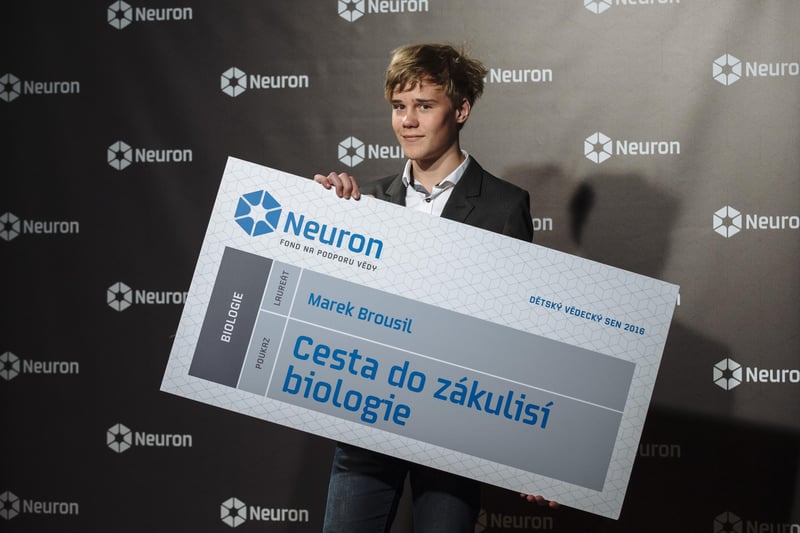
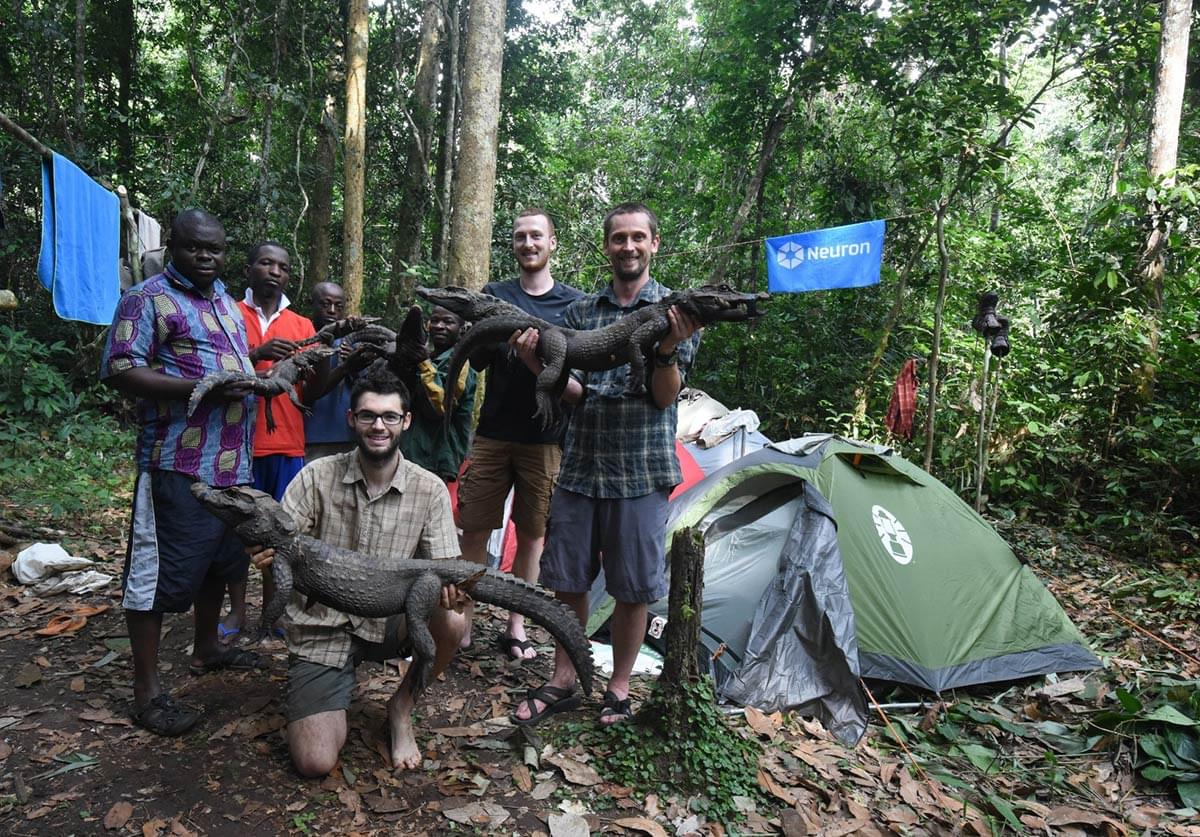
The subject of the 2017 Neuron Expedition: the aim of the expedition to Congo was to prove that the crocodile the team came across during its research in Congo is not the dwarf crocodile but an entirely new species. It differs genetically and morphologically, and yet its existence is not yet generally accepted. The aim of the expedition was to obtain field data that would support the validity of this hitherto overlooked crocodile species. For this research Václav Gvoždík won the Neuron Expedition competition in 2016 and received CZK 250,000. His expedition began on 16 January 2017 and lasted about two months. The members of his expedition team were the doctoral student Matej Dolinay, the assistant Jérémy Thomas from France, the Congolese collaborator Ange Zassi-Boulou and other local assistants. The expedition confirmed this hypothesis.
Read the travel notes or take a look at the photographs from the successful expedition.
On the trail of the mysterious crocodile
When did you first see the "forgotten" crocodile?
Originally, in 2012, I went to the northern part of the Republic of Congo mainly to study amphibians. And by coincidence I came across the Congo dwarf crocodile, which experts first described about a hundred years ago and gave the Latin name Osteoblepharon osborni. A few years later, however, other experts declared this was nonsense, cancelled its classification as a separate species and declared the name a synonym of the dwarf crocodile. Gradually the Congo crocodile fell into oblivion. Only in 2009 did an American group of herpetologists, on the basis of molecular genetic analyses, again propose classifying the Congo dwarf crocodile as a separate valid species, on the same level as the dwarf crocodile. Zoologists have, however, not generally accepted this proposal to this day.
What coincidence brought you to it?
I usually go out to observe animals at night, when many animals are more active. Crocodiles can be recognised well in the dark even from a distance, because in the light of a torch their eyes shine a beautiful red. "My" one was lying in a small, half-dried-up pool about 20 metres away. I would take a few steps, wait a few minutes and then move on a little. Crocodiles are very shy, and if they notice you approaching they leave the place and move elsewhere. When "my" crocodile registered me, it decided the pool was not very safe and wanted to crawl under the roots of trees. At that moment I quickly grabbed it behind the head so that it could not bite me. It was a young individual, a little under a metre long. When I had examined it, photographed it and taken a tissue sample for genetic analysis, I let it go again.
When did you find out that "yours" was a different species from the dwarf crocodile?
Hunters from a nearby village then showed me another, killed crocodile. At that time, in the field, I assumed that both animals belonged to the dwarf crocodile species. Although even in the field I noticed certain morphological differences, I did not yet attach any weight to them. I also photographed the killed crocodile and took a small piece of tissue for later genetic analysis. Only after returning home, one night, was I looking at the photographs of both animals in detail and suddenly, when I could see the two animals "side by side", I noticed marked differences in the build of the body. For instance the different shape of the head, the number and arrangement of the bony scutes on the neck and the number of rows of belly scutes. Since, alongside traditional field research, I work mainly with genetic methods, I did not hesitate and processed the biological samples from both crocodiles using standard methods of DNA analysis. It was confirmed that they were two genetically markedly different species. I was very lucky to have managed to find a place, a swamp in the rainforest in Congo, where both species live side by side. Back in 2012 I still had few findings, so when the chance came to enter the Neuron Expedition, it occurred to me to use my knowledge of the locality where both species occur together and to go and study them more closely.
How do they differ from each other?
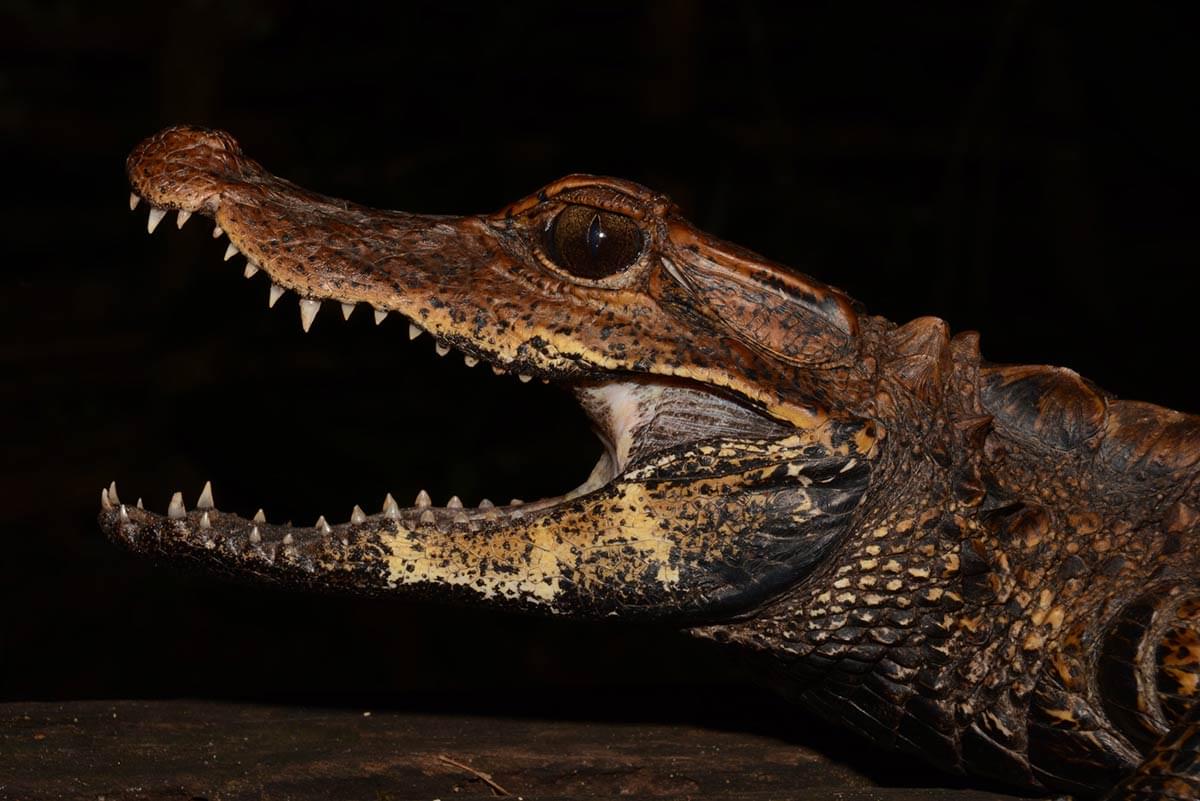
By a whole series of characters, but at first sight above all by the shape of the head and partly also by colouring. The Congo dwarf crocodile has a longer and straighter snout. The dwarf crocodile has a short snout, markedly raised at the front, which gives it its typical expression and hence its somewhat unusual Czech name meaning "large-browed". The Congo dwarf crocodile does not have this expression. What is more, the skin on its head, especially in younger individuals, is light brown. The neck is armoured with a larger number of bony scutes. The dwarf crocodile is coloured rather dark to black and its neck is not so covered with bony scutes. The dwarf crocodile also has its nostrils separated by a bony septum, whereas the Congo one has only soft tissue.
How long is the rediscovered species?
It belongs among what are called dwarf crocodiles. Usually it measures only a little over one metre; a length of 150 cm is already exceptional. But their teeth are as sharp as those of their larger relatives, so a bite would be nothing pleasant.
Do you know what it feeds on?
Essentially nothing is known about the biology of this species. Nevertheless it can be assumed, and inferred from the information of local hunters, that it feeds on whatever it can manage. It hunts mainly fish, but also other smaller vertebrates such as rodents, smaller birds, other reptiles and frogs, and also invertebrates such as snails or arthropods. They flee from people, because people in Congo often hunt them.
The ancient ancestors of crocodiles are dinosaurs; the smaller ones apparently lived in groups. How is it with the Congo dwarf crocodile?
Almost nothing is known about their way of life, but they evidently do not gather into groups; they live rather solitarily, and pairs probably come together only at mating time.
Did you manage to find a nest with eggs?
Unfortunately not. Crocodiles generally lay their eggs in what are called nests. These differ by species; sometimes it is a heap of piled-up vegetation, other times a hollow in the sand. When and where this species lays its eggs we do not yet know, but it would be marvellous if that could be established during an expedition. Observing these small crocodiles in the field is, however, not at all easy. They usually inhabit hard-to-reach parts of the rainforest. And when logging companies build new roads into their locality, the local crocodile populations disappear. Hunters from surrounding villages start to penetrate the forest along the roads and quickly hunt the animals out. Part of the population withdraws to less accessible places where they find more peace.
Is there a theory about how the new crocodile species came into being?
We cannot speak of any "newly arisen" species. That species has certainly existed here for a few million years. It is only that current science still does not register it. Which needs to change. It can be inferred, however, that the separation of the Congo dwarf crocodile from the common ancestor it shared with the dwarf crocodile probably occurred through the influence of a period of drier climate, when savanna divided the rainforest into an eastern and a western part. The until then continuous crocodile population was divided, the animals ceased to be in contact and in each of the two new groups DNA mutations accumulated until two different species arose.
What do you have to do before you start looking for crocodiles in the rainforest?
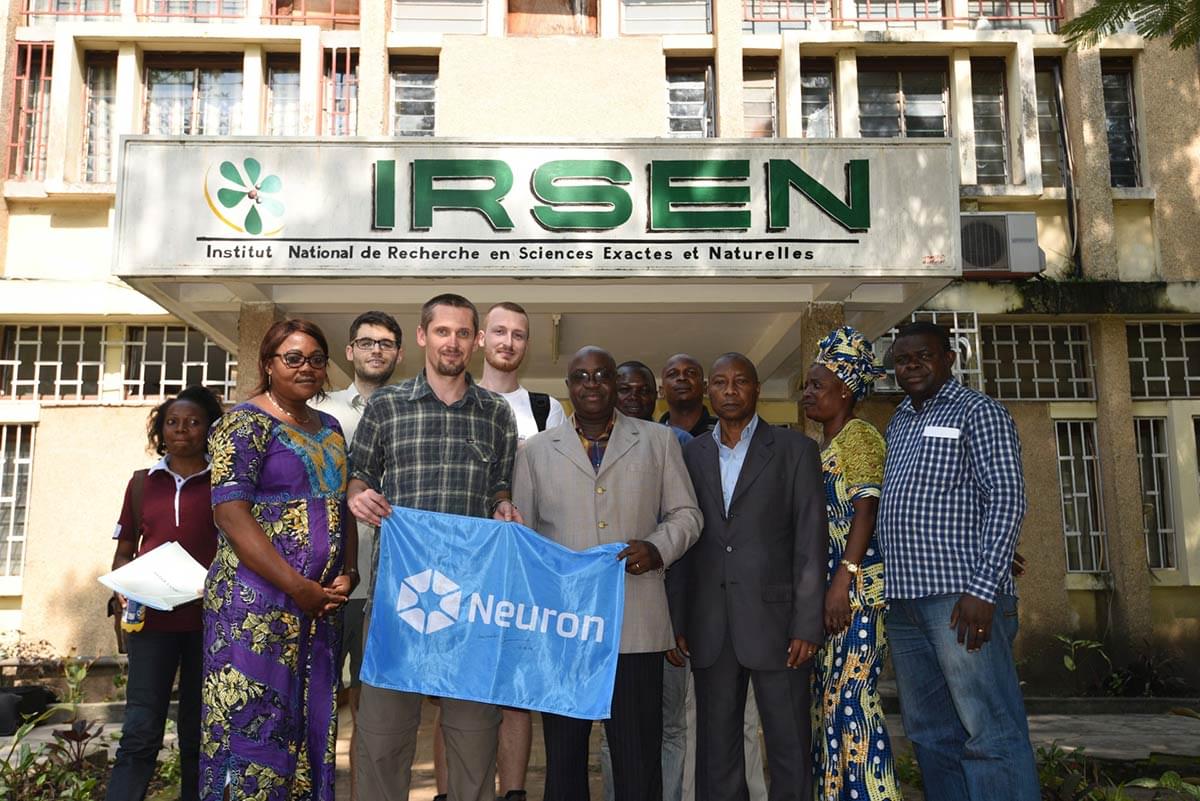
First it is necessary to go to the village nearest the site of the next research and approach the local chief, who is a highly respected man. I explain to him what I want to do in the forest. I show him the research permit obtained through the local research institute; then it is necessary to explain the purpose of the trip and usually I also have to give the village chief some contribution towards the development of the village. A colleague from the Congolese research institute goes with me. I speak to the village chief in my broken French, and when that does not work my collaborator communicates in the widely spoken language called Lingala. Then I hire porters and people who know the forest well — usually they are hunters — and with their help I choose a place in the forest for the base camp.
Do you divide up the area around the camp and map it step by step?
During field observation I am generally accompanied by local guides. But once I know the area better, I prefer to be alone during the research, or with only a local colleague, a zoologist, so as to eliminate disturbances and so that we can get to know better the environment in which the animals we study live. Once we have set up camp, we explore a radius of two to three kilometres. I pick out places I will go to at night, when the animals are more active. I focus above all on amphibians and reptiles. Besides notes on the ecology of the species, I also take tissue samples for later genetic analyses. And since the diversity of the herpetofauna — amphibians and reptiles — in the region of central Africa is still largely unknown, I collect smaller and hard-to-identify species whole and preserve them in ethanol. That is the standard approach to biodiversity research in remote and little-explored areas that still hide as yet unknown and undescribed species. From larger species such as crocodiles I take blood or a small piece of tissue and create detailed photographic documentation. In the morning I usually also go out on rounds, because some reptile species are more active then. For the rest of the day I process and record the material collected at the base camp.
Do the local people call the Congo crocodile by any special name?
They call it ngok. Incidentally, one of the popular beers in Congo is called Ngok, with a picture of a crocodile on the label and the cap. Whenever I have the chance, I always prefer this beer to others.
How do you tell local people you are looking for a particular species of animal?
If I want to find something specific, I usually show them a photograph I have prepared and printed before the trip. Or a photograph on my digital camera, if I have photographed the animal at a previous locality.
Are you not afraid to spend the night in the rainforest itself?
I mostly do research outside national parks, and in such places the large mammals have already been wiped out or are so rare that there is little chance of meeting them. What I fear most is the forest elephant or the buffalo. They are usually afraid of people, but if you were unlucky and came across a female buffalo with a calf or a solitary male elephant, it could be dangerous — but so far (he knocks on the wooden table) they have always run away from me.
Chimpanzees, who are sometimes aggressive, can be dangerous...
Theoretically yes, if I unexpectedly surprised a male in particular, he could attack. But great apes know about a person before that person discovers them. Once I encountered a chimpanzee hiding in dense undergrowth. It started roaring terribly and waving branches. I carefully walked on and tried not to look too much into the thicket, because most mammals regard a direct gaze as a sign of aggression. For a while the chimpanzee walked through the undergrowth beside me, occasionally shouting, but in the end it disappeared. I did not even see it properly, but it was not pleasant. Gorillas also live in the region; they are not usually as aggressive. A silverback male can, however, chase a person. More than the great apes I fear the forest elephants I mentioned. They are somewhat smaller than their relatives from the savanna, but they are still quite large and potentially dangerous; in size they resemble the Indian elephant. Incidentally, last year a savanna elephant killed a young Greek herpetologist in Zambia.
Are there no big cats where you do your research?
Leopards are a possibility, but they are very shy. Again, because local people hunt them. They have withdrawn from around the villages deeper into the forest to places where they have peace. Lions do not live in the rainforest; they occur in savannas or at most at the edges of forests. And outside national parks they are an absolute rarity.
Is there a risk of getting lost in the rainforest?
It has happened to me a few times and it is not very pleasant. On the way back to base camp it is very easy to get turned around, especially at night. But now I walk through the forest with a GPS in my pocket. Without this technological convenience I would have to mark my way and stay constantly alert, so I could not concentrate fully on my work. It did happen, though, that my GPS broke down. It was at night in a swamp — incidentally, also at a crocodile locality. I could not find the place from which I had come into the swamp. I was slowly starting to plan to spend the night on a small dry islet until morning. But it was not a pleasant prospect at all. I was wet, there were mosquitoes everywhere, and I also had a bit of a fever that day. In the end, though, the GPS relented and I found my way out of the swamp that same night.
How do local people react to you?
In small forest settlements people are usually delighted that, more than fifty years after colonialism ended in Congo, a white man has come to their village. Children and often adults from small forest settlements have never seen one in their lives. Even so, the village chief usually recommends that during my stay in the village I keep my tent close to his hut.
Are you in any danger from the villagers?
The village chief is a highly respected person. Once he has accepted me, nobody dares to threaten me. But occasionally there are a few people who do not agree with my visit, and if I camped at the edge of the village someone might, say, use the anonymity of darkness to attack me.
Why are some local people not glad to see you?
They are afraid that I will look for diamonds or gold in the forest and that loggers will come after me. But when I show my permit for zoological research and photographs of frogs, they start laughing that such small fry interest me.
But in the forest the chief's authority does not protect you...
I usually build the base camp quite far from the village, and nobody wants to go that far. And even if someone did set out after me, the villagers can tell one another with drums and come to help.
Do you know how many Congo dwarf crocodiles live there?
Nobody knows. It seems to be still fairly common in well-preserved forest landscape where there are enough smaller rivers, swamps and forest pools. The population of the Congo dwarf crocodile is probably still quite large, which we can also infer from the number of individuals offered at local markets. But precisely when you see how many they sell, it is clear that Congo dwarf crocodiles are under enormous pressure and in a few years their meat may be a rarity.
What is preventing the recognition of two species of dwarf crocodile, when it has been proved that they differ in the shape of the head and genetically?
Two American teams who are also studying the Congo dwarf crocodile have so far published only articles based on a small number of individuals, and from a minimum of specific localities in the Congo Basin itself. That is not yet enough for zoologists or for conservationists from the International Union for Conservation of Nature (IUCN). They require the examination of more individuals and also more precise information about distribution.
When will zoologists accept the Congo dwarf crocodile as a new species?
That will evidently happen the moment the professional community starts using the name of the new species. On the internet, for instance, there is a database of all recognised reptile species, and you will not yet find the Congo dwarf crocodile there — or rather only as a synonym of the dwarf crocodile. If a sufficiently convincing article appears in some prestigious scientific journal, a new species tends to be recognised very soon. Taxonomy is always chiefly a matter of evidence and of the way it is presented.
Since you know the locality where two genetically different species live in one place, can you contribute to the recognition of the new species?
Over the last five years I have visited various regions of the Congo Basin and in a number of them I have encountered the Congo dwarf crocodile. I think I already have interesting material in hand which, when supplemented with new data from the locality where they occur together, will be a significant contribution to zoological knowledge. A contribution that will hopefully also lead to definitive recognition of the Congo dwarf crocodile as a valid separate species.
Václav Gvoždík
He works at the Institute of Vertebrate Biology of the Czech Academy of Sciences and at the same time in the zoological department of the National Museum. He is a member of the committee of the Czech Herpetological Society. In his research he works on evolutionary history and herpetology. He says: "For effective species protection a thorough knowledge of biodiversity is fundamental. Such knowledge also helps us understand better the relationships between organisms in ecosystems and the evolutionary processes taking place in them. Among the least explored areas of the world in this respect is tropical Africa, especially the Congo Basin. Knowledge of biodiversity and of the distribution of organisms in Africa therefore deserves closer study."
What they wrote about the Neuron Expedition:
Václav Gvoždík as a guest of the programme Noční Mikrofórum (Czech Radio Dvojka, 25 October 2017)
After the mysterious crocodile: a Czech researcher has discovered a forgotten creature in the swamps of Congo (Hospodářské noviny, 26 May 2017)
A Czech scientist has discovered a forgotten species of crocodile in Congo (Muzeum 3000, 26 May 2017)
I catch crocodiles with my hands. It has proved its worth (Třebíčský deník.cz, 21 May 2017)
Finding A Living Fossil In The African Jungle (Perspective Wild, May 2017)
We discovered a new species of crocodile in Congo. In a freezer, adds the biologist Václav Gvoždík (Czech Radio Leonardo, 28 April 2017)
How to catch a crocodile? Forget the throwing net or the snare, bare hands are best (Czech Radio Vysočina, 20 April 2017)
A scientist from Studenec has discovered a forgotten crocodile (Třebíčský deník.cz, 23 March 2017)
A Czech scientist has discovered the smallest crocodile (Studio ČT24 on ČT, 19 March 2017)
A Czech naturalist has found a forgotten species of crocodile (Novinky.cz, 12 March 2017)
A Czech naturalist wants to find a forgotten crocodile (Zet.cz, 9 August 2016)
A Czech scientist wants to prove the existence of an unknown crocodile. He is preparing an expedition to find it (Lidovky.cz, 23 May 2016)
A Czech wants to prove the existence of an unrecognised crocodile (Týden.cz, 23 May 2016)
A Czech wants to find a forgotten crocodile (Lidové noviny, 23 May 2016)
He catches crocodiles with his bare hands. Now a Czech scientist is setting off into the African rainforest to study a forgotten species (iHNed.cz, 23 May 2016)
A Czech scientist is preparing an expedition to Congo to find an unknown crocodile (Czech Radio Radio Prague, 22 May 2016)
A Czech scientist is preparing an expedition to Congo to find an unknown crocodile (Deník.cz, 22 May 2016)
An expedition after an unknown crocodile (Lidové noviny, 19 April 2016)
A Czech scientist is preparing an expedition to Congo to find an unknown crocodile (Deník.cz, 22 May 2016)
He catches crocodiles with his bare hands. Now a Czech scientist is setting off into the African rainforest to study a forgotten species (iHNed.cz, 23 May 2016)
A Czech wants to find a forgotten crocodile (Lidové noviny, 23 May 2016)
A Czech wants to prove the existence of an unrecognised crocodile (Týden.cz, 23 May 2016)
A Czech scientist wants to prove the existence of an unknown crocodile. He is preparing an expedition to find it (Lidovky.cz, 23 May 2016)
A Czech naturalist wants to find a forgotten crocodile (Zet.cz, 9 August 2016)