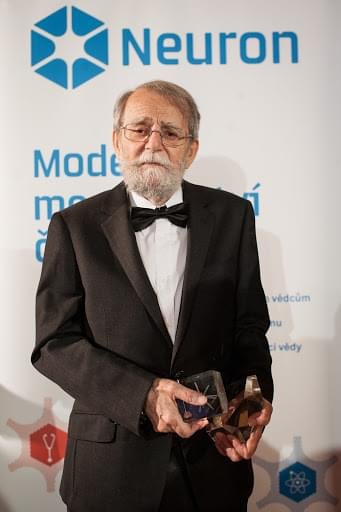
Two Neuron Award laureates have won a prestigious European Research Council grant
Two Neuron Award laureates in the social sciences, Filip Matějka and David Kosař, have received an ERC grant, awarded to the very best of European research. Both scientists are also members of the Neuron Foundation's scientific council for the social sciences. Filip Matějka and David Kosař had already won a Starting Grant from the European Research Council (ERC) in the past. David Kosař won one as the first Czech lawyer to do so, and Filip Matějka as the first Czech economist. With this new ERC grant the two scientists build on their research achievements and confirm that the Neuron Awards go to the very best scientists. Congratulations on a superb success.
Filip Matějka on the grant:
"We will study how and why people simplify their view of the world. Today, for instance, a lot of people believe that it is good to invest your way out of a crisis. That is a simplification, because in many crises it is appropriate, but in the present one it probably is not. We learn rules of thumb and forget that they do not hold for every situation."

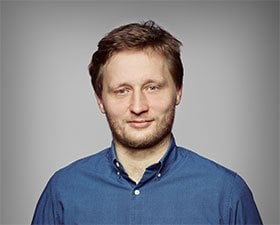
Filip Matějka
David Kosař
David Kosař on the grant:
"Thanks to the ERC grant we will map the role played in the current erosion of democracy in Europe by informal relationships between judges and political actors and by informal institutions within the judiciary," says David Kosař, adding:
"Thanks to the ERC grant we will map the role played in the current erosion of democracy in Europe by informal relationships between judges and political actors and by informal institutions within the judiciary. We are interested not only in negative phenomena such as nepotism, clientelism and gender segregation, but also in positive institutions such as international networks for sharing experience and good practice, informal ethics panels, mentoring groups for women judges and constitutional conventions that fill the gaps in written law."
Read more about Filip Matějka's research.
The economist Matějka has won a prestigious Consolidator Grant from the European Research Council; his project extends into health care
The economist Filip Matějka has won a prestigious Consolidator Grant from the European Research Council for his research. Matějka, who works at CERGE-EI, the joint institute of the Economics Institute of the Czech Academy of Sciences and Charles University, continues in the project "Attention" to study the imperfections of human decision-making and their effect on society. The Czech economist succeeded against more than two and a half thousand applications from 23 countries.
Filip Matějka's research
Matějka's research is built on the premise that the detailed workings of the world are indescribable and incomprehensible to us. He extends the model of imperfect individual decision-making to, for example, the behaviour of governments in regulating markets, or to the medical environment.
"We will study how and why people simplify their view of the world. Today, for instance, a lot of people believe that it is good to invest your way out of a crisis. That is a simplification, because in many crises it is appropriate, but in the present one it probably is not. We learn rules of thumb and forget that they do not hold for every situation," Matějka said of his project.
"In another part of the project we will try to help doctors save the attention they devote to patients. Modern technology piles a great deal of data about patients on them that they cannot process, so they often ignore it. We would like to help ensure that doctors receive the most useful information in a form they can digest. Then they will treat the rest of us all the better," he said of a further aim of the research.
Greater interest in the social sciences
The director of CERGE-EI, Sergey Slobodyan, believes that Matějka's success will increase interest in the social sciences. "Only the very best obtain support from the European Research Council, and Filip therefore rightly deserves it. His scientific results so far are truly exceptional," Slobodyan said. "I believe Filip's success will encourage other talented researchers and draw attention to the social science disciplines," he added.
The president of the Czech Academy of Sciences, Eva Zažímalová, is pleased at the recognition for the Czech researcher. "We try to motivate scientists to compete for ERC grants as much as possible. It is an opportunity for them to begin a top-class scientific career, or to continue one brilliantly, so I congratulate Filip Matějka from the bottom of my heart," Eva Zažímalová said.
A second success
Matějka has now been selected twice in international competition for ERC grants. In 2015 he became the first in the Czech Republic to win an ERC Starting Grant for social science research (in the same year David Kosař of Masaryk University also won an ERC grant).
Zdeněk Strakoš of the Faculty of Mathematics and Physics of Charles University, who in the past chaired one of the evaluation panels for awarding ERC grants, considers this an exceptional success.
"It rarely happens that a Starting Grant is followed by a Consolidator Grant. Filip managed it because he came up with a project that asks very important questions and answers them with an original approach," Strakoš said. "The whole ERC programme is about exceptional ideas. Even in his first project Filip managed to apply the theory of rational inattention to problems nobody had addressed," he added.
Along with Matějka, ERC grants in the social sciences were also won this year by David Kosař and David Zbíral of Masaryk University. According to Strakoš, the quality of applications from the social sciences is rising. For more Czech scientists to win European Research Council grants, he believes institutional support for applicants and the creation of the right conditions at individual institutions are needed.