Thanks to the Neuron Award I presented my work to the public
Five questions for the Neuron Award 2021 laureates, five answers. How have their work and their lives moved on since last year's award ceremony, and what do they expect from the future?
Five questions for the Neuron Award 2021 laureates, five answers. How have their work and their lives moved on since last year's award ceremony, and what do they expect from the future?
Next to answer is Lenka Zdeborová, who won the Neuron Award for promising young scientists for the complex solution of physical problems using algorithms based on neural networks.
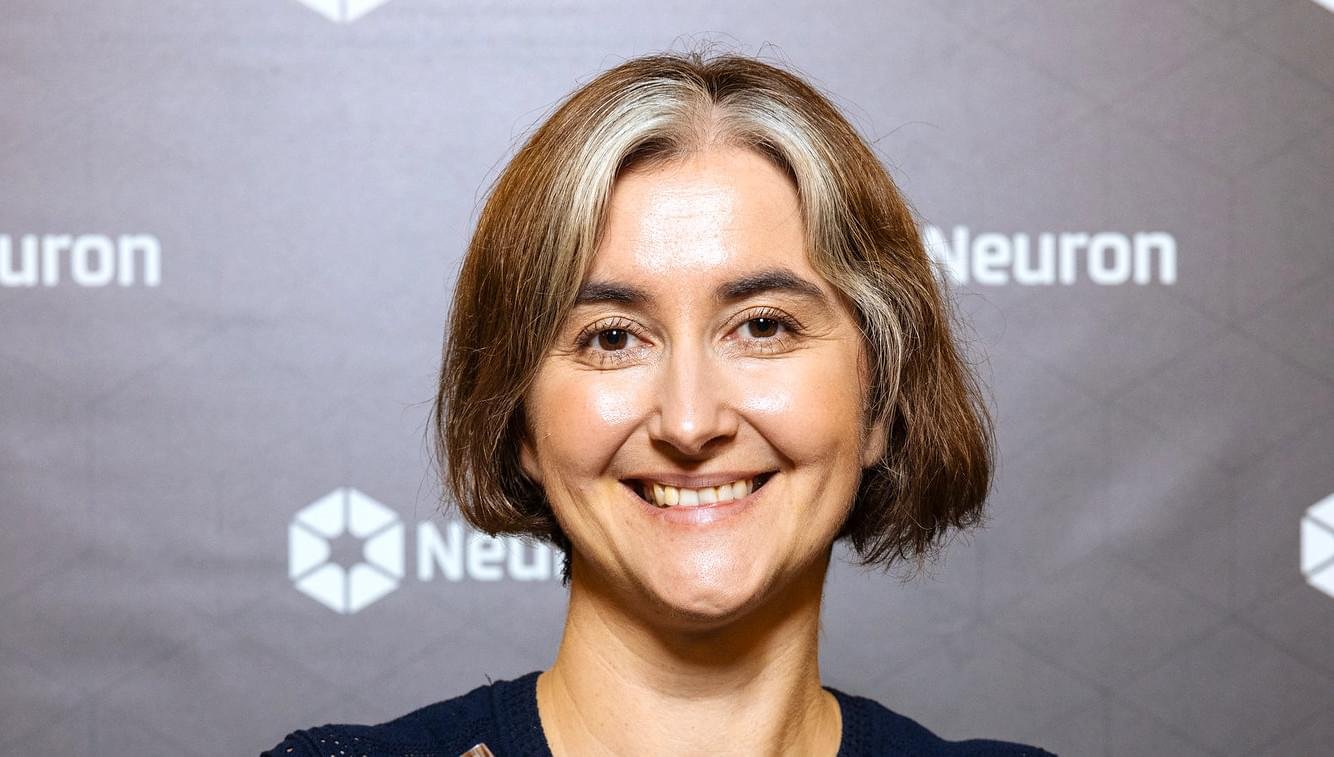
You received the Neuron Award last September. How has your field moved on since then?
Last autumn my field was recognised with the Nobel Prize in Physics. It went to Giorgio Parisi for his contributions to the theory of disordered systems, which have applications in many other fields including machine learning using neural networks and the analysis of modern algorithms. I spent a placement in Parisi's group during my master's studies, and his award is an enormous encouragement for our whole community in the physics of disordered systems and its applications.
What good things happened to you personally?
I am pleased, for example, with the semester course I created last autumn for physics students on the fundamentals of machine learning. It is a course that combines knowledge from statistical physics in an original way to understand the properties of algorithms and models in machine learning. I was also pleased by the successful running of Fyziklání, organised by the correspondence seminar Fykos, to which my Neuron award contributed financially. Thirdly I would mention the summer school of physics that I organised this July in the legendary Les Houches below Mont Blanc, on the subject of statistical physics and machine learning. It is very satisfying to watch a community of young scientists take shape there over a whole month — people who in, say, 10 to 20 years will be leading our field.
How can your field help society as a whole?
We create algorithms that will be able to use data for various useful purposes, for instance inventing new drugs, removing disinformation from the internet, or creating materials capable of eliminating carbon dioxide from the atmosphere on a large scale. Such things may sound utopian, but I believe they are well within reach.
What do you expect from science in the distant future?
I hope that with the help of science we manage to keep our planet beautiful and habitable. I hope we will understand how to organise society and how to educate the next generations so that they can live contented but also responsible lives, in harmony with the sustainability of resources and in peace.
Who should be the next Neuron Award laureate?
The Neuron Foundation has given me a whole range of opportunities to present my field to the Czech public. For someone who has been living and working abroad for 17 years, that is a fairly unique opportunity. I hope there will be more successful Czech scientists working abroad whom Neuron honours, thereby bringing them into Czech public awareness and helping to open the door back into Czech science for them.