A Czech parasitologist in elite company: Julius Lukeš among the scientific elite of the USA
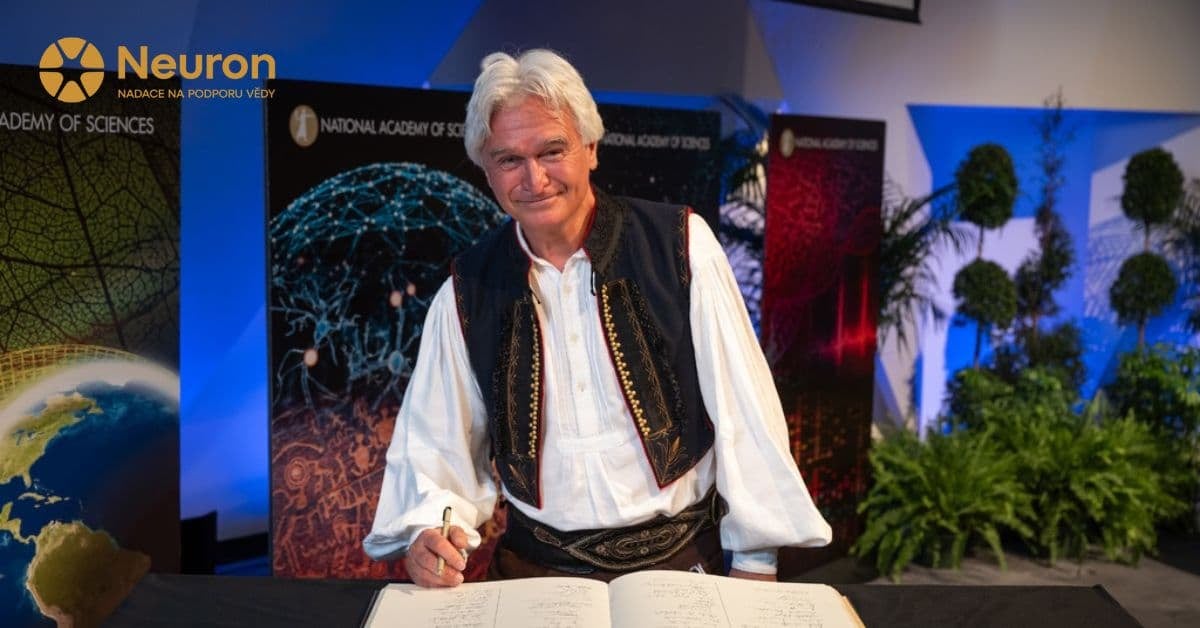
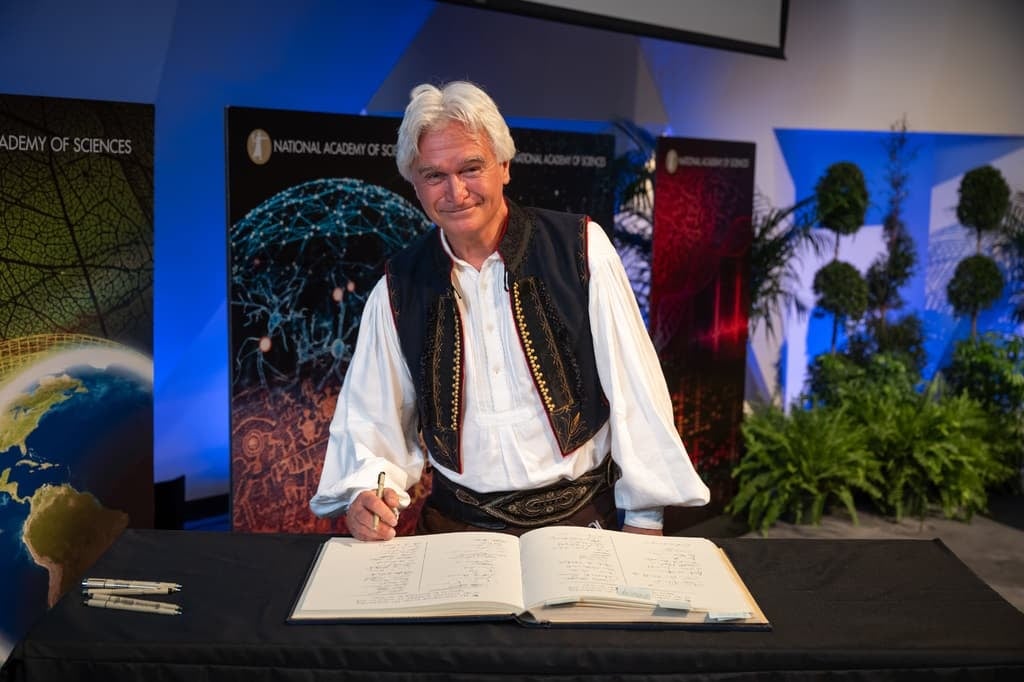
The Czech scientist Julius Lukeš experienced an unforgettable moment as, in a century-old ceremony, he joined the members of the National Academy of Sciences of the USA (NAS) — one of the most prestigious scientific institutions in the world. With this exceptional honour he took his place alongside the world's leading scientists and confirmed that even the study of parasites can have a global impact.
The Czech scientist Julius Lukeš experienced an unforgettable moment as, in a century-old ceremony, he joined the members of the National Academy of Sciences of the USA (NAS) — one of the most prestigious scientific institutions in the world. With this exceptional honour he took his place alongside the world's leading scientists and confirmed that even the study of parasites can have a global impact.
When you hear the word "parasitologist" you may picture a solemn scientist with a microscope, immersed in a world of invisible organisms. But Julius Lukeš, a member of the Neuron Foundation's scientific council, proves that these inconspicuous creatures can open the door to the world's scientific elite. Our leading expert on the extraordinary world of protozoa has achieved something only a handful of the chosen manage. In doing so he has added to the growing prestige of Czech science.
This elite scientific institution counts some five hundred Nobel Prize winners among those who have signed the sacred book, still in use, that Abraham Lincoln established 163 years ago. And now our Professor Lukeš appears among them. As the only living Czech representative.
"His story is proof that the Neuron Foundation's scientific council is made up only of the very best, who set the direction not only for Czech science but can also speak to the world's scientific elite," says the director of the Neuron Foundation, Monika Vondráková.
"At least two members have to nominate you, and you must have no relationship with them," Lukeš says of the demanding selection process. "It is a multi-round vote, and around twenty to thirty foreign members from all fields and countries are chosen each year — so the door really is narrow."
The professor is known for his unconventional approach to research — who else would voluntarily swallow tapeworm eggs in the name of enquiry? It is precisely this combination of brilliant science and the courage to experiment that makes him an exceptional figure.
What does such a prestigious honour mean? "I enjoyed a three-day programme of interesting ceremonies, superb lectures, discussions in field groups in the NAS building a short walk from the White House, and shared entertainment and dancing in the National Portrait Gallery," Lukeš reveals. "Among other things you become an official adviser to the US Congress, and thanks to that the Czech Republic has representation again."
From a practical point of view, membership brings further advantages: "The famous journal PNAS becomes my home journal and I can join NAS committees. It is a lively and active society, but for now I am a greenhorn, finding my feet…"
At the NAS he will work in the section devoted to pathogenic organisms and evolutionary biology — research that can help in the fight against serious diseases.
We congratulate Professor Lukeš on this extraordinary honour and are immensely proud that he is part of the Neuron Foundation community! The next time you come across a parasite, remember that thanks to scientists like Julius Lukeš we know more and more about them. His story is an inspiration for everyone who is not afraid to dream big. His success is proof that even a small country can influence world science.