Czech science proves we are not just a country of manufacturing and assembly plants
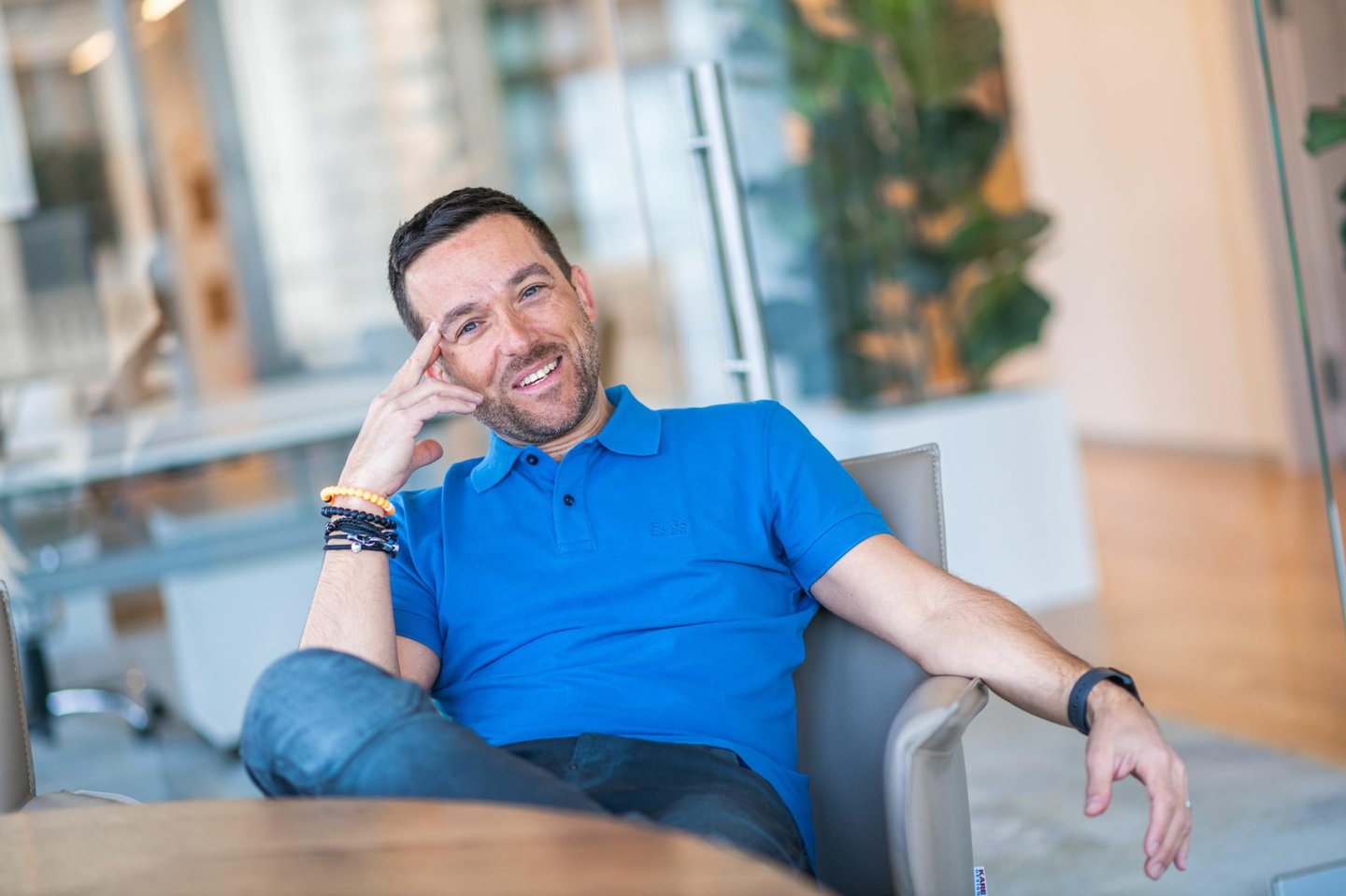
What are his philanthropic goals, and why are successful entrepreneurs taking an ever greater interest in the public good? Why does he support Czech science and what does he think of it? Ondřej Bartoš, a patron of the Neuron Foundation, admits in this interview to an "instinctive" philanthropic strategy and explains the three pillars he and his wife decided to help.
What are his philanthropic goals, and why are successful entrepreneurs taking an ever greater interest in the public good? Why does he support Czech science and what does he think of it? Ondřej Bartoš, a patron of the Neuron Foundation, admits in this interview to an "instinctive" philanthropic strategy and explains the three pillars he and his wife decided to help.
How did you become a patron?
A few years ago, at a certain moment, my wife and I began to realise that we had been luckier in life than a lot of other people and that we had also succeeded professionally thanks to the environment we live and work in. So it is only fair to share that. It was not a matter of rational calculation; I did not tell myself in my youth that I would "give such and such a percentage" — it was instinctive. At the same time I had lost my illusions about how efficiently the state spends tax revenue — and, frankly, taxes in the Czech Republic are not exactly staggering — so my wife and I concluded that it is right to support activities that do good and help make life here better.
Which projects do you choose? Also by instinct?
We want to help here, where we grew up, where we work, where we live and are raising our children. And so we want to support activities and organisations that try to make systemic improvements in areas we consider useful or important.
Which ones are those?
When we thought about our personal preferences, three areas emerged that interest us and are to some extent interconnected — science as an endeavour that can move society and the economy as a whole from assembly plants towards knowledge; second, education, which is a pillar and which determines what society will look like in one or two generations; and third, freedom of expression and democratic principles. In these three areas we have chosen organisations that do good work and focus on long-term, systemic improvement of the environment.
Naturally we should dwell a little longer on science…
Science is enormously important for any society. During the pandemic we saw live how scientists and modern technologies, created by scientists, saved the world. How the pandemic in the end played out in such a way that most people could work and most children could be educated. Even though the world came to a stop, technology helped us. And scientists began systematically and methodically to track the numbers and prepared a vaccine in an extremely short time. Science in general contributes to the fact that, as a society, we do not remain stuck in manual labour and are not merely a country of manufacturing and assembly plants. Science means brains that think up and create new things and in doing so move the whole of society forward. The results of scientific work help treat people, help them work more efficiently, more productively, better and more healthily. That is where I see the positives of science.
With your international experience, can you say what Czech science should concentrate on? Or what is needed from the point of view of your business?
I think it would be useful to support the fields in which we are genuinely good. So that we do not scatter our efforts. It is rather like being at school, where they force you to study every subject and then say, not maths now, you are good at that, study Czech, you have gaps there. And I think that is the wrong approach; on the contrary, it should be — you are bad at Czech, so don't spend too much time on it and concentrate on maths, where you can be phenomenally good. I would take the same approach to science: invest the most resources, energy, time and people in the fields where we can succeed internationally. And there is plenty of room for that, just as Czech science should make technology transfer routine, moving the outputs of basic research and science into practice.
I understand you are speaking as an entrepreneur, so I am curious whether you also see your giving in terms of a "business plan", numbers and your own budget?
Not at all; it is still very much instinctive and there are no numbers in it. I am afraid our giving is to some degree more of a mess than we intended. Originally we planned to keep our activities at the relatively simple level of supporting, say, three organisations, but it has spread a little…
Do you think a culture of patronage has been cultivated again in the Czech setting? That is, do successful entrepreneurs give enough?
Not yet, but it is improving. The trend is good; more and more people who have achieved success are coming to the realisation I spoke about and are supporting causes they find congenial. What is behind it I cannot say exactly; perhaps it is inspiration from abroad, or the explanation is even simpler — word of mouth. If someone becomes a patron and tells their social circle about it, a snowball effect may be starting.
What legacy should you leave behind as a patron?
I don't think about a legacy of my own. I would like to leave behind well-brought-up, happy, well-adjusted children; I would certainly like to be remembered rather well than badly, and ideally that I helped something good along. But calling that a legacy — I would not go that far.