"Zdeborová: AI needs more wisdom"
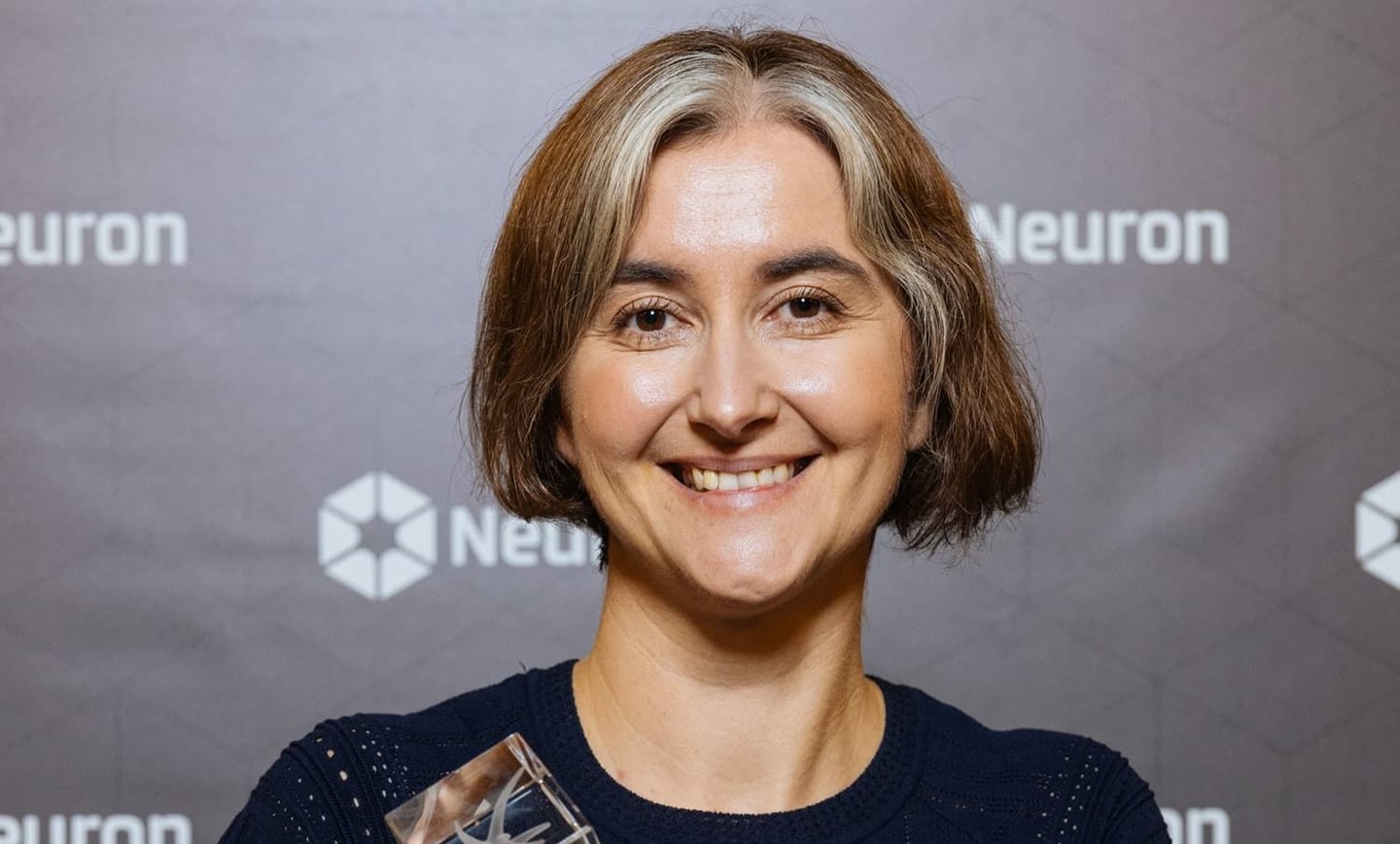
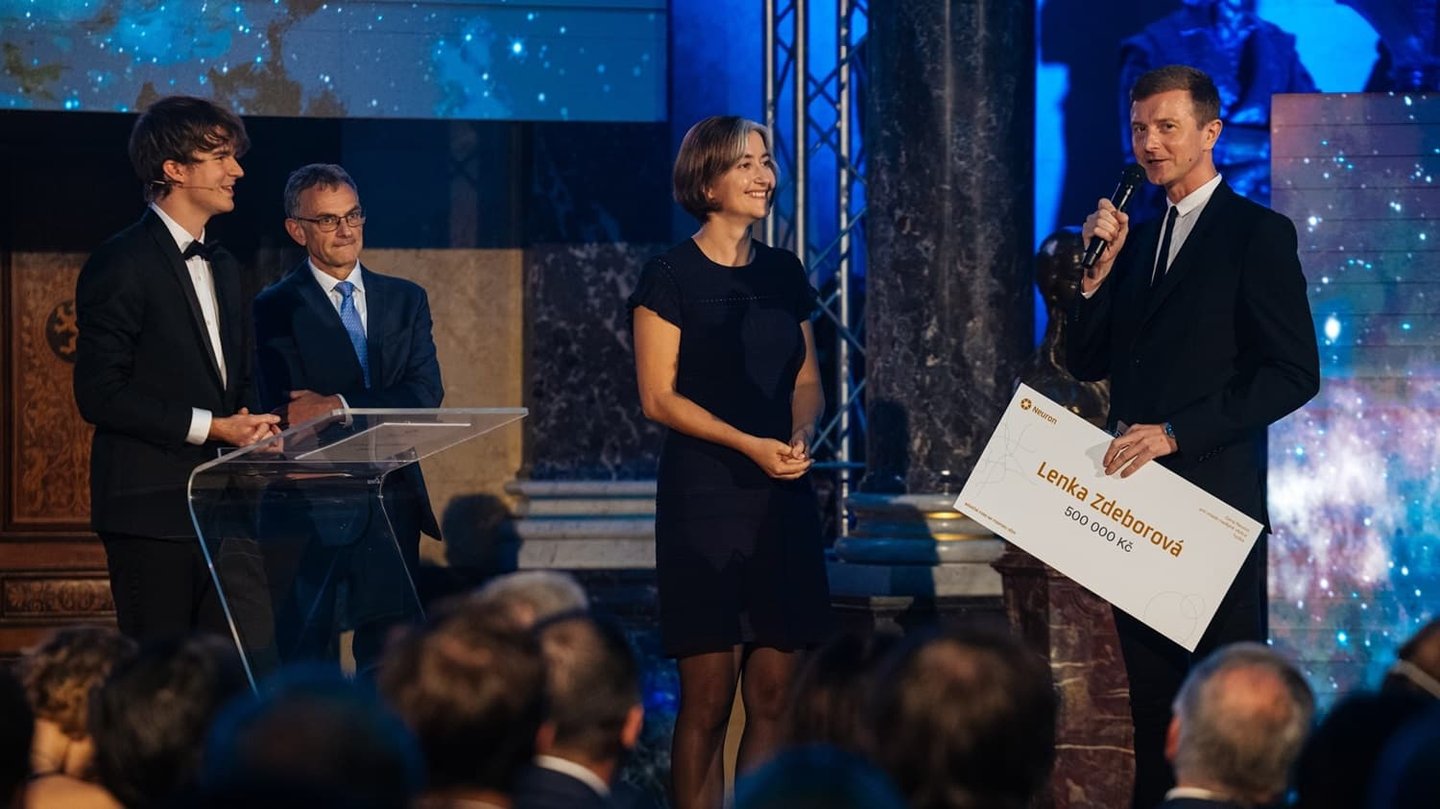
The physicist and computer scientist Lenka Zdeborová, laureate of the 2021 Neuron Award for young promising scientists, belongs to the narrow group of top scientists to have been awarded one of the most prestigious European scientific grants — an ERC Advanced Grant.
What is the aim of her new project? We put several questions to Lenka, which we bring you exclusively:
Lenka, your project will focus on making AI more efficient. If you had to explain its benefit with one concrete example from the future — what would it be?
Artificial intelligence already handles a number of tasks better than humans. And where that is not yet the case, it will very probably change soon. But current AI systems need an enormous amount of electrical energy and data. We do not know whether that is really necessary, or whether it is possible to design these systems far more efficiently. An AI that manages with less data and energy would be more accessible — and therefore usable even where it is not today. At the same time, this very efficiency could open the way to still more intelligent systems.
For now, though, we have no idea how much better these systems may be in the future. And that is precisely what my project is trying to understand. It is basic research whose practical impacts we cannot yet predict exactly.
So I will not give you an example from the future but from the past: when Sadi Carnot formulated the foundations of thermodynamics at the beginning of the 19th century, he only wanted to understand how a steam engine works. He had no idea that his work would lead to a probabilistic description of matter, from which information theory would later emerge — and from that, communication technologies such as the smartphone in each of our pockets.
You often mention that science is a collective work. What does a productive scientific dispute look like in practice? Is it a quiet exchange of mathematical formulas and proofs, or rather a passionate debate at the blackboard? Do you remember, for instance, some specific disagreement with colleagues that in the end led to a breakthrough discovery or solution?
Yes, science is often presented as the work of a few brilliant Nobel Prize winners. In reality, though, behind almost every discovery there is a whole community without which the laureate could not have taken that step at all. And even if a particular person did not exist, in most cases someone else from the same community would soon have made that fundamental discovery anyway.
Your question is interesting in that it assumes a breakthrough often arises from a dispute. But usually it does not. Most often it arises from curiosity and from a sincere effort to understand what the other person has in mind. It is precisely such a discussion, conducted with respect and a desire to understand, that often leads to knowledge we would never have reached on our own. Sometimes it is passionate too, but in a positive, collegial sense. Like two musicians improvising together, complementing each other, picking up on each other, creating together.
One of my most interesting results came about because a colleague at a seminar was trying to understand why a certain method used in another field works. He realised that it is connected with the physical principle of nucleation. When he was explaining this connection to us, we jointly realised that we could use the same method in completely different applications too. And suddenly a new path opened up before us, on which we then worked for a number of years.
In another case a colleague predicted a result I simply could not believe, and I tried to prove he was wrong. It was precisely this effort that in the end led us not only to confirming his result but also to a new method that was later used in many other problems.
Of course there are real scientific disputes too, but those tend to be rather counterproductive. Often they are more about ego and influence than about science itself.
From your earlier interview we know that you are driven by "insatiable curiosity and stubbornness". What would you say to today's students who are hesitating about whether to immerse themselves fully in science? How can they cultivate this curiosity in themselves and not let themselves be discouraged?
Stubbornness and insatiable curiosity are key for science. When you come up against a question nobody before you has managed to crack, you most likely will not manage it the first time, nor the second and often not even the tenth. But if that question keeps you awake, if you keep returning to it even when it does not work, then perhaps that is precisely when you are on the trail of something new.
But it is important to choose the right question well. And that you usually do not learn at university. You learn it from the people who guide you, most often during a doctorate. So I would say: trust your curiosity. Let it lead you, but choose well who teaches you to see that path. A good supervisor teaches you to overcome obstacles, to find your bearings in uncertainty, and to stand by your own thinking.
For most of what I can do today I am indebted to the people who showed me that path. And today my greatest task is to show it onward.