"Expedition notes: "In Kosovo you no longer come across an old house.""
22 October 2017
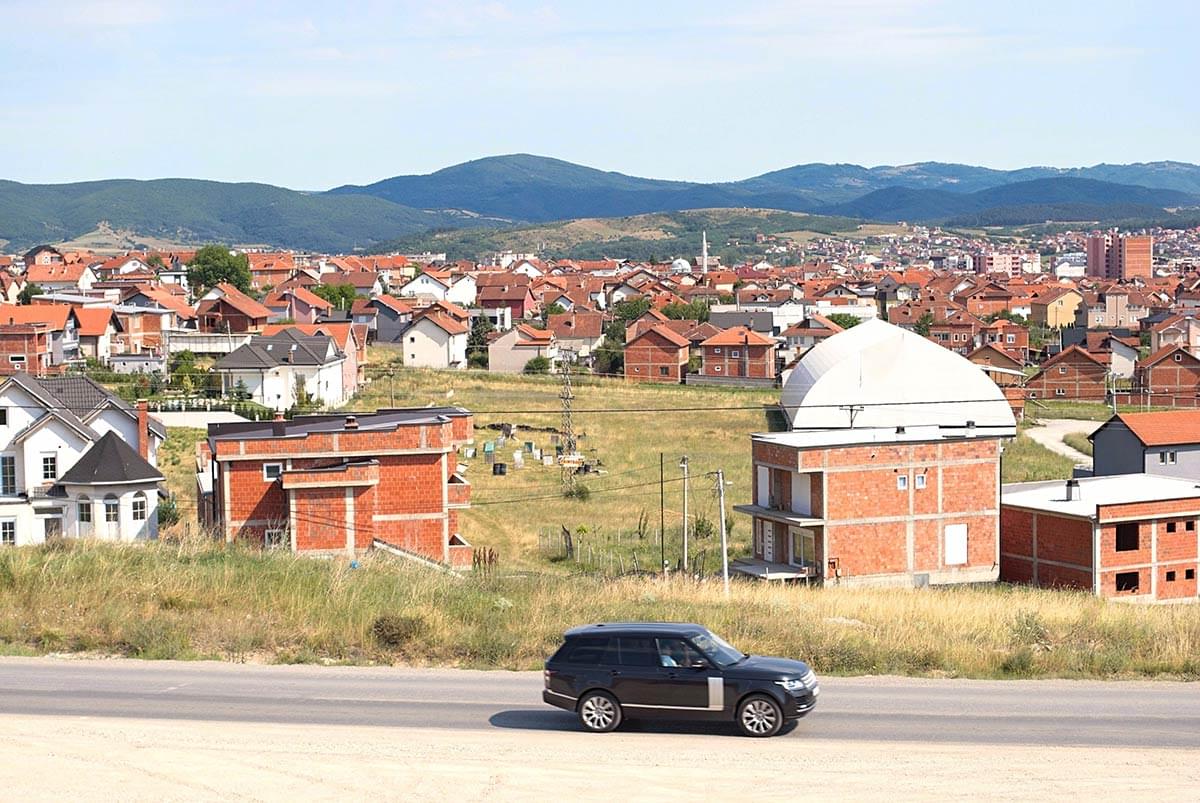
"Kosovo is one of those places where, even in the countryside, even at the very end of the world, even high in the mountains, there are only new houses and you actually no longer come across old ones… I have been coming back to Kosovo and working here systematically for 25 years and I see that boom and proliferation literally before my eyes. Towns are expanding dramatically, villages have become villa towns of several thousand, in the open landscape more and more settlements are proliferating until there is almost no open landscape left… So many times — for political and economic reasons — it seemed that this building fever simply had to end, but it goes on and on."
writes Radan Haluzík, who in July continued his research into the building fever in the Balkans. Of his latest journey he says:
"Kosovo is one of those places where, even in the countryside, even at the very end of the world, even high in the mountains, there are only new houses and you actually no longer come across old ones… I have been coming back to Kosovo and working here systematically for 25 years and I see that boom and proliferation literally before my eyes. Towns are expanding dramatically, villages have become villa towns of several thousand, in the open landscape more and more settlements are proliferating until there is almost no open landscape left… So many times — for political and economic reasons — it seemed that this building fever simply had to end, but it goes on and on."
This time he went to Kosovo with the anthropologist Prokop Ištvánek; in an ancient Toyota without air conditioning and in forty-degree heat they travelled across the whole country, visiting the families of old and new acquaintances and asking the questions: where do Kosovar guest workers working in Western Europe get the money for more and more new houses? How do these funds flow within Albanian extended families and how are they saved and invested in further bricks and concrete? What do the houses actually mean for them, their families and their communities?! Why are those built twenty years ago already being renovated again? And above all, why do people living and raising children often thousands of kilometres away abroad build houses somewhere in the fields of Kosovo where, as they themselves know well, they will most likely never live? And what would actually have to happen for them to return and for the villas in the fields to come alive with the life they dreamed of…?
Radan Haluzík will bring answers to these and other questions connected with megalomaniac houses all over the world at the end of his expeditions. In September he will set off to map the cultural and financial flows and tensions of the globalised world in Lebanon and in December in Nigeria and Ghana.