Going to Lebanon in search of the houses of the "rich poor" was a good idea
15 October 2017
"So we have arrived in Beirut. Skyscrapers grow out of the guts of oriental bazaars like mushrooms after rain. What does it want to look like: Manhattan, or Istanbul? A city whose face leaves even an architectural ignoramus anything but cold...," writes the social anthropologist Radan Haluzík after landing.
Greetings from Lebanon
"So we have arrived in Beirut. Skyscrapers grow out of the guts of oriental bazaars like mushrooms after rain. What does it want to look like: Manhattan, or Istanbul? A city whose face leaves even an architectural ignoramus anything but cold...," writes the social anthropologist Radan Haluzík after landing.
"So we have arrived in Beirut. Skyscrapers grow out of the guts of oriental bazaars like mushrooms after rain. What does it want to look like: Manhattan, or Istanbul? A city whose face leaves even an architectural ignoramus anything but cold...," writes the social anthropologist Radan Haluzík after landing.
"Lebanese Christians, Maronites, are building for all they are worth. Their territories in northern Lebanon are literally covered with houses from the lowlands high into the mountains. Most of them, however, remain empty or unfinished, because their owners are far away abroad for work and business, mostly in Australia, Nigeria or North America. We are staying in one such enormous palace, under construction for twenty years. To get to our room we walk over planks and glass wool... Eagles circle above the valley and at night fireworks are fired."
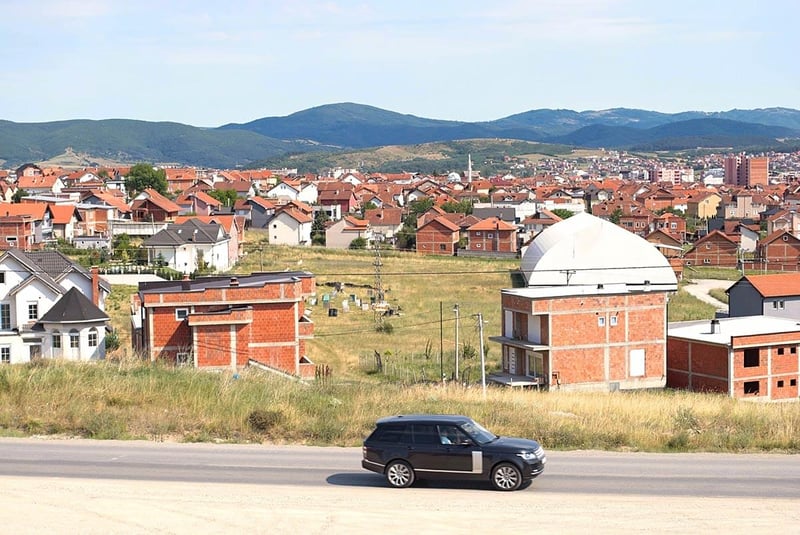
The landscape of the Lebanese countryside is literally covered with houses. In fields, in the remains of forests, on mountain slopes, on the rocky sides of canyons, everywhere. Villages merge into one another and grow together… Among them the last herds of goats graze, the remaining fields bear fruit, and numerous building sites and illegal dumps spread out. The night landscape is dotted with lights.
Most Lebanese live outside Lebanon, and so this country of six million depends on financial flows from entrepreneurs and guest workers living abroad. In the area where we worked, that is, in the north of the country in the Maronite Christian regions, we most often met people who go for work to North America, Australia or equatorial Africa. In equatorial Africa they then own building firms, restaurants, hotels and other services, but also betting shops and companies focused on financial speculation. Long-term work abroad is nothing new here and in some local communities has an almost century-old tradition. Sometimes it is already the fourth generation of young men who go overseas, while women and children often stay at home in a village that has meanwhile grown into a small town. Every family here has someone close to them overseas. "Look at those mountains. Look at those mountains — at that rock: do you see any factories anywhere here, any production, any industry, anything where one could work?" complains a fellow who has lived for years overseas in Australia.
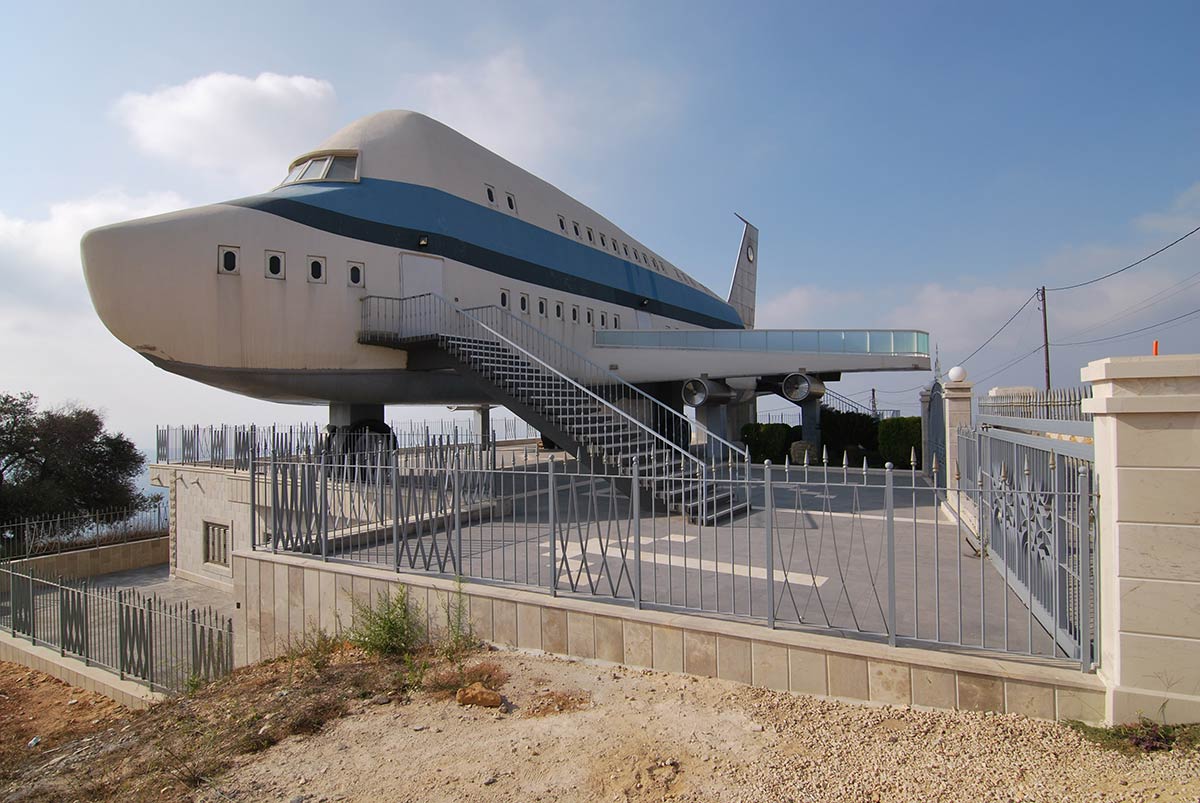
Those who can afford to build in Lebanese villages mostly live far away abroad. Five, ten, fifteen — but often more than thirty years! They return home in old age and usually about once a year for the summer or for Christmas. We went to visit this area in September, so we saw them pulling down the blinds on their houses, visiting their friends for the last time, handing the keys to their relatives, caretakers and gardeners and… leaving. Others go for the winter to flats in the capital, Beirut. Enormous houses resembling châteaux of the Loire, medieval castles, ancient temples, but also Egyptian pyramids or even a Boeing aeroplane thus remain empty…
"I haven't seen my dad for seventeen years…! And yet we talk to each other every day on the phone," says a twenty-five-year-old newly qualified interior designer with a resigned grinding of teeth. "I'd like to go and work with him in Africa, but apparently it's not for women…" Separation breeds estrangement, reproaches, exaggerated expectations, suppressed frustrations, divorces and outright major life traumas. And so a specialist in society-wide trauma — my colleague the psychologist Kristýna Bušková — has her hands full. She listens, conducts research interviews, but even so it sometimes seems that sitting over coffee turns into psychotherapy sessions. Disappointments, unfulfilled longings, feelings postponed for decades and great emotions… "I came home after twenty years for my first month's holiday, I visit acquaintances and relatives, but what hurts me most is that my old friends simply do not return my visits — as is supposed to be the custom here," a forty-five-year-old tells me almost with tears in his eyes, wandering the neighbourhood for hours and waiting to run into someone he knows outside the church. Twenty years overseas passed like water, but not only people, their figures, memory and faces, but the village too, everything has changed...
"I know how these people live. The great risk and danger of working in Africa and all that separation… I don't envy anyone these houses like châteaux: the price of success is high," comments a young café owner who, after his studies, preferred to stay at home and made do "with just an ordinary three-room flat" in a luxury village apartment building. "Yes, it doesn't come free," says a contemporary of his who is definitely not planning to go either, "but everyone who talks about the pitfalls sees only themselves and their family. Nobody ever talks about the consequences the money we have scraped together has for Africa…"
After returning from Lebanon we know one thing (among others) about the houses we study: nothing comes free.
The morning after landing,
Radan Haluzík