In memory of the polar researcher Josef Svoboda
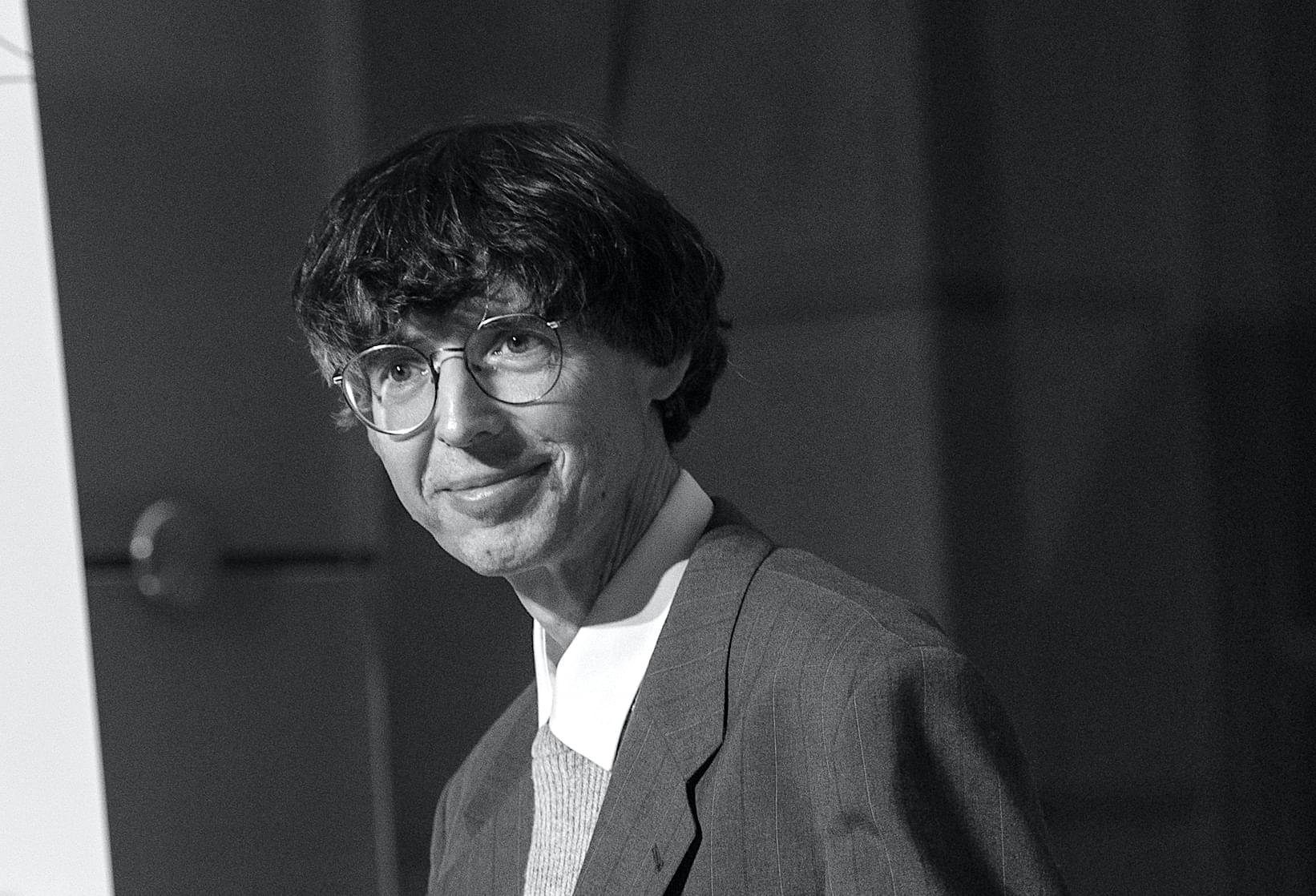
The passing of the polar scientist Josef Svoboda is very sad news for me personally. Whenever hard times come, I remember the professor. He was a man who always saw the glass half full. A man full of life, energy and inspiration. And that despite the obstacles life put in his way.
Instead of letting him study, the communists sent him to prison for eleven years. He told me how he cared for a beaten fellow prisoner who lost his sight through injury, and how he told him things were much lovelier than they really were. He gave him hope. He held on to hope himself despite further blows of fate; he did not grow bitter and nothing broke him.
In the end Josef Svoboda fulfilled his dream and studied biology. He became one of the finest polar scientists, received Canada's highest order and has an island in Alaska named after him.
RIP, professor, you were a wonderful man. Thank you for letting me get to know you and for becoming a Neuron Award laureate.
Monika Vondráková, chair of the administrative board of the Neuron Endowment Fund
Home is where you hang your hat. That is how the motto of an admirable man, the polar ecologist Josef Svoboda, can be summed up. This exceptional scientist with Czech roots, laureate of the 2017 Neuron Award for contribution to world science in the field of biology and holder of Canada's highest distinction, died on 21 November 2022 in Burlington. Honour to his memory.
Revisit the story of Josef Svoboda and the interview with him as we published them at the Neuron Awards ceremony five years ago.
Home is where you hang your hat
He approaches life's hard trials as strengthening ones. He did not choose them, but he accepted them. Including prison, where in the fifties he spent 8 years, 5 months and 14 days.
After a year of studying biology at Masaryk University in Brno, the communists arrested him in the autumn of 1949 for "anti-state activity" and, as part of the liquidation of the Brno group of Christian-democratically oriented students, sentenced him to 11 years. He was twenty. He passed through perhaps all the main Czechoslovak prisons including Mírov near Olomouc, Bory in Pilsen, the uranium mines of Jáchymov and Leopoldov. He did not grow bitter. Prison, he says, gave him the chance to meet people he would hardly have come across in normal circumstances. That is why he speaks of a second incarnation.
When he left prison in March 1958 he was not quite 29. He recalls that day quite matter-of-factly. "I saw fellow prisoners who started crying after their release and embraced the ground. That did not affect me. I walked out of the Pankrác gate, it was a nice day and I felt like a free wanderer with a margarine box under my arm. My mother, though, when she embraced me at home in Brno after all those years, fainted with joy."
After unsuccessful attempts to return to the faculty he fed animals at the zoo, until he saw an advertisement that the Institute of Botany in Brno was looking for a technician for field research into wetlands. They took him on and in time he managed to get onto a distance course in Prague; after six years freelancing he also married. But everything was ruined again by the Soviet occupation in August 1968. As a co-founder of the club of political prisoners K231 he was faced with the decision of whether to stay or emigrate and leave his loved ones once again. He chose the second option and emigrated via Germany to Canada. His wife, however, did not settle overseas and after four years returned home. After 22 years of interrupted study Josef Svoboda obtained a bachelor's degree at Western University in Ontario, continued at the university in Edmonton and focused on Arctic plant ecology. He married again and had two sons. Finally, in 1973, he settled as a professor at the University of Toronto and for thirty years continued summer expeditions to the Canadian Arctic with his students. He describes his time as a polar researcher as his longest incarnation so far, the third.
"At first sight the High Arctic resembles a lunar landscape. There is nothing more desolate than a land without a blade of grass, a cushion of moss or at least the coloured lace of a lichen. Let us say that in the early days there was even a certain analogy with the Jáchymov gulag — we ate tinned food out of mess tins, no shower, a toilet made of oil drums," he recounts. And the cold on top of it, though Josef Svoboda does not complain: "I'm the type of person like Voskovec and Werich, who used to say that home is where you hang your hat."
His colleague, the polar scientist Josef Elster of the University of South Bohemia, who took part in a number of expeditions with him, adds: "High above the Arctic Circle there is up to six months of continuous light in summer. Similarly, at that time there is polar night above the Antarctic Circle. Add to that a harsh climate, a lack of mineral nutrients and permanently frozen ground, or permafrost. We studied how flowering plants, sometimes only as big as a matchhead, can grow in these conditions."
Field experiments clarified the factors and processes that allow Arctic plants, once thawed, to produce flowers and ripe seeds. In Hudson Bay and Alexandra Fiord on Ellesmere Island, Professor Svoboda and his doctoral students grew local and cultivated plants in unheated polytunnels with fertilised local soil and increased their productivity up to thirtyfold. They studied the deposition of radioactive caesium in mosses and lichens as a result of the test nuclear explosions before 1964. And of course they were also interested in the retreat of the ice, connected with global climate change. "I do not put the blame for warming entirely on humans," says Josef Svoboda. "Climate change would have occurred even if we behaved like Neanderthals. But I do have one appeal: don't fell everything, don't burn everything, don't extract everything within 200 years, and leave something for future generations."
In 1994 he received recognition and a medal from the Canadian government for Arctic research; a year later Masaryk University (the one that had once rejected him) gave him an honorary doctorate in natural sciences. In 2002 he was in the Arctic for the last time, after giving it 32 years of his life. But do not ask him for nostalgia. "You know, I'm a person who is not easily moved emotionally. Otherwise I wouldn't still be here."
He knows what he is talking about, because another tragedy struck his family when their younger son Andrew, an exceptionally gifted composer and doctoral student at Columbia University, died suddenly. Before New Year's Eve 2004 he was talking on the telephone across half the planet with his girlfriend when his heart — the heart of a healthy athlete — stopped. He was 27.
"When our son died, they said to me: nothing moves you. But it seethes volcanically inside. I could not weep, but those boulders on my chest are still there," says the now eighty-eight-year-old father.
And so he at least tried to gather everything his son had created, so that he would not be forgotten as a composer. In his autobiographical book Three Incarnations he writes: "Faith kept me on my feet in life and it helped me even at the moment when I lost my son."
He describes what fills his life at the moment like this: "We rejoice in the family and the successes of our older son Michal, who followed me in becoming an Arctic ecologist. They live in the distant Yukon and have a son and a little daughter. Otherwise I keep up an extensive correspondence, I write articles and essays about where technological civilisation is leading us or leading us astray. We need to learn again, through a contemplative life and by withdrawing into the castle of the heart, to face the chaos rolling in on us from outside. That is a difficult path, almost painful, but therapeutic and regenerating."
If you were to pass on one credo to your students, what would it be?
The one my dad taught me: observe and follow everything around you, but do not take things over blindly and always form your own opinion.
Can you guess where your field will be in 50 years?
Ecology is not only a scientific discipline but also a view of life and a set of instructions. Let us just look at how much has been learned in the last 50 years and put right in people's behaviour. I have confidence in humanity's good genius.
Do you believe in something that cannot be scientifically proved?
I believe in the good Lord God, the Creator and Guardian of his creation.
What is your favourite food?
I asked my wife and she said: you like schnitzel. So I say schnitzel. A good, juicy one — they can't make it properly here.
What is your favourite drink?
I'm not much of a beer drinker, but there is nothing like a good Czech beer.
What does an ideally spent evening look like for you?
At my age I no longer have any adventurous plans, so a nice evening is with a book or peacefully in front of the television.