"Society 4.0: what is the future of human relationships?"
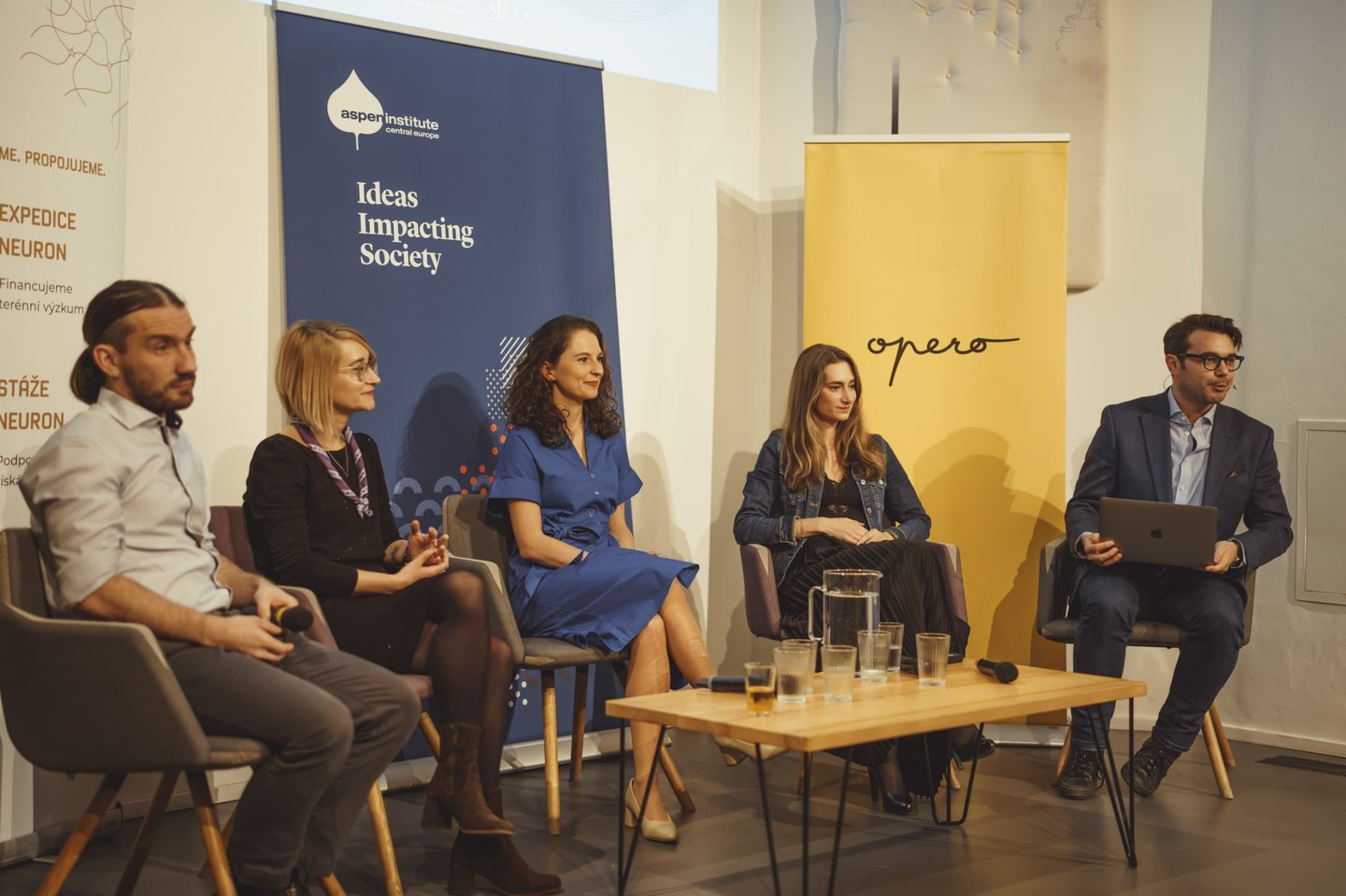
The world is changing fast, especially thanks to modern technologies, which affect human relationships too. Information spreads faster than ever before, which allows us to be constantly in touch. What impact that has on the future of relationships was the theme of the Society 4.0 debate.
At Opero in Prague the sociologist Martin Buchtík drew attention to the growing dissatisfaction of a certain part of the population. Whereas after the revolution 70 % of people thought the situation was decidedly better than under the totalitarian regime, now it is only 48 %. "It is not necessarily nostalgia for queuing for bananas, but a sign that they are badly off now. Part of society has been frustrated for a long time," the sociologist explains. He also registers a decline in trust in society, which was influenced by the Russian invasion of Ukraine as well.
The sociologist Markéta Šetinová mentioned the move of relationships online, including the resolution of conflicts. People more often deal with difficult subjects over the internet, which sometimes leads to arguments escalating. "They say that demanding subjects are easier to open up over messenger, say, than in person," she explains. The number of single people is also growing — up to a third of young people live single, half of them by choice. The sexual activity of young men is also declining, which may be a consequence of unrealistic expectations and a lack of relationship skills.
Generational differences and working with discomfort
In the panel discussion, in which the scientists Pavla Hubálková and Barbora Lukačevič Trojak also took part, it was said that younger generations prefer online communication, but that offline activities such as scout camps still have irreplaceable value. Children adapt quickly to personal contact, which supports empathy and cooperation. "We see how quickly children can adapt and enjoy simple activities such as building little houses for goblins or playing games together. These experiences teach them cooperation and empathy," Lukačevič Trojak said.
The panellists also drew attention to polarisation and aggression in online debates, where anonymity and information bubbles deepen differences. "In the online space people easily slip into dehumanising their opponents. Anonymity and the craving for recognition from an online audience make the situation still worse," Buchtík explained. In his view this phenomenon is a challenge not only for individuals but for the whole of society, which must look for new ways to support constructive dialogue. One solution could be the regulation of accounts verified by real identities.
Artificial intelligence is turning out to be a possible aid in solving the problems technology creates, because it can conduct a dialogue with people spreading disinformation.
The end of the discussion focused on the future of human relationships in the digital age. The panellists agreed that what will be key is the conscious use of technologies and the preservation of traditional values that are the basis of human interaction.
The panellists
Pavla Hubálková, science communicator
Barbora Lukačevič Trojak, spokesperson for Junák — Czech Scouting
Martin Buchtík, sociologist
Markéta Šetinová, sociologist and founder of the Modern Love Institute
The evening was guided by Michael Rozsypal.