Today's world through a geopolitical lens
At the beginning of the nineties we believed that the end of history had come and that a clash of civilisations was not what threatened us. Europe gradually reduced its armaments, states concentrated on economic development. But the world began to develop differently, conflicts over power moved closer to our borders and disputes are proliferating in several other places around the world. The struggle for power, territory and resources is intensifying and, as a society, we find ourselves facing new challenges. What are they? And what should we do so that we can go on living in freedom, prosperity and safety?
The answers were sought by the first discussion of 2024 in the Society 4.0 debate series, which the Neuron Foundation held together with the Aspen Institute Central Europe and Opero.
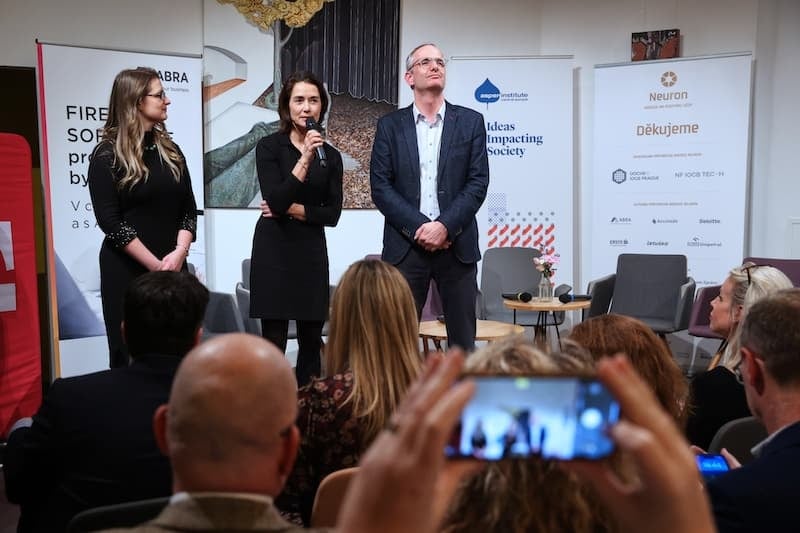
"At the Neuron Foundation we look at solving problems from various angles. It seemed important to me to focus on the subject of geopolitics within Society 4.0, because the whole world is in motion and we find it harder to get our bearings in it," said Monika Vondráková, director of the Neuron Foundation, opening the discussion.
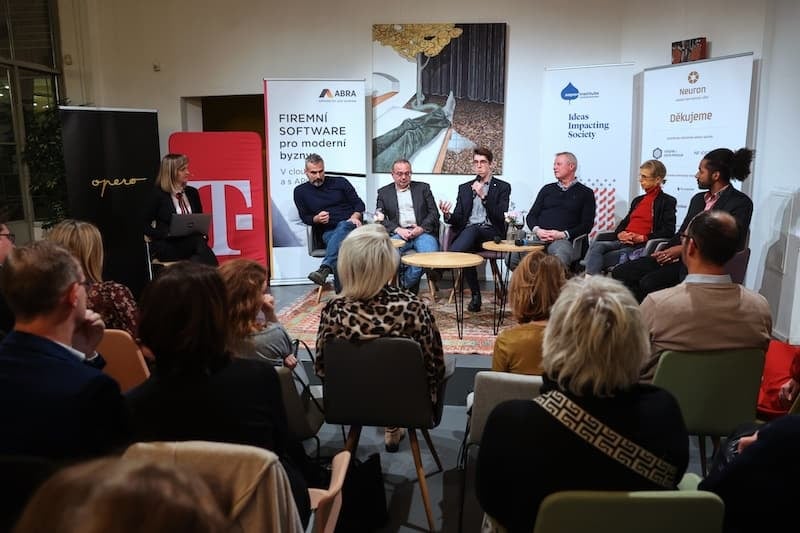
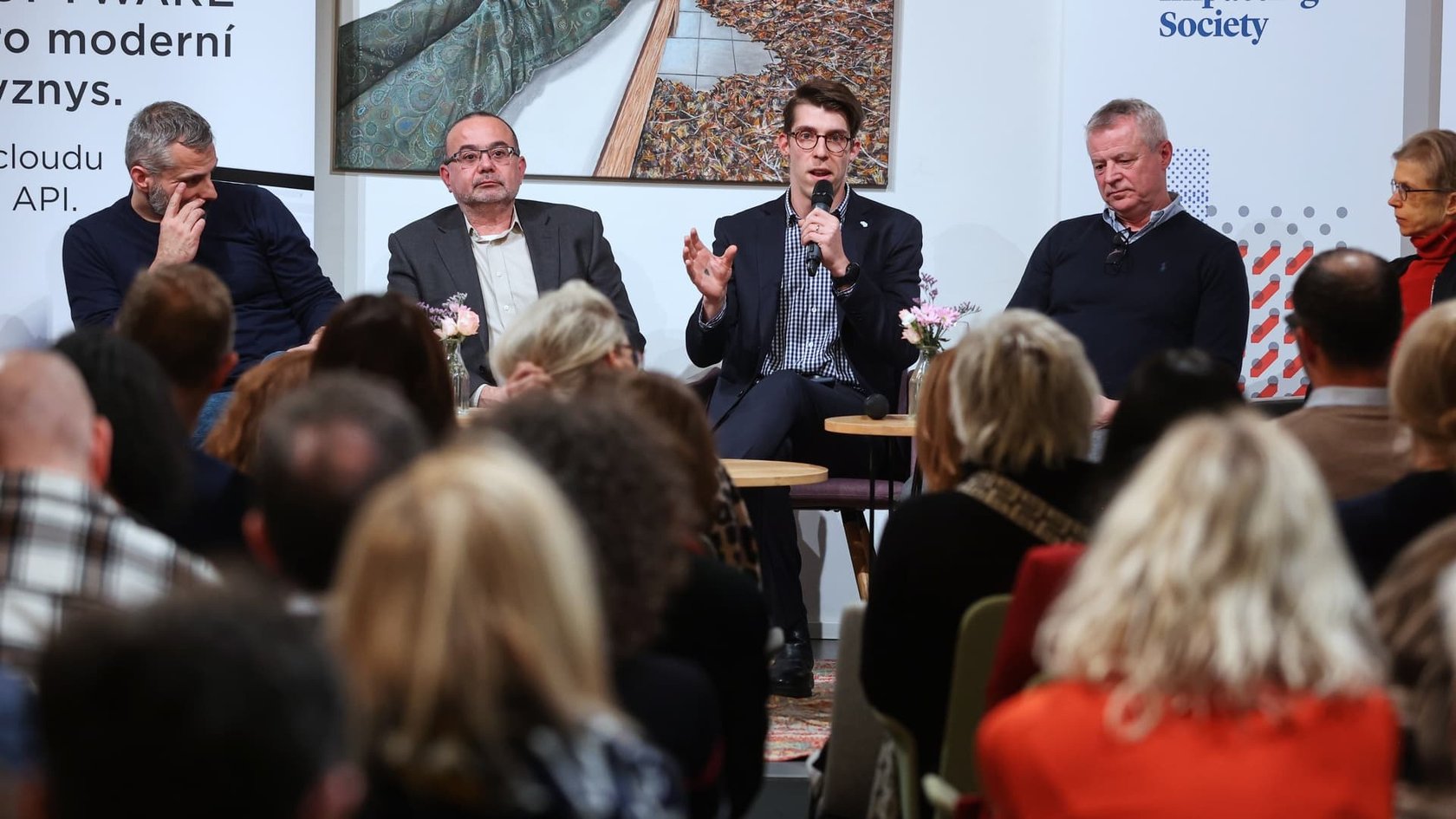
From the left: Czech Army officer Otakar Foltýn, political geographer Michael Romancov, former Czech ambassador to Russia and the USA Petr Kolář, member of the advisory team of the Secretary General of NATO Jan Lukačevič, sociologist Tereza Stöckelová and science communicator Yemi A.D.
History is clear: being the MOST is not enough, it is determination that wins conflicts
"Geopolitics is a top-class analytical method that makes it possible to follow the distribution of power in the system of international relations. Power has a material nature. And the greatest power always belongs to those who are for some reason the MOST… the biggest, the most populous, the richest and so on," the political geographer Michael Romancov recalled at the opening of the meeting. "But from history we know an enormous number of cases in which those who were big, populous and powerful were in the end defeated by those who at the given moment were more determined," he added in a parallel with current events.
Petr Kolář, former ambassador to Russia and the USA, recalled that we are facing a problem we to some extent created ourselves. "At the beginning of the nineties we wanted to believe the dream that Russia would become a partner, perhaps an ally. We saw that period as the beginning of something new, we told ourselves that the Russians too were, after all, winners of the Cold War. But they took it to mean that we had defeated them."
The development that followed actually happened with our tacit agreement. "We allowed it. We were never able to say in time: that's enough! This is no longer a partnership, it is no longer about wanting to accommodate you, about our having interests we are prepared to defend," Petr Kolář added.
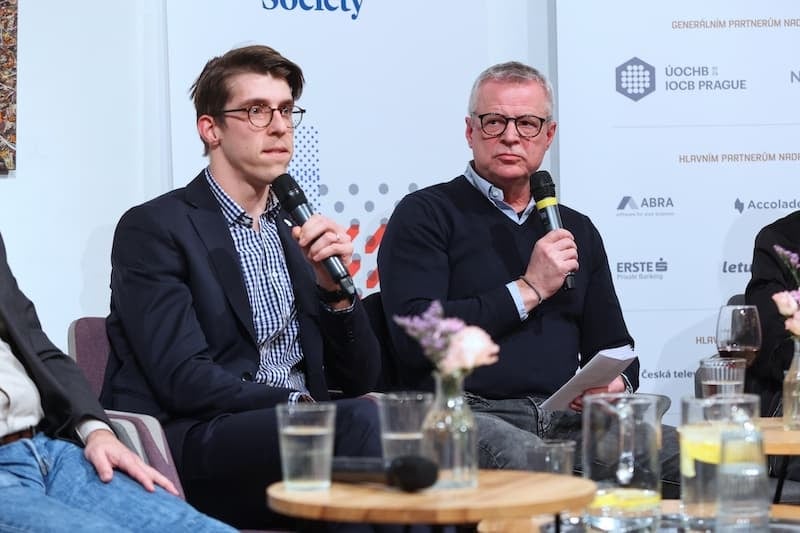
A generational clash: resolve the armed conflict first, or the environment?
But which matters more? Resolving an armed conflict on the one hand, or focusing on the environment, diversity or other current social themes? That is precisely what became the subject of a passionate discussion and an exchange of views between the generations at Opero.
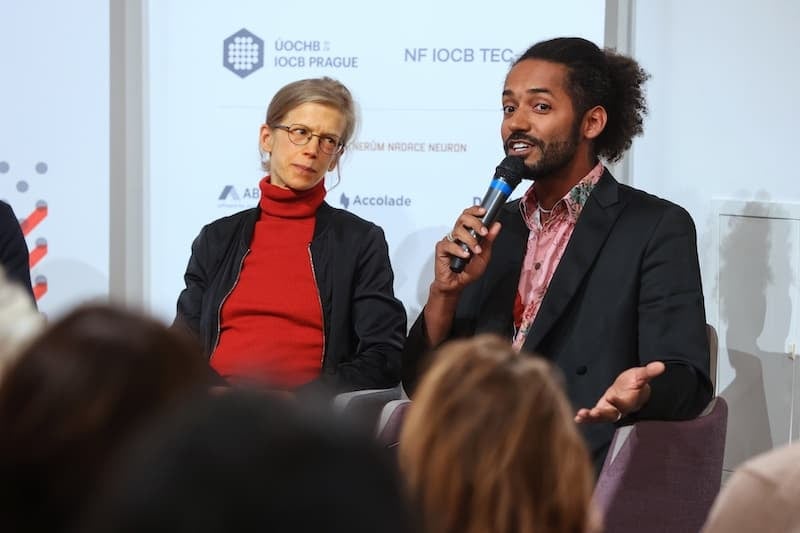
While Petr Kolář, Michael Romancov and Otakar Foltýn pointed out that the priority is to stop the aggression of war, because if that does not happen we may not be dealing with any climate questions at all, the other current of opinion — Jan Lukačevič, Yemi A.D. and Tereza Stöckelová — countered that a strategy of putting these questions off should not be on the agenda. And that climate change is just as important a subject as geopolitical questions.
The aggressor must be given limits and the democratic world must be united
"If we accept this strategy, then we will never address the question of climate change, because we would never have a clean slate that would let us get to these things too," Tereza Stöckelová pointed out.
For Jan Lukačevič it is important that young people are also invited to the table and that solutions are sought together. "They will often be the bearers of the solutions, it concerns them most. Climate, security… the young generation has far more years ahead of it. They will be our greatest allies, or our greatest enemies. A generational struggle is unavoidable, it is about finding a common language."
In the end everyone agreed that of course they want to breathe fresh air and drink clean water, but equally that there is no single template and no single solution. The aggressor must be given limits and the democratic world must be united. "We have to stop them so that they do not think they can do anything they like, and for that we need the young generation to understand that it is in their interest too. That it is not just some boomer sourness of people marked by growing up under communism. But that it is about their freedom and the future of this country," said Petr Kolář.
Let us not underestimate regional great-power ambitions
What does our present life actually rest on? According to Otakar Foltýn, security analyst of the Military Office of the President of the Republic, chiefly on three basic values: justice, dignity and freedom. "We profit from having these values, constitutionally and in fact. They fell into our lap without great sacrifices. From this point of view Ukrainians do not want to be part of the denial of these values, they want to be part of living these values. They are paying for it in blood," he added in the context of the current geopolitical situation to the east of our borders, and went on to say that "to defeat Russia means to stop Russian imperial appetites, to stop the aggression and the killing."
Michael Romancov pointed out that in Europe we have until now been living in the safest and most prosperous society there has been. "We felt no need to talk about the hard military dimension, because we had learned from the past. Now we are paying for it. Or rather, not us — the Ukrainians are."
What will happen if we do not stop the current aggression together? "If we do not stand up categorically against evil, it will spread us on its bread," Petr Kolář added, and opened another discussion: what purpose does the UN serve today? "At the time it came into being in 1947 it was a reflection of the Second World War, but what does it reflect today? The five permanent members of the Security Council are the USA, France, Great Britain and Russia and China — countries that veto everything. Where is Brazil, South Africa, India, that is, the countries with regional great-power ambitions? They feel uninvolved in the international space. In this way we are losing space that could be very well disposed towards us."
The solution? Let us talk to India and South Africa. "Africa currently has the largest population of young people of all the continents. That is an enormous opportunity for us, which we underestimate and fail to use," Yemi A.D. added.
We thank ABRA Software for supporting the discussion within the Society 4.0 series.