The Neuron Expedition has discovered one of the oldest Mayan cities
9 January 2024
With the support of the Neuron Foundation, a Czech-Slovak archaeological expedition has discovered a new city of the Mayan civilisation. The city, which it named Yax Balam (First Jaguar), lies in the Guatemalan province of Petén and has a history of almost 3,000 years. Finding one of the oldest Mayan cities, together with the study of other finds from the area, will help uncover unexplained and decisive phases of Mayan history.
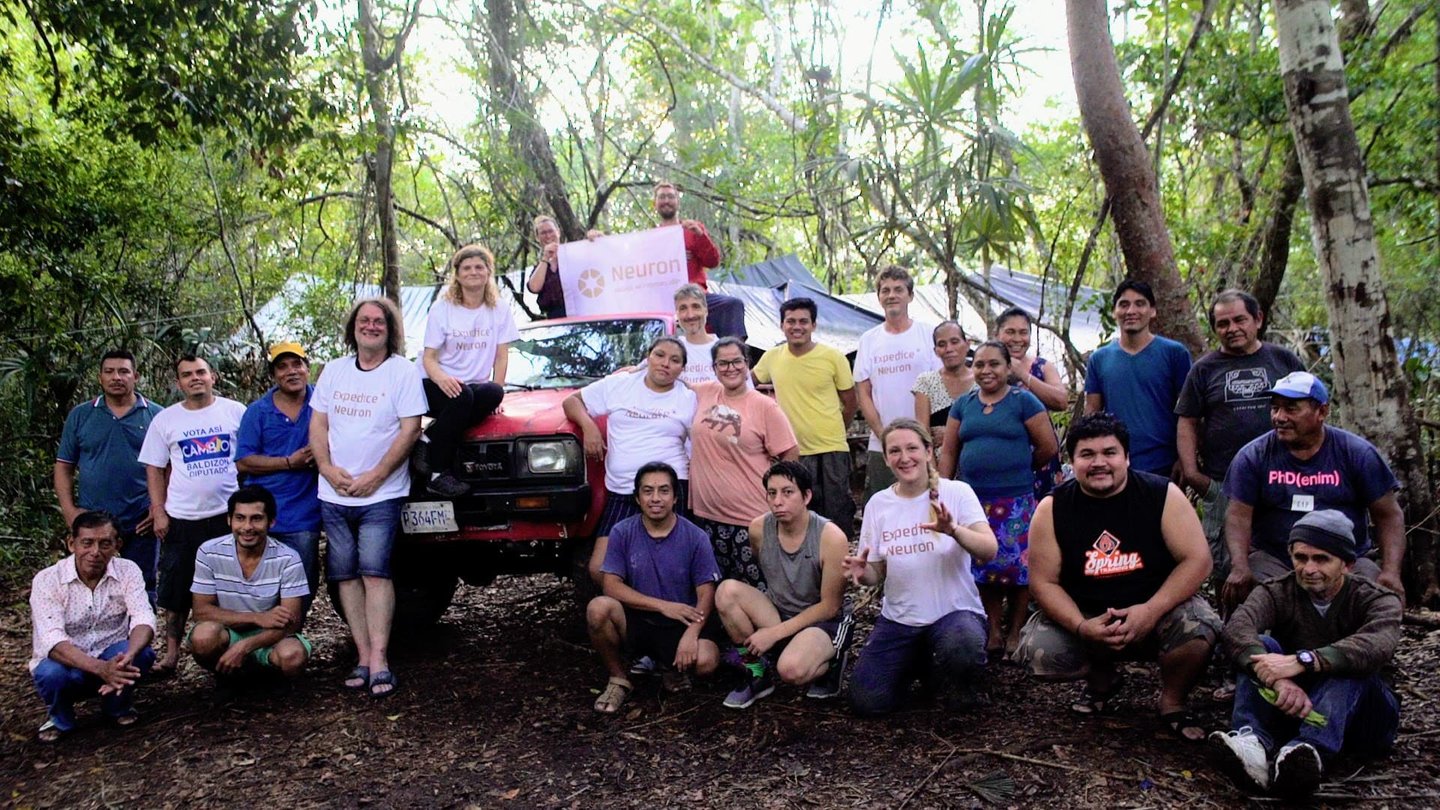
The expedition In Search of a Lost Mayan City, which the Neuron Foundation supported through its grant programme with CZK 1 million, was led to Guatemala by the Czech explorer Ladislav Šilhán and Professor Milan Kováč of Comenius University in Bratislava. The expedition identified hitherto unknown Mayan settlement, or rather several urban centres. Excavations on site revealed that this is probably the oldest urban centre in the region and at the same time the largest as yet undiscovered city in the archaeologically rich north-eastern Petén.
Even while planning the expedition, its members drew on the findings of the most modern technologies and invited into their team the archaeologist and researcher Sara Polak, who studies history in connection with artificial intelligence technologies. It was technology, combined with systematic archaeological excavation, that then made it possible to place the finds in the appropriate chronological and cultural framework.
We are glad that the bet on modern technology paid off and that it was confirmed that technology has its place even in a field as traditional as excavation in the field. The monuments discovered promise a new view of Mayan history, so the Czech-Slovak research trail may leave an international legacy.
— — Monika Vondráková, director of the Neuron Foundation —
Discoveries of incalculable value will describe both the rise and the fall of the Mayan civilisation
The Maya were among the most advanced civilisations, and archaeological excavations in Guatemala have revealed a great many finds — palaces, statues, the remains of rituals, astronomical observatories and many other objects of incalculable scientific value. The first fieldwork revealed that the city of Yax Balam flourished above all in the Middle and Late Preclassic period, that is between 850 BC and AD 150, and was the centre of the region for roughly a thousand years.
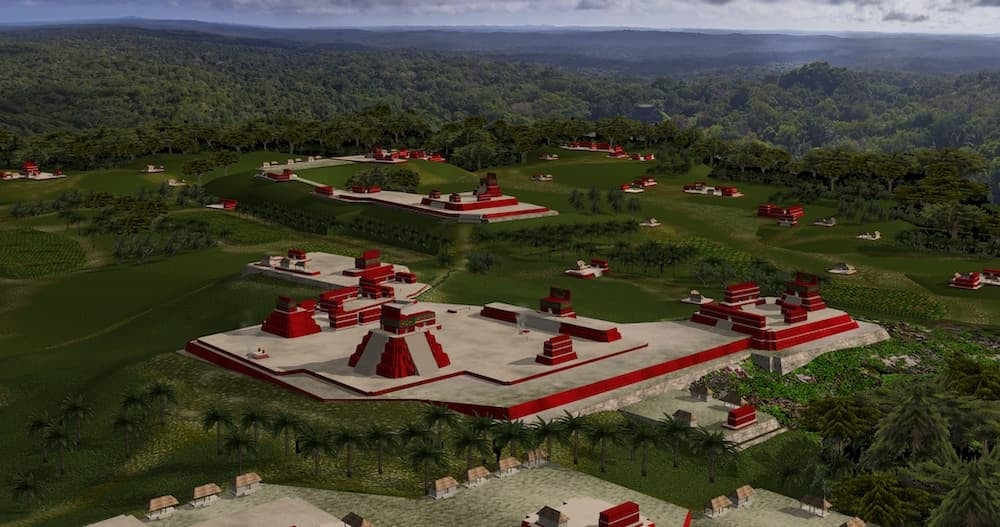
"According to the excavations the city is among the oldest Mayan agglomerations of all. Over the years it went through decline and renewed growth, from the very beginning of Mayan history, the emergence of kingdoms and the first city states, to the so-called Mayan collapse that brought about the end of the civilisation," explains Milan Kováč, the scientific guarantor of the Neuron Expedition and head of the Centre for Mesoamerican Studies at Comenius University in Bratislava. "In our fieldwork we documented as many as 7 large architectural districts of the city of Yax Balam," Kováč adds.
3D reconstruction of the city of Yax Balam
Fieldwork in Guatemala: a symbiosis of technology and people
The expedition set out for the province of Petén in July 2023 and drew on various forms of the most modern technology even while preparing. The archaeological expedition combined artificial intelligence and neural networks in verifying digital data from LiDAR aerial survey. LiDAR laser technology penetrates below the surface and can render the character of the terrain, that is, reveal buildings, palaces or urban complexes. Neural networks then search for objects of interest directly using chosen algorithms. Excavation in the field and archaeological survey then confirm the finds.
"Technology made it possible to identify the city in advance and head for a precisely targeted spot in the Guatemalan jungle, but until now no survey had been carried out there. So it was not clear whether the various clusters of buildings deep in the jungle really form one compact agglomeration, what the relationships between them are, or what the chronology and historical significance of the site is," explains Ladislav Šilhán, a specialist in 3D visualisations of Mayan centres and leader of the Neuron Expedition.
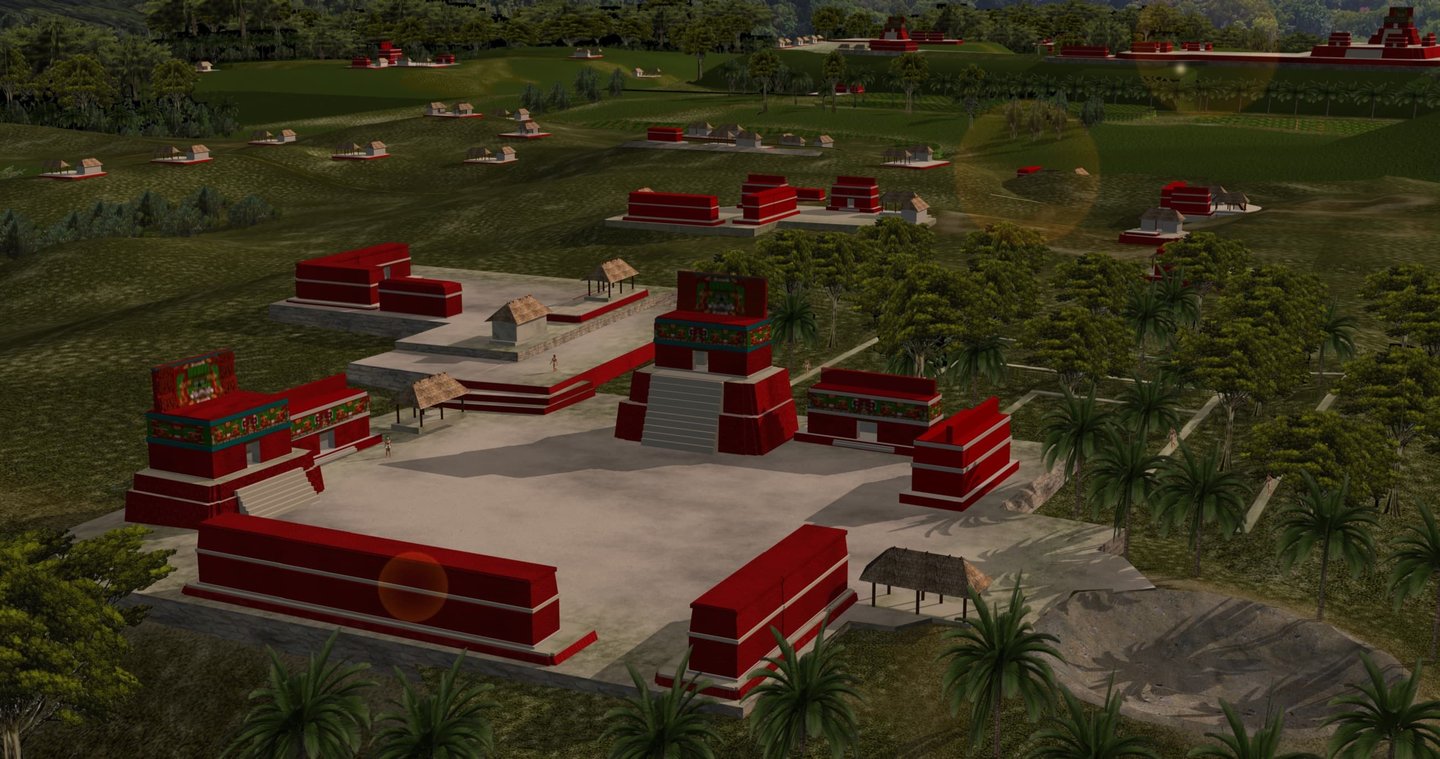
The seven-week expedition brought answers to all these questions. "We digitally documented the main centres of the discovered city of Yax Balam, which we are now gradually turning into 3D models. Some parts we will study further or present to the public using realistic 3D animation. In that way we will convincingly bring to life one of the oldest civilisations in the world," Šilhán adds.
3D reconstruction of the city of Yax Balam
Besides the city of Yax Balam, where its fieldwork documented as many as 7 large architectural districts of the urban complex, the Neuron Expedition carried out survey and excavation in the wider rainforest region — the scientific evaluation of the discoveries and the processing of the archaeological finds are currently under way, with the participation of specialists in the digitalisation of cultural heritage from the Czech Technical University in Prague. One aim is to reconstruct and simulate how the civilisation lived.
"Processing the excavation reports is a precondition for publicising the expedition's results further," Milan Kováč adds.
Discoveries lie waiting all around, do not let them slip by! Every month we will send you a fresh batch of information about the world of science and Neuron.
Sending…
Something went wrong. Please try again.
Subscription confirmed
To help you use our website by offering customized content or advertising and to anonymously analyze website data, we use cookies which we share with our social media, advertising, and analytics partners. You can edit the settings via the "Cookie settings" link and change them at any time in the footer of the site. See our Privacy Policy for more details. Do you agree with the use of cookies?