A ritual can be a "cure" for anxiety, says Martin Lang
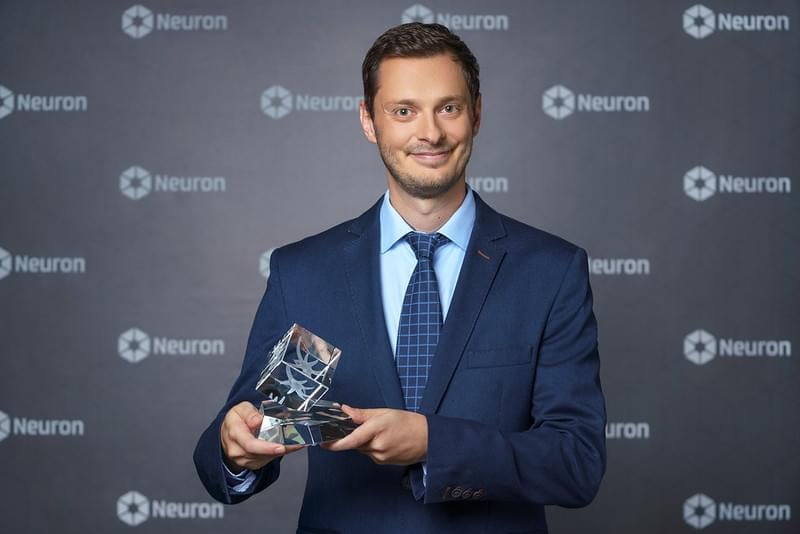
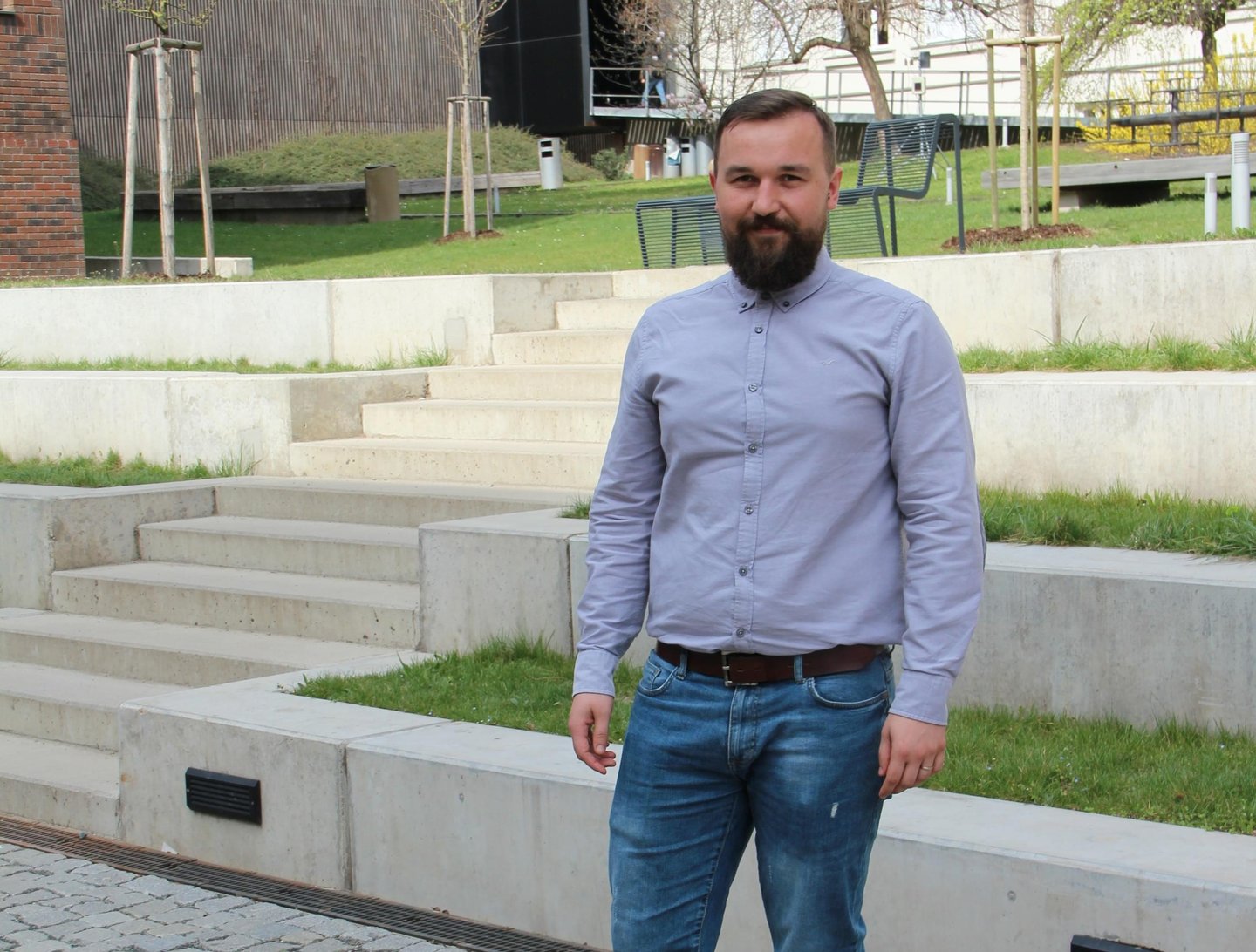
Mgr. Martin Lang, Ph.D., received the Neuron Impuls award in 2017. In his research he was interested in whether ritual behaviour helps reduce anxiety about uncontrollable threats. Later he studied the subject of how we communicate our commitments in relation to social norms. "The award from Neuron allowed me to return from the United States straight away with a research project, thanks to which I quickly became established in the Czech Republic," says this world-class scholar of religion today.
Mgr. Martin Lang, Ph.D., received the Neuron Impuls award in 2017. In his research he was interested in whether ritual behaviour helps reduce anxiety about uncontrollable threats. Later he studied the subject of how we communicate our commitments in relation to social norms. "The award from Neuron allowed me to return from the United States straight away with a research project, thanks to which I quickly became established in the Czech Republic," says this world-class scholar of religion today.
What can we call a ritual? Is washing your hands a ritual, for instance?
A ritual is an activity repeated in predetermined patterns. A ritual determines what we are to do, when and how, even though we often do not actually understand what the individual steps of the ritual are for. And precisely because we do not know what the individual steps of a ritual bring about, they have to be performed exactly as our ancestors did them. Invariability is an important characteristic of ritual.
Rituals also have an important symbolic aspect, which is often tied to the identity of the group performing them. Nevertheless, even in ordinary activities such as washing hands we can encounter a ritual approach, and then we speak of the ritualisation of those activities. That means that these activities have characteristics similar to cultural rituals — they are repeated in predetermined patterns. Ritualisation can occur in hand washing if we wash our hands several times in a row in a particular way even though they have long been clean, and if we do not wash them in this way they still seem dirty to us. In extreme cases such ritualisation is connected with psychopathological disorders such as obsessive-compulsive disorder.
Can rituals be a "cure" for anxiety, as you suggested in 2017 when you received the Neuron award?
Yes, but the answer is not as simple as I originally thought. Rituals often appear in a context of uncertainty, when we have no control over the events that threaten us — a flight, the crisis in Ukraine, anxiety at work… So it is obvious that rituals could help alleviate this anxiety when they are naturally connected with it.
Of course anxiety is necessary and important for people, because it is a motivational mechanism telling us that we should avoid a threat or resolve it. But some threats persist and we can neither avoid them nor resolve them. With them the anxiety persists too, and in some people it can even be inadequately high. A ritual can then become for us an activity that gives us a chance to influence the situation, even if we do not know how. It can be seen nicely in athletes, who often perform some ritual before a competition. They have a so-called compulsion to do something in order to influence the result. Often it is a particular ritual they are used to and which is repeated before important sporting performances. Our hypothesis was therefore that it is precisely the predictability of rituals — the fact that rituals are repeated in a predetermined form — that gives people a sense of control over the situation. This sense of control should then alleviate anxiety. Our results showed, however, that this mechanism only worked in people who consciously felt anxiety in the experiment, and even in them the result was not as convincing as we had thought.
On the basis of these results we therefore assume that performing a ritualised movement is only one factor influencing the effect of ritual on anxiety. However, cultural rituals are far more complex than the predictable movements we used in our study, and so they may influence anxiety in various ways. For example, rituals are often performed together with other people, so they can give us a sense of social cohesion and help. They are also performed as an entreaty to supernatural agents (Christian prayer, for instance), who are believed to have unlimited possibilities for influencing events that are not under our control.
Whether rituals in their complexity reduce anxiety better than purely ritualised movements is something we then investigated as part of our Neuron-funded research on the island of Mauritius, where we have a field station. There we induced anxiety in two groups of people. One group could perform their typical prayer in their temple, the other group only sat and waited with their anxiety for the next steps of the experiment. We monitored both felt and physiological anxiety and we saw that the group in the temple experienced a greater reduction in anxiety than the group that did nothing. So yes, rituals are helpful, but there is more than one mechanism that brings this about.
You are now working on research asking how rituals make it easier to communicate our commitments in relation to social norms. What does that mean?
Let me try to explain it using the example of a wedding. A couple first live together unmarried. In such a situation they can both promise each other fidelity. They may keep it and they may not; perhaps each of them understands "fidelity" in a different way, it is not so clear… But when a wedding takes place and they make their vows there, everyone sees it and clearly understands what the couple have committed to. However it was before, now it is clear. They are together, they cannot have other partners. Whether they live up to it is another matter. But they have clearly communicated that these are their intentions, and if they fail to keep them, others may judge them for it.
Collective rituals therefore persist in our societies because they help us communicate our inner states and intentions in a predetermined way, so that it is unambiguous what we want to say and what we have actually committed to. We have to perform something everyone can see and understand, because it has been done that way for generations. It is not only about words, which can be vague or ambiguous. Often it is a clear gesture, a physical act everyone can see (for instance whether or not we took the host in church). From this point of view the structure of the ritual is again very important. The physical performance of a ritual also makes it possible to communicate the strength of the commitment to the group — that is, not only whether someone took part in the ritual or not, but also how intensely. In some cases rituals can be very demanding, even life-threatening.
An example of such extreme rituals is the thaipusam kavadi ritual, which we study in the Tamil community in Mauritius. It is a procession in honour of the god Murugan in which people undergo various torments. For instance they have their bodies pierced with hundreds of needles, they construct heavy altars which they then carry on their shoulders for 6 km along the scorching asphalt to the thunder of drums. Some even walk on nails. It is a very strenuous, demanding and painful ritual.
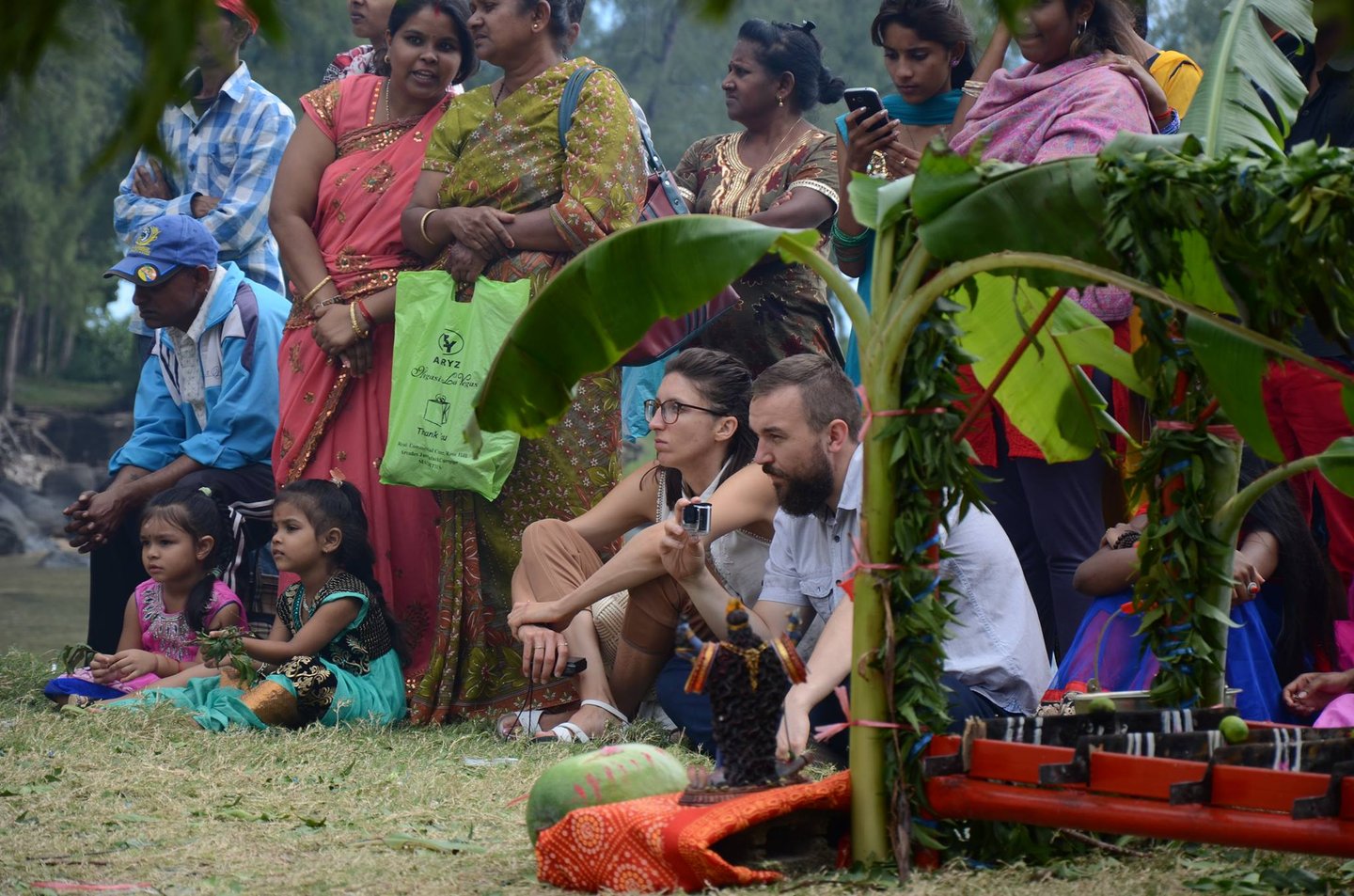
Ethnographic observation of religious behaviour in Mauritius. Photo: Dimitris Xygalatas
What leads people to do something like that?
One of the reasons people undergo such rituals is the effort to demonstrate devotion to their community through bodily suffering. The more extreme the participation in the ritual, the more credible the person is for the community. Very few people would undergo such torment without really believing in the god Murugan. And it works the other way round too — the individual can rely on the community having accepted them and being ready to fulfil its commitments towards them. Undergoing such an extreme ritual, or for instance taking part regularly in a less demanding one, thus deters people who do not have honest intentions towards the community and would only want to exploit it. For example, when I watch the torments the participants in thaipusam kavadi undergo, I have no desire at all to take part in that ritual. But without taking part I cannot become part of that community.
It should be added, however, that people do not undergo the thaipusam kavadi ritual solely to communicate commitments; it can have various functions. Sometimes, for instance, sick people undergo it despite how demanding it is. In this way they entreat the god to heal them. During our research we observed that the perceived state of health of these people really did improve within a week to a fortnight of the ritual. It may be a placebo effect, but even so it is important to show that because I am a member of some community, I can use a shared ritual for my personal goal.
Why do such extreme forms of expressing commitment to communities not occur here? And are rituals still important for us?
The reasons are chiefly historical. From the perspective of our theory it can be said that in Czech culture bodily torment is considered needlessly extreme. Even in Mauritius wealthy families demonstrate their devotion in other ways. For instance they provide beautiful decorations, hold a feast for hundreds of people, or contribute their wealth in other ways. People who cannot afford such financially demanding gestures and still want to show their devotion often use the most valuable thing they have for it — their bodies.
Nevertheless it holds that rituals are costly here too, even if compared with this extreme ritual it may sound like a walk in a rose garden. For instance, if someone is a member of a Christian church, they have to go to church every Sunday. If they do not go, they have to confess it. The priest asks about it — are you a Christian if you don't go to church? Even such a ritual costs us time and money, we have to know how to behave in church, know the prayers and so on. Similarly, then, we can say that if someone goes to church every day, that is fairly extreme and they are evidently a strongly believing person.
On the other hand, in our society religion is no longer the sole guarantor of moral and fair behaviour, as it once was. We have a secular judiciary and a secular police force that deal with cases of breaking the law. The laws specify for us the parameters of how we should and should not behave without our having to perform some ritual committing us to obey the laws. For this reason religious rituals are no longer so fundamental in our society. But we still have to agree that these laws are our laws and that we as citizens will obey them. At that moment secular rituals come into play — we have our flag, anthem and coat of arms, which we honour in some ritualised way, thereby showing that we agree with how the system is set up and that we will go on recognising it in the future too, even if we may have some particular reservations about it.
The recent taking of the presidential oath can be understood in a similar spirit. By his signature, the elected president Petr Pavel committed himself to being a good president of the Czech Republic. Again we can observe that although the ceremonial acts surrounding the oath may differ a little from previous ceremonies, at its core it is precisely the signing of the presidential oath that turns the president-elect into the sitting president. At that moment the president commits himself to serving the Czech Republic and its citizens, and from that moment they can judge him. That it is in fact a ritualised act could be seen in the past too, when the incoming president Miloš Zeman had a mistake in his printed oath at his first inauguration and had to sign it again later. From this it is clear that such an event must take place exactly as it should, and only at that moment is it valid. So I think that in this respect too rituals have their place in today's society.
Could you sum up what benefit the Neuron award brought you?
For me the award had several benefits at once. The greatest benefit was that it allowed me to return to the Czech Republic after my time at universities in the USA came to an end. The Neuron award allowed me to return straight away with a research project, thanks to which I quickly became established in the Czech Republic and was able to transfer some projects from the USA to this country. Thanks to Neuron I got through the critical period of returning to the Czech Republic, which was fortunately followed by further grants. I think the Neuron award had a great deal to do with that, not only because it enabled me to carry out top-level research, but also thanks to its prestige, which other grant agencies take into account.