Gabriel Demo. In a few years we will move from the test tube straight into the cell
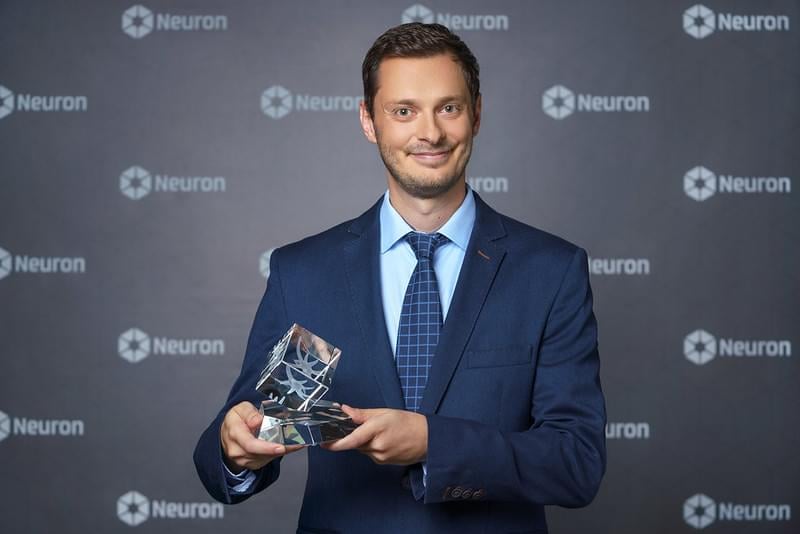
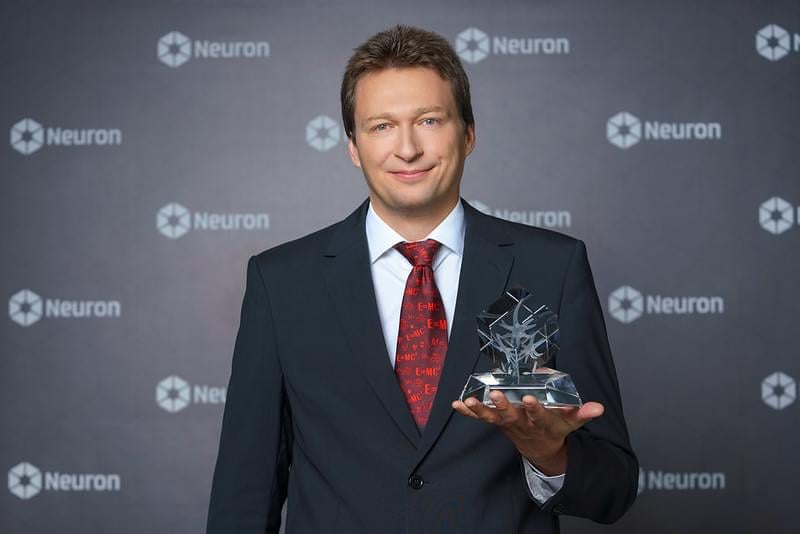
He studies bacteria and virus-infected cells, observing their molecular detail. The biologist Gabriel Demo works on protein structures, above all using the modern cryo-EM method, and is interested in the synthesis of RNA and protein, for which he received the Neuron Award 2022 for promising scientists in biology.
What has changed since last October, when he received the prestigious scientific award at the National Museum? What does he expect from the future?
"Cryo-electron tomography already allows us to observe individual large biomacromolecules such as viruses and bacteriophages in infected cells structurally and in considerable detail. This approach will fundamentally change how we see the way infection occurs and what really happens in infected cells," says Gabriel Demo.
You received the Neuron Award last October. How has your field moved on since then?
Science moves forward very fast along with technology. So over the past year fundamental papers have appeared in our field that have moved our own research on as well. Above all I can see that we are slowly moving directly into living organisms, where we try to determine the structures of protein complexes in their natural environment.
What interesting things have happened to you personally since October?
Personally I have begun a new chapter of my life in the form of sharing a roof with my partner. As for my scientific life, we have already made a few discoveries that in my view will bring new knowledge about the hibernation of ribosomes in cells. That is, about how individual organisms suppress translational processes when exposed to stress.
How can your field help society as a whole in 2023?
The field I work in, structural biology, can fundamentally help us understand the detailed mechanisms of translation in 2023. At present scientists are focusing more and more on human ribosomes and human translation. I expect 2023 to be fruitful in this area and to bring a great deal of knowledge about the regulation of translation and protein synthesis in humans.
What do you expect from science further into the future?
In my field I expect a fundamental shift in the technological approach in future. I think that in a few years we will move fully from cryo-electron microscopy to cryo-electron tomography. Loosely speaking, we will move from the test tube straight into cells. Cryo-electron tomography already allows us to observe individual large biomacromolecules such as viruses and bacteriophages in infected cells structurally and in considerable detail. This approach will fundamentally change how we see the way infection occurs and what really happens in infected cells.
And who should be the next Neuron Award laureate?
If I may, since I still belong to that young generation of scientists who returned from abroad not long ago, I will name two outstanding young scientists who returned to the Czech Republic this year and set up their own research teams. I think they are truly outstanding in their field and already have an enormous number of high-quality papers behind them. The first is Peter Fabian, who is part of the Institute of Experimental Biology at Masaryk University and works on the molecular mechanisms of vertebrate development. The second is Petr Tesina, who is part of CEITEC at Masaryk University and works on precisely those human ribosomes and translation, using structural biology, that is, cryo-electron microscopy, to do so.