Petr Sedláček: What do we now know about start-ups? And is ecology economical?
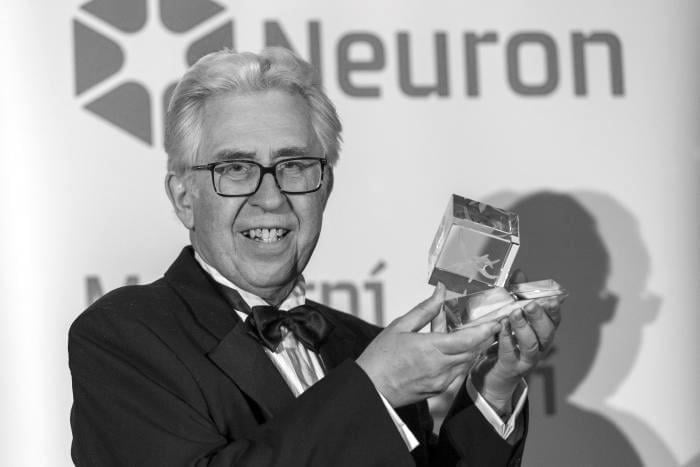
Read the second part of the interview about ongoing research into start-ups, environmental questions and, for instance, the relationship between economics and the good. "We are trying to work out which is the greater mistake — giving start-ups no support at all and avoiding the risk of losing money because some of them fail, or giving them money knowing that a few will fail but that some would have great potential," says Petr Sedláček, laureate of the Neuron Award 2021 for promising scientists in the social sciences.

Read the second part of the interview about ongoing research into start-ups, environmental questions and, for instance, the relationship between economics and the good. "We are trying to work out which is the greater mistake — giving start-ups no support at all and avoiding the risk of losing money because some of them fail, or giving them money knowing that a few will fail but that some would have great potential," says Petr Sedláček, laureate of the Neuron Award 2021 for promising scientists in the social sciences.
Read the first part of the interview, on inflation and experience abroad, HERE.
What actually is a start-up?
When I say "start-ups", it has a very precise definition. These are companies no more than one year old. That is the definition of the US Census Bureau, which we follow. It differs quite a lot from how the public understands the word "start-up". Their importance lies in the fact that they can become older companies that grow and create jobs.
If you had to come up with 5 adjectives characterising start-ups, what would they be?
Young, dynamic, fragile, risky, important for macroeconomics. On the one hand they are young companies that create new jobs, but on the other hand most of them will cease to exist.
"We assumed it would be a major crisis and that start-ups might disappear within a year."
When you received the Neuron Award you were studying start-ups and their role in the economy. You argued that the state should not overlook start-ups during the pandemic crisis and that it might pay the state to invest in them. Do you still see it that way today? Has the current situation not shown that start-ups tend to collapse during crises rather than help turn the wheels of the economy and pull countries out of recession?
That is hard to answer. We are trying to obtain data covering the whole economy. But such data are available only one to three years later. For that reason it is always enormously hard to talk about what is happening right now.
The covid crisis was also more interesting in that it was not an average, familiar economic crisis of the kind we had seen before. At the start it looked as though it was; it seemed start-ups would take a heavy blow. Leading indicators such as applications for tax numbers really did fall a great deal. We assumed it would be a major crisis and that start-ups might disappear within a year. From that we could have concluded that start-ups would have the potential to slow the economy in future too. But what happened was that at the end of 2020 it not only turned around but overshot, and there are now more applications for tax numbers than there were on average before the crisis in 2018–19. So economists are now racking their brains over what happened. Did the pandemic accelerate some structural changes in the economy? Did part of the economy shift to online sales and so on? We are trying to understand whether that will show up in larger numbers of start-ups or not.
Does that mean the thesis holds — that it could pay the state to invest in start-ups?
We have research saying that when start-ups are in crisis and their number falls, a fall in their potential goes with it. When a crisis comes there are fewer start-ups, and those that do begin then do not create as many jobs. From that point of view we argue that it would be superb if there were support programmes. But of course we realise that in practice it is terribly hard. If you look at some of the economic policies during the covid crisis, the great majority were based on a company having to show that its revenues had fallen by 20% compared with previous years. That definition alone excludes every company that was not yet operating a year earlier. And of course it is terribly hard to come up with a good economic policy aimed at start-ups, about which nobody knows much. A large part of it would certainly be money thrown away, because it would go to start-ups with no potential or unable to survive even with support.
"Part of the money will burn up, but part can help start-ups that could not survive without support but that, if they do survive, have great potential. We do not yet know where that balance lies."
So what should be done?
The question is where the balance lies. Part of the money will burn up, but part can help start-ups that could not survive without support but that, if they do survive, have great potential. We do not yet know where that balance lies. And it is terribly hard to find data that would answer this for us. It is an open question we are currently working on. We are trying to work out which is the greater mistake — giving start-ups no support at all and avoiding the risk of losing money because some of them fail, or giving them money knowing that a few will fail but that some would have great potential. That is currently unknown and I think it is a big question.
In 2021 you also said of start-ups and small companies: "Even though such businesses are key to economic growth, we still know little about why these particular firms succeeded." Can you say more today about what determines a start-up's future success?
That is one of the questions that troubles me every day. I do not have the answer, and if I did I would probably quit the academy and set up an investment fund. We have a list of characteristics associated with the performance of start-ups or young companies. But I am not able to have you come to me with a start-up and, on the basis of some predictive model, tell you that it is 50% likely to be a gazelle, that is, a start-up with high growth potential.
We are more interested in mechanisms and individual factors. At the moment we are putting together data on founders and focusing on one small group — entrepreneurs who have several companies. There are very few of them, but we have found that even so they are extremely important for the macroeconomy. For some reason their companies are far more successful. We are trying to find out why. Is it that only successful entrepreneurs found a series of companies? Or do they learn it over time? Or did they have better access to finance? If we manage to find out what allowed them to succeed, we are a step closer to being able to say: now I can propose an economic policy that will help you, because this is what I know from the data on entrepreneurs…
Some time ago you and your colleagues created a calculator that can determine, on the basis of how start-ups are doing, how long it will take a given country to emerge from recession. What does that calculator predict for the Czech Republic now?
Yes, the calculator can be found on the European Commission's pages. Anyone can try it. You choose a country and enter three things — what happened to the number of start-ups, what happened to their growth potential, and what happened to the probability that they will fail. The calculator then produces the path of employment. The problem is that we do not yet have data for 2020, so we cannot check whether the calculator works for the Czech Republic, for instance. One of the calculator's results tends to be that even if a crisis lasts only one year, employment does not recover for, say, 10 years. That hole is not filled until new start-ups come along, and that takes a while.
So what does such a calculator make possible in practice?
We wanted to put together quickly something that would help governments get a picture of how great an impact the covid crisis could have on employment. Using this simple calculator they can find out which mechanisms are stronger. The fact that companies will be more likely to fail, for instance, does not do that much to overall employment. What is a serious problem is growth potential. These simple comparisons could give governments an idea of where to aim their economic policies.
"When grants to support existing companies are introduced, the rise in bankruptcies stops — and that happened, that was successful, but the question is how much it does for the economy."
For example?
Governments need a quick policy they can apply in a crisis. When grants to support existing companies are introduced, the rise in bankruptcies stops — and that happened, that was successful, but the question is how much it does for the economy. And whether companies that should not survive then survive. It is complicated. The calculator is not sophisticated enough to answer that. But simple comparisons offer a direction. Unfortunately it is a difficult direction. It points to start-ups, about which we know little. That is what then led us to the idea that we need to work out what we are trying to balance in terms of the costs and benefits of supporting start-ups.
"There is a steady slowdown in the economy; it seems everything is slowing down…"
What other questions trouble macroeconomists studying start-ups?
We are troubled by the fact that there seem to be fewer start-ups relative to the number of established companies in the economy. It looks as though there is a downward trend in dynamism. That is connected with a lot of other trends — falling labour productivity, falling economic growth. It is a big question where it comes from. There are various fragments of knowledge, but we do not know what causes it, and until we do we cannot stop it.
How long have you been observing this trend?
It has been going on for as long as there have been data from the USA, that is, 30 years. But we observe similar trends in other developed economies too. There is a steady slowdown in the economy; it seems everything is slowing down…
Another crisis that has been playing out in the background for a long time is the climate crisis. Is there even time at present for economists to work on it?
I think addressing the climate is immensely important. Of course attention is now somewhat elsewhere.
The environmental crisis is a hard nut for economists too, and again it can be connected with the problem of imbalance in society. It need not be a current economic imbalance, but an intergenerational one. The reason it is so hard to do anything about it is that it does not concern the generations that caused climate change. Nor does it concern the generations who will, I hope, enjoy a clean planet. But it is our generations that should now pay the costs of that transition. And something like that is terribly hard to offer people, because they know it is not their fault and that even if they manage it they will get nothing out of it. So I think bridging these imbalances is the basis of success.
So how do we change the behaviour of people, societies, companies?
People should care about the environment. But relying on someone making the right decision just because the planet needs saving and it is a good thing — that will not work. People respond to their environment on the basis of incentives. We should set up a policy that makes it possible for people who do not think that way to make such a decision too. So the way is to design a climate policy that gives people an incentive not to drive, for instance, or to heat less and so on.
Emissions should be taxed, because that raises the price of all the inputs that create emissions. If it is more expensive, companies will stop using them — that is the incentive. This of course exists, but the question is whether it is strong enough. It rather looks as though it is not. Politically it is hard to get to the level at which these taxes really "start working". But I think this is the way.
Is more attention being paid to the environment now because we see part of the solution to the energy crisis in renewable sources?
That is happening and we could observe the trend earlier too. Renewables are on the rise. The question is whether they are rising fast enough. And whether we have the technology for the transition. Because renewables are not currently, if I understand correctly, advanced enough to cope with fluctuations. We can always burn coal, but the sun only shines during the day. If we have an economy using the renewables currently available, it is a big question how far that will create uncertainty in the economy. On the other hand it is true that, partly because of the war in Ukraine, countries are now more aware of the security aspect of renewables. Someone may cut off your gas, but the sun will always shine on you. So yes, I think you are right; from that point of view environmental topics have come to the fore. The question is whether it is enough.
Does an economist, in climate questions too, look for solutions that are a good investment, or for solutions that are good and true? How do you see it?
That is an excellent question. I would distinguish two branches of economists — either economists who are genuinely interested in these questions, or a second branch of economists who tend to avoid them. I am rather in the second group. I think it is more the task of politicians and of society as a whole to decide what they want to achieve and what they value. Economics is here so that you give me the parameters of what you care about and I can tell you which policies will have which effect. The question of what is right and what is wrong is terribly complicated. It will always be good for someone and not for someone else. And I would not presume to put numbers on that weighting.
"Economics is here so that you give me the parameters of what you care about and I can tell you which policies will have which effect. The question of what is right and what is wrong is terribly complicated."
What brings you joy in your working life?
I enjoy most of the things I do. There are only a very few things I do not look forward to. I enjoy teaching, and research is the greatest fun of all for me. I enjoy all the projects I work on — I like waking up in the morning and getting stuck into them.
What brings you joy in your personal life?
We moved to be near family. The whole time we have had two children we were abroad, where we had neither side of the family. Now we live in literally the same place as my wife's parents. For the girls it is incredible; they had never experienced it. At Christmas my parents were here too, so they had everyone together, which was terribly nice.
You can find the first part of the interview here.