Laureate Social sciences
Ing. Petr Sedláček, Ph.D.
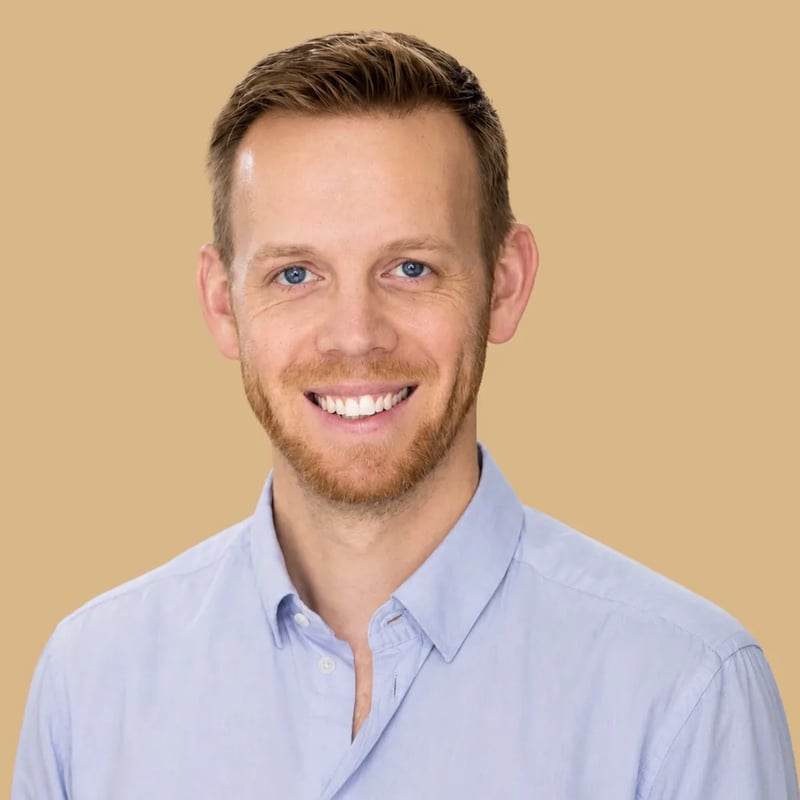
Neuron Award 2021 laureate for young promising scientists in social sciences
Petr Sedláček is a world-class economist who, after studying at the Prague University of Economics and the Universiteit van Amsterdam and teaching at the Universität Bonn, became a full professor of economics at Oxford. The main interest of his research is macroeconomics, specifically the role of individual firms and startups in the economy.
Petr Sedláček publishes regularly in prestigious academic journals, including the American Economic Review, and has received an ERC Starting Grant. This autumn he is moving to a university in Sydney.
How would I explain what I do, as clearly as possible, in seven short sentences?
I am fascinated by the enormous differences between firms, whether in their size, productivity, growth or riskiness. How do such differences arise, why do they not disappear over time, and what impact do they have on macroeconomics? A simple example is the fact that the great majority of productivity growth and job creation in the whole economy happens in a relatively small group of successful startups and young businesses.
Even though such businesses are crucial for economic growth, we still know little about why exactly these firms succeeded. My colleagues and I are still relatively at the beginning of this research, trying to understand the basic, general patterns of firms' success and the impact they have on macroeconomics. A better understanding of these questions can then be used in shaping economic policy, but also in formulating crisis measures — during a pandemic, for instance.
What do I enjoy at least as much as my work?
Basketball. Sadly I have not played for a long time.
What is the greatest obstacle I have overcome in my life?
When I was twenty and had to decide to hang up my life's goal so far — playing basketball professionally — and started looking for a new path.
Talent, temperament, hard work, luck, something else — what decides success?
All of the above. And I would add health to it. But that may fall under luck, which is sometimes underrated by people who have managed to succeed and overrated by those who have not.
What do I consider the greatest success I have achieved?
In academia, probably receiving a Starting Grant from the European Research Council. The grant gives me the freedom to research what fascinates me, and at the same time it is recognition of my research so far and motivation for further work.
What would I change in the world if I had the power?
I would guarantee equality of opportunity for every individual. Above all, equal access to good education, which opens a great many other doors.
What is the greatest challenge facing my field and science in general?
Economics is a social science, and one of the key challenges for society now, in my view, is how to understand better the causes, effects and possible solutions of inequality between individuals. This subject is extremely broad, and for me it also covers the question of climate change, which is essentially connected with generational inequality.