Martina Živná: Science should not be beholden to politics and trends
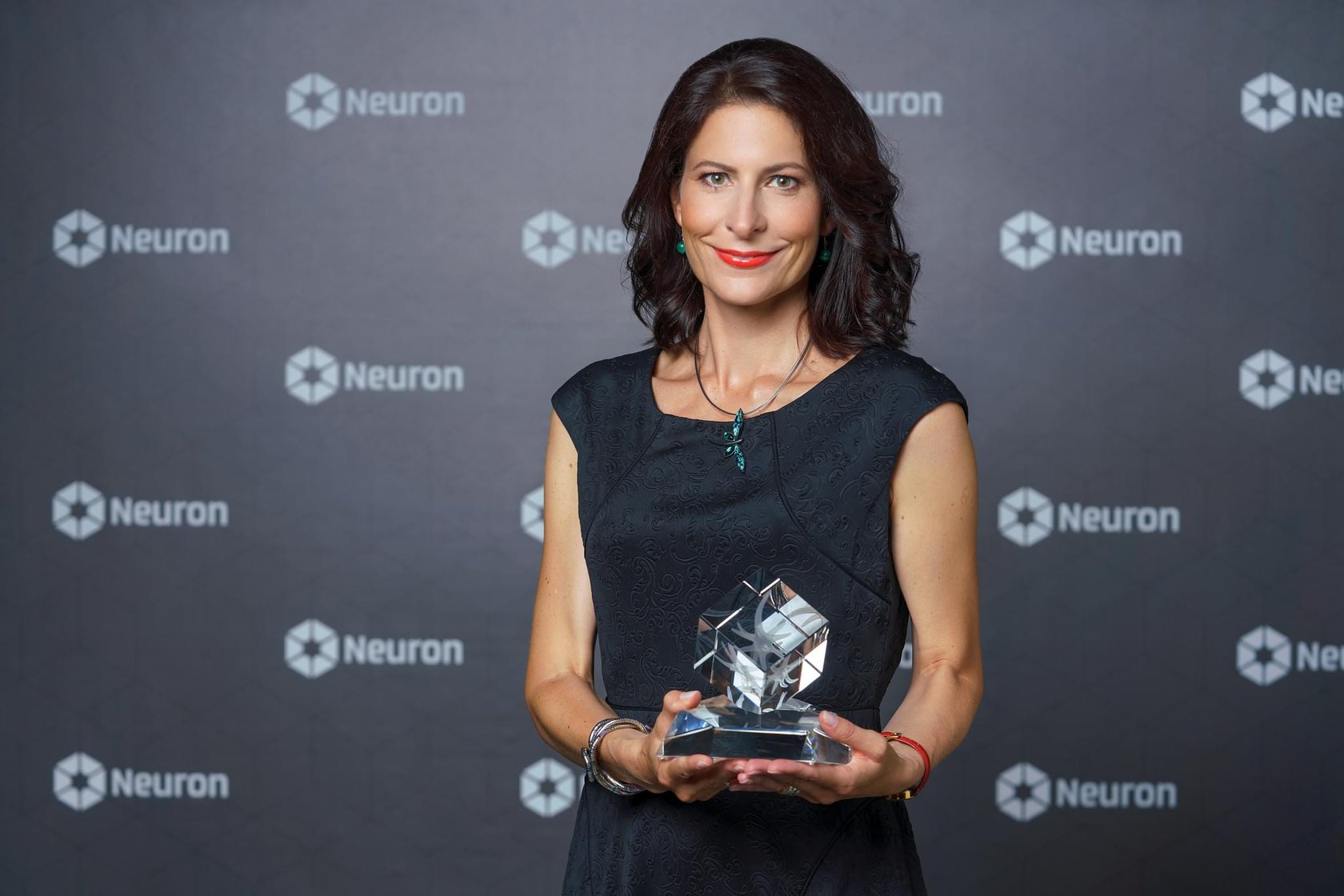
Martina Živná took part in identifying the genes whose mutations lead to the development of hereditary chronic kidney failure. She contributed significantly to explaining the mechanism of the disease and to developing diagnostic methods, for which she received the Neuron Award 2022 for promising scientists in medicine.
What has changed since last October, when she received the prestigious scientific award at the National Museum? What does she expect from the future?
"I fear, though, that by the very nature of the system by which science is supported and evaluated, some subjects will always be preferred and certain subjects will generate greater demand than others," says Martina Živná.
You received the Neuron Award last October. How has your field moved on since then?
I work in the medical sciences, specifically the genetics and molecular biology of hereditary kidney diseases. Generally it can be said that in my field there tend to be partial discoveries every year, which every so often someone connects, and then a significant shift or reassessment of existing hypotheses occurs. Another substantial driver of major advances and discoveries is new technology. A "revolutionary" technological advance of that kind came about fifteen years ago, when next-generation sequencing methods were introduced into medical research and then, as they became cheaper, into specialised medical practice. These methods make it possible to analyse either the whole genome or its essential regions in a single experiment. Before that it was entirely unimaginable. I have not seen a shift of that size in genetics and molecular and cell biology over the past year.
What interesting things have happened to you personally since October?
My last year was actually quite successful professionally. I consider one of the greatest successes of last year an invitation to lecture at the congress of the American Society of Nephrology (ASN), which gathers around 15,000 participants every year. It is not usual for Europeans to lecture at this congress organised by Americans. I also value having gained the position of "Adjunct Associate Professor" in nephrology at Wake Forest University in North Carolina. This position is the culmination of many years of cooperation between our team and Prof. Anthony Bleyer.
How can your field help society as a whole in 2023?
I work on finding the genetic causes and molecular mechanisms of, and developing treatment for, hereditary chronic kidney disease, so the answer suggests itself. Every new piece of knowledge in this field improves the lives not only of individual patients but also leads to better and cheaper health care.
What do you expect from science further into the future?
I expect science to address the fundamental nature of natural, medical and social processes and to find answers and solutions to interesting hypotheses. I would like science not to be beholden to political demand and socio-economic trends. I fear, though, that by the very nature of the system by which science is supported and evaluated, some subjects will always be preferred and certain subjects will generate greater demand than others.
And who should be the next Neuron Award laureate?
When I look around me, even just at our own department of paediatrics and inherited metabolic disorders at the First Faculty of Medicine of Charles University, I see at least one superb candidate. But I will keep the name to myself; anyone working in paediatrics will certainly guess who I mean.